FROM LEGEND TO PROOF, FROM THE LOS ANGELES TIMES
“Legend Has It”…The Fence Between Networks at Super Bowl I
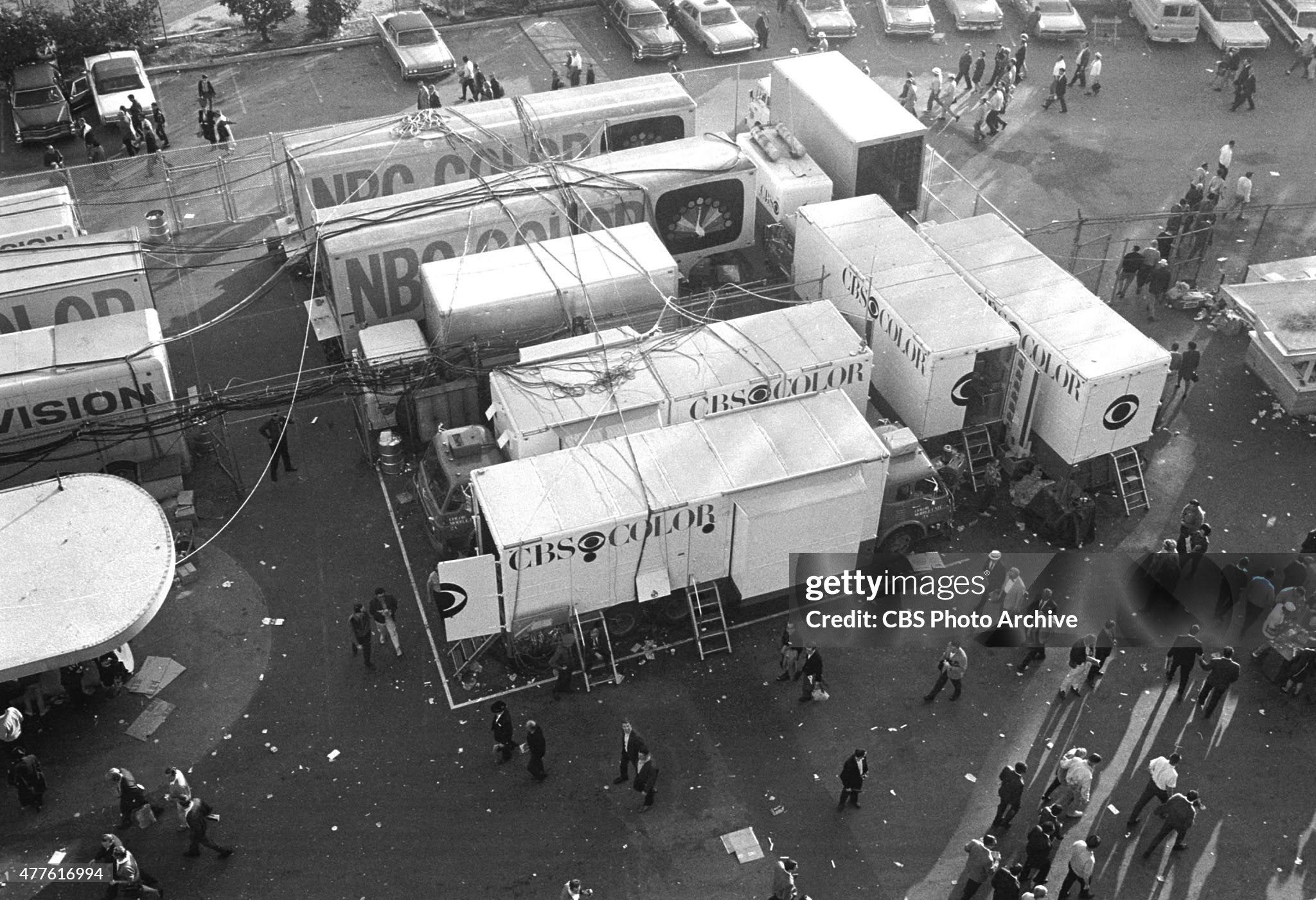
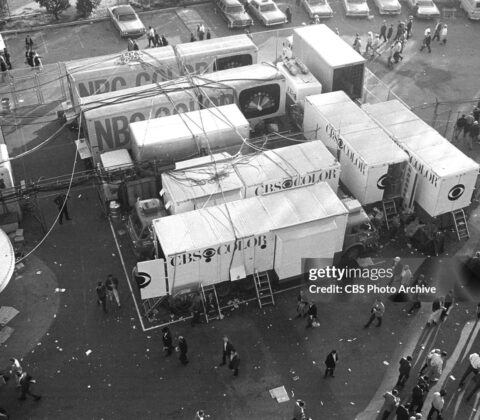
For decades, one of the most persistent bits of broadcast‑industry lore has been the story of the fence—a literal, physical barrier—built between the CBS and NBC crews covering Super Bowl I at the Los Angeles Memorial Coliseum. Engineers talked about it. Cameramen remembered it. Producers swore it happened. But until now, no one had ever produced photographic proof AND newspaper reporting from the Los Angeles Times!
Here is the direct quote from the full and very good article linked below…
One of the first arguments was over camera position. NBC wasn’t happy with where CBS wanted its 11 cameras.
The arguments among the network brass and the technical staff continued through the game.
“There was more animosity among the technical people, who belonged to different unions, than there was between the two teams,” Summerall said. “They had to put up a chain link fence at the Coliseum to separate those guys.”
There was more of a cooperative spirit among the announcers.
At last, that changes.
Super Bowl I, played January 15, 1967, remains the only Super Bowl ever broadcast by two networks simultaneously. CBS held the NFL rights; NBC held the AFL rights. Neither network was willing to concede production control, so both arrived with full crews, full equipment packages, separate announce teams, separate trucks, and completely different production philosophies.
The result was a broadcast compound unlike anything before or since—two rival networks forced to work side‑by‑side while protecting their workflows, their camera positions, and their proprietary equipment. The tension was real enough that stadium officials erected a chain‑link fence between the CBS and NBC areas to keep personnel, cables, and cameras from crossing into the other network’s territory.
The fence became a kind of inside joke among sports‑TV veterans, a symbol of the rivalry between the NFL and AFL and the equally fierce competition between the two broadcast giants. But without a photo, it remained a story told more than shown.
This newly surfaced L A Times article finally anchors the legend in reality. It captures a moment when television history was still being invented on the fly—when two networks, two leagues, and two production cultures collided on the biggest stage in American sports.
It’s a rare reminder that even the most famous broadcasts have untold stories behind the cameras… and sometimes, a fence between them.