Posts in Category: Archives

Page 3 of 11
1 2 3 4 5 6 7 8 9 10 11

SPECIAL!! EARLY TELEVISION SURPRISES, Part 2 of 3

Surprise #1…THIS IS A PREVIOUSLY UNKNOWN PHOTO OF THE WORLD’S FIRST TELEVISION REMOTE BROADCAST, three years before John Logie Baird’s 1931 Epson Derby remote in England.

Surprise #2….This was also the first live television news event. Or, was supposed to be. It seems that all went well in rehearsal, but when Gov. Smith came to the podium, all the film cameras there turned on their bright lights, which washed out the ability of the photo cells to see the image.

Surprise #3…The photo was taken on August 22, 1928, as WGY transmitted Gov. Al Smith’s speech accepting his nomination for the U. S. Presidency. The event took place in Albany, New York, and 24-line pictures were sent back to Schenectady, OVER A TELEPHONE WIRE.

Using a telephone line for TV transmission was a relatively new event. Jenkins did a 5 mile “Shadow Graph” transmission in 1923, but it was late 1927 before Baird did a 435 mile transmission in the UK, and AT&T did a New York-Washington linkup.

This rare image is the one that started the idea for these surprise stories. I found it a about six weeks ago in one of the anniversary editions of the Broadcasting Magazine Yearbook (pg.4).

http://www.americanradiohistory.com/Archive-BC/BC-1981-50th/BC-1981-50-Years-of-Broadcasting.pdf

The three black boxes on stage caught my eye first, then the caption, which said, “These General Electric television cameras, from WGY Schenectady were said to be involved in the first TV remote when they covered New York Gov. Al Smith, the 1928 Democratic Presidential nominee, accepting the nomination in Albany.”

I was confused by the black boxes in the photo, but began to investigate. This is where yesterday’s surprises in Part 1 came into play. The two smaller boxes here are the photo electric pick up cells, and the big box in the center…the one we think of as a camera, is actually projecting a strong light through a scanning disc inside the big box.

Put another way, it is a “flying spot scanner”. In much the same way electronic television tubes scan the subject – delivered by the camera lens to the target screen, scanned from left to right, and top to bottom – the mechanical system’s “camera” projected a spot of light that scanned the subject the same way.

The images of the subject are made by the photo electric photo cells which are seen here as the two smaller black boxes.

Surprise #4…At the link is an incredible 20 second piece of film from WGY in 1928 that will explain how this works. WATCH CLOSELY and repeat.

First, notice…the octagonal object on the left is the “monitor”, a mechanical televisor unit with a 3 inch screen. The smaller black boxes with the big glass objects are not lights, but the photo electric “eyes” that make the picture. The big black box with a lens on the front (that looks like a camera) is the light projector and the lens focuses the 1000 watt light inside, projected through a spinning disk.

Watch how the tech moves the small photo electric box like a camera…which is is.

This is part of the first ever dramatic television broadcast called “The Queen’s Messenger” and what you are seeing in this clip is how they shot a close up scene that concentrated on the actors hands, and what they had in them.

There were only four actors, these two hand actors and two face actors…a female Russian spy and a male British diplomatic courier. Only close ups were possible and there were three projectors in the room with six photo electric cell boxes. One projector was for the female face actor, one for the male face actor and one for the hand actors.

By the way, this is a brightly lit reenactment for the film camera, because the studio had to be twilight dark in order for the not so sensitive photo electric cells to capture the 24 lines of light projected onto the subjects.

Also shown here is an April 1928 diagram of the GE mechanical television process that includes the broadcast and reception method. Notice that two radio transmitters were used in these experimental broadcasts. The visual image was broadcast on GE’s experimental shortwave station W2XB operating on 37.33 meters (7.7 MHz) and the sound was broadcast over their radio station WGY, operating on 379.9 meters (790 KHz).

The last image is a simplified version of the broadcast apparatus from an April 1928 Mechanic’s Illustrated.

Tomorrow, how mechanical television morphed into the electronic version, and more surprises! Please share this with your friends, so they can be surprised too. -Bobby Ellerbee


Source

SPECIAL!! EARLY TELEVISION SURPRISES…PART 3 of 3

With so many overlapping and similar events happening not only in the US and UK, but at RCA, Westinghouse, General Electric and AT&T, writing this synopsis is a real challenge. That’s why, as this final part leads us into electronic television, I am only hitting the major events, and giving you links to fill in the glorious details. You will find them at the bottom of the page.

Surprise 1…We start with the first time the photo electric “eye” was actually put inside a light sealed box to make a television camera.

You can see that in the first photo (above), which is the AT&T “Direct Scanning System”. It was first demonstrated July 12, 1928 at the Bell Labs in New York, and was the first demonstration of outdoor television using sunlight and a scanning disc…something no other researcher had been able to do.

It was not revealed at the time, but the 50 hole, 3 foot disc system’s success was due to the new, Bell improved Case Thalofide photo electric cell.

On August 24, 1928, Philo Farnsworth gave a private demonstration of his all electronic system to Pacific Bell. The images on the
one-and-a-quarter by one-and-one-half inch blueish screen made images hard to identify, but the motion was easy to follow. Ten days later, he demonstrated it to the press in San Francisco. Reports were that “the basic principal of electronic TV had been proven and that perfection was just a matter of engineering”.

Surprise 2…Farnsworth applied for his first patent, which was on the Image Dissector tube January 7, 1929, but contrary to popular belief, he did not patent the first all electronic system. His patent did not specify a cathode ray receiving tube, as he was convinced that he could not patent such a basic device.

As I understand it, the real problem with Philo’s system was that due to some unlockable technical relationship between the Image Dissector output and the transmitted image, the size of the picture received was forever limited. That is, the only way to get a bigger picture on the receiving set was to massively increase the size of the Image Dissector tube.

Tests using a mechanical camera and an electronic receiving tube had been done as early as 1926 at Bell Labs, but half tones were not possible until improvements in the photo electric cells were made. That is why Bell’s Direct Scanning or Outside System was so important.

Finally in May of 1929, a 7” by 20” tube, fabricated by Corning Glass was given a willemite phosphor screen prepared by Zworykin’s group at Westinghouse. With it’s green phosphor screen, half of the goal of electronic television was accomplished. Here, half tones made a difference again, as part of the research Zworykin had done on the Westinghouse facsimile machine’s half tone transmission and reception was incorporated.

On November 13, 1928, Zworykin received an American patent on his improved all cathode ray television system. It was not until February of 1933 that RCA was able to demonstrate a fully electronic camera with Zworykin’s Iconoscope tube, which is shown below, with his recently developed spherical Iconoscope tube.
_____________________________________________________

At this link is a very thorough and photo filled article from Richard Brewster from our friends at the Early Television site.
http://www.earlytelevision.org/rca_story_brewster.html

Below is a video that takes us through the whole process…from Nipkow’s disc and Baird’s work, to Farnsworth and Zworykin. -Bobby Ellerbee


Source

The Early History of Howdy Doody…Television’s First Hit Show

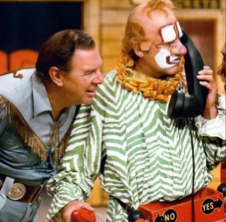
“The Howdy Doody Show” wasn’t just early television — it defined it. As network TV’s first daily program and later the first daily show broadcast in color, it set the pace for everything that followed. With the help of Howdy historian Burt Dubrow, I’ve pulled together a 41‑page deep dive filled with rare photos, firsthand accounts, and hard‑to‑find details from my interviews with the people who were there. The result is a clearer picture of just how groundbreaking this show was — on the air, behind the scenes, and even in the way television learned to advertise. – Bobby Ellerbee

“Big Bang Theory”….THE ANSWERS TO, The Stair Case Mysteries

This article and the two videos will answer three questions many of us have about the “Big Bang” set and, the plot line too.

1. Is the staircase set a multi story set shot with a jib?
2. If not, is the stage raised or is there a hole in the floor?
3. Will the elevator ever be fixed?

You are about to find out, but I have to say, these question has intrigued me as much as the MAD Magazine “Schuster’s Fork” optical illusion of the 1960s.

Before I give you the answer, take a look at this short but sweet trip down the stairs from top to bottom, and it will answer Question 1.

As you see, it is a single set with two stair cases, but a single landing. Since the 4th floor is where all the action is, if long stair climbs are needed, the landing is redressed for each floor as the actors ascend or descend.

That still doesn’t answer the big (bang) question though, so let’s look a great tour of the set with Howard and Rahesh, with the stairs at 3:29.

With the camera dollies rolling down what looks like a concrete floor, it is beginning to look like maybe it is not a raised set, right? But if it is not…what about the hole? Was it there, or did “Big Bang” make it?

Here is the answer: When the pilot episode was shot, the project was done on Stage 25, which is one of the biggest and best on the Warner lot. To build the stairs, they had to dig a hole in the floor, which caused some friction, but it turned out to be a good thing for the bangers.

After the series was bought, Warner wanted to assign them a smaller stage. Creator Chuck Lorre said OK, “but we’ll have to dig a new hole there too”. With that, Warner let them stay on Stage 25.

As for Question 3, the answer is NO! The walks up and down the stairs are to useful as a plot device as it gives the writers a chance to tell parts of the story that would be hard to tell elsewhere. Now we all know! -Bobby Ellerbee

Source

RCA Red Book, “The Equipment”…Holy Grail Of Early Color Television History, Part 1 of 2

In 1953, RCA submitted 700 pages of documentation to the FCC as a “Petition For Approval of Color Standards for RCA Color Television System.”  Due to the bright red cover, it is generally referred to as “The Red Book,” and every detail you could possibly want to know about RCA’s color system is included.  I have extracted two segments of the original to make it easier to get to the information that we are most interested in…the equipment and the history.

This is The Equipment part, with 74 pages of detail on everything from the cameras to the new color mobile unit.  At the very end of this section, there is even a price list for each stage of going color. The presentation of this rare document would not be possible without the help of our friend David Gleason and his one of a kind resource site, http://www.americanradiohistory.com/  The full 700 page presentation is at this link:  http://www.americanradiohistory.com/Archive-Catalogs/RCA/RCA-FCC-Color-Proposal-1953.pdf

RCA Red Book, “The History”…Holy Grail Of Early Color Television History, Part 2 of 2

In 1953, RCA submitted 700 pages of documentation to the FCC as a “Petition For Approval of Color Standards for RCA Color Television System”.  Due to the bright red cover, it is generally referred to as The Red Book, and every detail you could possibly want to know about RCA’s color system is included.  I have extracted two segments of the original to make it easier to get to the information that we are most interested in…the equipment and the history.

This is The History part, with 89 pages of detail that will captivate you for hours! In essence, there are three phases of color development, once the process left the RCA Lab…The Washington Field Test, The New York Field Test in NBC Studio 3H, and The New York Field Test at The Colonial Theater. This is the most detailed description of these test, and locations ever set to paper. There are many rare photos included here too!  Presentation of this rare document would not be possible without the help of our friend David Gleason and his one of a kind resource site, http://www.americanradiohistory.com/  The full 700 page presentation is at this link  http://www.americanradiohistory.com/Archive-Catalogs/RCA/RCA-FCC-Color-Proposal-1953.pdf


RCA Color Television…Best Color History Primer Ever!

From the David Sarnoff introduction to the history highlights at the end, this is one of the best short study resources you will ever find. Every angle of the how, when and why are in this special December 1953 publication from RCA.

http://www.visions4.net/journal/wp-content/uploads/Sarnoff1-PDF.pdf

December 6, 1948…CBS Studio 50’s Television Debut

December 6, 1948…CBS Studio 50’s Television Debut

On this day in 1948, what had been the CBS Radio Theater #3 since 1936, became CBS Television Studio 50. At 8:30 that Monday night, “Arthur Godfrey’s Talent Scouts” became the first program to be televised from the studio we now call The Ed Sullivan Theater, at 1697 Broadway.

This was the second CBS radio theater to be converted to television. In order to get the new “Toast of the Town” show with Ed Sullivan on the air on June 20, 1948, The Maxine Elliott Theater was the first transformation. Sullivan’s show, still titled “Toast of the Town,” moved from Studio 51 to Studio 50 in January of 1953. Sullivan got to move in when “This Is Show Business” moved to another night.

The first TV show to come from Studio 50 was actually a holdover from the radio days. When LIFE profiled Arthur Godfrey in 1948, his voice was ubiquitous on the American airwaves, reaching 40 million listeners each week on three different CBS Godfrey shows.

The “Talent Scouts” radio show started in 1946 and was a sort of amateur hour for young professionals. It ran for 25 minutes on Monday nights with the sponsorship of Lipton tea. During the show, the “scouts”—who could be anyone from a manager to a parent—brought out their “talent” to perform in front of a live audience. Winners were decided by an old-fashioned applause meter, with a new star declared each night. Here is a rare surviving clip of the show, with the applause meter at the end.

“He will probably be on television very shortly,” LIFE predicted, and the prophecy came true on December 6, 1948. After two years on the radio, “Arthur Godfrey’s Talent Scouts” became a regular show on CBS-TV. It was simulcast on radio from the studio it had been in those two years…CBS Radio Theater #3 which, when converted to television became Studio 50. This was the first television show to originate from Studio 50.

Ironically, the first radio show from CBS Radio Theater #3 in 1936 was the “Major Bowes’ Amateur Hour”, which the Godfrey show’s format was based on. Below, in comments, is a photo of the new TV control room. -Bobby Ellerbee

Source

November 17, 1946…TV’s 1st Magazine Style Show Debuts

November 17, 1946…TV’s 1st Magazine Style Show Debuts

“Television Screen Magazine” was the show, and it may have been the second ever NBC network series, but it was certainly among the first. NBC’s “Hour Glass” variety show came first with a debut on May 9, 1946. At the time, NBC’s television network included only three stations in New York, Schenectady and Philadelphia.

This weekly half hour program ran until July 23, 1949 and covered a lot of topics, but certain “sections” were recurring and were hosted by their “editors”. To reinforce the magazine format, magazine pages were turned before each new segment.

The lady in these photos (from 1948) is Ursula Halloran, who was a publicity agent for stars like Sid Caesar, Imogene Coca, Bob Hope and more.

Although it was not well known, Ursula and Bob had a very long affair, and once she finally gave up hope (literally), that Bob would leave his wife for her, the former beauty queen overdosed on sleeping pills.

The show ran on Sunday nights at 8:30 and the only other regular NBC network shows that year were, “Hour Glass”, “You Are An Artist” with John Gnagy (remember that?), and boxing shows that came from both Madison Square Garden and St. Nicholas Arena. -Bobby Ellerbee


Source

AT&T Book…Connecting The Continent For Radio And Television


By far, the most informative collection of information I have ever seen on early telephony and broadcasting. Without AT&T’s help, there never could have been radio, or television networks with such immediacy and reach. Until satellite communications, Ma Bell was the only way to connect, and overall, they did a great job, as did Mark Durenberger in creating this book. THANKS!

NBC “Chimes Magazine”…554 Pages Of Network History ’52-’54…

Here is a 1953 report on color television progress at The Colonial Theater, which is just one of many dozens of interesting, historical tidbits you will find here.

Thanks to Barry Mitchell, we can see the contents of 2 years of articles in NBC’s in house magazine “Chimes”. Not every page is pertinent, but there are many gems here, so take some time to browse this site.

Until now, I never knew the old radio control booth on the Studio 6B stage had also been an early TV control room too, but on Page 12 of the November, 1954 edition, I found that out. In the same issue, there is a story on NBC’s new Stage Services Building, where all the scenery is made. I’ll be browsing this along with you, so get some coffee and enjoy! -Bobby Ellerbee


Source

November 8, 1952…NBC’s First Full Color Facility Debuts

On this day in 1952, The Colonial Theater broadcast it’s first color production to the network. Fittingly, the show was NBC’s top rated Saturday night program, “Your Show Of Shows”, but it was a one time event. At least for “YSOS”, as it was NBC’s intent to rotate all of their New York based shows trough the Colonial for a color show for two reasons.

The first reason was to help teach the producers and talent how to do color shows, and the second reason was to continue to demonstrate that the RCA Dot Sequential color system really was “compatible color”…that is, received by black and white sets, just as well as regular black and white broadcasts.

I think The Colonial first came to the attention of RCA/NBC in October of 1951 when RCA exhibited a color TV receiver-projector there, which provided color pictures on a 9 x 12 foot theater screen.

At this time, the 1,300 seat theater built in 1905, was in an RKO movie theater. In 1935, RKO converted it from a vaudeville and live theater venue to a movie theater, but newer theaters nearby had taken the wind from The Colonial’s sails.

The Colonial was located at 1887 Broadway and became NBC’s 15th studio with a November 8, 1952 debut. Gone, but not forgotten! -Bobby Ellerbee

#NBCColorHistory #NBCColonialTheaterColor #RCAColorHistory


Source

ATT Telephone TV Skyway

A brief, but informative look at the ATT effort to span the continent with new coaxial and microwave relay systems to enable television from coast to coast.

Total Color Camera Sales, USA, 1954-1982, RCA & All Other Brands


Total Color Camera Count for USA 1954-1982 from RCA, and 1964-1981 including all major brands

Thanks to our friend Lytle Hoover at Old Radio.com who has single-handedly collected volumes of information from the historic documents he has collected, we have for a few years now, had for a pretty good idea of how many RCA color cameras were sold in the US, and it’s all because of Lytle’s hard work on the charts below.

However, Lytle (below left, with Soupy Sales), has outdone himself. Under the RCA charts is a brand new creation that shows the total number of broadcast quality (High Performance) color cameras from all major brands that were sold in the US from the mid 1960s till the early 1980s.

Aside from the number of cameras sold, this chart is uniquely handy in determining when specific camera models were made, because there is rarely any dates of manufacture for these cameras available! The list includes Philips Norelco, Ikegami, Marconi, GE and more. Again, thank you, Lytle!

Here is a little background on Mr. Hoover: After directing television for 12 years (which included a long period working with Soupy Sales in Detroit), Lytle joined RCA’s Broadcast Equipment Division and became the Marketing Research Director from ’68 though ’82. Unfortunately, a lot of the valuable research Lytle compiled for RCA was lost…fortunately though, Lytle did have the foresight to save some of this information in his private files and has painstakingly reassembled these databases by hand. If you have for some reason not ever seen his photo history of RCA’s Broadcast line of studio, transmitter and videotape equipment, as well as the Virtual Library of cameras held by private collectors, including yours truly, please visit the “Old Radio” site.

RCA MARKET ESTIMATES OF CAMERAS SOLD

Below are four charts compiled by Lytle Hoover and show the estimated number of cameras sold by RCA over the 30 year period of 1954 to 1984, starting with the TK40 and ending with the TKP47. Unfortunately there are no figures available to date that show the 1947 – 1953 information or any black and camera sales figures.

LIVE COLOR CAMERAS SOLD IN THE US BY YEAR AND MAKER

1964-1981 Includes all major brands other than RCA; H.P. = High Performance or commercial broadcast quality

Ellerbee Classic Camera Census

July 2027: To update this a bit as this site transitions into Edition 5, I would be remis if I did not point out that (like some of us) The RCA TK10 and TK30 Image Orthicon cameras are 80 years old now!

On June 19, 1946, NBC’s broadcast of the Joe Lewis-Billy Conn rematch at Yankee Stadium, was the first ever use of the RCA TK30 Image Orthicon cameras. The new truck and cameras arrived from Camden just a couple of weeks before the match. Below is a photo taken in that 2-week period, between June 5 and June 18, 1946, that shows the actual field testing of the brand new TK30s.

This is the world’s first and only count of the remaining studio size television cameras from the Golden Age and beyond. It was last updated in 2016. 

Over 80 years of history is represented in this survey. The sad news is that there are very few that have made it. Included in the census are the RCA, Norelco, Marconi, GE and Dumont studio size cameras, and for the first time, I’m adding the Ikegami line to the list.

Also, for the first time, I am attempting to count cameras on a worldwide basis. Most cameras are in the US, but thanks to Dicky Howett in England, we have a more comprehensive count on cameras abroad. I have now included the RCA and Marconi cameras at Dicky’s Golden Age TV Recreations prop house and some others in UK museums, at the BBC, and in Australia and New Zealand.

No ENG, or shoulder-mounted cameras are included, nor are Sony or Ikegami cameras. Fortunately, two compete TK41 camera chains have been found since our last update, as have a few TK41 camera heads. A few more GE and Marconi cameras have surfaced and so have a few early RCA black and white camera heads. A large number of cameras from History for Hire have been added too. Since our last update, a few collections have been sold and a few added to. I am also happy to report that a very rare 1939 RCA Iconoscope studio camera has surfaced to join Steve McVoy’s field version of the 1939 RCA Iconoscope camera. That makes a grand total of 324 RCA cameras left.

I’m sure there are others out there, but my bet is, less than 50 more than the 459 total cameras listed here. I have tried to be as inclusive as possible and have been in touch with not only private collectors like myself, but all of the major museums and archival sources that I know of including the sources below. If there are collections or sources that you would like me to know about for inclusion in the list, please feel free to contact me.

THANK YOU ALL for Participating!  Bobby Ellerbee

SPECIAL NOTE: To see some great charts and tables that show when certain cameras were manufactured, please see in this same section (Archives), TOTAL COLOR CAMERA COUNT by Lytle Hoover.  Total Color Camera Sales, USA, 1954-1982, RCA & All Other Brands – Eyes Of A Generation…Television’s Living History

ABBREVIATIONS:
SSM = Smithsonian Institution National Museum of American History; information provided by Elliot Sivowitch (curator and “great grandfather” of all Television collectors)
MBT = Museum of Broadcast Technology in Woonsocket, R.I. (curators, Paul Beck and Tom Sprague)
MBC = Museum of Broadcast Communications in Chicago (curator, Bruce DuMont)
NEW = The Newseum in Washington, DC (curator, Carrie Christofferson)
VM** = Virtual Museum Page on Old Radio.com (curator, Lytle Hoover)
**For clarity, to avoid double counts, the cameras on the VM site have been included individually in the counts
UCLA* = University of California at Los Angeles, Television Archives (curator, Dan Einstein)
*see other cameras at end
PIC = Private Collection, owner wishes to remain anonymous
ETF = Early Television Foundation, Hilliard Ohio (curator, Steve McVoy)
UN = University of Nebraska College of Jrl. and Mass Comm. Lincoln, Nebraska
HFH = History For Hire, the top prop shop for TV equipment in Los Angeles
MRT = Museum of Radio and Technology, Huntington, W. Virginia
SM = Schenectady Museum, a major repository of GE archives
HFM = Henry Ford Museum, Dearborn, Michigan
MBC = Museum Of Broadcast Communications, Chicago, Illinois

tk-10a


RCA TK10 (left) – TK30 (right) Series:
Bobby Ellerbee: 1 TK30, The Pat Weaver NBC Camera, presented to first President of NBC TV in appreciation for his achievements in programming. See the Ellerbee Collection for more.
Bobby Ellerbee: 1 TK10, one of the original 8 bought and used at WGN in 1948
Billy Graham Museum: 1 TK30
Chuck Pharis: 1 TK10, 7 TK30
Allan Weiner*: 1 TK10, 4 TK30
Tom Long: 1 TK30
UCLA: 1 TK10, 1 TK30
SSM: 1 TK30
PIC: 1 TK10, 1 TK30
Dicky Howett: 1 TK10, 1 TK30 (England)
Steve Selinger: 1 TK30A
ETF: 3 TK30A (on loan with 1948 RCA TJ 48 remote truck from Ohio State Historical Society)
UN: 1 TK30A (serial # 24, originally owned by WOW-TV Omaha)
Julian Burke: 1 TK30
Bill Kuhar: 1 TK30 used at CBS Studio 55 in NYC
Edwardo Suarez: 1 TK10
HFH: 3 TK30, 1 TK10
Ed Sharpe: 1 TK30
VM – KFOR: 1 TK30
Total TK10 and TK30 = 38 (Running Total = 38)


RCA TK11- 31 Series:
Bobby Ellerbee: 1 TK11-A-1
VM – Kennedy Library: 2 TK11 from WBBM Chicago (original Kennedy-Nixon Debate cameras) with thanks to the SSM
VM – Lloyd Scott: 1 TK11
VM – WHIZ-TV: 1 TK11
VM – Sarnoff Library (Courtesy of Dave Abramson): 1 TK31
MBT: 4 TK11/31
Chuck Pharis: 8 TK11/31
Jay Ballard: 1 TK11
Allan Weiner *: 2 TK11, 4 TK31
UCLA: 1 TK11 (from KTLA, donated by Steve Dichter)
Michael Aisner: 1 TK11 (from the Chuck Pharis Collection)
UCLA: 1 TK11, 1 TK31
SSM: 1 TK 11
Julian Burke: 3 TK11s
MBC: 1 TK31 (the remaining Kennedy-Nixon debate camera that was originally gifted Northwestern University)
David Johnson Collection: 1 TK31 (complete chain)
NBC: 1 TK31 (Rockefeller Plaza display)
Ronald Purtle: 2 TK11A
ETF: 1 TK31
Jan Lowery: 1 TK 11A (purchased from Chuck Pharis)
UN: 1 TK 11/31 (serial # 1420, originally owned by KUON-TV at UN)
Jim Bragg: 1 TK11
Edwardo Suarez: 1 TK11
Bill Howard, KOCO: 1 TK 11
HFH: 3 TK11
Chuck Conrad: 1 TK11A (Serial # 1475, from KIIV Sherman TX)
Dicky Howett: 1 TK11 (England)
Ed Sharpe: 1 TK11
VM – WHIZ lobby: 1 TK11
VM – Bill Howard: 1 TK11
VM – WEWS lobby: 1 TK11
VM – Oklahoma Historical Society: 1 TK11 (from KETA)
Total TK 11/31 = 54 (Running Total = 92)


RCA TK14 (left) and (right) TK15:
Chuck Pharis: 2 TK15, 2 TK14
PIC: 1 TK15
Alan Weiner: 2 TK15
MBT: 1 TK14, 1 TK15
Ed Sharpe: 2 TK14
Total TK 14/15 = 12 (Running Total = 103)


RCA TK40 – 41 Series:
Bobby Ellerbee: 1 TK41C (from KTLA: former ‘4th sister’ to the Red Skelton TK41A cameras now at UCLA)
Ed Reitan: 1 TK40A (one of the first CBS Television City color cameras, Los Angeles)
Kris Trexler: 1 TK41C (from KSTP)
MBC: 1 TK41C (from WGN)
UCLA: 3 TK41Bs (the Red Skelton, Red-E-O Video cameras were sold to KTLA; now archived at UCLA)
David Woods/WCOV: 1 TK41C
Chuck Pharis: 1 TK40 (“1952 earliest known RCA color camera. This is a 1 of only 2 prototypes built and used for testing by NBC on sports coverage. It bridges the gap from ‘coffin cameras’ to production model. RCA/NBC later updated the viewfinder and some internals on this camera as it entered regular service at NBC Burbank when the TK40 production models arrived.)
Chuck Pharis: 5 TK41 (one with complete chain, twin of Rick Wold’s new TK41)
MBT: Jay Ballard’s 1 TK41B and 1 TK41C on permanent display
Allan Weiner *: 1 TK40, 1 TK41
Bob Ennis: 1 TK41C (from the Chuck Pharis Collection)
Steve McVoy: TK41C (no viewfinder…yet) Early Television Museum in Hilliard, Ohio
SSM: 1 TK41 (from WALB-TV, Albany, Ga.)
PIC: 1 TK41C
Axeman Army-Navy Store: 1 TK41 (on display at their Minneapolis store)
Chalina Johnson: 1 TK41C (bought from Chuck Pharis)
Leonardo Ferraz: 1 TK41C (complete chain)
Oklahoma State Museum: 1 TK40A twin of the MBT TK40A from WKY-TV, one of a pair (see MBT below)
MBT: 1 TK40A, one of a pair of the first 2 color cameras delivered to a local station WKY-TV; twin at OK State Museum
Julian Burke: 2 TK41C
Rick Wold: 1 TK41C (complete chain, twin of new Chuck Pharis TK41)
Jim Bragg: 1 TK41C
HFH: 3 TK41s from CBS
Ed Sharpe: 1 TK41C
PIC: 1 TK41C (a former director in LA has one but wishes to keep his name private)
MBC: 1 WGN TK41 on display in Chicago
Total = 36 (5 TK40s and 31 TK41s) (Running Total = 140)


RCA TK42 – 43 Series:
Bobby Ellerbee: 1 TK42
Julian Burke: 2 TK42, 1 TK43
Chuck Pharis: 1 TK42
Allan Weiner *: 1 TK42 , 2 TK43s
Tom Long: 1 TK42
Jay Ballard: 2 TK42s
WAVY-TV: 1 TK 42
UCLA: 2 TK42s, 1 TK 43
DC Video: 1 TK42 with chain
Ed Sharpe: 1 TK42
Total = 17 (Running Total = 157)


RCA TK60:
Bobby Ellerbee: 2 TK60s
VM – J.F.K. Library: 1 TK60 (from Paul Beck with thanks to the SSM)
MBT: 9 TK60s
Chuck Pharis: 5 TK60s
Jay Ballard: 1 TK60
Allan Weiner *: 1 TK60
UCLA: 2 TK60
Julian Burke: 1 TK60
DC Video: 1 TK60
SSM: 1 TK60 (at Kennedy Library)
Robert Voll: 2 TK60
Jan Lowery: 1 TK60
Bob Blauvet: 1 TK60
Brian Summers (UK): 1 TK60
Jim Bragg: 2 TK60s
HFH: 4 TK60s
Ed Sharpe: 2 TK60
James Patterson: 1 TK60 (Australia, oldtvgear.com)
Total = 38 (Running Total = 195)


RCA TK 44 (left) – TK45 (center)  – TK46 (right) Series:
Bobby Ellerbee: 2 TK44s, 2 TK46s
VM – Bob Meza: 1 TK44 (Bob was the last engineer at NBC Burbank to work on the 44s)
Jon Lessa: 3 TK44s
MBT: 3 TK44s, 4 TK45s
VM – WLIO-TV: 1 TK44
Chuck Pharis: 3 TK44s, 2 TK45s, 1 TK46
Jay Ballard: 3 TK44s
VM – Lytle Hoover: 1 TK44 (curator of the Virtual Museum at oldradio.com)
Ed Sharpe: 2 TK44
DC Video: 2 TK45s, 5 TK46s
PIC: 1 TK44
Ronald Purtle: 1 TK45
Jan Lowery: 1 TK44
UN: TK44B (serial # 08043; original owner WOWT-TV, Omaha)
John Bolin: 2 TK44s
Jim Bragg: 1 TK44
HFH: 4 TK44s, 2 TK45s
Joe LaRe’: 1 TK44
James Patterson: 1 TK45 (Australia, oldtvgear.com)
VM: 1 TK44, Dennis Lamb
VM: 1 TK46, Carl Bergquist
Total = 52 (Running Total = 250)


RCA TK47:
Bobby Ellerbee: 1 TK47
VM – Lytel Hoover: 2
Ed Sharpe: 3
Chuck Pharis: 2
Jay Ballard: 11
Lou Gordon: 4
Tom Long: 1 TK47C Model
MBT: 5
Jan Lowery: 1 TK47
Brian Summers (UK): 2 TK47
John Bollin: 1 TK47
Jim Bragg: 2 TK47
HFH: 4 TK47s
Jodie Peeler: 1 TK47 with chain (formerly of KCET-TV)
Total = 40 (Running Total = 290)


RCA 1939 Iconoscope:
MRT: 1 1939 Studio Camera, (Model MI-21081-A) Very rare field camera, recently acquired and on display.
ETF: 1 1939 Field Camera. A very rare and historic camera. Steve McVoy has had this a few years and a great page of pre 1945 cameras on his site can be seen by clicking here
Total = 2 (Running Total = 292)

End of RCA Cameras: counting 292 known, remaining RCA studio cameras.


Norelco PC60 – PC70:
Bobby Ellerbee: 1 PC60, 2 PC70s
NEW: 4 PC70s (CBS – Cronkite Studio cameras)
MBT: 4 PC60s, 6 PC60-70s, 4 PC70s (+ 1 PCP 70)
Chuck Pharis: 2 PC-60s, 4 PC-70s
UCLA: 1 PC 70
Allan Weiner *: 1 PC70 + 2 PCP 70s
Ed Sharpe: 3 PC70
Martin Perry: 1 PC60
HFH: 10 PC70s
DC Video: 2 PC70s with chains
Julian Burke: 1 PC70
Total = 48 (Running Total = 340)

mark-7


Marconi: Mark V – Mark VII
Bobby Ellerbee: 1 Marconi Mark IV, 1 Mark VII (Sesame Street, Tele-Tape Productions)
Guy Spiller: 2 Mark VII
Chuck Pharis: 2 Mark IV
UN: 1 Mark VII, original owner KOUN-TV at UN
Chuck Conrad: 1 Mark IV head with 3 ccus (WFAA/Dallas, Kennedy – Oswald)
James Patterson: 1 mint condition Mark IV, 1 Mark VIII, Melbourne, Australia…OldTVGear.com
Dicky Howett: 1 Mark II, 1 Mark III (see all his cameras in the Collections section)
Golden Age Television Recreations: 1 Mark ll, 10 Mark llls, 6 Mark IVs, 2 Mark Vs and 7 Mark Vllls
(this is the top UK TV prop house owned by Dicky Howett).
Special Note: In a conversation with Dicky Howett, he estimates there is 1 more Mark IV in Australia, 2 more in New Zealand and 4 more in British museums, including the BBC, for 7 more surviving Marconi cameras.

Total Mark ll is 5 worldwide Total Mark llls is 11 worldwide
Total Mark IVs is 16 worldwide Total Mark Vll is 11 worldwide
Total = 48 (Running Total = 388)

dumont


DUMONT:
HFM: 1930s era Iconoscope camera from WWJ TV
Alan Weiner: 4 TA-12 complete chains
Chuck Pharis: 1 124B studio camera with chain, 1 Electrocam with film camera attached
PCI: 1 studio camera
SSN: 1 studio camera chain
UN: 1 Pickup head 5098C and Viewfinder 5099B, original owner KOLN-TV, Lincoln
Chuck Conrad: 5095A IO (thought to be from WFAA / KBTV Dallas)
South Carolina State Museum: 2 studio cameras (one ex-WNOK-TV, with chain; one ex-WCSC-TV)
Total = 13 (Running Total = 401)

ge


General Electric:
Bobby Ellerbee: 1 PE 350, 1 PE 400
SM: 2, 1930s era Iconoscope cameras from WRGB-TV
Ronald Purtle: 1 PE 250
DC Video: 1 PE 350 with chain
Chuck Pharis: 3 PE 250, 2 PE 11 (5-lens cameras)
UN: 1 I/O camera (no model) from 1953, original owner NTV network stations, KHOL and KHGI
UN: 1 color (no model) 1967, original owner KOLN-TV
ETF: 1 PC 11 I/O model, 1 PE 250
Martin Perry: 1 PE 250, 1 PE 400, 1 PE 15 (The PE 400 may be the first color camera used in the Goodyear blimp)
Chuck Conrad: 1 4PC 121 A1 IO (KRLD Dallas TX), 1 4PC 14 A2 Videcon (SMU, Dallas) chalkhillmedia.org
Julian Burke: 1 PE 250, 1 PE 350
Eduardo Suarez: 1 PC 11B
Total GE cameras = 22 (Running total = 423)


Starting From Scratch…The Earliest CBS Grand Central Studios Images

In the fall of 1939, CBS began work on the area they had chosen to become their premier television studio facilities. When it was all said and done, Studio 41 and 42 were created in this space you see below, in this one gigantic hall. Studio 41 was 44 x 60, and 42 was 44 x 76, and they were divided by a removable wall. The control rooms were built at the outer-wall ends of each of these production spaces.

Not to confuse you, but CBS also referred to these control rooms as studios, mostly because of their ability to operate independently of the attached production space in that they could take feeds from any source and could send out images from film and telecine units located there. Studio 43 (a control room) was at the end of Studio 41 and (control room) Studio 44 was at the end of Studio 42. Later, like in the early 50s, the space above the control rooms was pressed into service as a second story with telop, telecine and film chains upstairs and expanded control panels in the downstairs area.

As you look, keep in mind the larger set of windows are on the outside wall, and the smaller arched windows on the opposite side are above an internal hallway. When the larger windows are on the right, you are looking in the direction of Studio 41 and when they are on the left, your view is tword Studio 42. When the sound paneling on the walls goes up, the windows are no longer visible.

There will be more detail on the photos, but before CBS took over, this had been the offices of the Grand Central Terminal’s Federal Credit Union, that served the workers of the New York Central Railroad. A lot of television history was made here, and here is the starting point. -Bobby Ellerbee

The photo at the top of the page shows where the Studio 41 control room will be built. All of the railing and stairs will come down and the CR will be built in the lower opening. The small office with the many windows will remain intact as the film projection room and film will be projected directly into an Iconoscope camera suspended on a rolling track in the control room. You can see the open space above the control rooms that will be the second story rooms in the early 1950s.  

Above is the Studio 42 end with another set of small offices that will be torn out to construct the control room for 42. Notice that camera lights are already here, even before construction has started on this end. As you will see soon, camera work was being done in the studio, and I think Studio 41’s control room was the first to be built and operative.

Above, we are looking from where the Studio 42 control room will be, toward the future Studio 41 control room area. Notice the outside wall is on the right, and the hallway that that access this space with doors is on the left.

Above, we are looking toward the future Studio 42 control room, from the Studio 41 control room area, with the internal hallway on the right.

Above, Studio 41 control room with light grid hangers going in.

This is the first ever sighting of electronic cameras in use at CBS. Photo is dated September 1, 1939. This is an RCA Iconoscope camera is broadcasting test images of live subjects over the newly operational transmitter at The Chrysler Building. Notice these are the same lights that we saw here a month or so before while construction on the Studio 41 CR was going on. The walls are all covered with sound proofing now too.

In the next 2 photos below, we can see a door to the hallway on the left wall, which makes this shot in Studio 41 with the CR behind the large set in the back.


Source

Gray Research Telop Machine, Television’s First Optical Projection System

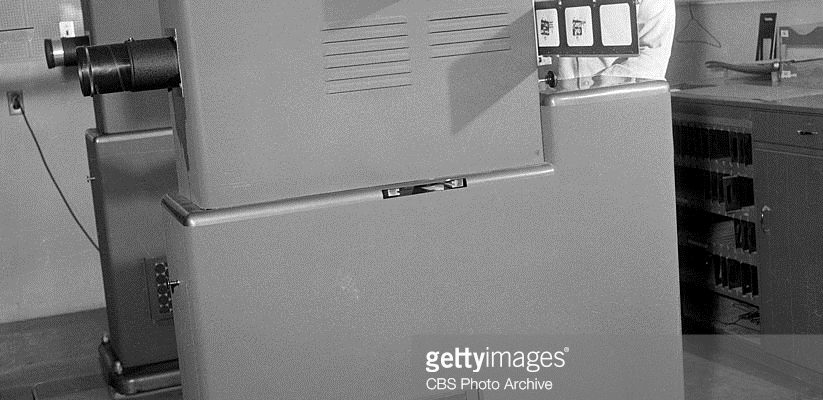
Thanks to Val Ginter in NYC, here is a rare copy of the 1953 Gray catalog with a price list at the end. This machine was able to televise opaque cards, which was the forerunner of transparent slides. It also had add on features that would allow a news type horizontal ticker scroll across the bottom of the screen (on real ticker tape) and a vertical scroll for credits. All the networks depended on them heavily for station breaks and promos, and they were also widely used at local stations.

When it comes to the lower third of the screen, this was the first apparatus that could scroll text there. As you will see, it was an available accessory for use on the Gray Telop machines and the horizontal ticker crawl was done with 8MM film.

BUT! Before we go to the finished product, here is the CBS and NBC prototypes of this machine! The “CBS Shadowbox” design (below) was the version that Gray licensed to manufacture from CBS. This three-function machine allowed a live camera to shoot into the box and see, with the aid of moving mirrors, photo images, title cards and “rolling credits” on a drum. With no fader controls on the switching console in the control room, live dissolves could be done here manually with mirror movements and fading light sources in each of the three sections.

These two photos below show what I believe to be the next version of the baloptican projection element of the CBS prototype before licensing their technology to Gray. Thanks to Harry Moore and his Early Television and Television Hobby Experimenters Facebook site.

Below is the middle element of NBC’s three element version which was called the “title frame optical mechanical dissolve machine”.

This brochure features images and a price list from Gray from 1953. The cost of the top-of-the-line Telop I was $3500…in today’s money, that’s over $31,100. CBS had a half dozen of these in their Grand Central headquarters. I’m pretty sure NBC and ABC used these too. There were two smaller, less expensive models for local stations as well and these were marketed mostly as production aids for creating spots, but at the network level, they were the main mechanisms for promos and billboarding upcoming shows and it was all done live during the breaks. The alternative would have been the RCA 35MM slide drums in a telecine chain, but I don’t know if they had those in the early 50s.

NBC’s Former Brooklyn Studios


6 pages of blueprints of the former NBC studios in Brooklyn.
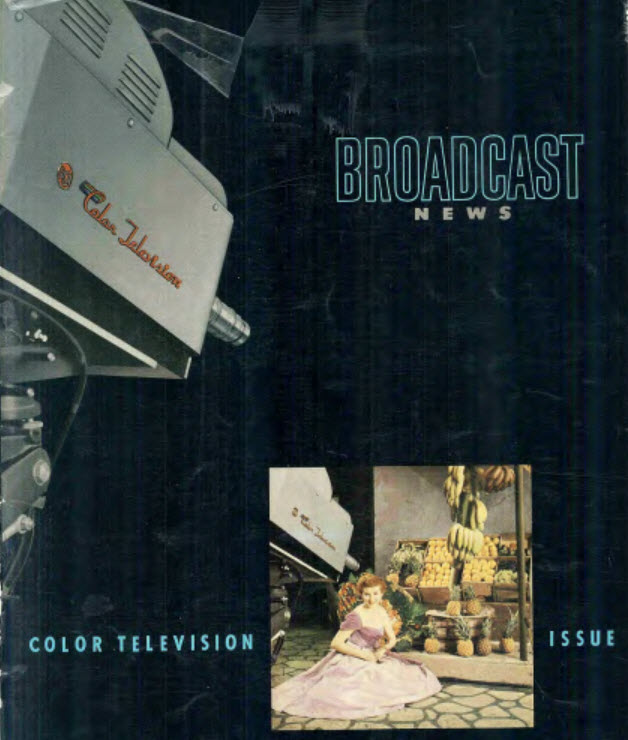
RCA Broadcast News, January 1954


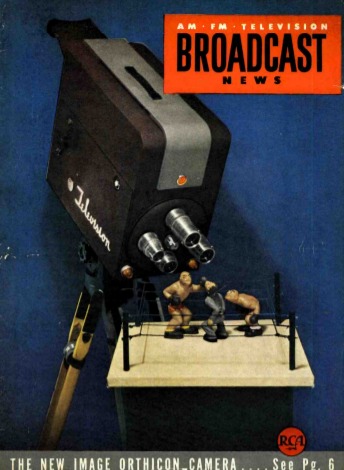
“Color Television – What It Means to Broadcasters” is the tile of this issue, and this was the first issue ever wholly devoted to one subject. That subject is color TV, and this is a fascinating time capsule. On page 62, there is a multipage, photo-filled introduction of the RCA TK40 color camera, but all through this issue, everything color is examined, from film chains to transmission, colorplexers and much more.

RCA Broadcast News, April 1961

From April 1961, here is what EVERYBODY was doing with color. From networks to local stations and cameras to tape, this packed-with-pictures edition of RCA’s Broadcast News is all about color.

Page 3 of 11
1 2 3 4 5 6 7 8 9 10 11