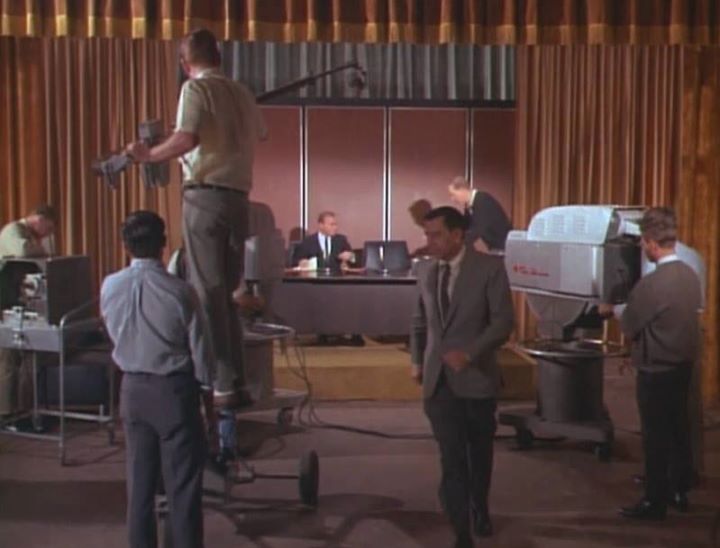
Can You Spot The Impostors?
Can You Spot The Impostors?
These TK41 cameras prop really got around. Here they are on the set of a ‘Dragnet’ episode. I’m think MGM owned them and I’m pretty sure these are the same two that were used in “How To Succeed In Business Without Really Trying” in 1967. If the pedestals had cable skirts, it would be hard to tell if they were real, but the bad wheels and lack of circular vents on the back and left rear side are dead giveaways. Can you name any other productions you have seen them in? Thanks to John Bolin for the photo.
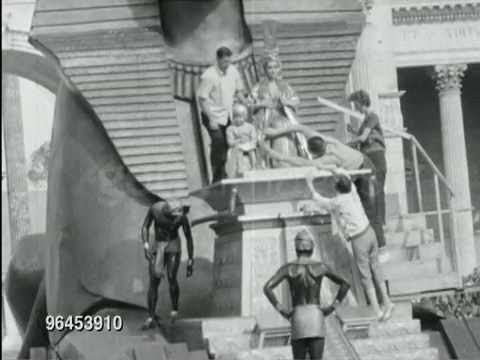
“Cleopatra”, RARE, Home Movie Footage
“Cleopatra”, 1963’s Top Movie
Here is a RARE, home movie look at the grand entrance to Rome scene. This scene took 3 days to shoot and had to be redone several months later because the light was going fast when the first takes were done. The Kennedy’s viewed this film at the White House in June of ’63.
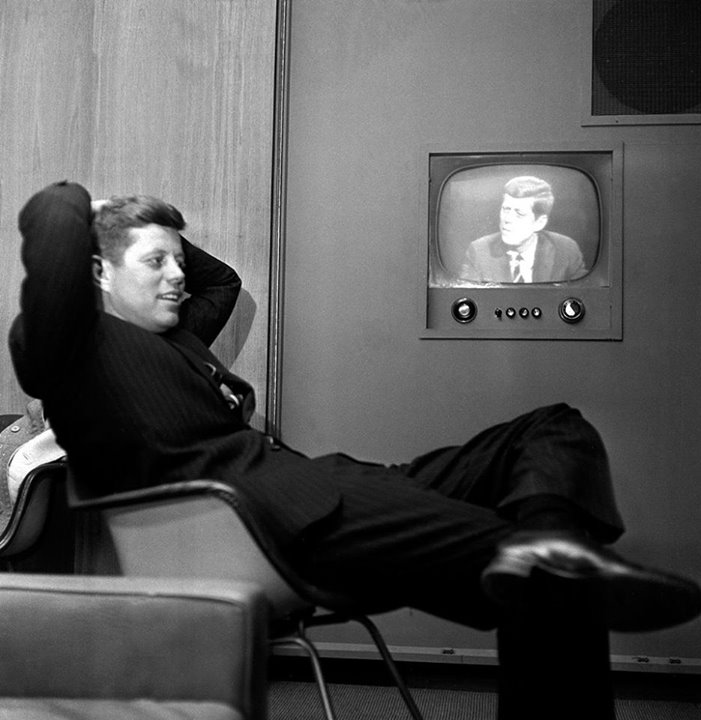
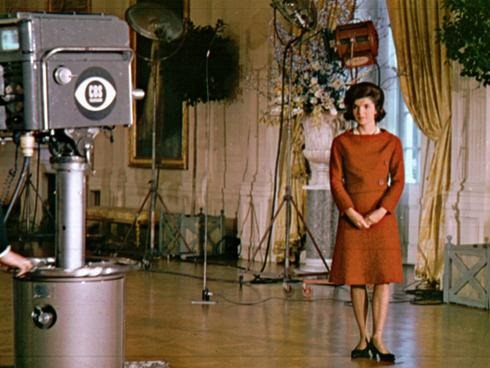
In Better Days…
In Better Days…
Here’s a rare color shot of Jackie Kennedy taken during her famous tour of the White House in 1962. There were 8 TK11/31s there for the 7 hour taping session and the CBS producer played back some video tape at the end of the day for her and President Kennedy, who seemed quite proud of his wife. I just learned from a recent special that she smoked the whole time off camera and surprisingly dumped ashes everywhere as there seemed never to be an ashtray available anywhere. Bless her heart.
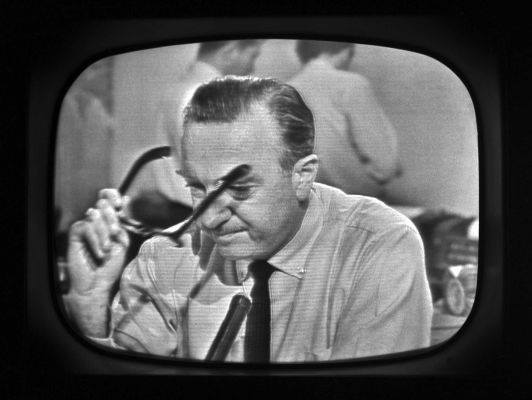
That Unforgettable MomentIn a weekend filled with unforgettable moments
That Unforgettable Moment
In a weekend filled with unforgettable moments and images, this is one of the most iconic of all. Choking back the emotion that all of us felt, the sight of Walter Cronkite making the news official and showing ever so briefly his human side, this consummate professional soldiered on. Although all three networks were on the air reporting furiously, this image of this man in this moment is the one most remembered.
Why It Was Called “Walkie Lookie”
Why It Was Called “Walkie Lookie”
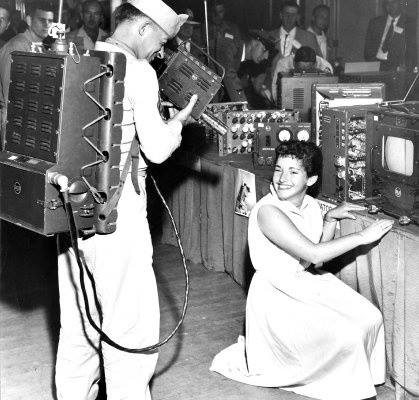
Yes, this portable wireless Vidicon camera had a lot of potential for broadcasters, but guess who else was interested in it! That’s right…the Army. RCA had a long history with military radio, radar, television and more but having “eyes” at a forward position was what interested the Army in this unit. Having used RCA Walkie Talkies for years, the obvious nick name for this equipment pack was the Walkie Lookie. Experimental versions came along in 1949. In a related note, the RCA TK30 field camera was RCA’s top priority for release because of commitments to the Army. The TK10 studio camera was supposed to be the first to debut to broadcasters but the military’s need put the TK30 first in line. The TK10 was held back so that RCA could supply the Army with TK30s in early 1946. NBC got their first TK30s in June of 46 and the TK10s debuted in late 1946.
August 1960, Boston’s Fenway Park
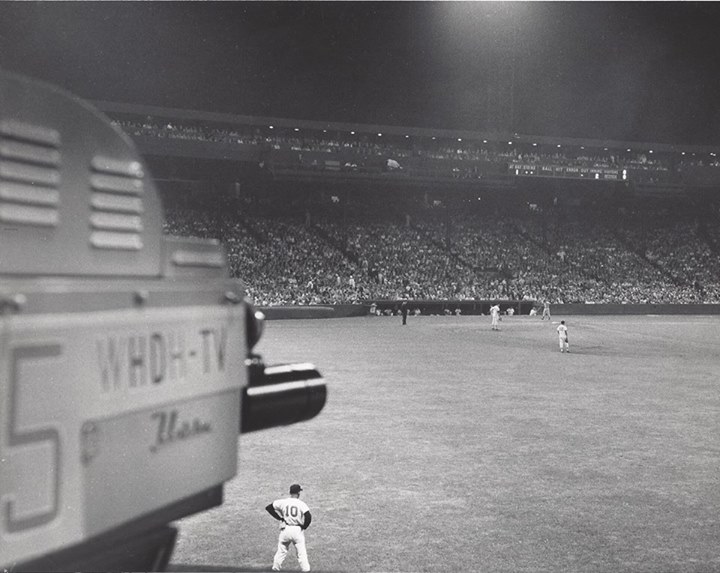
August 1960, Boston’s Fenway Park
This TK41 is shooing from center field in a test of their ability to colorcast Red Sox baseball. This is just after WHDH moved into it’s new all color facility and there is an RCA color truck here as well as a support unit just in case. This game may have been against the NY Yankees, with coverage sent to WNBC. It would be interesting to see a clip of this video to see how a night game looked. If you look up in the upper deck, you can see another TK41. From other photos I have of this night (that I’ll post soon), it appears that there are at least 4 TK41s at the game. Thanks to Maureen Carney for the photo and background.
The Grandfather Of ENG Cameras, 1950
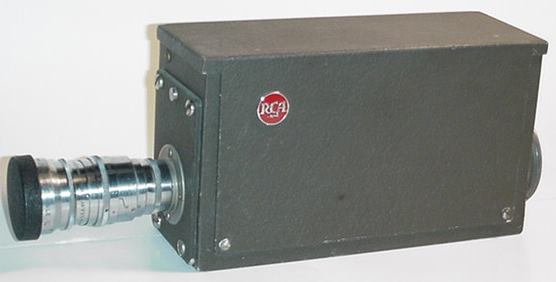
The Grandfather Of ENG Cameras, 1950
Last week, we looked at RCA’s wireless version of this portable Vidicon camera that was used in the coverage of the 1952 political conventions. Here is a good article with pictures on the cabled version of the grandfather of ENG cameras.
http://www.myvintagetv.com/rca_videcon_camera.htm
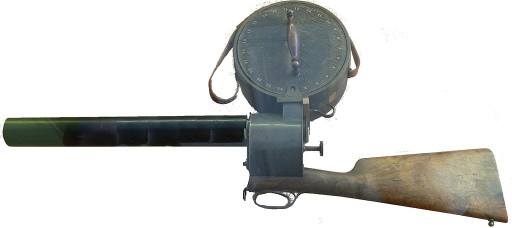
Point & Shoot…The First Portable Movie Camera, 1882
Point & Shoot…The First Portable Movie Camera, 1882
The design of the first “Chronograph” as it was called then, was made by French scientist Étienne-Jules Marey and debuted at 1882 by the name of Fusil Photographique or photographic ‘rifle’. The rifle used a magazine consisting a plate film separated into 25 light tight compartments – each was exposed separately at a staggering rate for that time of 12 FPS. To see the film it shot and how it worked, click on this link and be ready to be amazed.
http://www.diyphotography.net/first-movie-cameras-was-12-fps-rifle
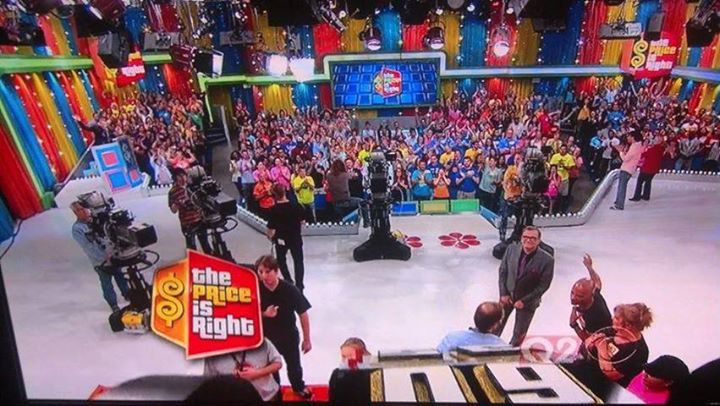
The Surprise…Wireless Studio Cameras At Television City!
The Surprise…Wireless Studio Cameras At Television City
http://www.aerialvideo.com/technology/hd-wireless
Until I verified this myself yesterday, I was skeptical of a post a few weeks back by Father Bob Sewvello, but it is true! I had replied to Bob that the cameras in Studio 33 had white triax cables which was also true…till a few months ago. The link above takes you to the Aerial Video Systems site which is what CBS is using. If you look closely, you can see two aerials on each camera (one for data, one for compressed video) and a 12 volt battery attached to the base of the Vinten Quattro pedestals. There are five cameras on ‘The Price Is Right’ set and all are Sony 1500s…only the jib camera (taking this screen shot) is cabled now. More news…this week, CBS will be doing side by side testing of 4K cameras on ‘The Price Is Right’ and ‘The Bold And Beautiful’ sets. Thanks to Father Bob Sewvello for the sharp eye and this photo.
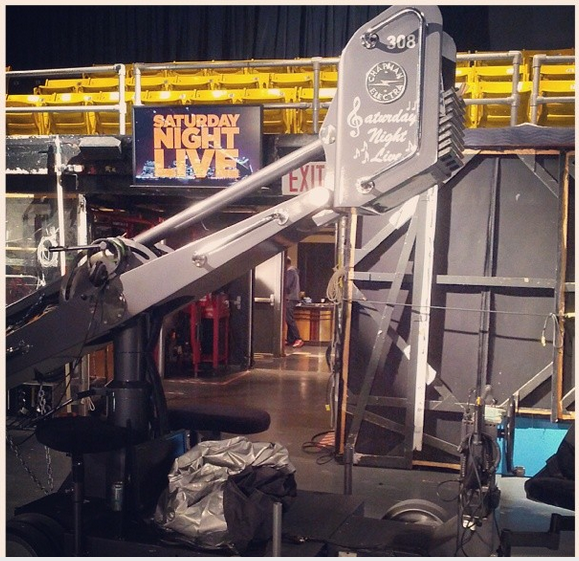
New “Do” And A Great Crew…More On The NBC 8H Electra Crane
New “Do” And A Great Crew…More On The NBC 8H Electra Crane
Yesterday you met John Pinto, but without Louis Delli Paoli, Philip Pernice and Bobby Mancari, SNL could not get those great crane shots because they are the crew that drives and mans the boom arm. As you can see in this photo, the Chapman Electra # 308 has had a new paint job and make over. In case you did not know, this historic crane is owned by Chapman but leased by NBC and last year, Chapman wanted to retire #308 and did…for a while. Turns out that the new Electra could not make the tight turns and was not as maneuverable as the old one. There was only one solution…bring back #308. While Chapman had her, they did an overhaul and gave her a new paint job. I would appreciate it if someone would get me the names of all the other camera operators on SNL and if possible, some pictures of them with their Sony’s.
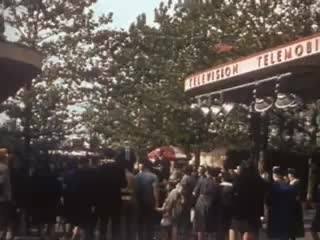
Super Rare Footage…Live Television At 1939 World’s Fair
Super Rare Footage…Live Television At 1939 World’s Fair
After the opening days of the fair that were broadcast by NBC, the RCA Pavilion had a camera that visitors could walk in front of and see themselves on a monitor. It was all the rage and certificates were issued stating that the bearer had indeed been among the first people ever to be “televised”!
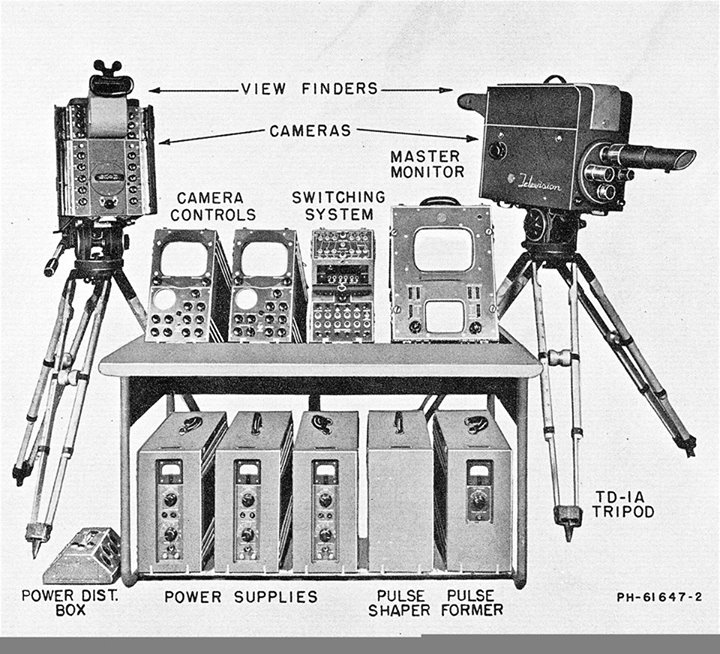
RCA TK30 Remote System
RCA TK30 Remote System
From the 1949 RCA catalog, here’s what it took to do a two camera remote. Some don’t know that the TK30, as well as the TK10 and TK11/31 had a two part head. The bottom of the head is the camera itself and on top, the viewfinder. The TK30 field camera came out in the summer of 1946, a few months earlier than the TK10 studio camera which debuted in October. As far as I know, they used the same tubes and were practically identical inside but the TK30 could operate with less power.
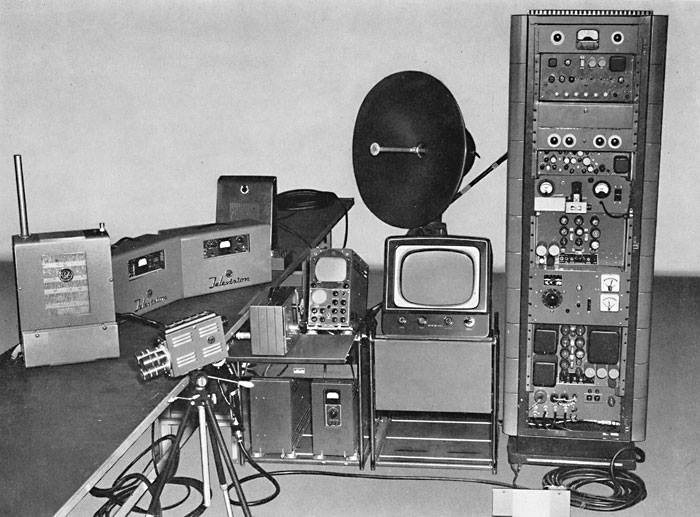
One Of A Kind Photo
One Of A Kind Photo
This is the full complement of equipment associated with the RCA “Walkie Lookie” Vidicon camera. This photo from the 1956 NAB Convention, shows the wireless version with the backpack transmitter on the table. This camera and a few others like this were used by NBC for the ’52 political conventions, but those did not have the wireless capability like the 1956 version. These units were able to operate almost a mile from their base station.
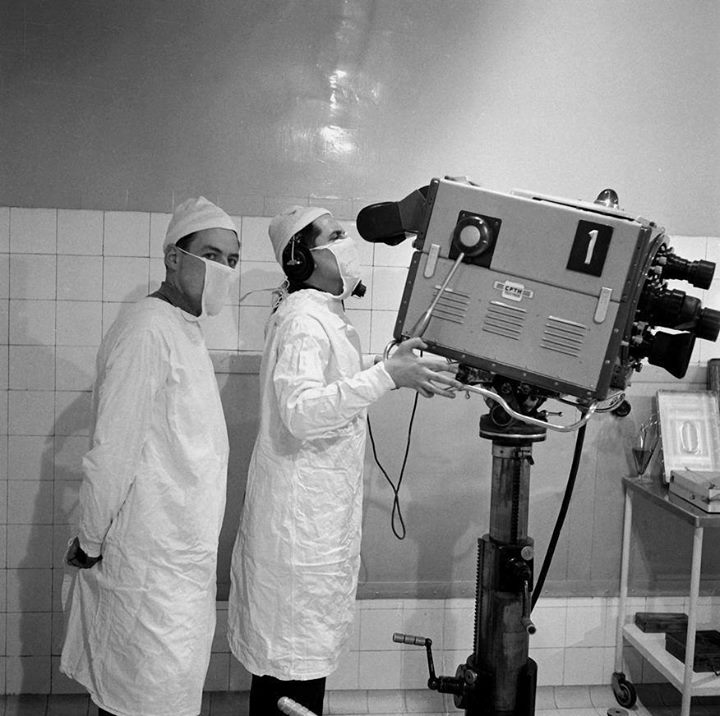
The French Connection
The French Connection
Thanks to Jorge Delendatti, our friend in France, here is another early Thomson camera at work. Designed and made in France, one of Thomson’s distinguishing features through the 1950s and 60s were the lifting handles they added to their cameras. Here, you can see them under the chassis with a thoughtful detente in the center for the hand hold.
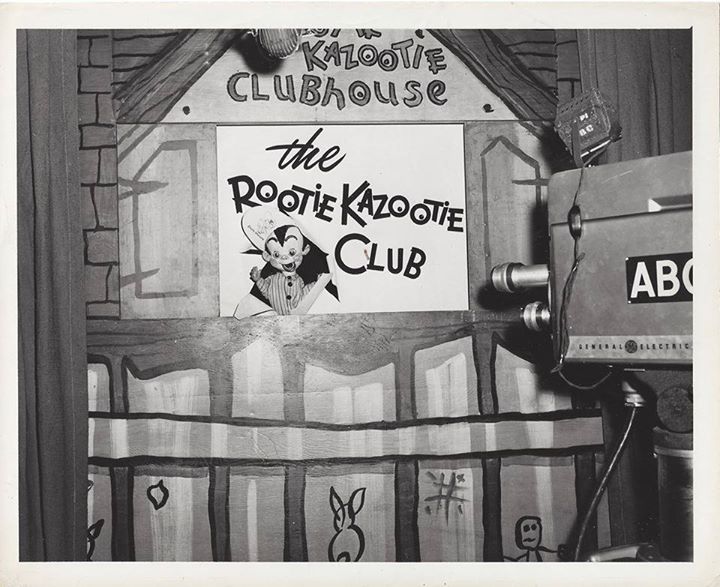
Remember Watching Rootie Kazootie?
Remember Watching Rootie Kazootie? I Do!
Did you know this was the first of two early children’s TV shows that introduced an interactive technique called “the magic screen”? The “magic screen” (a thick piece of green vinyl that you sent away for) would cling to the TV screen via static electricity. Kids could follow along with drawing and writing on “their side” the magic screen with a crayon. The second show was ‘Windy Dink And You’ in 1953. This show first aired locally as ‘The Rootie Tootie Club’ on New York’s NBC affiliate WNBT on October 14, 1950. Since the title character regularly used a magical kazoo, which he called his “Magic Kazootie,” the kids began calling him “Rootie Kazootie.” Following the kids’ lead, the names of the show and the character were changed with the December 26 show. The network began broadcasting it nationally on July 2, 1951. The show aired on NBC until November 1952, and was seen on ABC beginning in December. The last telecast was May 7, 1954. The link above it to a full 30 minute show from 1953 that came from ABC. Thanks to Maureen Carney for this rare photo.
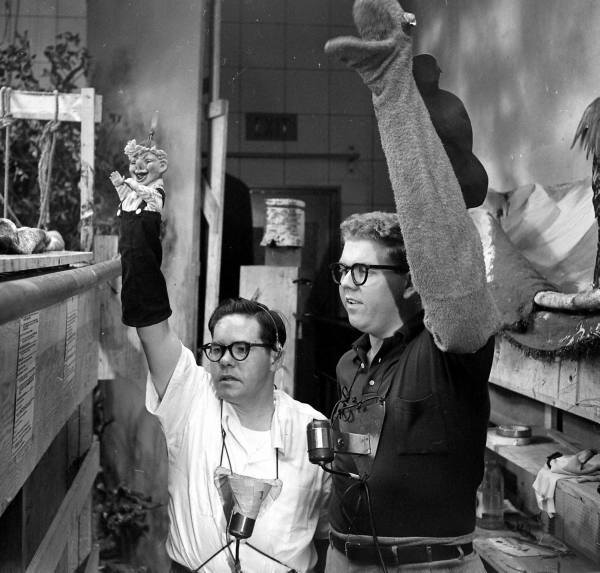
The Original Beany & Cecil
The Original Beany & Cecil
On the left is the voice of Beany, Daws Butler…on the right is the voice of Cecil, Stan Freberg. This photo was taken April 4, 1950 on the set at KTLA. More on the next post.
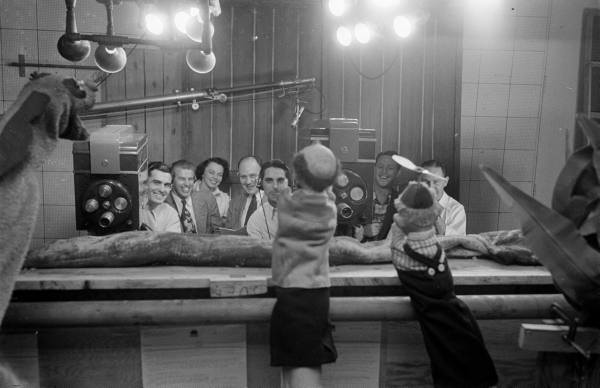
KTLA’S First Hit Show…’Time For Beany’
KTLA’S First Hit Show…’Time For Beany’
Beany and Cecil was created by animator Bob Clampett after he left Warner Bros., where he had been directing theatrical cartoon shorts. Clampett originally created the series as a puppet show called ‘Time for Beany’, which ran from February 28, 1949 to 1954 and originated at KTLA. ‘Time for Beany’ featured the talents of veteran voice actors Stan Freberg as Cecil and Dishonest John, and Daws Butler as Beany and Uncle Captain. This photo was taken on April 4, 1950…the cameras are RCA TK10s.
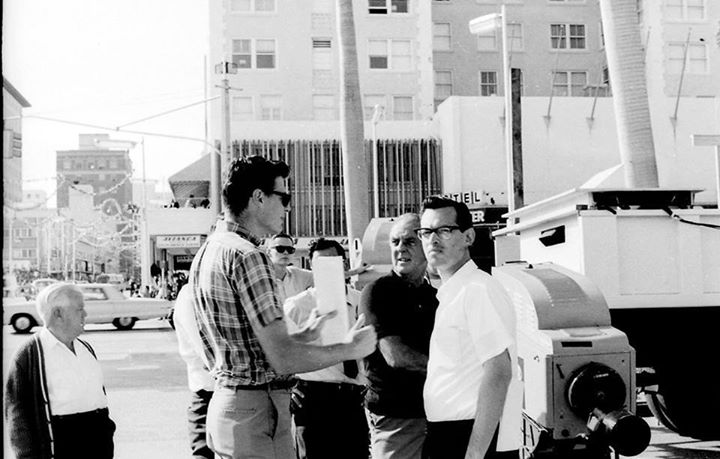
Orange Bowl Parade: December 31,1966
Orange Bowl Parade: December 31,1966
Thanks to David Zorning for this very interesting photo. In preparation for the CBS broadcast, two RCA TK1s are being set up. There were probably six cameras on the parade route and they had to belong to CBS as the first color cameras WTVJ had were Norelco and may have been bought in late 66. WTVJ was Florida’s first station and a long time CBS affiliate. I think only WPLG (ABC, Miami) had TK41s. Notice the CBS Color logo on the camera…that logo was created by CBS when the started loading up on Norelco cameras but they used it on their TK41s too.
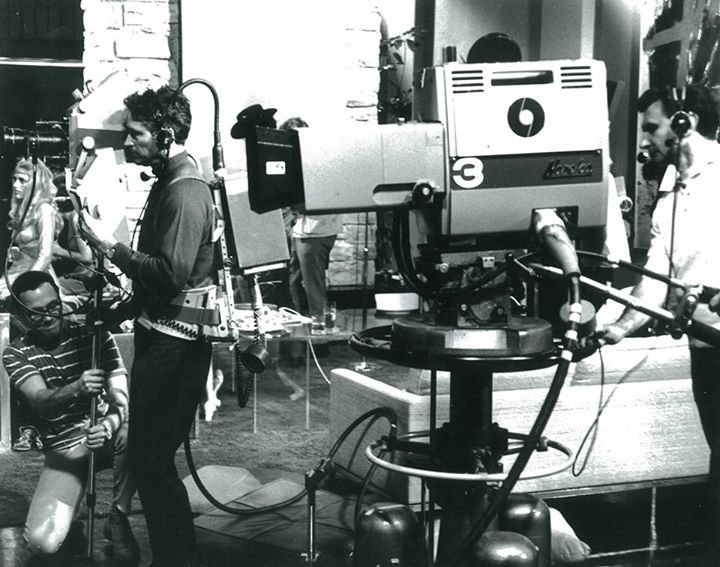
KTLA…’Solid Gold’
KTLA…’Solid Gold’
On September 13, 1980, ‘Solid Gold’ debuted and ran for eight years. The syndicated music show was taped at KTLA from 1980 till 1984 when it moved from the Golden West Studios to Paramount Studios. This photo from Judy Watson shows her husband Dick behind the Norelco PC70 and Dick Woods using the Norelco PCP 70. The link below is to the first episode of the show. Dion Warwick was the original host and Robert W Morgan was the first announcer. At the 5 minute mark, the countdown starts with quick cuts from a lot of songs you’ll remember. Enjoy and thanks to Judy for the photo.