ULTRA RARE! For The First Time Anywhere!
ULTRA RARE! For The First Time Anywhere!
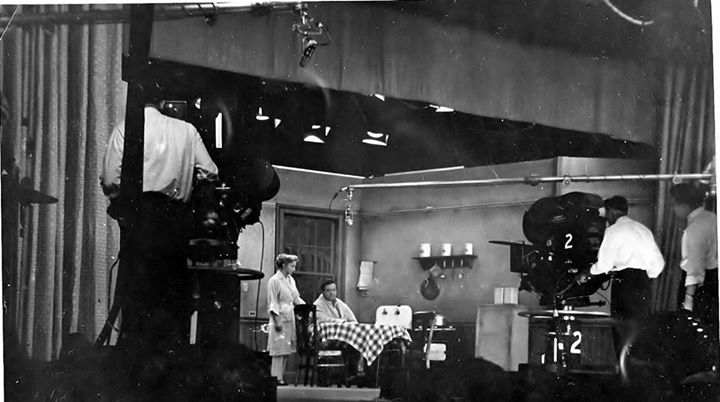
Although there are two similar photos of Jackie Gleason’s ‘Honeymooners’ being shot by these Dumont Electronicams, this one has never been seen before. It was taken by our new friend Peter J. Katz at the Adelphi Theater in November of 1955. The episode being filmed is Episode 7 of the “classic 39” titled ‘Better Living Through TV’ and up top is a link to the video. There is an extra bonus at 14:40 where a regular Dumont camera is on the set.
This photo is rare on many levels. Gleason usually did only one rehearsal and this was taken during that one runthrough of ‘Better Living’. In case you have never seen a Dumont Electronicam, this is a Dumont television camera with a Mitchell 35MM movie camera mounted along side and both are shooting through a shared lens.
In the photo, Ralph is trying to convince Alice to go along with him on yet another get-rich-quick scheme – selling Handy Housewife Helpers on TV…this comes at around 11 minutes in, in the video. This features a rare gone-wrong moment when one of the gadgets flies off the handle, forcing Gleason to retrieve it and then ad-lib his way back into the scene. When airtime comes, Ralph suddenly contracts a bad case of stage fright.
Soon, more rare photos from Peter J. Katz, all of which are copyrighted and we thank Peter for sharing. Enjoy and share! -Bobby Ellerbee

‘Wheel Of Fortune’…Behind The Scenes, 1988 Part 1
‘Wheel Of Fortune’…Behind The Scenes, 1988 Part 1
Tomorrow, I’ll post part two which follows the show to New York for a week of taping there, but for now…welcome to NBC Burbank Studio 4, which was also home to Dean Martin.
The cameras are RCA TK47s and we get a good look at the studio in the first minute and again just before the 7 minute mark. For Vanna White fans, there’s a lot of this Atlanta girl here to enjoy and, of the show’s producer Nancy Jones. Tomorrow, we meet the show’s director, Dick Carson…Johnny’s brother. Enjoy and share! -Bobby Ellerbee
https://www.youtube.com/watch?v=ryV1yGk4xz4
Aired November 12, 1988. Some of the backstage faces seen in this special are announcer M.G. Kelly, producer Nancy Jones, director Dick Carson (Johnny’s brot…
The NBC Color Caravan Story…June 9 – August 11, 1954
RARE! The NBC Color Caravan Story…June 9 – August 11, 1954
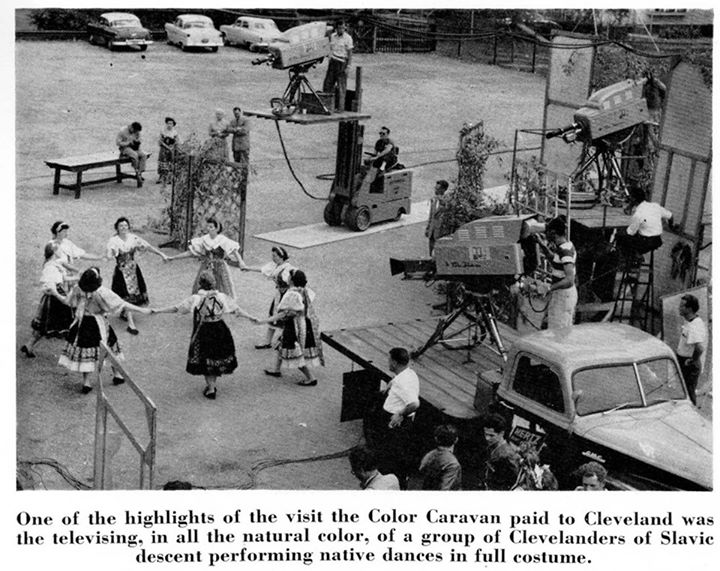
Some have heard about this, but for those that haven’t, we finally have the NBC Chimes Magazine article from August of ’54, thanks to our friend Dicky Howett in The UK.
RCA and NBC were proud as peacocks with their new color abilities and took the first two color trucks on the road for a month of live colorcasts that were carried on ‘Today’ and ‘The Home Show’.
On July 9, a crew of eighteen men did the tour’s first color remote from St. Louis as the local stations and major department stores along the way were pre stocked with RCA color monitors and sets for sale and display. The cities they visited also included Milwaukee, Chicago, Columbus, Cleveland, Washington DC, Baltimore and Ft. Meade Maryland. Enjoy and share! -Bobby Ellerbee


September 18, 1927…The CBS Radio Network Debuts
September 18, 1927…The Second Radio Network Debuts
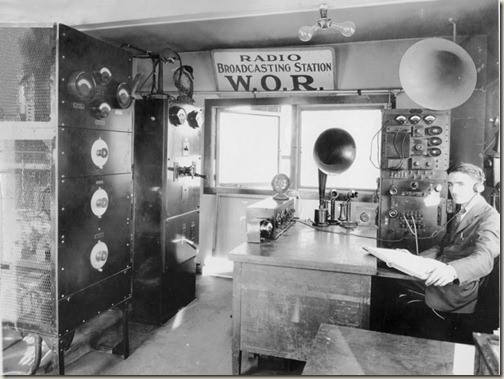
87 years ago today, The Columbia Phonograph Broadcasting Company went on the air with a 16 station network (list below).
What we now know as CBS actually started on January 27, 1927, as United Independent Broadcasters, Inc., when talent agent Arthur Judson, unable to obtain work for any of his clients on the radio programs carried by NBC, established his own network…United Independent Broadcasters.
Even before United got started, the Columbia Phonograph Co. had become interested in the venture. The Columbia Phonograph Broadcasting System, which was to act as sales agent for United, was organized in April of 1927. United contracted to pay each of the original 16 stations $500 per week for 10 hours of radio time. Soon the sales agent could not sell enough air time and the network was near collapse after only a few months.
Plagued with mounting financial losses, the network was purchased for a modest $400,000 by William S. Paley, whose father owned the company that made La Palina cigars, one of the network’s principal advertisers. On January 18, 1929, the newly christened Columbia Broadcasting System signed on the air.
Sunday, September 18, 1927: The Columbia Phonograph Broadcasting Company made its debut at 3 PM EST.
16 stations were on board for Opening Day.
Originating station: WOR Newark
Other Stations:
WEAN Providence
WNAC Boston
WFBL Syracuse
WMAK Buffalo-Lockport
WCAU Philadelphia
WJAS Pittsburgh
WADC Akron
WAIU Columbia
WKRC Cincinnati
WGHP Detroit
WMAQ Chicago
KMOX St. Louis
WCAO Baltimore
KOIL Council Bluffs
WOWO Fort Wayne
Enjoy and share! -Bobby Ellerbee
A Rare, One Of A Kind Moment On ‘The Match Game’!
A Rare, One Of A Kind Moment On ‘The Match Game’!
At last, we see our friend Dick DeBartolo at his post on the set next to Gene Rayburn in NBC Studio 8H on the original run of the show. Dick was the man who wrote all the questions for the show from the time it started till the end of it’s run on CBS.
Dick is also one of MAD Magazine’s top writers and again, has been there almost from the beginning. With that said, wait till you see the fun explode when a frequent guest of the show, Lauren Bacall, reveals that Mr. Debartolo is her “secret passion”!
The video’s quality is lacking but not the content of this rare scene. Thanks to Dick for posting this. Enjoy and share! -Bobby Ellerbee
https://www.youtube.com/watch?v=JHOBcqaOXCk
Lauren Bacall was a frequent guest on Match Game. She was great. On this show she tells Gene Rayburn that I’m her ‘secret passion’.I spent months looking for…

‘Wheel Of Fortune’…Pilot Number 2…1974
‘Wheel Of Fortune’…Pilot Number 2…1974
‘Wheel Of Fortune’ premiered as a daytime series on NBC on January 6, 1975, and continued to air on the network until June 30, 1989, but not before some major reworking of the original pilot we see in today’s first post.
In this second pilot, Ed Byrnes, the actor who played “Kookie” on the ’77 Sunset Strip’ series, served as host for the second pilot which by now was titled ‘Wheel of Fortune’, and was directed by Marty Pasetta, who gave the show a “Vegas” feel that more closely resembled the look and feel that the actual show ended up having.
Now the wheel was mounted horizontally and spun by the contestants themselves, and had a lighted mechanical puzzle board with letters that were now manually turnable. Showcase prizes were located behind the puzzle board, and during shopping segments a list of prizes and their price values scrolled on the right of the screen.
I think there was actually a third pilot that kept the new set but was shot with the host of the first pilot, Chuck Woolery. NBC had liked Chuck and the new set, so the did one more pilot that combined the two, just as a demo and production began in December 1974.
Susan Stafford turned the letters on Byrnes’ pilot episode and continued there when the show went to air on NBC with Woolery as the hose and Charlie O’Donnell as its announcer.
O’Donnell left in 1980, Woolery in 1981, and Stafford in 1982; they were replaced, respectively, by Jack Clark, Pat Sajak, and Vanna White. After Clark’s death in 1988, M. G. Kelly took over briefly as announcer until O’Donnell returned in 1989; O’Donnell remained on the network version until its cancellation, and continued to announce on the syndicated show until his death in 2010, after which he was replaced by Jim Thornton, who has been the announcer since.
Sajak left the network version in January 1989 to host his own late-night talk show, and was replaced on that version by Rolf Benirschke. Bob Goen replaced Benirschke when the network show moved to CBS, then remained as host until the network show was canceled altogether. The syndicated version has been hosted continuously by Sajak and White since its inception. Thanks to James Barr for the video. Enjoy and share! -Bobby Ellerbee
‘Wheel Of Fortune’…Pilot Number 1…1973
‘Wheel Of Fortune’…Pilot Number 1…1973
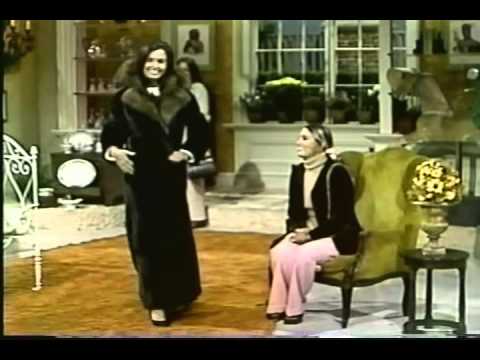
Merv Griffin shot three pilot episodes for ‘Wheel Of Fortune’…this is the first and at the time the show was called ‘Shopper’s Bazaar’ and was hosted by Chuck Woolery. In the next post, we’ll see the second pilot hosted by Ed “Kooky” Burns, but here’s how this all came about.
Griffin conceived ‘Wheel of Fortune’ just as the original version of Jeopardy!, another show he had created, was ending its 11-year run on NBC with Art Fleming as its host.
Griffin decided to create a Hangman-style game but it needed a “hook”. He decided to add a roulette-style wheel because he was always drawn to such wheels when he saw them in casinos and had a friend at Caesars Palace build one for them and as you’ll see, the original wheel was mounted vertically.
When Griffin pitched the idea for the show to Lin Bolen, then head of NBC’s daytime programming division, she approved, but wanted the show to have more glamour to attract the female audience; she suggested that Griffin incorporate a shopping element into the gameplay, and so, in 1973, he created a pilot episode titled ‘Shopper’s Bazaar’, with Chuck Woolery as host and Mike Lawrence as the announcer.
As you probably know, ‘Wheel of Fortune’ ranks as the longest-running syndicated game show in the United States, with over 6,000 episodes aired. This is how it started, but there’s more on how it all came together in today’s next post. Enjoy and share! -Bobby Ellerbee
https://www.youtube.com/watch?v=0n896dobPzg
Here are the first few minutes of the woefully awful beginnings of Wheel of Fortune. There are prizes, a puzzle board and Chuck Woolery, but otherwise it’s a…
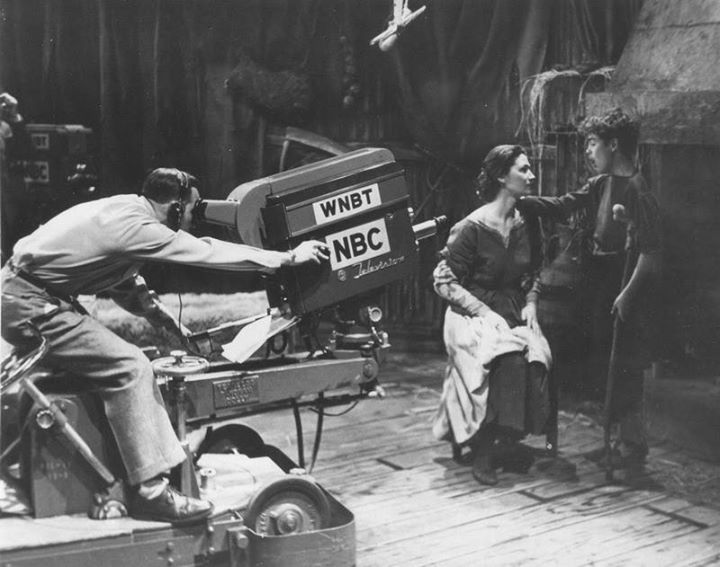
The First Hallmark Sponsorship…’Amahl And The Night Visitors’
The First Hallmark Sponsorship…’Amahl And The Night Visitors’
At 9:30 PM on December 24, 1951, in NBC Studio 8-H, the first opera ever written expressly for television went live on the air. The sponsor for the NBC holiday spectacular was Hallmark Cards. This was their first venture into television and this lead to the development of the now famous ‘Hallmark Hall Of Fame’ series.
In the photo below, we see one of the four cameras used on the show in 8H shooting the child lead, Chet Allen. In researching this, I’ve come across an interesting description of that night in 8H and have included Mitchel Hadley’s account below.
Christmas Eve in a TV Studio
The scene was a dramatic one – and, par for the course for early television, far from ideal. For one thing, although 8-H was the largest television studio in America, it wasn’t nearly large enough for the cast, crew, and musicians. The result, among other things, was that singers and orchestra would have no direct contact with each other. The orchestra was located in Studio 8G…the conductor could see the action on the set via the monitors while the singers would hear the music piped in through speakers in the studio.
Up in the control room would be Director Kurt Browning. At his disposal were four cameras – three inside the “hut” where Amahl and his mother lived, and one outside – and three boom microphones, one between each camera. His “control” was far from absolute, however; union rules of the era prevented the director from speaking directly to the cameramen, requiring him to go through the technical director to communicate his instructions. Such an arrangement was a recipe for disaster, especially for a live broadcast. Menotti was no stranger to the challenges of television, though, and he and Browning worked closely on the camera script, ensuring that there would be no spare gesture, no extraneous movement that would throw an actor out of frame.
The cumbersome equipment of the time would also prove to be a challenge, as Browning recalled in a 1994 interview. “As I remember, I had pedestal cameras which weighed four to five hundred pounds and a dolly camera that weighed another seven to eight hundred pounds. Movement was limited, however, for “once you got over a 90mm lens, you couldn’t move the camera because the movement registered on the camera and you would lose focus almost immediately.”
On the set itself the cast, after a month of preparation and anticipation (but only four actual days in the studio), was ready.
When the camera light winked on at 9:30, viewers saw a blurred image of church bells, followed by a title card announcing that the following program was presented by Hallmark. It is often stated that the actress Sarah Churchill hosted that first broadcast, since she subsequently served as host of Hall of Fame for the first couple of years, but in fact it was Nelson Case, host of NBC’s Armstrong Circle Theater, who greeted the audience. (Amahl was, in fact, being presented in Armstrong’s regular Tuesday night time slot.) After a solemn, if overlong, introduction, Case presented Menotti, who stood on a set in front of a fake fireplace decorated with garland, the Bosch painting hanging over the mantle.
Speaking from notes and in Italian-accented English, Menotti said he hoped that parents had allowed their children to stay up late for the broadcast, since the opera had been written for them and “I don’t want you to be like those awful parents who insist on playing with their children’s toys.” He then introduced the people who had helped make Amahl possible, asking them to join him on camera since the audience “won’t see [them] while the opera goes on”: Browning, who “photographed this opera the way I saw it in the windows of my imagination,” Schippers, who “captured the sounds of my childhood,” and set designer Eugene Berman, “who designed the sets that come straight out of my own heart.”
As a series of handwritten slides (taking a moment to come into focus) introduced the cast and crew, the overture began in the background – a tender, moving melody that soon gave way to the sound of a pipe. The camera dissolved to a star high in the sky, and then slowly panned down to a young boy playing the pipe. Amahl and the Night Visitors had begun.
Here it is worth noting that the broadcast features a fascinating attempt at a primitive “special effect.” Menotti wanted the approach of the Kings to suggest a journey of a great distance. The entrance of the Kings began, therefore, with only their voices being heard. While Amahl and his mother lie sleeping, the camera zoomed in on a close up of Rosemary Kuhlmann. Then, using her back as a movie screen, a pre recorded film of the Kings’ entry was projected. Browning then cut to a shot of Kuhlmann from a different angle, while the lyrics “the shepherd dreams inside the fold” were sung – suggesting, subtly, that the Kings might be nothing more than a dream. It was a complex effect, sophisticated for the time, especially for live television. It’s not known how many times this effect was used in subsequent broadcasts of Amahl; by 1955 it had been replaced by a simple cut from the inside of the hut to the outdoor set.
This was done live each year for many years till video tape came along. In 1954 was done in color and in ’63, finally recorded on color video tape. More interesting photos from Amahl soon! Enjoy and share! -Bobby Ellerbee

‘NBC News Overnight’…The Final Minutes & More
‘NBC News Overnight’…The Final Minutes & More In Two Video Clips
Many have called this “the best written, best executed news program ever produced”. I agree…I watched it every night. Before I get too far along, at the link above, Linda Ellerbee talks about ‘Overnight’ in the same style that endeared her to so many. The embedded video is the last few minutes on the air and the full 60+ staff and crew credits with video of all of them! You may see some familiar faces!
‘NBC News Overnight’, a live one-hour news program, aired from 1:30 till 2:30 AM for about seventeen months starting on July 5, 1982. Its debut coincided with a lunar eclipse, and despite science reporter Robert Bizel’s disappearance during the live broadcast (he went for some coffee), it was a success from the first night.
It never talked down to its viewers because, from day one, it never assumed that the lowest common denominator was the way to go. Entirely the opposite, in fact. The writing was crisp, witty, and smart. Overnight closed its doors in the first week of December 1983, after NBC management dropped it because of low ratings.
The first co-anchors, co-writers, and co-editors for Overnight were Linda Ellerbee and Lloyd Dobyns, who had, a few years previously, co-written and co-hosted Weekend, an offbeat weekly magazine for NBC.
After about six months of helping to shape Overnight, Dobyns left to do other work for NBC. Bill Schechner ably took his place as co-anchor and co-writer until ‘Overnight’ went off the air.
‘Overnight’ featured literary quotations, subtitled reports from overseas news programs for a new perspective, the best features (or sometimes just the silliest) from local affiliates, and a whole grab bag of things never before seen on national news programs. As Bill Schechner said on the final program, it proved that there is more than one way to deliver and to receive the news. Overnight must have been puzzling to some, though, because it had an unexpected mix of both seriousness about important issues and irreverence for nonsense.
As with any live broadcast, goofs occurred from time to time on the program. However, the anchors always made the best of it. They would chuckle instead of becoming mortified and simply corrected their mistakes, often injecting a bit of humor. Ellerbee once said this on the program after one such mistake:
“Live TV is a great time saver. It allows you to make a fool of yourself in front of large groups of people instead of one at a time.”
Shortly after Dobyns left, an NBC News executive suggested to Ellerbee that she take Lloyd’s seat now that she was the senior anchor. Ellerbee said she felt no need for that, but agreed to give it a try. Some nights later, she returned to her old spot. During that broadcast, she explained, after showing a tape of her position changes:
“Lately, you may have noticed a bit of musical chairs being played on this program. But in three nights, I have spilled three cups of coffee because the coffee was where it should be, but I was not. So I have moved back. And if the executives don’t like it, they may jolly well come and do the show and spill their own coffee.”
A year and a half after its birth, NBC decided to cancel Overnight in November 1983, due to low late night ratings and corresponding lack of ad revenue. In the following days and weeks, thousands of viewers (ten thousand, to be exact) called and wrote letters or telegrams of protest to NBC management. Some even sent checks and cash to defray the costs of producing the program (all the money was returned).
NBC’s news release on the program’s cancellation said the program remained “the model of a one-hour news program,” but it was being canceled because “being the best is not enough”. And so it goes!
By the way, Linda is a distant cousin of mine through marriage. Even if she wasn’t related, I would still think she’s still one of the best and most unique in the business! Enjoy and share! -Bobby Ellerbee
#t=37″ target=”_blank”>https://www.youtube.com/watch?v=cKBMuyZFmhQ #t=37
For all the devoted Overnight fans out there, this is (in parts) the last Overnight broadcast, with Linda Ellerbee and Bill Schechner. In this part, say bye-…
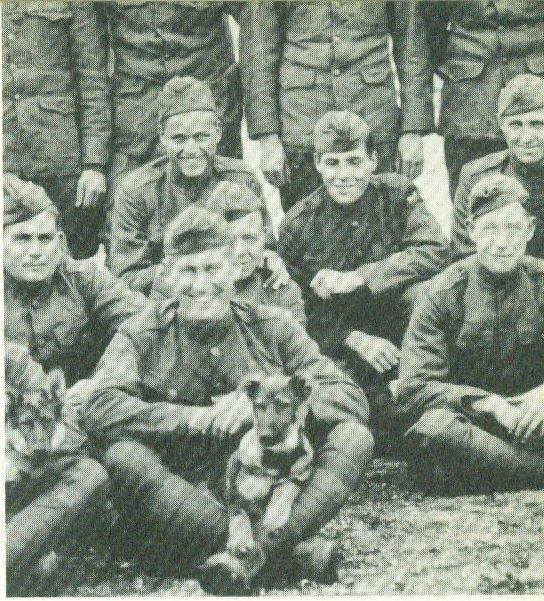
How Rin Tin Tin Got His Name & More…
How Rin Tin Tin Got His Name & More…96th Anniversary & Video
If you are like me, you’ve always wondered where this great dog actor got his odd name. After I tell you about the name, we’ll look at some of the history and a full episode of the TV show, but now…let’s go to Lorraine, France. The year is 1918 and these are the last few months of World War I.
An American soldier named Leland Duncan was stationed in the Meuse Valley and had been ordered to search a bombed-out German encampment. Inside one of the ruined buildings, Duncan found a German Shepherd cowering with her two pups, which were only a few days old. He named the pups Rin Tin Tin and Nanette, after little yarn puppets that the French children played with. They gave these puppets to American soldiers as good luck charms.
In the photos below, we see Corporal Duncan with Rin Tin Tin as a pup on their return to the states and a postcard with Rin Tin Tin and Natalie. The puppets were actually characters from a French children’s book that came out before the war.
Nanette died shortly before Duncan made it home to Los Angeles, but Rinty, as Duncan called him, became a beloved pet.
After the war, Duncan began entering Rin Tin Tin in local dog shows. At one show, an inventor wanted to try out his new slow-motion movie camera, so he filmed the dog scaling a 12 foot wall. It struck Duncan that maybe he had a future movie star on his hands, so he wrote a silent movie script featuring the dog and shopped it around at various studios.
He was turned down by all of them. Then one day he was out walking with Rin Tin Tin when he came upon a film crew trying to shoot a scene with a wolf hybrid. The wolf wasn’t cooperating, so Duncan suggested that he and his dog could do the scene in one take. He was true to his word, and Rin Tin Tin had his first big break. He later signed a deal with Warner Brothers, and the dog had his first starring role in ‘Where the North Begins’ in 1923.
In addition to 26 feature films, Rin Tin Tin starred in a radio program, ‘The Wonder Dog’, in 1930, in which he did his own barking and other sound effects. The original Rinty died in 1932, and his son, Rin Tin Tin Jr., took over the role in his place. The immense profitability of his films helped make Warner Brothers Studios a success and advanced the career of Darryl F. Zanuck. In 1929, Rin Tin Tin may have received the most votes for the first Academy Award for Best Actor, but the Academy determined that a human should win and never released the vote totals.
In 1954, ‘The Adventures of Rin Tin Tin’ came to television. The show ran for five seasons on ABC on Friday evenings from October 1954 to May 1959. ABC reran the series on late afternoons from September 1959 to September 1961 and that’s where I remember watching this. How about you?


From Kinescopes to Digital Cinema
The Latest Article From Richard Wirth…”From Kinescopes To Digital”
Television’s main technical challenge has always been, how to deliver the best image. That has not been easy given the need for time delays in the broadcast world and in this article, Richard does a fine job of bringing us through the many steps that have lead us to where we are now. Enjoy and share! -Bobby Ellerbee

Barbra Streisand Returns To ‘Tonight’ First Time In 50 Years
Set Your DVR Now…Barbra Streisand Returns To ‘Tonight’, 51 Years Later!
Just two weeks ago, I posted her first ever network appearance on ‘Tonight With Jack Paar’, with Orson Bean as a guest host. That was in 1961.
Her next appearance on ‘Tonight’ was during the guest host period between Paar and Carson with Groucho Marx on August 21, 1962. Carson debuted as host on October 1, 1962 and three days later, Barbara made her third appearance. Her sixth and final appearance was March 5, 1963.
Tomorrow night, she will be the only guest and this should be very interesting! Here’s the Washington Post story…enjoy and share!
-Bobby Ellerbee
Barbra Streisand is going to be on the ‘Tonight Show’ for the first time in more than 50 years
She’s promoting a new album, and she’ll be the only guest for the entire evening.
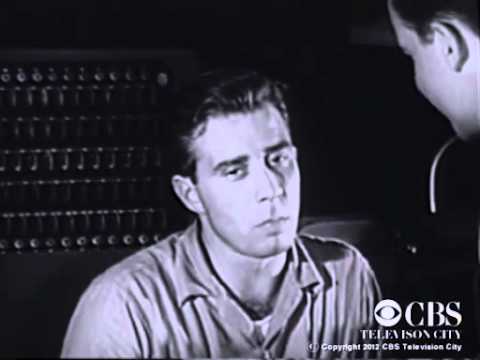
A Tour Of CBS Television City With Edward R. Murrow
A Tour Of CBS Television City With Edward R. Murrow
This is a November 1953 broadcast of ‘See It Now’. In the first part of this half hour show, we’ll see the extensive and state of the art lighting in Studio 31, Art Linkletter’s show in Studio 41 and Jack Benny rehearsing upstairs in the space where James Cordon’s “Late, Late Show” is now done. We’ll also see “My Friend Irma” (one of the first network shows to originate at TVC) in production in Studio 43.
In the second half, we continue with Jack Benny rehearsals, but quickly move to the huge scenery and paint shop. We’ll visit camera maintenance and get up close and personal with a new RCA TK11. After that, we go to Telecine, see a fabulous custom patch panel and we’ll get to spend about five minutes on the set of “My Favorite Husband” for camera rehearsals in Studio 33. Enjoy and share! -Bobby Ellerbee
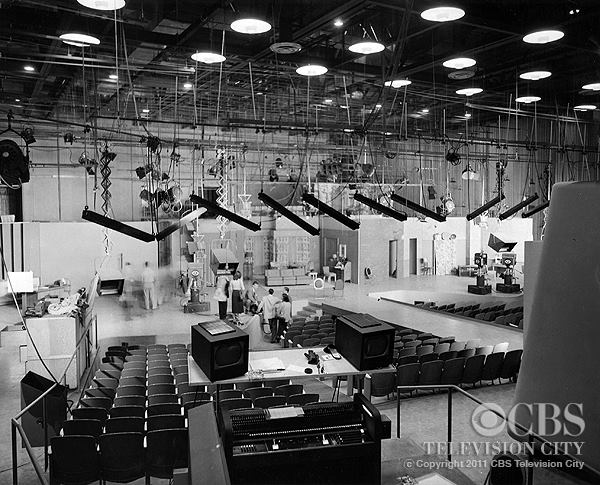
CBS Television City’s First Series…’My Friend Irma’
CBS Television City’s First Series…’My Friend Irma’
Here’s the set of ‘My Friend Irma’ on the brand new Studio 31 stage, but before we get to the studio, take a look at the set. This may have been the first time this horizontal production process was used in television. With all the “rooms” laid out in a row, the cameras could move up and down the stage for different scenes. In New York, many soap and sit com sets were built like rooms in a house as stage space was limited. For most of it’s 20 year run, NBC’s ‘The Doctors’ set was in rooms and not on the long set like this.
This was the first series telecast from TVC and ran from January 8, 1952 until June 1954. This is Studio 31’s original configuration with a camera ramp that went all the way to the control room with space at the rear for cameras too. That I know of, CBS was the only network to use the long hanging banks of flood lights. In the foreground, we see the lighting board and in today’s next post, we’ll see it in action as Edward R. Murrow takes us on a tour of the new facilities. Enjoy and share! -Bobby Ellerbee

NBC Legend Harry Coyle…Power Outage Takes All But One Camera!
NBC Legend Harry Coyle…Power Outage Takes All But One Camera!
This amazing video starts a few seconds before the NBC Sports truck loses power. It was shot by NBC producer Rick Reed and here is what Rick wrote about this event:
“In 1982, we were producing a pre-game segment for NBC’s Game of the Week on director Harry Coyle. Our battery powered camera was in the truck when the power went out. It is the top of the ninth inning of a shootout between Milwaukee and Boston at Fenway Park. This twelve minute raw segment contains the PL lines of director Harry Coyle and producer Michael Weisman. After power is restored, the truck only has one camera and nothing else.”
The cameramen were Mario Ciarlo, Lenny Basile, Buddy Joseph and Lou Gerard and as you’ll see, it all came down to Mario…his was the only camera working and here’s how he covered the rest of the game…solo.
Director Harry Coyle (1922-1996) pioneered the look of baseball on television. He directed 36 World Series over a 42 year career. Below is a very good New York Times story on Harry and his crew from October 4, 1983.
Thanks to Steve Mangiaracina for the Rick Reed info. Enjoy and share! -Bobby Ellerbee
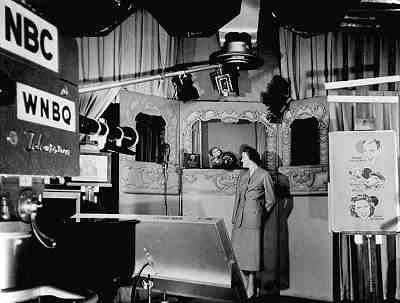
Who Knew? Zoomar Long Lenses Were Used In The Studio…
Who Knew? Zoomar Long Lenses Were Used In The Studio…
The first example I ever saw of this was when I discovered some rare photos of ‘Kukla, Fran And Ollie’ being done at WNBQ in Chicago. That was the first time this was done and the lens inventor, Dr. Frank Back even paid a visit to the studio to see it in action in 1949.
‘KFO’ started in ’47 on WBKB, but moved to WNBQ in November of ’48 and I think the idea of the field zoom came shortly after that and just before the show was picked up by the NBC network January 12, 1949. Here’s a look through that lens at this clip and notice the crew laughing…standard fare as this show had a lot of adult viewers too.
The Zoomar Field lens was a huge 27 element zoom that, as the name implies, was meant for field use, but inside, it gave a smooth and unique look to images. I think all these photos are from before 1952 because that’s about the time two smaller Zoomar studio zoom lenses came into use.
As we see here, CBS did the same and later, local stations like Cleveland’s WXEL (now WJW) followed suit. Anybody here ever use this lens? Enjoy and share! – Bobby Ellerbee


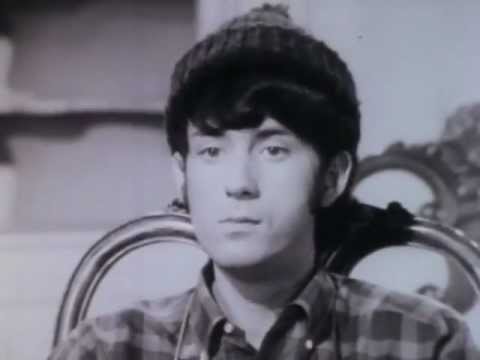
September 13, 1966…’The Monkees’ Debuts On NBC
September 13, 1966…’The Monkees’ Debuts On NBC
Before the background, a note on the video. At the start is some of the screen test shots of the guys and this is followed by the series pilot which never aired. The theme song is a demo by Boyce and Hart. Don Kirshner was in charge of the music for the show. Enjoy and share! -Bobby Ellerbee
Although the series only ran from ’66 till ’68, it was indeed the start of something big. Aspiring filmmaker Bob Rafelson developed the initial idea for The Monkees in 1962, but was unsuccessful in selling the series, but then came The Beatles ‘A Hard Days Night’ and everything changed.
The show was sold to Screen Gems Television on April 16, 1965. Rafelson’s original idea was to cast an existing New York based group, The Lovin’ Spoonful, which was not widely known at the time, but the canny John Sebastian had already signed the Spoonful to a record company, which would have denied Screen Gems the right to market music from the show on record.
On July 14, 1965, The Hollywood Reporter stated that future band member Davy Jones was expected to return to the United States in September 1965 after a trip to England “to prepare for a TV pilot for Bert Schneider and Bob Rafelson.”
Jones had previously starred as the Artful Dodger in the Broadway show ‘Oliver!’, which began on December 17, 1962, and his performance was later seen on The Ed Sullivan Show the same night as The Beatles’ first appearance on that show, February 9, 1964. He was Tony-nominated for best supporting actor in a musical in 1963.
In September 1964, he was signed to a long-term contract to appear in TV programs for Screen Gems, make feature films for Columbia Pictures and to record music for the Colpix label. Hence, Rafelson and Schneider already had him in mind for their project after their plans for the Lovin’ Spoonful fell through; when they chose him, he was essentially a proto-star looking for his lucky break.
On September 8–10, 1965, Daily Variety and The Hollywood Reporter ran an ad to cast the remainder of the band/cast members for the TV show: “Madness!! Auditions. Folk & Roll Musicians-Singers for acting roles in new TV series. Running Parts for 4 insane boys, age 17-21. Want spirited Ben Frank’s types. Have courage to work. Must come down for interview.”
Out of 437 applicants, the other three chosen for the band/cast of the TV show were Michael Nesmith, Peter Tork and Micky Dolenz. Nesmith had been working as a musician since early 1963, and had been recording and releasing music under various names, including Michael Blessing and “Mike & John & Bill” and had studied drama in college; contrary to popular belief, of the final four, Nesmith was the one member who actually saw the ad in the Daily Variety and The Hollywood Reporter.
Tork, the last to be chosen, had been working the Greenwich Village scene as a musician, and had shared the stage with Pete Seeger; he learned of The Monkees from Stephen Stills, whom Rafelson and Schneider had rejected.
Dolenz was an actor who had starred in the TV series ‘Circus Boy’ as a child, using the stage name Mickey Braddock, and he had also played guitar and sung in a band called “The Missing Links” before the Monkees, which had recorded and released a very minor single, “Don’t Do It.” By that time, he was again using his real name of Micky Dolenz; he found out about The Monkees through his agent.

Introduction Of The Auricon Pro 1200
Now This Is Interesting! Introduction Of The Auricon Pro 1200
We don’t spend much time on film cameras here, but this is such an interesting piece of film, I thought you would like to see it. Thanks Steve Williams for sharing this.
At first, I thought the “studio finder” was perhaps an electronic video camera used as a video assist, but after seeing this a second time, I think it is just a large ground glass optical viewfinder. I have seen a couple of these in person, but never knew there were small lenses in the center of the turret for the cameraman’s eyepiece. You learn something new every day! Enjoy and share! -Bobby Ellerbee
Source
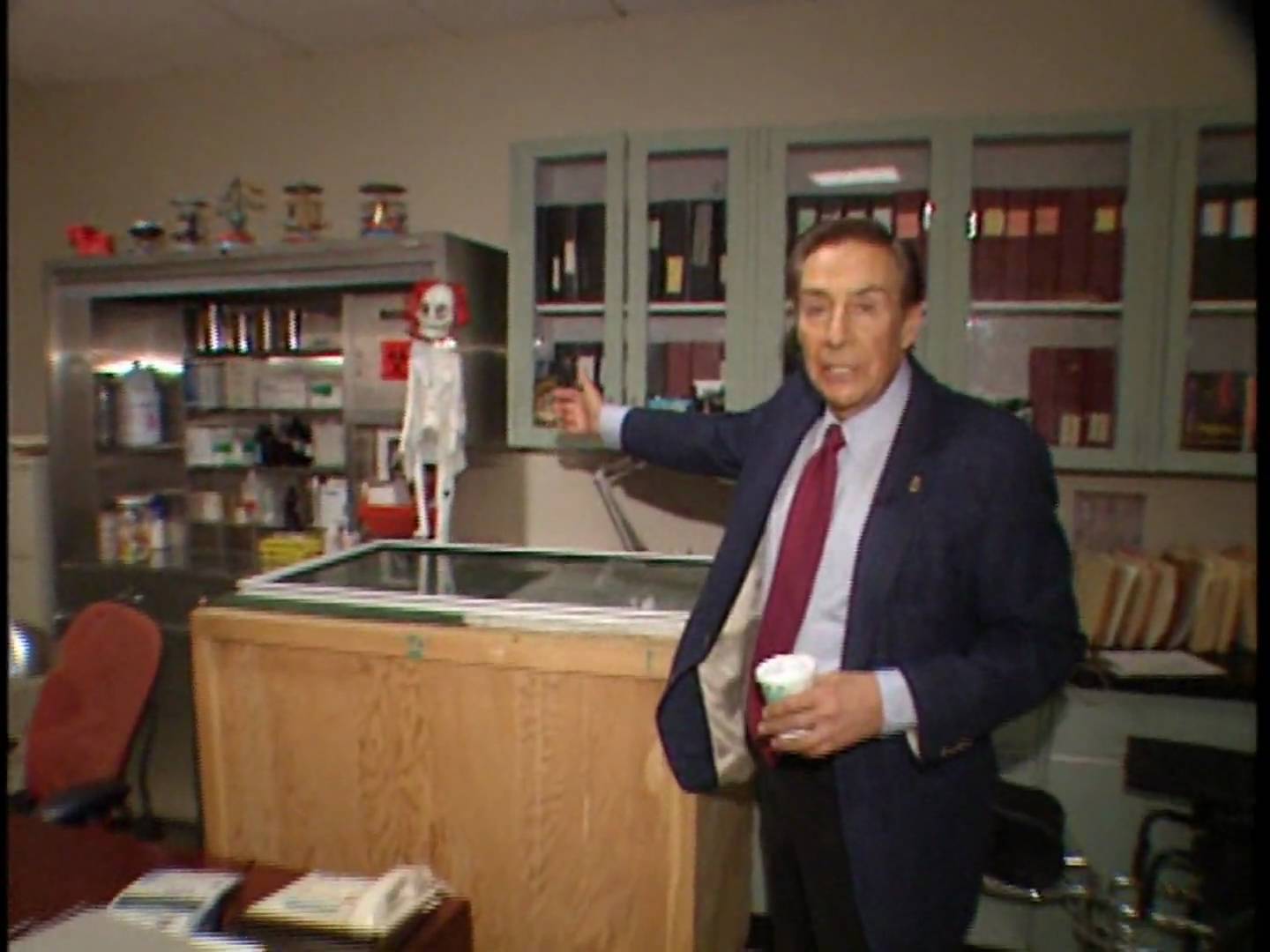
‘Law And Order’…A Tour Of The Set With Jerry Orbach
‘Law And Order’…A Tour Of The Set With Jerry Orbach
Since we are celebrating the September 13, 1990 debut of the show, I thought we should see this again…the best ever set tour with the show’s best ever detective, Lennie Briscoe. Enjoy and share! -Bobby Ellerbee
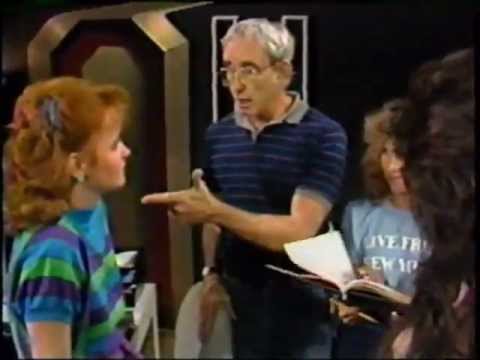
‘Search For Tomorrow’…The LIVE Episode!
Very Interesting! ‘Search For Tomorrow’…The LIVE Episode!
On August 4, 1983 the master tape and back up copy of one of the show’s daily episodes went missing! By now the show had moved to NBC from CBS and WNBC’s Jack Cafferty is reporting here on the event of doing a live show. Even Don Pardo is there live, but NOT at NBC! They were at Reeves Teletape and the cameras are RCA TK46s.
As our friend Chuck Snitchler explains; “Although Search had switched networks, it was still produced at the CBS Broadcast Center at 524 West 57th St. in Manhattan until December 1982. By late December 1982 or January 1983, NBC relocated the show’s production to the Reeves Teletape Studio on Broadway and West 81st St., the former home of Sesame Street (which had relocated to the former WNET-TV studios at 9th Ave and 55th St.). However, in March 1985, production of the show moved to the former Edge of Night studio at the EUE/Screen Gems Studios at 222 East 44th St., where it remained for the rest of its run.”
More than likely, the tapes were hidden by the shows producers and the live event was just a way to get some free publicity. Enjoy and share!
https://www.youtube.com/watch?v=GsTmfQ_croA
News report on CPC’s Sid Hoffman running the teleprompter on the set of Search for Tomorrow.