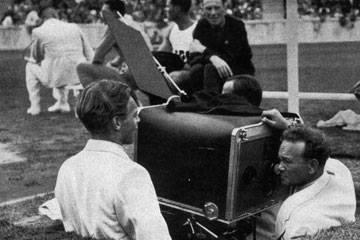
August 9, 1936…Jesse Owens Won His 4th Gold Medal In Berlin
August 9, 1936…Jesse Owens Won His 4th Gold Medal In Berlin
The first live television coverage of a sports event in world history occurred during the 1936 Summer Olympics in Berlin, Germany. These games were televised by two German firms, Telefunken and Fernseh.
Telefunken’s two large stationary cameras were based on RCA technology and the single, smaller Fernseh “roving” camera was based on Philo Farnsworth’s system.
Below, the dark camera is the Fernseh camera and was a bit smaller than the big white Telefunken cameras. Both systems broadcast at 180 lines and 25 frames per second. Four different areas were telecast using three cameras. In total, 72 hours of live transmission went over the airwaves to special viewing booths, called “Public Television Offices” in Berlin and Potsdam.
The cameraman looking into the viewfinder on the Telefunken is Walter Bruch who later went on to develop the Phase Alternation Line System or PAL that was initially adopted by more than thirty countries and eventually, more than one hundred. When interviewed by German talk show host Hans Rosenthal on why he had named it the “PAL system”, Bruch replied that certainly no German would want to have a “Bruch-System” because Bruch in German is synonymous with “broken”.
By the way, these were basically Iconoscope cameras. The Telefunkens appear to have zoom lenses, but they’re not. There were several fixed focal length lens options that could be changed out and we can see an example of that in the telephoto lens shot. They have placed the focus mechanism on the outside of the camera instead of inside and are already using cradle heads instead of friction heads. Enjoy and share!


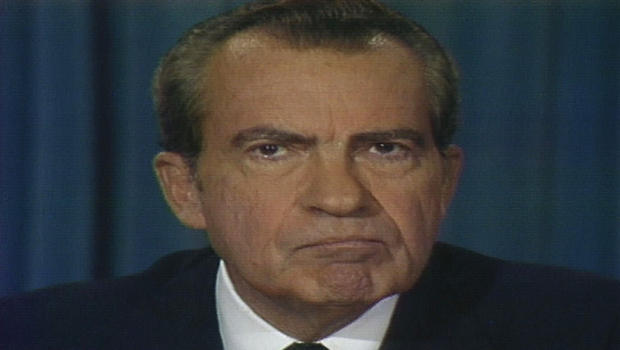
“Scared to death”: CBS cameraman covered Nixon’s resignation speech
In Case You Missed It #2…CBS Crewman At Nixon Resignation
The 7 minutes of conversation Nixon had with the people in the Oval Office the night he gave his resignation speech is just fascinating, but if you were there, like George Christian, it was kind of creepy and a bit scarey.
Here is a recent interview with George done by CBS newsman Chip Reed for the ‘CBS Evening News’. Thanks to Bruce Ferrell for bringing this clip to our attention. Enjoy and share!
http://www.cbsnews.com/news/scared-to-death-cbs-cameraman-recalls-the-night-nixon-resigned/
“Scared to death”: CBS cameraman covered Nixon’s resignation speech
CBS News veteran George Christian, just 27 years old in 1974, was one of the only people in the Oval Office to witness historic moment
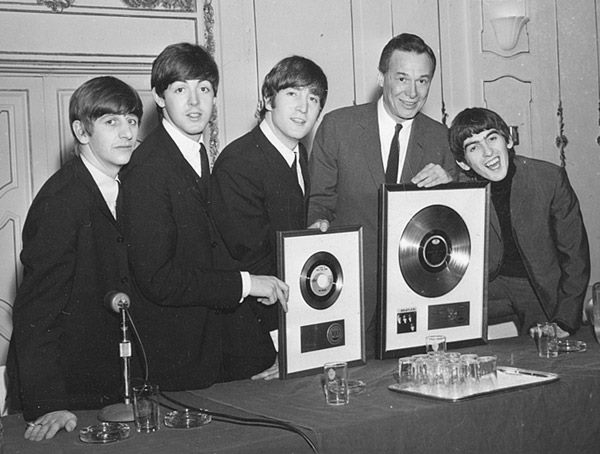
What Do ‘Bonanza’, The Beatles And Bozo Have In Common?
What Do ‘Bonanza’, The Beatles And Bozo Have In Common?
The amazing Alan Livingston…that’s what!
Livingston was best-known for his years as president of Capitol Records during the 1960s, when he signed The Beatles, but he also created Bozo The Clown and as an NBC executive, was responsible for ‘Bonanza’ coming to the screen.
As Capitol’s president, he signed artists like The Beach Boys, Steve Miller and The Band. His most famous signing, however, took longer than might be expected.
Livingston first heard about the Beatles in 1963 when he read about the group in the English music press. The Beatles’ records were being released in the United Kingdom by EMI. And because EMI was Capitol’s major stockholder, Capitol had the right of first refusal on the Beatles in America. But Capitol rejected the Beatles’ early hit singles as unsuitable for the American market.
Livingston finally received a call from the Beatles’ manager, Brian Epstein, from London wanting to know why there was no interest in the group. When Livingston said he hadn’t even heard the Beatles sing, Epstein told him to listen to one of their records and call him back.
Livingston did, and the Beatles signed with Capitol, which agreed on a $40,000 budget to promote their first single. In February 1964, the Beatles made their first appearance on “The Ed Sullivan Show,” and Beatlemania in America was in full swing.
While growing up, he took saxophone and clarinet lessons, and his brother, Jay, studied piano. Jay later teamed with fellow songwriter Ray Evans, and they shared Oscars for writing “Buttons and Bows,” “Mona Lisa” and “Que Sera, Sera.” Jay Livingston died in 2001.
While at the University of Pennsylvania, Livingston and his brother paid expenses by forming an orchestra that played at fraternity dances and school events. After serving in the Army as a second lieutenant during World War II, Livingston was hired by Capitol Records in Hollywood in 1946 as a writer and producer of storytelling record albums with illustrated read-along books for children.
He called the new concept a “record-reader.”
After writing “Bozo at the Circus,” Livingston worked with an artist to create the clown narrator — a composite design of Livingston’s based on various clown pictures — and he hired former clown and cartoon voice-over artist Pinto Colvig to supply Bozo’s voice.
“Bozo at the Circus,” with music produced by Billy May, was a big hit, with the series reportedly selling more than 8 million copies over the next several years and spawning Bozo merchandise and Bozo-hosted TV shows.
Other Livingston-written and produced children’s recordings followed, featuring Woody Woodpecker and various Disney and Warner Bros. cartoon characters.
In the early ’50s, after becoming vice president in charge of creative operations at Capitol Records, Livingston signed Frank Sinatra, then at a low point in his career, and teamed him up with arranger Nelson Riddle — a pairing that launched Sinatra’s comeback on the charts.
Livingston, who was married for several years to actress Betty Hutton, left Capitol in the late ’50s. He became vice president of NBC network television programming, during which he supervised the pilot for the western series “Bonanza.”
Livingston returned to Capitol Records as president in the early ’60s and became chairman of the board before leaving again in 1968. He later formed his own company, Mediarts, which was involved in movies, records and music publishing.
From 1976 to 1980, he was group president for 20th Century Fox Film Corp.’s television production, records, music and film processing operations.
He then became president of Atalanta Investment Co., a position he resigned in 1987. He also wrote a novel, “Ronnie Finkelhoff, Superstar.”
Now THAT’s one hell of a carrier! Gone but not forgotten…Alan W. Livingston left us March 13, 2009. Thanks to Glenn Mack for recommending some research into Mr. Livingston. Enjoy and share!
In the photo, we see Livingston presenting The Beatles with their first, of many, gold records from Capitol.
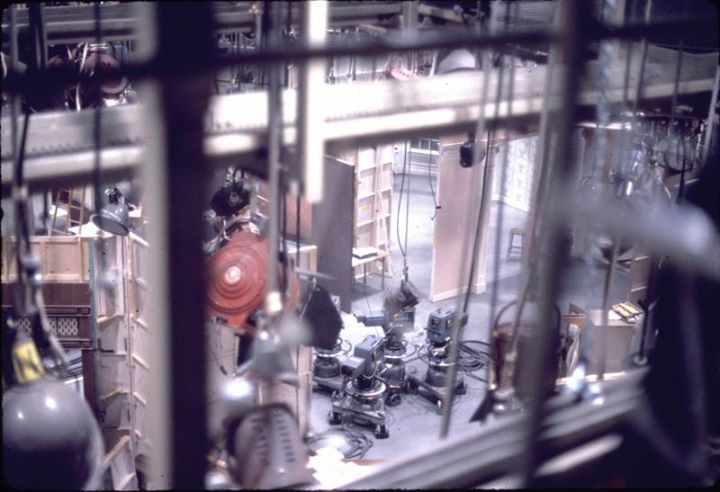
CBS Broadcast Center…50th Anniversary Special Report
CBS Broadcast Center…50th Anniversary Special Report
You’ll want to save a link to this or copy and paste this as it is a one of a kind presentation. This is, to the best of our knowledge, the most complete list of Daytime shows and their originating studios on CBS in the fall of 1964.
When television operations moved from Grand Central to the Broadcast Center in August of ’64, so did a lot of shows that CBS had produced in the many theater properties they had in New York like the very busy Liederkranz Hall, with four studios and of course all the activity in GC studios 41-44.
In the fall of 1964, the CBS daytime lineup was as follows…
(please send me any corrections or additions)
8am Captain Kangaroo (Broadcast Center; Studio 45)
10am CBS Morning News With Mike Wallace (?)
10:30 I Love Lucy (film repeats)
11:00 Andy of Mayberry (film repeats)
11:30 The Real McCoys (film repeats)
12pm Love of Life (Broadcast Center, Studio 44)
12:25 News (New Room Studio,33)
12:30 Search for Tomorrow (Broadcast Center; studio 43)
12:45 The Guiding Light (Broadcast Center; studio 45)
1pm Sunrise Semester (Studio 46, BC)
1:30 As the World Turns (Studio 65, Hi Brown Theater)
2pm Password (Studio 52)
2:30 Art Linkletter’s House Party (Studio 41,Television City)
3pm To Tell the Truth (Studio 52)
3:25 News (?)
3:30 The Edge of Night (Studio 61, Monroe Theater)
4pm The Secret Storm (Broadcast Center; Studio 46)
4:30 Jack Benny (film repeats)
Evening CBS Evening News with Walter Cronkite (News Room Studio 33, BC)
Thanks to Game Show Network historian David Schwartz and others for their help with this list. Save, enjoy and share!
CBS Studio 52…A Surprise, With Studio 50 & 51 History Expanded
CBS Studio 52…A Surprise, With Studio 50 & 51 History Expanded
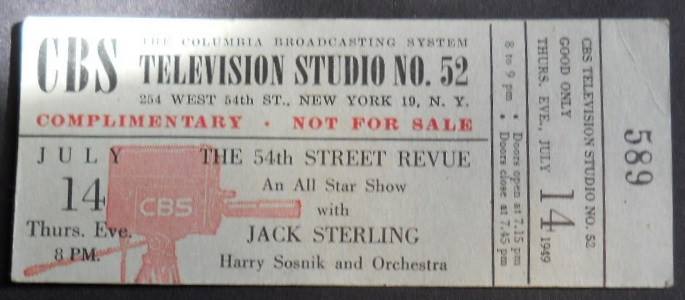
Here is a ticket from July 14, 1949 for ‘The 54th Street Revue’ television show from Studio 52. Thanks to author and television historian David Schwartz in Los Angeles who sent this, we now have proof that Studio 52 was in television service two years earlier than we thought.
Thanks to David, we also now know that CBS Studio 51, The Maxine Elliot Theater at 109 West 39th Street, was the first CBS television theater property. It was probably converted, from legitimate theater to television, in anticipation of the start of Ed Sullivan’s ‘Toast Of The Town’ show which debuted from there on June 20, 1948.
Remember, before this, all the CBS television originations were from their studios in the Grand Central Terminal Building at 15 Vanderbilt Avenue and one or two small studios at the headquarters building at 485 Madison Avenue.
The second conversion was CBS Studio 50 which came only a few months after 51’s conversion. I think Studio 50, which CBS used as a huge radio studio, was up and running by January of 1949 and with work completed there, the engineers went around the corner to Studio 52 and began work.
‘The 54th Street Revue’ debuted on Thursday night, May 5,1949 from Studio 52 and this may have been the first ever television series produced there. The host was Jack Sterling with the Harry Sosnik Orchestra and guests on the first show were Cliff Edwards, a comedian, singer and cartoon voice who you may best remember in the role of Jiminy Cricket in Walt Disney’s ‘Pinocchio’. Edwards’s rendition of “When You Wish Upon A Star” is probably his most familiar recorded legacy. Other debut guests included the dance team of Bob Fosse and his wife Mary Ann Niles and singer Carol Bruce.
As I learned when I created the 40 part History Of NBC’s New York Studios earlier in the year, many times old tickets can tell us things that are absent in other records. Thanks to David for his help. Enjoy and share!
ULTRA RARE! Nixon Jokes With Crew Minutes Before Resigning
ULTRA RARE! Nixon Jokes With Crew Minutes Before Resigning
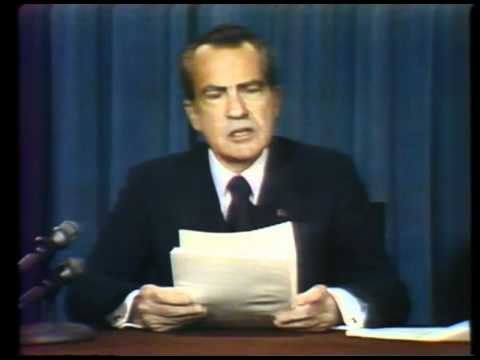
Forty years ago today, President Nixon announced his resignation to the nation from the Oval Office of The White House. The first seven minutes of this video capture his pre broadcast remarks which, under the circumstances, are truly remarkable.
The CBS crews handled the pool coverage the night of August 8, 1974 with two Norelco PC70s…one as primary and one as a backup. It seems that Nixon’s grandiosity was on display as he asked if one was an NBC camera in case the CBS camera had problems. Sensing a historic moment, a smart network tape operator started recording even before Nixon entered the office.
A lot of his personality is revealed here as he admonishes White House photographer Oliver (Ollie) Atkins for doing his job and wants everyone out of the room except the CBS crew…even the Secret Service is asked to leave, but I think they were required to stay.
At the 7 minute mark, his speech starts and the whole thing is here. Thanks to Kevin Vahey for reminding me of this historic video. Enjoy and share.
https://www.youtube.com/watch?v=zLHc8NR_v-8&feature=youtu.be
Help us caption and translate this video on Amara.org: http://www.amara.org/en/v/B1oT/ Moments before he goes on-air to resign as President of the United Sta…
We’d Like To Welcome You To Munchkinland!
We’d Like To Welcome You To Munchkinland!
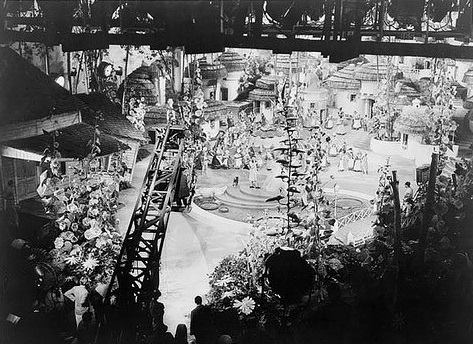
This month marks the 75th Anniversary of the release of ‘The Wizard Of Oz’. This is a long shot of the Munchkinland set, the most intricate of the many huge sets used in the production. Enjoy and share!
CBS Studio 52, Floor Plan And Specs
CBS Studio 52, Floor Plan And Specs
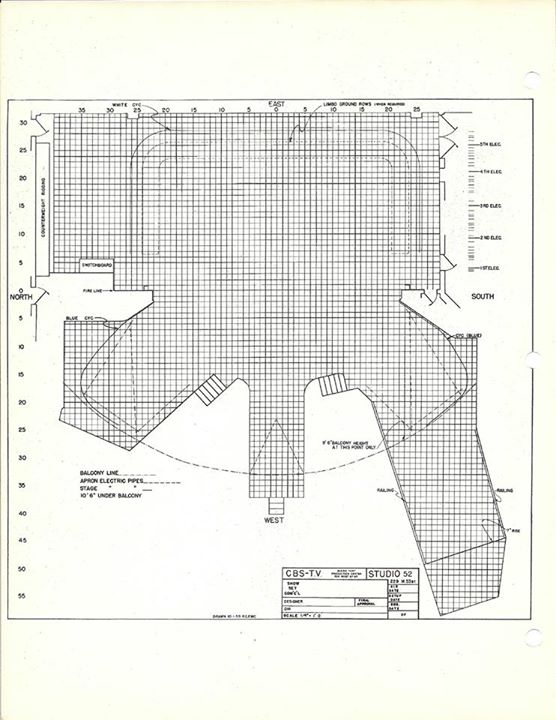
From the CBS Engineering files here is a layout and description of the theater as it was in 1960. Thanks to Gady Reinhold for these rare pages. Enjoy and share!


A Brief History Of CBS Studio 52…254 West 54th Street
A Brief History Of CBS Studio 52…254 West 54th Street
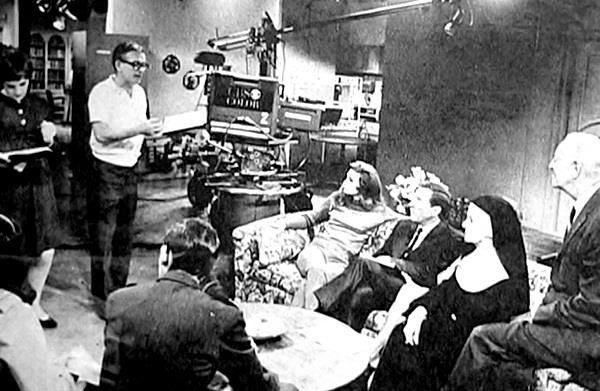
Here’s a shot of the long running CBS soap opera ‘Love Of Life’ in rehearsal at Studio 52, which is located just around the corner from The Ed Sullivan Theater on Broadway. Actually, it’s around either corner because Studio 52 went all the way from the front entrance on 54th to the 53rd Street back entrance which is just across the street from the entrance to the famous Birdland nightclub.
Speaking of famous nightclubs, after CBS sold it in 1976, Studio 52 was bought by Steve Rubell and Ian Schrager and opened as Studio 54 in 1977. The venue was built in 1927 and opened as the Gallo Theater and changed hands several time till it closed in 1940 under the name of The New Yorker Theater.
CBS bought the property in 1943 and turned it into a radio theater, which Studio 50 (Sullivan Theater) was too at the time. As you’ll see in another post at the top of this page, this studio was converted to television in 1949, not long after Studio 50 and 51 made the leap.
When the now famous ‘$64,000 Question’ debuted, in 1955 it was from Studio 52 and along the way, ‘Video Village’, ‘Password’, ‘To Tell the Truth’, ‘Beat the Clock’, ‘I’ve Got a Secret’, and ‘Captain Kangaroo’ all called Studio 52 home.
It seems that except for ‘$64,000 Question’, pretty much all the shows to come from Studio 52 were move ins from other theaters. One of those move ins was ‘I’ve Got A Secret’ and here is the first episode of that show to originate at Studio 52 from June 12, 1960. https://www.youtube.com/watch?v=tJqXuzejV2k
I was in this venue earlier this year and can best describe it as long and narrow. When radio left and television took over, most of the floor seats were taken up and most of the audiences were seated in the balcony as the floor space was needed for cameras and stages. The floor seat were temporary and could be moved around. At one time, there was an underground passage from Studio 50 to Studio 52 but when 50 was remodeled for David Letterman, that passage was bricked up.
The Man Behind The Curtain…The Wizard Of Ollie
The Man Behind The Curtain…The Wizard Of Ollie
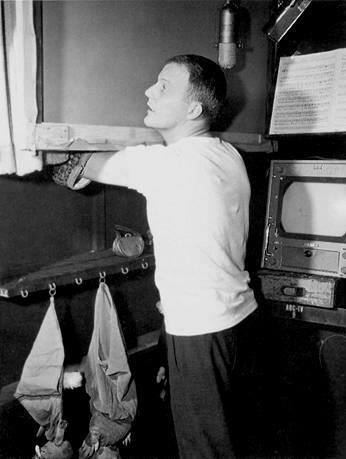
Here is a rare look behind the curtain at the creator of the great ‘Kukla, Fran And Ollie’ show, Burr Tillstrom at work. He had two monitors to see how he was doing on the other side.
Burr was the creator and only puppeteer on the show, which premiered as the hour-long ‘Junior Jamboree’ locally on WBKB in Chicago on October 13, 1947, where it stayed for a year.
Tillstrom got a better offer from across town competitor WNBQ (and NBC O&O stations) and they moved. The program was renamed ‘Kukla, Fran and Ollie’ and aired locally on WNBQ (the predecessor of Chicago’s WMAQ-TV) starting November 29, 1948.
NBC NY executives saw the show and wanted it for the network. The first NBC network broadcast of the show took place on January 12, 1949. It aired from 5–5:30 p.m. Eastern Time, Monday through Friday from Chicago.
Fran was Fran Allison, a radio comedienne and singer who was usually the only human to appear on screen, filling the role of big sister and cheery voice of reason as the puppets engaged each other concerning their foibles.
Fans became so attached to the show that when it was cut back to 15 minutes in November 1951, letters of outrage poured into NBC. During that time, KFO was a hugely successful show that counted Orson Welles, John Steinbeck, Tallulah Bankhead, Ben Grauer, Milton Caniff, and Adlai Stevenson among its many adult fans.
From August 1952 to June 1954, KFO ran as a weekly program on Sundays but NBC gave them a weekday radio show in October of that year. Incidentally, Gene Rayburn made his first network appearance on KFO and would occasionally have Burr and the puppets on ‘The Match Game’.
Here’s a short clip of the show from WNBQ in Chicago. Enjoy and share!
‘The First Hundred Years’…Television’s First Daytime Soap Opera
‘The First Hundred Years’…Television’s First Daytime Soap Opera
There are several “firsts” to cover, but first…a word from our sponsor, Tide. In the rare opening credit clip above, you can get the gist of why they were called “soap operas”. Having evolved on radio, most of the midday dramas there were presented by laundry, dishwashing and bath soap makers who were targeting their prime demo…housewives.
‘The First Hundred Years’ debuted on CBS Television December 4, 1950 and originated from Studio 63/64 which had been recently purchased by CBS from Dumont which explains the occasional sighting of Dumont cameras in some of the old CBS photos…now we know those were in Studio 63/64 only at 205 East 62nd Street.
The series was produced on a budget of $8,650 per week and was directed by Gloria Monty, who subsequently directed ‘The Secret Storm’ and produced ‘General Hospital’.
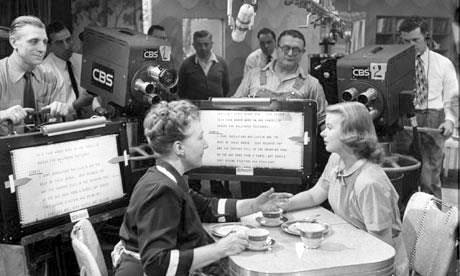
Created and written by prolific radio soap writer Jean Holloway, the series aired lasted only until June 27, 1952, and is credited with being the first to use the Teleprompter. As you see here, back then teleprompters were quite large and were handled more like Q cards.
Although the show ranked among the top ten daytime programs in the spring of 1952, Procter & Gamble officials reportedly felt that it was not drawing quite the audience the company desired, and replaced it with the television version of the long-running radio serial ‘The Guiding Light’ which was a good idea, because that show went on to become the world’s longest running daytime drama running from 1952 till 2009, which was preceded by a fifteen year radio run.
Please remember to visit the Eyes Of A Generation home page as Facebook doesn’t give you all our posts in your timeline.
‘Your Hit Parade’…The Original, Music Countdown Show
‘Your Hit Parade’…The Original, Music Countdown Show
Long before the Casey Kasem or American Bandstand countdowns, there was ‘Your Hit Parade’ which started on radio in 1935 and ran there till 1955. The television version started on NBC in 1950 and ran there till ’58 when it went to CBS for a year.
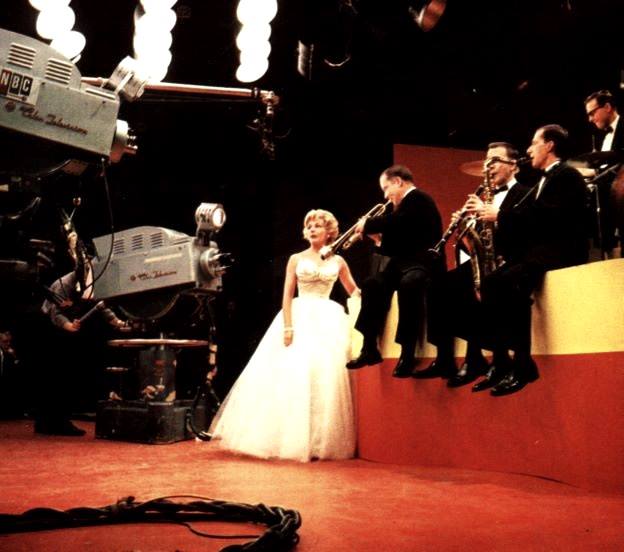
In the great photo below, we see one of the show’s biggest stars, Dorothy Collins singing before the cameras at NBC’s Ziegfeld Theater, in color. The show started July 10, 1950 in NBC’s brand new Studio 6A which was converted May 29, 1950.
The show needed more floor space for the 10 song scene sets and the next year it moved to NBC’s brand new 8H which was converted January 30, 1950. The show was done in color occasionally from The Colonial Theater, but went all color in 1956 when it moved to Perry Como’s new home at the Ziegfeld Theater.
You can tell from the look of this video clip that this was a color broadcast captured on black and white kinescope film. It shows Dorothy Collins singing “I Get A Kick Out Of You” from the Ziegfeld. When the show moved to CBS, it went back to black and white. Enjoy and share!
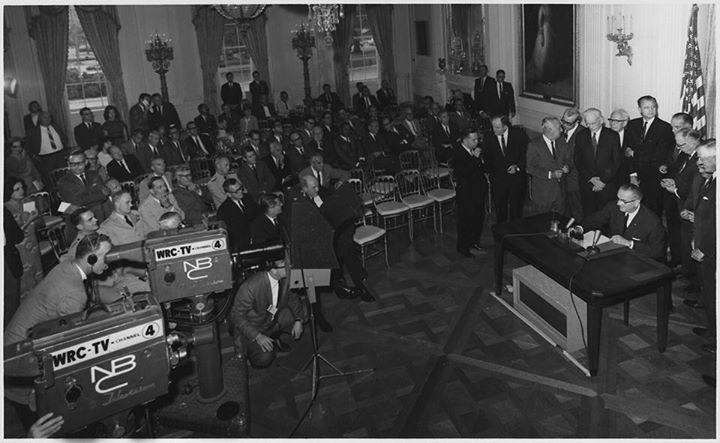
August 6, 1965…President Johnson Signs Voting Rights Act
August 6, 1965…President Johnson Signs Voting Rights Act
I’m not sure if this photo was taken on that day as I don’t see any civil rights leaders, like Dr. King, but the anniversary offers a prime occasion to post this photo which is one of the only images I have ever seen of NBC handling the pool coverage from the White House.
All three networks would rotate pool coverage of White House events, but NBC and ABC were usually glad to pay a small fee to CBS to handle most events as CBS had two mobile units in Washington and it was easier for them all.
I think the larger, four camera, CBS unit was a network truck kept there for Redskins football and the other was a WTOP local unit. NBC used the WRC unit and as you see here, they were equipped at the time with RCA TK30s, but would soon carry TK41s. Notice the early “through the lens” teleprompter. That belonged to the White House and Johnson used it often. Please remember to visit the Eyes Of A Generation page…don’t rely your timeline to deliver all the daily posts.
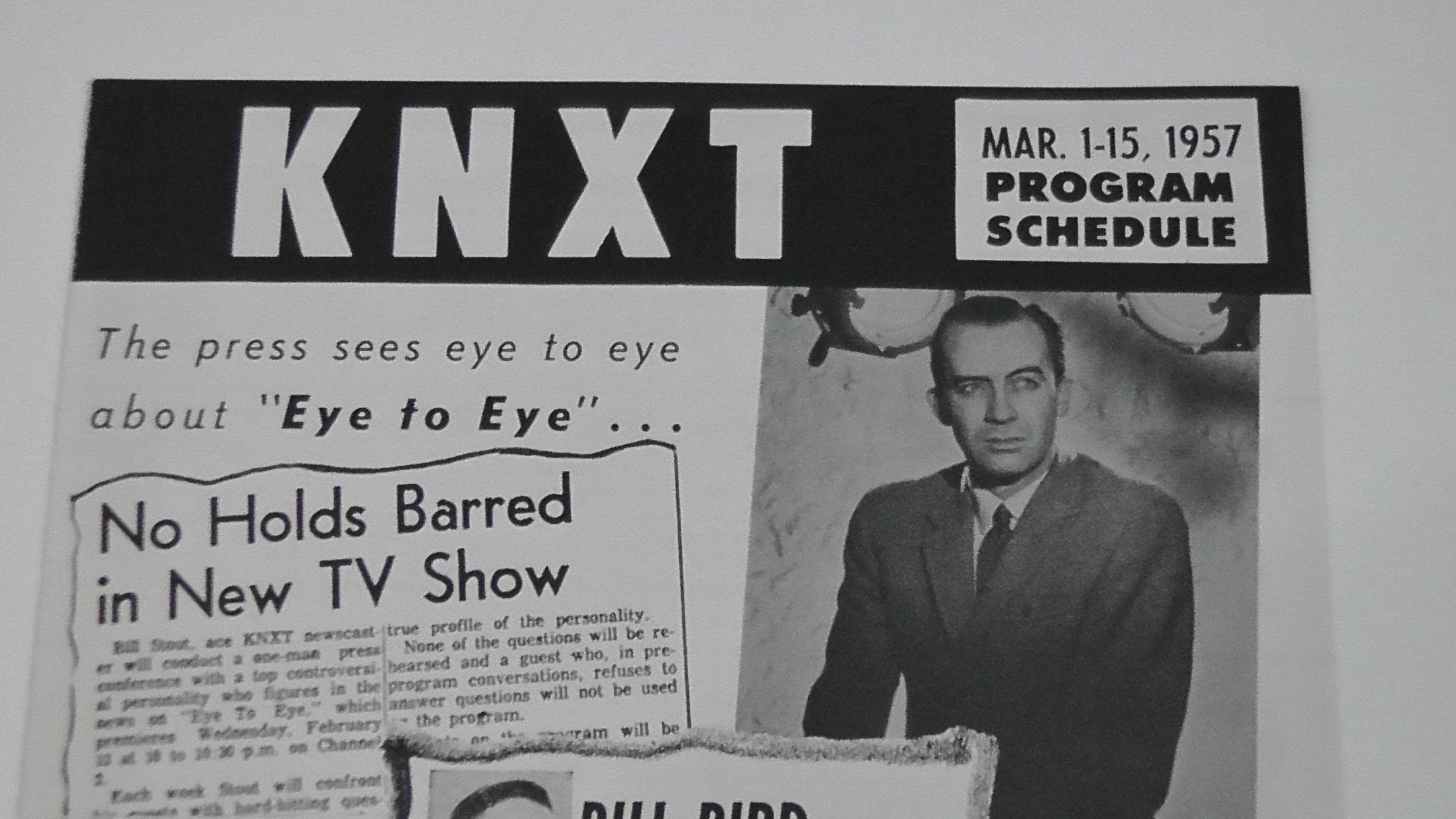
What Was On TV In March 1957? Take A Look!
What Was On TV In March 1957? Take A Look!
Thanks to our friend Steve Dichter, here is a short video look at a KNXT Los Angeles program guide. KNXT is now KCBS but has always been the CBS flagship station there.
The most interesting part to me is on the last page…the 9AM hour has four 15 minute soap operas followed by Walter Cronkite at 10 with a ten minute news cast.
WSB’s White Columns…A Shrine To Atlanta Radio & Television
WSB’s White Columns…A Shrine To Atlanta Radio & Television
When NBC Radio started in 1927, WSB was already on the air and was one of the first affiliates to sign up. As a matter of fact, the famous NBC chimes were inspired by WSB’s chimes.
White Columns on Peachtree Street was one of the grandest broadcast centers anywhere, and although it’s gone now…it is not forgotten. This article from our friend Bob Foreman is full of rare photos and some interesting facts. One of which is the date WSB broadcast NBC network shows in color…1954. Enjoy and share!
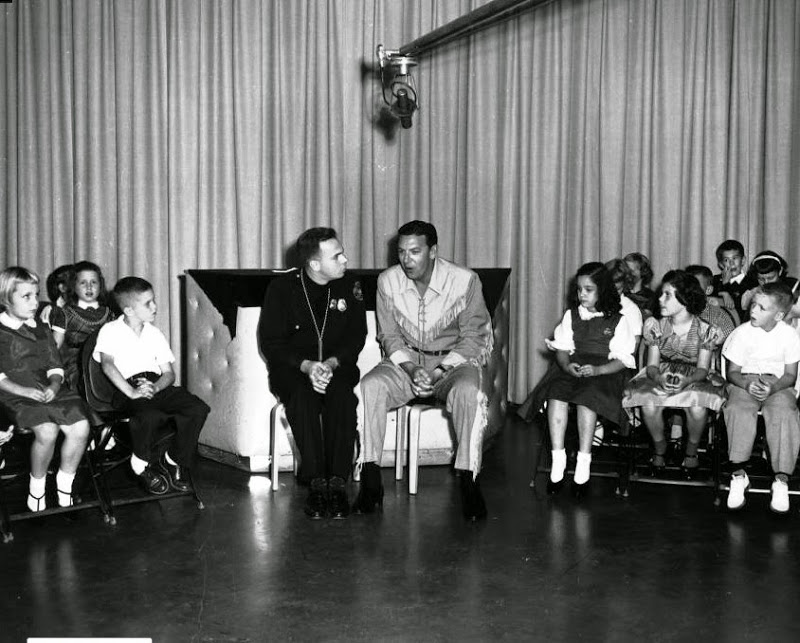
By the way, the photo is shows Atlanta legend Don Kennedy in his earliest days as “Officer Don” on an early ‘Clubhouse Gang’ show. With him is Howdy Doody host, Buffalo Bob Smith and given Smith’s appearance and the lack of the regular set, this may be the show’s debut.
http://insidebobforemansbrainpart2.blogspot.com/2014/08/august-2014-white-columns.html
INSIDE BOB FOREMAN’S BRAIN PART 2: AUGUST 2014 WHITE COLUMNS
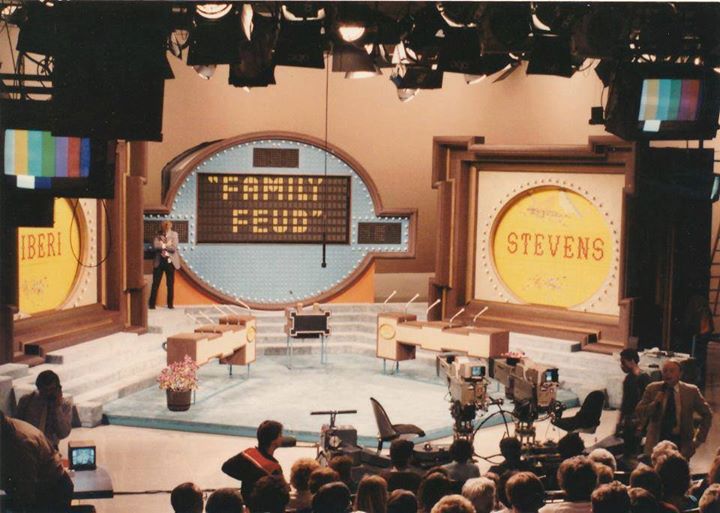
‘Family Feud’…ABC’s TV 54 Studio, Hollywood
‘Family Feud’…ABC’s TV 54 Studio, Hollywood
TV 54 was the largest studio ABC had at the Prospect property. It was also home to ‘American Bandstand’ and ‘Let’s Make A Deal’ back in the ’60s and ’70s. I think ‘General Hospital’ took it over and may still be there…it’s in it’s 51st year on the air.
In this photo, we see two Chapman Sidewinders on the set and next to them is announcer Gene Wood warming up the audience. The cameras, I think, are Ikegami HK 322s. Donna Quante, who sent me this photo, was usually on one of the Sidewinders. I understand a lot of the crew wore coats to these tapings as host Richard Dawson liked it cold in there.
The original version on ABC ran nine seasons, from 1976 till 1985 and was a Goodson/Todman Production. Enjoy and share!

The BBC’s State Of The Art Television…1956
The BBC’s State Of The Art Television…1956
On the 10th Anniversary of the return to the air after World War II, here is a look at the history of television in The UK. From the early Emitron cameras to the Marconi BD 848 color cameras and even zoom lenses, it’s all here.
By the way, the Emitron would be the general equivalent to the Iconoscope and as you’ll see, the Marconi color camera looks a lot like the RCA TK41. Having started with Marconi as a boy, David Sarnoff had a soft spot for them and shared not only the TK41 design, but the TK30 plans too back in 1946. Enjoy and share!
https://www.youtube.com/watch?v=2G36AaMDFdM
A Panorama programme from June 1956, with Richard Dimbleby, showing a behind the scenes view of technological advances in BBC Television. Showing the studios…

Theatrical Television
New Article From Richard Wirth…”Theatrical Television”
The subject this time is Theatrical Television and explores the early days of TV when is was thought it might replace motion picture film. Now, almost 85 years after those first attempts, that day has finally come. What took it so long? Read Richard’s perspective on the answer to that at this link. Enjoy and share!
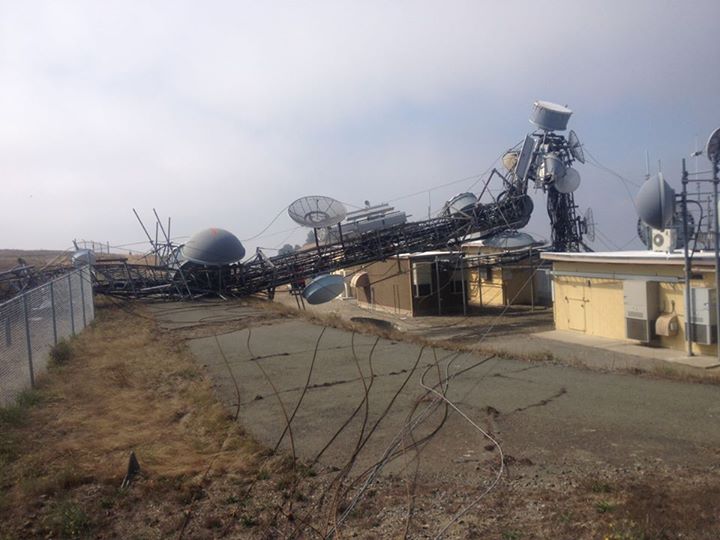
August 4, 1987…FCC Rescinds Fairness Doctrine
August 4, 1987…FCC Rescinds Fairness Doctrine
My Thoughts On The State Of Broadcasting Today…An Editorial
I don’t often climb on my soapbox, but today…I’m going to. I’ve wanted to write about the condition of broadcasting for a while and with this historically significant date at hand, now seems to be as good a time as any.
Like it or not, we can thank the republicans for much of the carnage in radio and television. Ironically, it was the administration of ‘The Great Communicator”, Ronald Reagan that proved once again that the road to hell is paved with good intentions.
The fun began when Reagan appointed Mark Fowler as head of the FCC in 1980. Fowler was a communications lawyer, but worked with the Reagan For President Committees in 1976 and 1980. He was a big supporter of deregulation, as much of the Reagan clan was.
Under Fowler, the number of television stations any single entity could own grew from seven in 1981 to 12 in 1985. In 1985, and guidelines for minimal amounts of non-entertainment programming are abolished and FCC guidelines on how much advertising can be carried per hour are eliminated. Before this the rule was 8 minutes per hour…today, it’s around 18.
Soon after he became FCC Chairman under President Reagan, Michael Fowler stated his desire to do away with the Fairness Doctrine and on this day in 1987, the “Fairness Doctrine” was eliminated. At its founding the FCC viewed the stations, to which it granted licenses, as “public trustee” and required that they made every reasonable attempt to cover contrasting points of views and present balanced coverage of controversial issues. This was the last time the news in America was actually “fair and balanced”. Sound familiar?
The number of big media companies in the US was already shrinking from around 80 in 1960 to around 50 in 1990, but there was more to come. By the way, if Murdoch’s News Corp is allowed to buy Time Warner, we will go from 6 big television companies to 5.
The biggest mistake ever made in US broadcast history was when President Clinton signed the Telecommunications Act of 1996. The bill was written by South Dakota’s Republican Senator Larry Pressler.
At the time, the 104th Congress was controlled by the republicans and Newt Gingrich was in charge. They shut down the government twice, passed bills like the Defense Of Marriage Act and could pass just about anything they wanted as they controlled both the House and Senate.
This 1996 law is generally regarded as one of the most important pieces of legislation regulating media ownership ever written. Under this, the radio industry experienced unprecedented consolidation after the 40-station ownership cap is lifted. Clear Channel Communications owns 1200 stations, in all 50 states reaching more than 110 million listeners every week. Television is not in any better shape.
With unlimited ownership and no fairness doctrine in place, Clear Channel took most of thier AM stations talk and gave the Rush Limbaugh’s of the world a stage like no one had ever seen.
I’ve been in radio and television for 50 years and have to admit that I have not listed to terrestrial radio since satellite radio became available about 15 years ago. That in itself is a pretty sad commentary on the state of media in the US. – Bobby Ellerbee
Aside from the facts, this is just my opinion and you may agree or disagree, but I remind you to keep your comments civil. Enjoy and share.
Fascinating, First Hand Television History…
Fascinating, First Hand Television History…
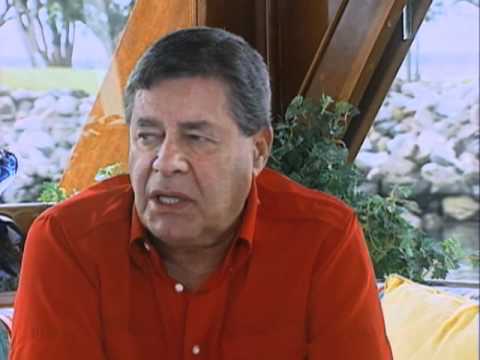
As mentioned in the previous post, here is Jerry Lewis discussing the Martin & Lewis years on ‘The Colgate Comedy Hour. Enjoy and share!
https://www.youtube.com/watch?v=TOnXZDjyPqI
Full interview at www.emmytvlegends.org/interviews/people/jerry-lewis