50 Years From CBS Television City…Part 5, The Sitcoms
50 Years From CBS Television City…Part 5, The Sitcoms
The Sitcom segment has two parts and this is the link to the second part. http://www.youtube.com/watch?v=htyaNaWa5vA
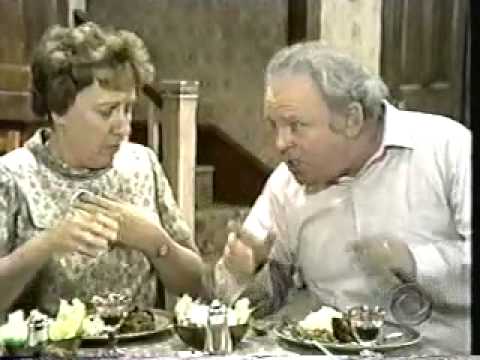
John Ritter hosts this segment from Studio 31, home of ‘All In The Family’ and spends most of the first segment on this historic show.
In the second segment, we’ll go from the first TVC sitcom, ‘My Friend Irma’ to ‘The Steve Harvey Show’, with clips from 16 shows in between. Enjoy and share!
http://www.youtube.com/watch?v=eQ6AEFxXWXA
John Ritter hosts a segment on CBS 50 Years from Television City, focusing on Sitcoms. Special aired 4/27/02.
50 Years From CBS Television City…Part 4, The Specials
50 Years From CBS Television City…Part 4, The Specials
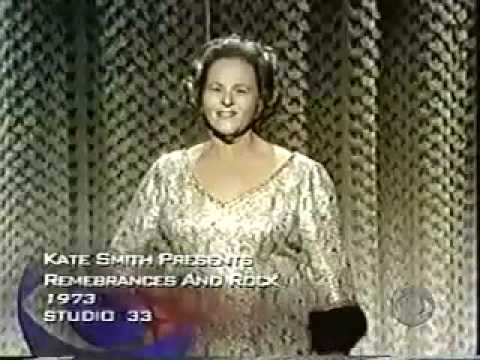
Carol Burnett walks us through time with a who’s who list of stars that have done specials at CBS and starts with the first one…’Stars In The Eye’, from 1952 hosted by Jack Benny. We’ll also see clips from ‘The Edsel Show’ with Bing Crosby and shows by Sid Ceasar, Ann Margret, Danny Thomas, Kate Smith, Doris Day, Lilly Tomlin, Shirley MaClaine, Johnny Cash, George Burns, Elton John and more. Enjoy and share!
http://www.youtube.com/watch?v=j3_M2EoUcpE
Carol Burnett hosts a segment on CBS 50 Years from Television City, focusing on Specials. Special aired 4/27/02.
50 Years From CBS Television City…Part 3, The Variety Shows
50 Years From CBS Television City…Part 3, The Variety Shows
The Variety Show segment has two parts and this is the link to the second part. http://www.youtube.com/watch?v=ShnIw82D5js
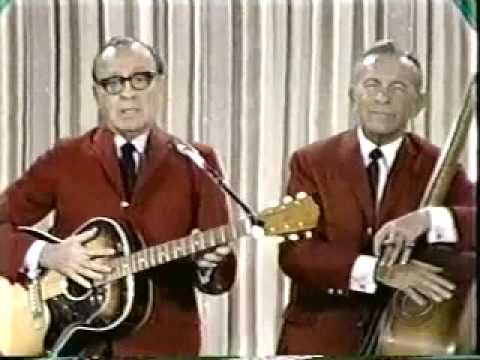
Tom and Dick Smothers are the hosts of this segment and we start with their great show with a rundown of their production week which puts them in the studio all day Thursdays for camera blocking.
The second segment starts with Glenn Campbell and ends with an absolute must see scene from Tony Orlando with Phyllis Diller losing her wig. We’ll also see Sony and Cher, Red Foxx, The Jacksons and more. What we don’t see is Carol Burnett’s show so I’m thinking there is a third part which is not online. Enjoy and Cher?
http://www.youtube.com/watch?v=PYV11QSToAI
The Smothers Brothers host a segment on CBS 50 Years from Television City, focusing on Variety Shows. Special aired 4/27/02.

50 Years From CBS Television City…Part 2, The Talk Shows
50 Years From CBS Television City…Part 2, The Talk Shows
The Talk Show segment has two parts and this is the link to the second part.
http://www.youtube.com/watch?v=2fWWdxFiQFA
The first segment, hosted by Craig Kilborn features great footage from Art Linkletter, Merv Griffin, Dinah Shore, Mike Douglas and more. The second part starts with Merv Griffin talking about how most of his shows were lost to the reuse of video tape stock and continues with Tom Snyder? Yes…Tom Snyder.
After his many years on ‘Tomorrow’ at NBC (73-82), David Letterman convinced Snyder and CBS to create the ‘Late, Late Show’ to follow his show. Surprise! You’ll want to see both parts!
There’s also footage of Bill Maher, Dennis Miller and Letterman. Enjoy and Share!
http://www.youtube.com/watch?v=BkFQXtJetyo
Craig Kilborn hosts a segment on CBS 50 Years from Television City, focusing on Talk Shows. Special aired 4/27/02.
50 Years From CBS Television City…Part 1, The Soap Operas
50 Years From CBS Television City…Part 1, The Soap Operas
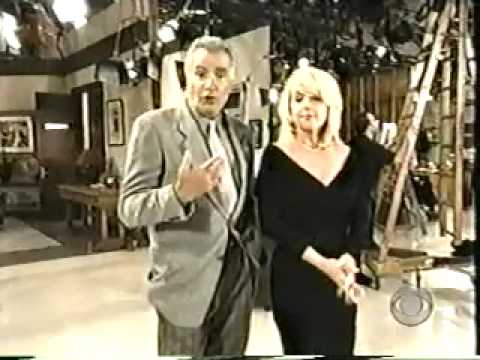
CBS dedicated its new $7 million Hollywood production and office facility, Television City, on November 15, 1952. This special with Carol Burnett as host aired in April of 2002. As you’ll see as we go, this was done during the Hitachi period at TVC and the live cameras are SK 110 models built to CBS specs. Enjoy and Share!
John McCook hosts a segment on CBS 50 Years from Television City, focusing on Soaps. Special aired 4/27/02.
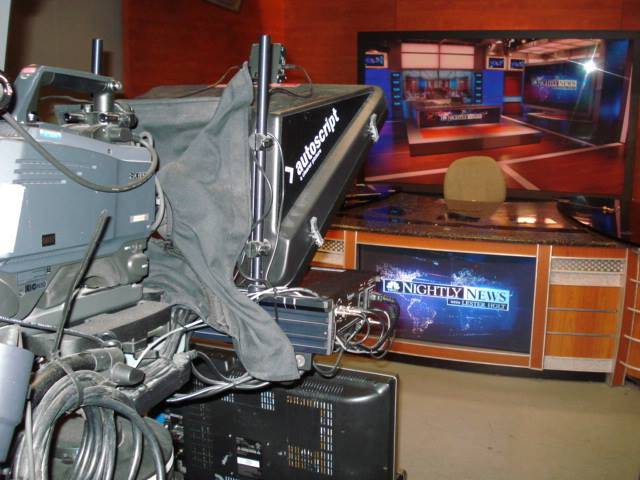
Here’s Where The Weekend ‘NBC Nightly News’ Comes From
This is where Lester Holt anchors the weekend edition of NBC’s ‘Nightly News’ show. This is Media Room 1, which is one of four small studios inside Studio 6E, otherwise known as the Global Media Center.
The control room for all four is right next door. This was the main news desk used by Tom Brokaw and Brian Williams in 3C from 1998 till 2008. In ’08, a new set and desk was built in 3B where the weeknight show is done now. The control room for 3B is under the ‘Today’ studio in the basement of Studio 1A, across 49th Street.
Below you see the single robotic camera in the studio on the left and just to the left of the camera is a production desk with the prompter controls. That’s me at the desk and on the right, a shot of me in the monitors in front of the desk. Notice the virtual set on the wall monitor. Enjoy and share.


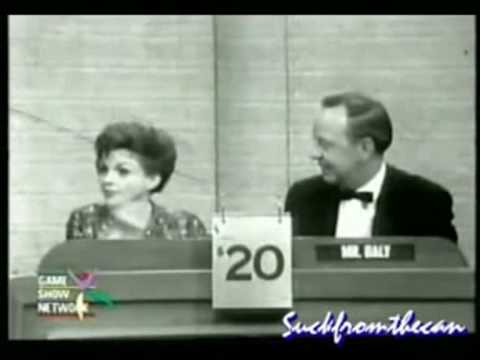
Judy Garland…March 5, 1967, ‘What’s My Line’
Judy Garland…March 5, 1967, ‘What’s My Line’
At the end, Judy mentions “Valley Of The Dolls” which puts this show and Jack Paar’s visit with her about the same time, as that was mentioned in the Paar audio posted yesterday.
https://www.youtube.com/watch?v=OIiCtk9NW_k
The great Judy Garland on What’s My Line (March 5, 1967) Enjoy! 🙂

A Parade Of 50 Years Of CBS Stars!
Just Amazing! A Parade Of 50 Years Of CBS Stars! Part 2
It is extremely rare to see the founder and chairman of CBS on television, but here is William S. Paley along with Walter Cronkite closing the week’s festivities with about a hundred of America’s best known faces. The long pan of stars at the end is really something to see! Enjoy and share!
http://www.youtube.com/watch?v=3Xw3KdQpcwA
From April 1, 1978, here are the last 10 minutes of the week-long special “CBS: On The Air: A Celebration of 50 Years.” This clip includes comments by CBS’ f…
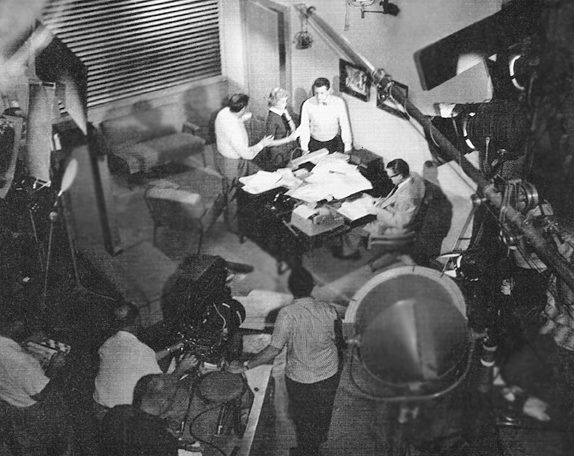
More “SUPER” Rarities…
More “SUPER” Rarities…
So many people liked yesterday’s post, I thought we’d look deeper.
‘The Adventures Of Superman’ ran from 1952-58 and was a syndicated show sponsored by Kellogg’s. The show’s first two seasons (episodes 1–52, 26 titles per season) were filmed in black-and-white; seasons three through six (episodes 53–104, 13 titles per season) were filmed in color but originally telecast in black and white in first-run syndication. Television viewers would not see Superman in color until the series was re released in 1965.
Below left, we see a scene being shot in Clark Kent’s office at The Daily Planet. In the center is star George Reeves atop a short ladder that he used to jump off of when making a “flying” entrance. On the left is Reeves in rehearsal, without the cape, practicing a take off on the springboard and landing on the pad.
Occasionally, Superman would take off without the springboard and a running start. In those sequences, that start in a flat footed crouch, wires were used. Reeves would perform the move and make a leap, but then a stunt double was brought in with his wire harness to repeat the move which was shot from a different angle to hide the face.


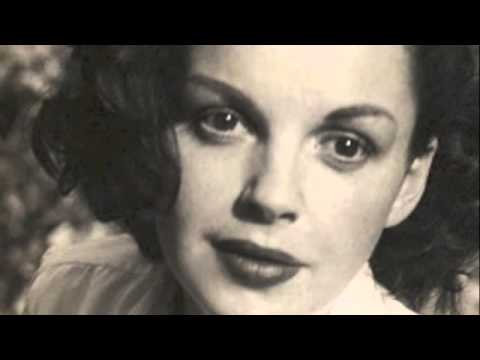
Judy Garland…Jack Paar’s Storytelling At It’s Best
Judy Garland…Jack Paar’s Storytelling At It’s Best
Aside from Television City, the other part of our Memorial Day Weekend special features include the great, Judy Garland.
This is a very rare audio recording made by Jack Paar about a day he spent with Judy in Hollywood. Paar is a legendary storyteller and this is the best example of that ability, I have ever heard.
I found this last week and have wrestled with it ever since. Although Jack’s story and his touch are beautifully told and as gentle as possible, some sad truths about Mrs. Garland come to light here. I’ve wondered whether to post this or not, but given the quality of the tale, have decided to go ahead with the following notes.
First, Bless Her Heart! Judy Garland is without a doubt one of the most talented people in the entire history of entertainment which dates back to the Greek tragedies of 534 BC. Ironically, her life mirrored the joy and pain of those ancient productions almost to a tee.
I have been around fame and famous people most of my life and I can tell you that it comes with a heavy price. For most of her life, she was not just a star, but a superstar and that comes with an unbelievable burden and a lot of insecurity. I think the only thing that was ever real to her was her children, as certainly everything else was surreal in the best and worst of ways.
God Bless You Judy! Bobby Ellerbee
https://www.youtube.com/watch?v=D31747Wy2YY
DISCLAIMER: Although we believe that Jack Paar was sincere in his intentions, he is factually off base on several points, and sensationalizes others. The gen…
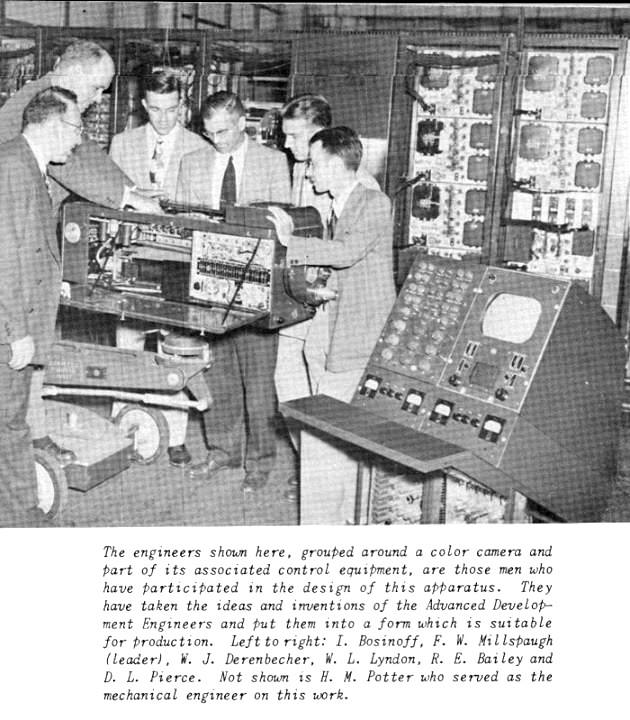
Ultra Rare! RCA TK40 Prototype Color Camera…November 1952
Ultra Rare! RCA TK40 Prototype Color Camera…November 1952
Since posting this a year or so ago, new details on the first use of this camera have surfaced. As you remember, a few months back, I published the first and only timeline history of the NBC New York Studios. While doing that research, a tiny blurb in Broadcasting Magazine’s November 17, 1952 issue unlocked the mystery of just when the RCA TK40s were first used. It was November 8, 1952 and the occasion was a special broadcast of ‘Your Show Of Shows’ from The Colonial Theater.
‘Your Show Of Shows’ was usually done at The International Theater on Columbus Circle, but on that Saturday night, it came from The Colonial. The show was not broadcast in color as the FCC had not approved the Dot Sequential process yet, nor had they approved a special test permit, but it was a good test of the new cameras to show how sharp their monochrome output was to the many affiliates interested in how color broadcasts would look on black and white receivers. RCA and NBC engineers saw it in color on a closed circuit feed to 30 Rock and Princeton NJ.
The photo shows one of the prototypes and the engineers who were mostly responsible for it’s development and those names are in the caption. It’s interesting to note that the camera is painted RCA’s famous umber gray and on the side rear, we see a focus knob and not the now familiar panhandle focus.
Most of the “famous” color broadcasts from The Colonial came in late 1953 and early ’54. The cameras needed a year or so of field testing before they were ready for that and monitors and control equipment was still being tested and developed in NBC Studio 3H and in Princeton.
The TK40s did not go into production till March of ’54 and by then, several changes were made based on experience gained at The Colonial. The first change was the camera’s color from umber to silver that better reflected heat. That lesson was learned at a summer remote.
The second change was the position of the focus demand that moved from the side knob to the pan handle. The camera was too big for one handed operation and the cameramen also like the old Iconoscope style demand better.
The third change was the pan head. The Colonial cameras were originally mounted on the old friction type pan heads, but they were too small in two ways. First, their support plate put too much weight on the belly of the camera which needed more distribution. Second, they could “get away” from you on a steep tilt. The answer was the Houston Fearless cradle head. A prototype was made for two of the four cameras and it worked great. When the TK40 went into production, it was supplied with the cradle head and at the same time, the smaller cradle for black and white cameras became available. Enjoy and share.
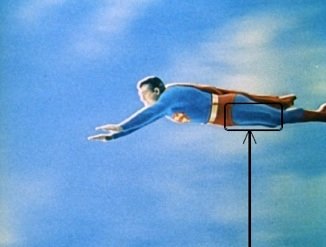
‘Superman’…Rarities From Radio & Television
‘Superman’…Rarities From Radio & Television
This is Superman’s “flying pan” which was used by George Reeves in ‘The Adventures Of Superman’, that many of us grew up watching. After a few falls from wire suspension, on which was fairly serious, the pan was developed for Reeves to lay in and tilting and rolling was controlled by a long lever.
Often you can see it under his suit if you know what to look for. Included is a drawing of the device in use and that is the actual pan which is now in the Superman Museum in, wait for it…Metropolis, Illinois. Enjoy and Share!


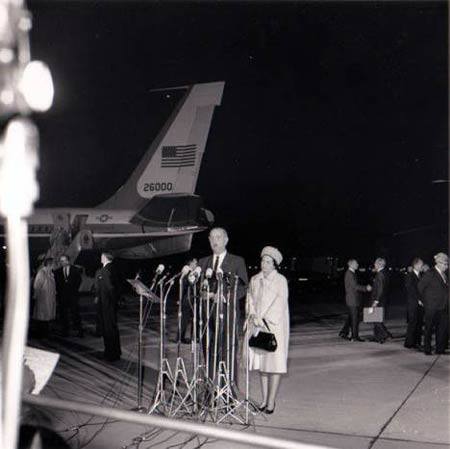
NBC Director Max Schindler’s Day….November 22, 1963
NBC Director Max Schindler’s Day….November 22, 1963
At the link is our friend Max Schindler’s account of the arrival of President Kennedy and President Johnson from Dallas. He was the director sent to cover the arrival for NBC in Washington, and as it turns out, for CBS and ABC too, as his truck was the only one that had been linked to AT&T lines.
In the first eight or so minutes, Max describes the incredible drama of the day and the many unknowns at they went to air. He helped direct the funeral a few days later and speaks of that as well as the MLK “I Have A Dream” speech which he covered.
Schindler later started a two decade long association with ‘Meet The Press’ in 1965 and directed the show for over 20 years. As a director, he was very highly regarded at the time, and, in the 70s, he was the coverage director when other important events, such as the Watergate, the Iran hostage crisis and the Pope’s visits to the United States occurred.
Schindler’s work in television has influenced many to-be directors through his six decade work as a director, producer, and cameraman.

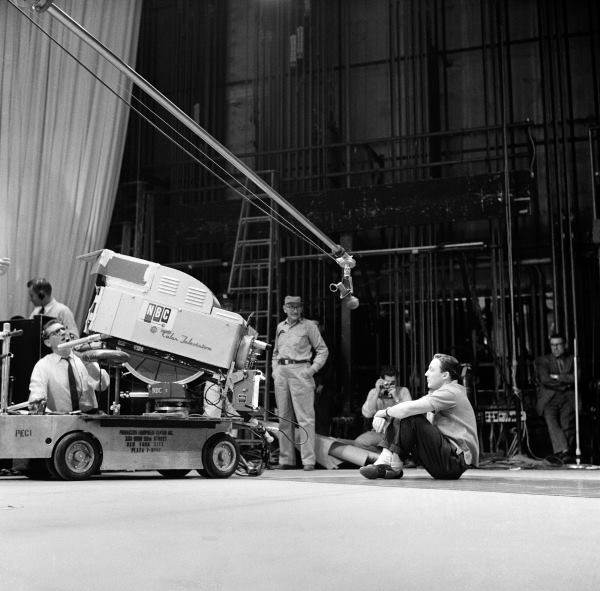
December 21, 1958…’Dancing: A Man’s Game’ With Gene Kelly
December 21, 1958…’Dancing: A Man’s Game’ With Gene Kelly
NBC’s great ‘Omnibus’ program, which I remember well, was a wide ranging show that on one Sunday afternoon included a half hour segment conceived, written and narrated by Gene Kelly.
Assisted by the top names in sport, like Mickey Mantle, Sugar Ray Robinson and Johnny Unitas, Kelly sets out to demonstrate the rhythm and coordination required of great athletes. He also traces the history of modern American dance, and sets out to prove that dancing is, not the property of women but that, rightfully, it’s “a man’s game.”
The show was done at NBC Brooklyn and the cameraman in the black and white photo is Don Mulvaney (who by the way was also the main crane cameraman on Perry Como and the original crane cameraman on ‘Saturday Night Live’). The color photo is from another scene in the show.
At the clip is one of the only known pieces of the kinescope of the show. Enjoy and share!


Quite Rare: Barbara Walters…The Lucy Interview, 1977
Quite Rare: Barbara Walters…The Lucy Interview, 1977
This is the only known full presentation of Walters’ famous interview with Lucille Ball. Unfortunately, there are not many surviving interviews with Lucy, and none as in depth or as deep as this one. This is Barbara at her best! Enjoy and share.
http://www.youtube.com/watch?v=xQR5BzN4EKg
Along with having Dolly Pardon, Henry Winkler, and Stacy Weitzerman as guests for her 1977 Special, Barbara Walters also sits down with Lucy and Gary Morton….
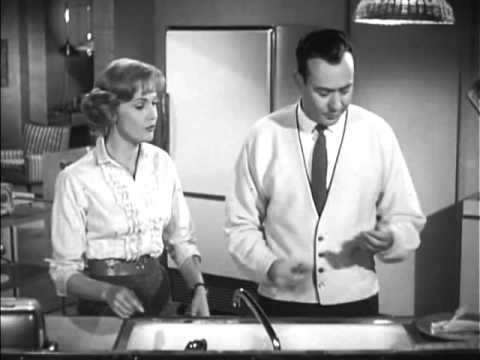
‘The Dick Van Dyke Show’…Full Pilot Episode
‘The Dick Van Dyke Show’…Full Pilot Episode
This is part of the text from the Emmy Legends story on the pilot show called ‘Head Of The Family’ that starred Carl Reiner as Rob Petrie. Read on…
Back in the summer of 1958, Carl Reiner, already an established writer and supporting actor on Sid Caesar’s ‘Your Show of Shows’, sought to create a sitcom in which he would star. He followed the adage of “write what you know” and created thirteen scripts of ‘Head of the Family’, a largely autobiographical series centered around Rob Petrie, head writer of “The Alan Sturdy Show.” Rob was married to Laura, they had a six-year-old son, Ritchie, and Buddy and Sally were Rob’s cohorts in the writers’ room. Sound familiar?
Reiner’s agent, Harry Kalcheim, shopped the Head of the Family pilot script around, and actor Peter Lawford wanted to front the money to shoot the pilot. Once Reiner sent a script to Lawford’s father-in-law and supplier of the cash, Joseph P. Kennedy, Reiner was given the green light.
The pilot was shot in December of 1958 in New York, with Reiner starring as Rob, Barbara Britton as Laura, Gary Morgan as Ritchie, Sylvia Miles as Sally, and Morty Gunty as Buddy. And then … nothing. The pilot failed to sell for the Fall 1959 season, and for the next year, Reiner thought the project was dead. But Kalcheim refused to abandon the show. He presented the pilot episode to another client of his, producer Sheldon Leonard.
Already a successful creator/producer of The Andy Griffith Show, and producer of The Danny Thomas Show, Leonard recognized genius in Head of the Family, but identified one major flaw: Reiner completely miscast himself as Rob Petrie. It’s difficult to see how Reiner could be wrong for a role that he based on himself, but Reiner was a natural sketch performer, not a sitcom actor.
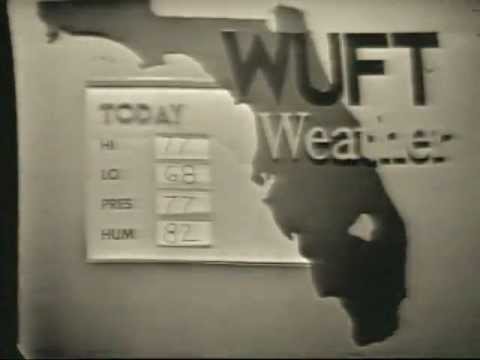
Ultra Rare! Cronkite Goodbye To Huntley, & Huntley – Brinkley Finale
Ultra Rare! Cronkite Goodbye To Huntley, & Huntley – Brinkley Finale
That I know of, this old demo tape from long time Miami news man Bob Mayer is the best, and one of the only captures of Walter Cronkite’s farewell to Chet Huntley, which even includes an unheard of insert from Huntley. AND, immediately following the CBS News credit roll, is the final few minutes of ‘The Huntley – Brinkley Report’. All in good quality color.
This all happened July 31, 1970, fourteen years after their start on NBC on October 29, 1956.
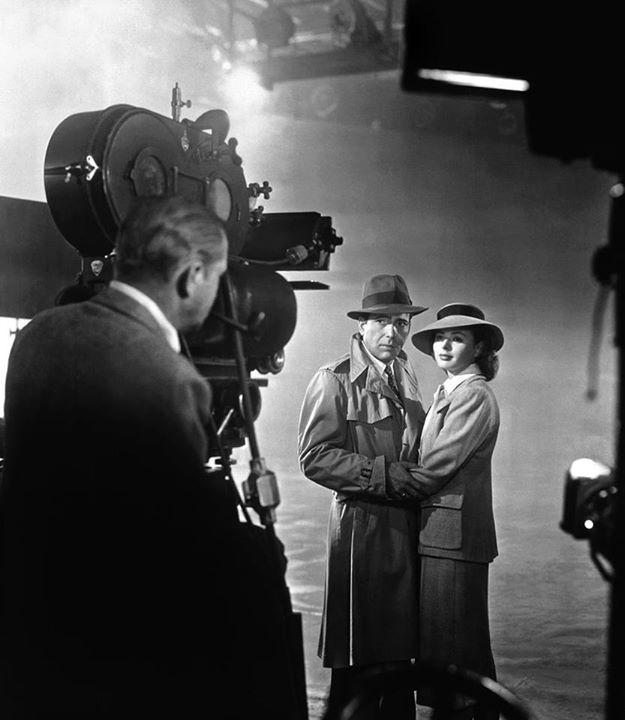
Spoiler Alert…They Weren’t Really In Casablanca, OR Outside!
Spoiler Alert…They Weren’t Really In Casablanca, OR Outside!
Just for fun, here’s a shot of the final scene of ‘Casablanca’ filmed around August 2, 1942. The whole picture was shot on the Warner back lot except for the sequence showing Major Strasser’s arrival, which was filmed at Van Nuys Airport, and a few short clips of stock footage views of Paris.
This scene on the “runway” was purposefully over fogged to hide the deficiencies in the cardboard mock up of a Lockheed Electra which had very short extras around it to help cheat the proportionality. Speaking of cheating, Bogart was two inches shorter than Bergman, so…like in this scene, he stood on blocks and sat on pillows to hide the difference.
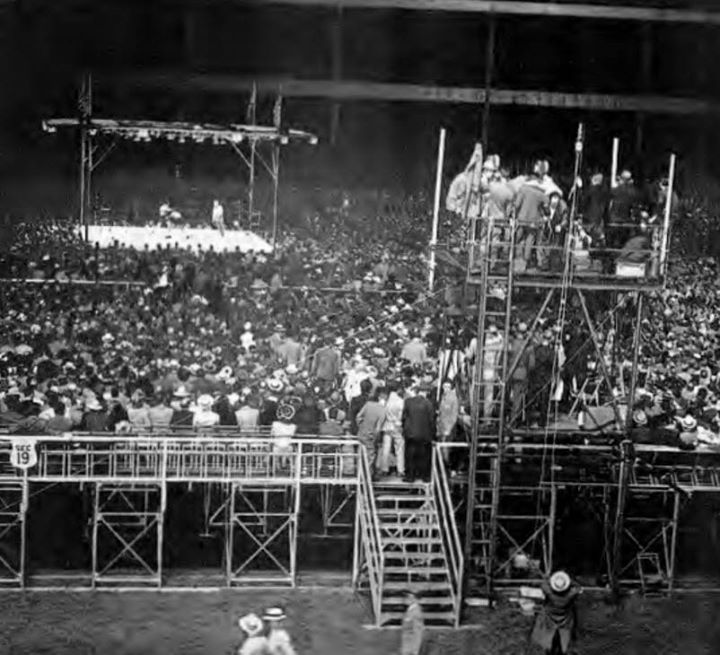
June 19, 1946…The debut of the RCA TK30s…
The debut of the RCA TK30 Image Orthicon camera was live in half of the nation and on kinescope for the rest, so this better be good! And it was! This was trial by fire.
RCA worked so fast to get six TK30s to NBC in New York for the Lewis-Conn rematch at Yankee Stadium, the art department didn’t even have time to cut and paste photos of the cameras in their pre fight ads that ran in May of 1946.
In the photos on the right and left, you see the first TK30s ever used anywhere…even on a local NBC NY show. The introduction date was officially set for October of ’46, but the Lewis-Conn rematch was such a big deal that production was moved up to get at least a few in service for the fight. NBC covered the fight on radio and television on the full network. This was television’s first ever coverage of a World Heavyweight Championship bout.
In the RCA ad in the center we see the immediate predecessor to the TK line of Image Orthicon cameras. These are RCA Orthicon cameras…better than Iconoscopes, but still not half the quality of the IO cameras.
Here’s a little history on this Lewis-Conn rematch…one long delayed by WWII. In 1942, Conn beat Tony Zale and had an exhibition with Louis. World War II was at one of its most important moments, however, and both Conn and Louis were called to serve in the Army. Conn went to war and was away from the ring until 1946.
By then, the public was clamoring for a rematch between him and the still world Heavyweight champion Louis. This happened, and on June 19, 1946, Conn returned into the ring, straight into a world Heavyweight championship bout. Before that fight, it was suggested to Louis that Conn might outpoint him because of his hand and foot speed. In a line that would be long-remembered, Louis replied: “He can run, but he can’t hide.” The fight, at Yankee Stadium, was the first televised world Heavyweight championship bout ever, and 146,000 people watched it on TV, also setting a record for the most seen world Heavyweight bout in history. Most people who saw it agreed that both Conn and Louis’ abilities had eroded with their time spent serving in the armed forces, but Louis was able to retain the crown by a knockout in round eight.
Reports on the television coverage were glowing too! These cameras had delivered the clearest, sharpest pictures ever and with four lenses on the turret, were able to offer a never before available range of shots per camera with 24 views of the action.

