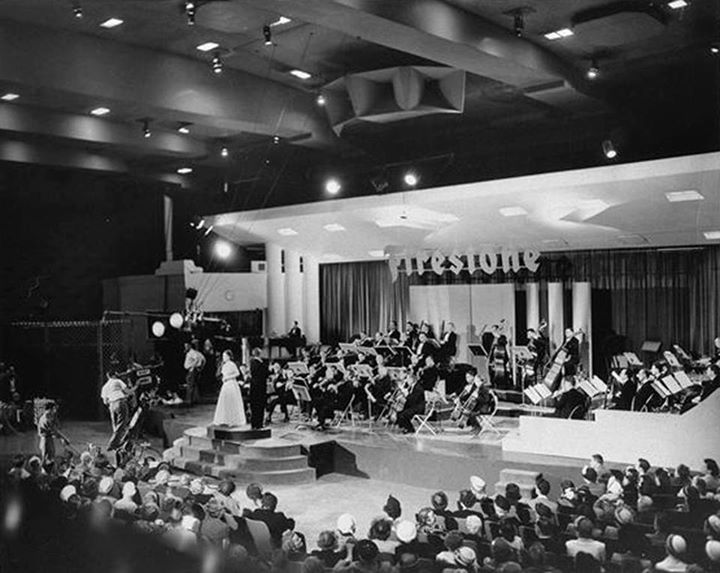
Ultra Rare 1: ‘The Voice Of Firestone’, NBC Studio 8H, 1949
Believe it or not, this is a ‘remote’ broadcast. At 30 Rockefeller Plaza, there were only two television studios at this point…3H and 8G. 3H was converted from radio to TV in 1935 and was home to all the experimental black and white shows and color testing. It served as NBC Television’s lone studio until the conversion of Studio 8G in 1948. 8H was converted in 1950.
The radio show began in 1928 and was originally called ‘The Firestone Hour’ and aired at 8:30 on Monday nights. This show may have been the first series in U.S. television history broadcast beyond New York on a network on a regularly scheduled basis. It began on November 29, 1943 on New York’s WNBT-TV, when there were very few television sets. First seen on the NBC television network in April 1944, it continued until January 1947.
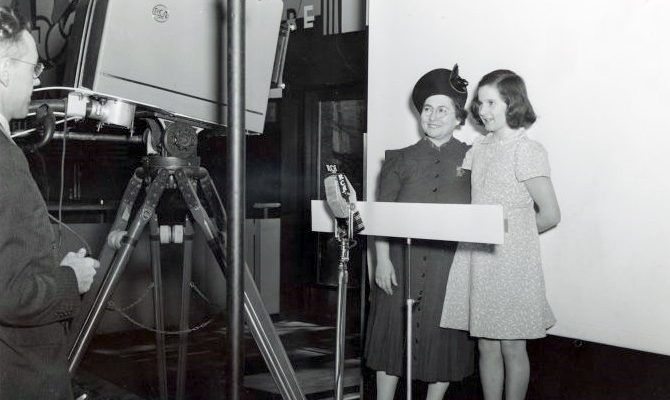
When ‘The Voice of Firestone’ arrived on television in the fall of 1949, NBC simulcast the show on radio and TV, making this one of the first programs to use that technology. In the lower right, you can see an RCA TK30 on a Panoram dolly. Notice the height of the ceiling…8H is actually three stories tall…not two. There is a roof garden just above it. Thanks to Val Ginter for these two photos.