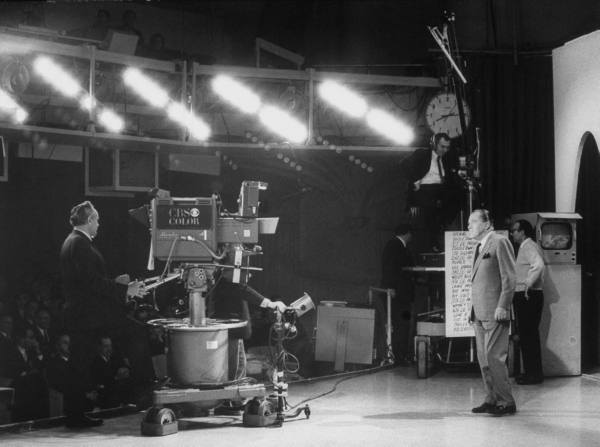
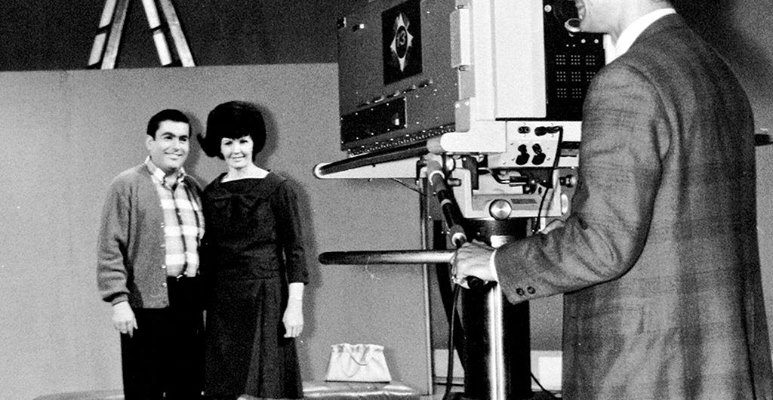
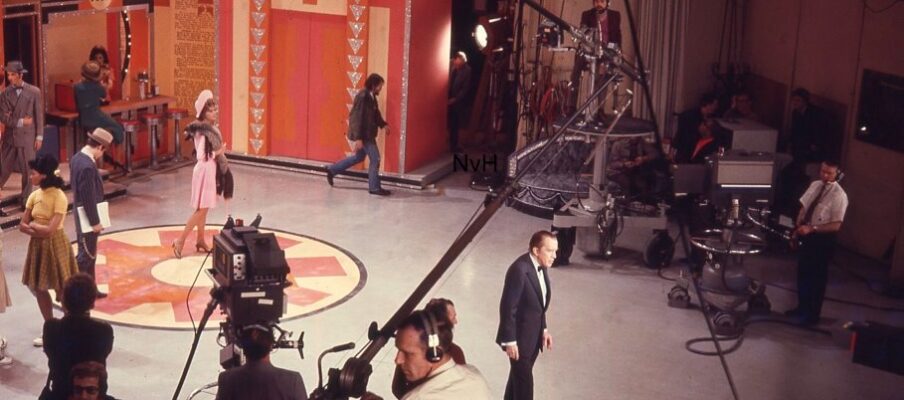
Like Red Skelton and others, Sullivan was enamored with the way he looked on television. In his early days, he would try different wardrobes, make up and hair dressings to see which ones made him look best (a tall job), but he found that somehow a cameraman on his Studio 50 crew named George Moses made him look best. From that point on, he was the only cameraman allowed to shoot the close ups and introductions Sullivan did. Moses was a permanent fixture on Camera 1 from the ‘Toast Of The Town’ days till the last show on March 28, 1971. I don’t know the whole story, but Moses was also involved with the first US/Europe satellite broadcast via Telstar and was shooting either Walter Cronkite or The Statue Of Liberty in NYC, or President Kennedy in Washington on July 23, 1963.
Related Posts
The ED SULLIVAN SHOW, The RCA TK41 SPECIAL USE…Part 7 (of 7)
- September 20, 2023
SPECIAL COLOR BONUS PAGE: Before October 31, 1965…the day CBS Studio 50 was color capable via their new Norelco PC71 cameras, Sullivan’s show had been broacast in color only a handful of times and all but one of those color shows had originated at CBS Television City in Hollywood. This is the one time that […]
Television’s First Camera Pedestal…November 1936
- January 16, 2014
Designed by Alda V Bedford and Knut J Magnusson, the patent assignment went to RCA which I think was their employer. It was a surprise to me that the lifting column is powered by an electric motor located in the base, and the up and down action is controlled in the left panhandle of the […]
October 18, 1952…RCA’s First Experimental Color Football Broadcast
- October 18, 2016
Below is a rare look at RCA/NBC’s first color remote unit, used for this color-cast. Although it was seen by 99.9% of the audience in black and white, it did at least prove the “compatible color” claim RCA made for its Dot Sequential color system. The year before, CBS had broadcast a football game in […]
1931: Tour Of CBS Experimental TV Studio, W2XAB New York
- May 1, 2020
Complete with pictures and drawings, this 1931 article from Science and Mechanics takes us on a tour of CBS’s W2XAB facility in New York…one of the first experimental television stations in the U.S.