_______________________
September 7, 2027, will mark 100 years from the day when electronic television was invented. To celebrate the Centennial, this website and accompanying podcast are going to countdown the Top 100 Milestones from the First 100 Years of Television.
________________________
________________________
November 22, 1963, started much like any other day in the fictional town of Oakdale, Ohio, when television’s most popular daytime drama, As The World Turns, went on the air at 1:30 PM Eastern Time on CBS.
In the second scene of the episode, veteran actress Helen Wagner – playing series matriarch Nancy Hughes – has just sat down for coffee with her father-in-law, the avuncular Grandpa Hughes played by Santos Ortega. They’re discussing arrangements for Thanksgiving dinner when suddenly Oakdale is wiped off the screen by a bolt of static and a black card that said simply, “CBS News Bulletin.”
In Columbus, Mississippi, Beth Blasingame – like millions of other children across the country – was playing on the floor in front of the TV while her mother was making lunch in the kitchen.
How Is This Possible?
Only four years old, Beth did not understand what was happening. “I thought we were watching real people in Oakdale,” Beth recalled decades later. “I didn’t know that was possible. This is my first real memory.”
Beth Blasingame’s first real memory was experienced through television – and quickly became a collective national memory, one of just a handful of “do you remember where you were?” events in modern history.
What Beth and her mother heard next was the voice of CBS News anchor Walter Cronkite:
The bulletin lasted about 45 seconds. When it was over, the screen returned to a commercial for Nescafe Minute Brew – “a new kind of instant coffee” – already in progress.
When the commercial ended, the title card for As The World Turns returned briefly to the screen, but before the program could resume, the CBS News Bulletin and the disembodied voice of Walter Cronkite returned with “further details:”
Back to Oakdale
The bulletin continued for nearly three minutes before the screen returned to yet another scene of domestic normality from Oakdale.
That placid scene was followed by a cocker spaniel and her puppies chowing down on a bowl of Friskies dog food. But the canine feast was interrupted by the CBS News Bulletin card again. For several minutes Cronkite recapped the events unfolding in Dallas before taking “a pause to allow all our stations to identify themselves and join the network.”
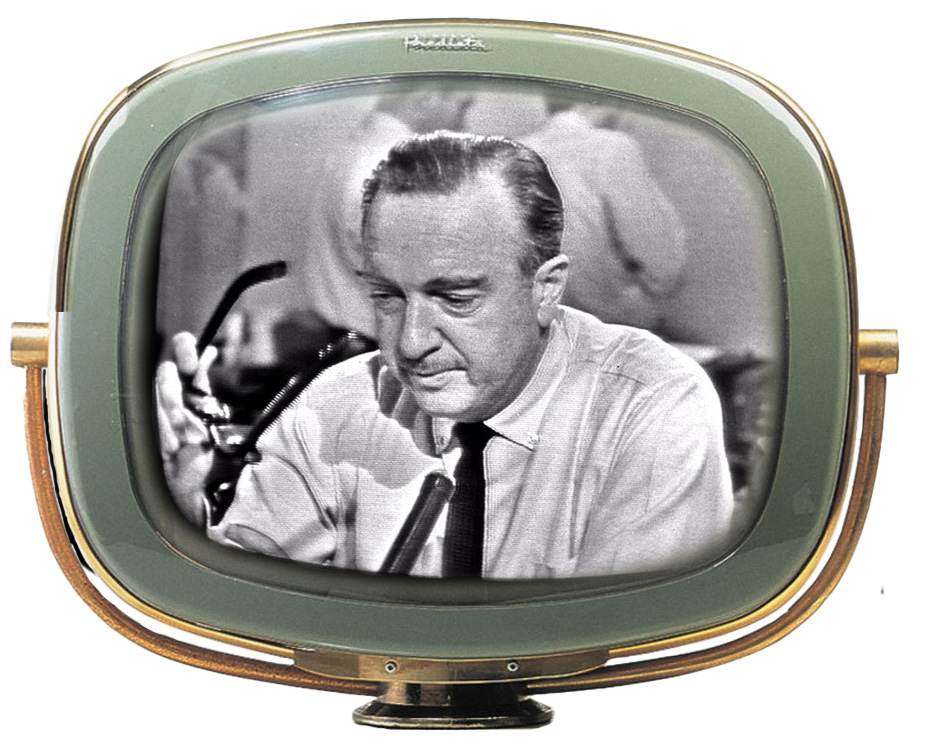
Ten seconds later, Cronkite himself finally appeared in shirtsleeves surrounded by telephones behind a desk in the CBS newsroom.
That was the end of the normal day in fictional Oakdale, Ohio – and in all of America if not the world.
For the better part of the ensuing hour, the screen switched between Cronkite’s newsroom and scenes of the crowd milling about at the Dallas Trade Mart where Kennedy had been scheduled to speak that afternoon.
Back at the news desk, Cronkite faced the camera with unconfirmed reports that the president was dead.
Apparently Official
Beth Blasingame recalls what happened next:
My mother gave a gasp, wiped her hands on her apron and ran to the phone on the wall. She called my sister’s school to ask if they had heard. They said yes and they were calling the bus drivers to come get the students. My daddy was a salesman traveling in another state. He said he did a U-turn and headed home. He said that every church was lit up and parking lots full as he drove home. My parents were not Kennedy fans, but they wept with the rest of the nation.
Similar scenes were unfolding all over America, and for the next several days the entire nation was, as the saying goes, “glued to their televisions.”
By the time Cronkite made his pronouncement, all three of the major networks had dropped their regular programming and switched to their newsrooms.
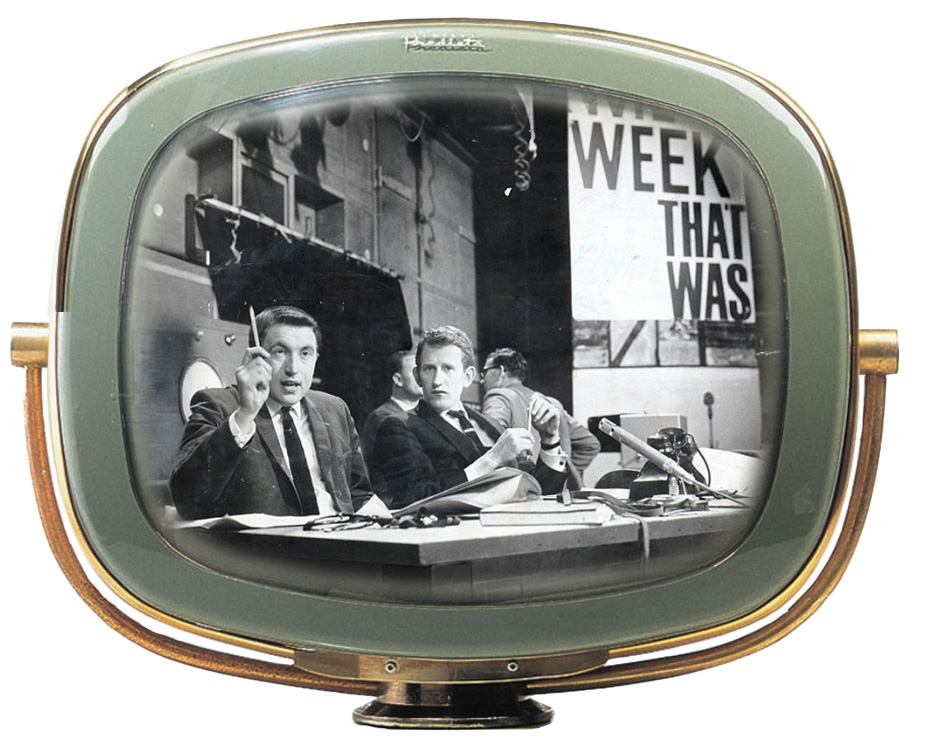
NBC had been airing a filmed sitcom, Bachelor Father, when its first bulletin interrupted the program. The network soon switched to Chet Huntley and David Brinkley anchoring from New York.

ABC, still the smallest of the three networks, was airing a rerun of Father Knows Best when it cut away to news bulletins. ABC lacked the depth of resources of its larger rivals, but nonetheless committed to uninterrupted coverage with anchor Ron Cochran.
Reach and Limitations
Once Kennedy’s death had been officially confirmed all three networks went with wall-to-wall coverage. Estimates suggest that a cumulative audience of between 100 and 150 million Americans tuned in sometime during that afternoon and evening.
While this largest-ever audience tuned in over the ensuing weekend, Kennedy’s assassination demonstrated both the cultural reach and the technical limitations of television in the early 1960s.
The national catharsis demanded immediate coverage, but there were no satellite feeds and only limited microwave links between Dallas and New York. Television cameras were still enormous and immobile, so video from Dallas was limited. The closest the networks could come to real time was 16mm film that had to be shot and processed before any footage could be put on the air.
On Saturday, November 23, the networks focused on the deceased president lying-in-state, first at the White House and then under the dome of the Capitol Rotunda. Reactions were conveyed from foreign leaders, correspondents offered analysis and extended studio discussions. Nielsen estimated that more than 120 million Americans watched television at some point that day.
By Sunday, authorities in Dallas had a suspect in custody: Lee Harvey Oswald was being held at the police headquarters in downtown Dallas.
Murder in Real Time
Word leaked out Sunday morning that Oswald would be transferred to the Dallas County Jail. The route required Oswald to pass through the basement of police headquarters, where all three networks mounted cameras to provide the country its first look at the man accused of murdering the president in cold blood and in broad daylight.
At 11:21 AM, as Oswald was being led toward an armored car, a Dallas nightclub owner named Jack Ruby stepped out of the shadows, fired a pistol, and suddenly Oswald himself was murdered in cold blood, in broad daylight – and in front of a nationwide TV estimated at some 80 million people watching in real time. 1
CBS coverage of the shooting of Lee Harvey Oswald, November 24, 1963.
Again, television united the nation in disbelief.
The televised, collective, national state of shock continued the following day. John F. Kennedy’s funeral procession and internment in Arlington Cemetery on Monday, November 25, remains one of the most-watched events in television history. Conservative estimates count the audience at upwards of 100 million viewers in America alone.
In Western Europe, much of the funeral was carried live or near-live via the Eurovision system, which linked national broadcasters by microwave and cable relays2. Britain, France, West Germany, Italy, and others cleared their schedules much as U.S. networks had; Eastern Europe, Latin America, Asia, and parts of Africa mostly saw the funeral hours or days later, via kinescope films or videotape flown overseas. In all, the total audience for the funeral has been estimated at 600 million worldwide.
Return to “Normal”
Life in fictional Oakdale, Ohio, returned to some semblance of normal on Tuesday, November 26, when As The World Turns resumed its regular schedule. But something fundamental shifted in the real world for Beth Blasingame and her family – and the entire country.
The weekend of the Kennedy assassination not-so-subtly redefined the relationship between television and the nation’s perception of itself. For the first time, history was not something conveyed after the fact. It was experienced simultaneously nationwide. And a nation conditioned by the sight of fictional murder and mayhem got to see the real thing firsthand.
The coverage of the assassination brought television into a new era. Today’s continuous coverage of “breaking news” can trace its origins back to Dallas in 1963. Later crises – from Vietnam and Watergate to 9/11 – refined the formula, but a new template was set: when history turns violent or unstable, the cameras stay on.
An iconic moment from the funeral: 3-year-old John F. Kennedy Jr. salutes his father’s casket
In many respects, the Kennedy assassination marked the end of an age of postwar innocence reflected in white-bread, status quo programming like Lucy, Ozzie and Harriet, and Father Knows Best.
The assassination also marked the beginning of a challenging time – when the first generation of children raised on their shared television experience would begin to question that status quo.
And much of the turbulence would unfold on television.
______________________

______________________________
1 For comparison: On January 28, 1986, approximately 20 million witnessed the explosion of space shuttle Challenger in real time; Roughly 50 million people were tuned in when the second airplane struck the World Trade Center September 11, 2011. That makes the estimated 80 million viewers who witnessed the murder of Lee Harvey Oswald still the largest audience ever to witness a sudden, unscheduled act of violence live on television.
________________________