Long before digital compositing, CGI, or even reliable videotape editing, Ernie Kovacs was bending television to his will. In an era when most shows were little more than radio with pictures, Kovacs treated the TV screen like a magician treats a stage — a place where reality could be rearranged, distorted, or completely ignored.
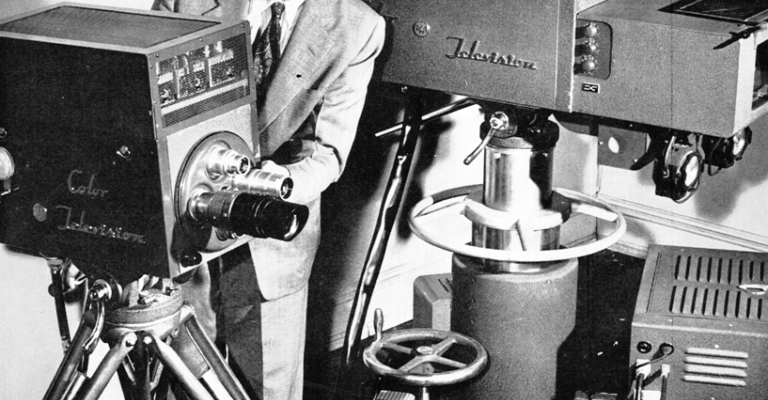
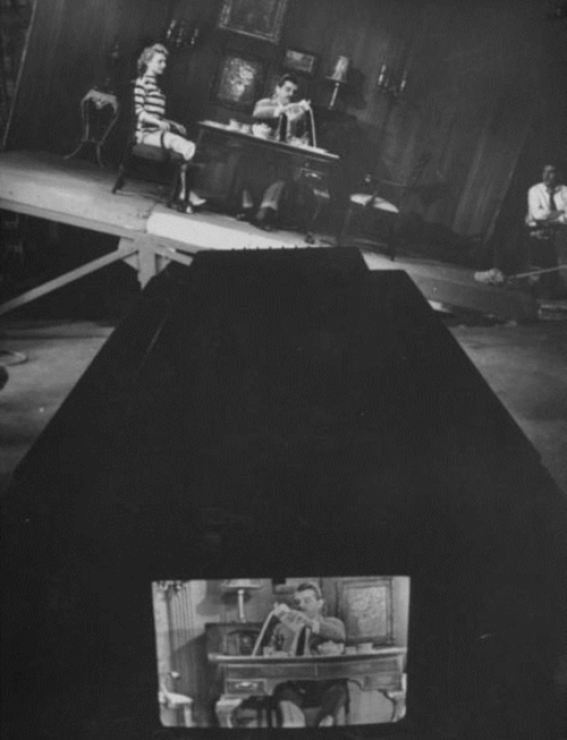
What made him extraordinary wasn’t just his humor. It was his technical imagination. Kovacs saw the control room, the cameras, and the switcher as part of his cast. He understood that television wasn’t just a medium — it was a toy box. (Because you can see over the camera in the featured image at the top of this page, well…it is like you cheated when you watch the perfect little 2 minute gag.)
Live-TV Wizardry
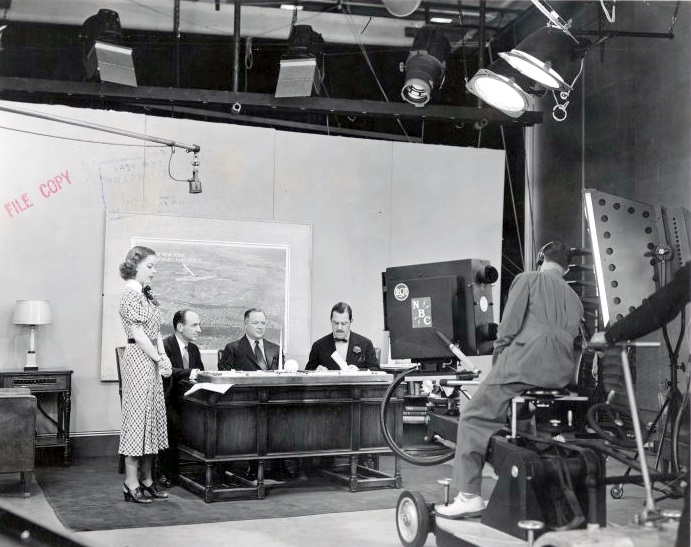
Working in the 1950s meant everything happened live. No retakes. No post-production. No safety net. Yet Kovacs routinely pulled off visual tricks that seemed impossible for the time:
- Superimposed characters interacting with themselves
- Objects appearing and disappearing through precise camera blocking
- Split-screen illusions created manually on the switcher
- Forced perspective gags using studio sets and camera angles
- Blackout comedy timed to the frame with live cues
These weren’t accidents. They were carefully engineered stunts requiring total coordination between Kovacs, the director, the technical director, camera operators, lighting, and stagehands. He pushed crews to think differently — and they loved him for it.

OK…WHICH ONE IS THE GENIUS?
The Nairobi Trio and Beyond
Kovacs’s most famous creation, The Nairobi Trio, is remembered for its surreal humor, but the sketch is also a masterclass in timing. The slow, mechanical movements of the characters were choreographed to match the music exactly, allowing Kovacs to build visual jokes that depended on perfect synchronization — again, all done live.
Other recurring bits, like his “Eugene” silent films, used in-camera effects, odd lenses, and lighting tricks to create moods that television simply wasn’t built for at the time.
A Technical Legacy
Kovacs didn’t just influence comedians — he influenced directors, TDs, and engineers. His willingness to experiment forced networks to expand what their equipment could do. Many of the visual techniques he pioneered became standard tools in variety shows, comedy specials, and even news and sports production.
He proved that television could be more than a stage. It could be a canvas.
Why He Still Matters
Today, when digital tools can create anything imaginable, Kovacs’s work feels even more astonishing. He achieved his effects with:
- Live cameras
- Manual switchers
- Physical sets
- Real-time coordination
- Zero post-production
His brilliance wasn’t in technology — it was in vision. He saw possibilities no one else saw, and he convinced the medium to follow him.
Ernie Kovacs didn’t just perform on television. He reinvented it.