Posts in Category: TV History

Sightseeing #2…’Today’ Show, Set Tours And Ikegami HK322s


Sightseeing #2…’Today’ Show, Set Tours And Ikegami HK322s

It’s not often that we get to see the Ikegami cameras at NBC, or a complete new set change on a major show, but in this video we get both. We start with the Friday, September 7, 1990 sign off from Studio 8H and the old set. During the SNL summer break, ‘Today’ moved there so that Studio 3B could be updated and the new set built. The second part is the intro of the new set in 3B with a few nice shots of the Ikis there.

I don’t think NBC stayed with the Ikegamis very long…maybe four years? Anyone know? I think they may have left the RCA TK47s around 1989 and by ’93 or ’94 had switched to Sony. Enjoy and share! -Bobby Ellerbee

Source

Sightseeing #1…’Another World’, NBC Brooklyn 1990

Sightseeing #1…’Another World’, NBC Brooklyn 1990

Thanks to Anthony Torre, here’s a something we don’t often see…NBC’s Ikegami cameras. This was at the Brooklyn Studios and I think that’s an HK 322, but I’m not positive. With this in mind, up next is a 1990 trip to ‘Today’ and a look at their Ikegamis. Enjoy and share! -Bobby Ellerbee

Source

October 22, 1939…The First Ever Pro Football Telecast

October 22, 1939…The First Ever Pro Football Telecast

75 years ago today, the relationship between professional football and television began when The National Broadcasting Company earned a spot in history by televising a pro football game. Only 22 days before, NBC had televised the first ever college game on September 30th.

A crowd of 13,050 were on hand at Brooklyn’s Ebbets Field on that now-historic day when the Philadelphia Eagles fell to Brooklyn’s Dodgers 23-14. Yes, there was a Brooklyn Dodgers football team, from 1930 to 1943.

The game included play by three future Hall of Famers…quarterback Ace Parker and tackle Bruiser Kinard for the Dodgers and end Bill Hewitt for the Eagles.

Five hundred-or-so fortunate New Yorkers who owned television sets witnessed the game in the comfort of their own homes, over NBC’s experimental station W2XBS. Many others saw the telecast on monitors while visiting the RCA Pavilion at the World’s Fair in New York where it was scheduled as a special event.

According to Allen “Skip” Walz, the NBC play-by-play announcer, only eight people were needed for the telecast. Walz had none of the visual aids…monitors, screens or spotters used today, and there were just two iconoscope cameras. One was located in the box seats on the 40-yard line and the other was in the stadium’s mezzanine section. (The photo of Waltz below was taken a few years later with an RCA Orthicon camera behind him).

“I’d sit with my chin on the rail in the mezzanine, and the camera was over my shoulder,” remembered Walz. “I did my own spotting, and when the play moved up and down the field, on punts or kickoffs, I’d point to tell the cameraman what I’d be talking about.”

The television log records of that day say that the game began at 2:30 p.m. and ran for exactly two hours, thirty-three minutes. By comparison today’s games run almost three full hours. Of course there were no commercial interruptions during the 1939 game. There were, however, interruptions of another sort.

“It was a cloudy day, when the sun crept behind the stadium there wasn’t always enough light for the cameras,” according to Walz. “The picture would get darker and darker, and eventually it would go completely blank, and I would begin to call the game in the style I used for radio broadcasts.”

Enjoy and Share! -Bobby Ellerbee


Source

Television In The Army…1953 ‘The Big Picture’ Special


Television In The Army…1953 ‘The Big Picture’ Special

This is about as good a look at RCA TK 11/31s in action as you will ever get, but we also see Dumont 5098C cameras here. There are some RCA TK30s scattered in and even a small Dage portable and RCA’s Walky Looky. There’s a lot of camera footage here, but you’ll have to skip around some.

The first 10 minutes of this is done at the Army’s New York facility and is RCA heavy. Some of the TK30 footage of the war games was shot at West Point.

The second segment takes us to Augusta, Georgia and the Southeast Signal Corps School at Ft. Gordon (where I trained), and this installation was equipped with Dumont equipment, including a kinescope machine which we’ll see.

At around 14 minutes in, we see a small Dage portable and at 21, more of the mobile unit with TK30s. At 22:25 we see the RCA Walky Looky in action. Many of us that grew up in the 50s and 60s remember watching these ‘Big Picture’ presentations on our local stations. Do you remember? Enjoy and share! -Bobby Ellerbee

Source

Inside CBS Studios 41 And 42…Grand Central Terminal, Then And Now

Inside CBS Studios 41 And 42…Grand Central Terminal, Then And Now

In November of 1937, CBS was near completion of their first television transmitter on the 72nd and 73rd floors of the Chrysler Building. Across the street in Grand Central Terminal, work was underway on the new CBS television studios.

The studio space was 40 feet high, 230 feet long and 60 feet wide. There, two live production studios were built…41 and 42. Studios 43 and 44 were control rooms, but called studios. All four structures, plus a dressing room and some engineering space was packed into this room.

In the photo with the many fluorescent lights, we see the largest studio, 41. In the next black and white photo, we see Studio 42. I think there was a movable wall between them for huge productions and election night coverage.

Next is a photo of that space stripped and ready to become The Vanderbilt Tennis Club. In the exterior photo, we see circled the area of the building where this space is located. Finally, here’s a shot of the space as it looked a few years ago. I think the tennis courts are gone now and the space is now a lounge for conductors and engineers. Enjoy and Share! -Bobby Ellerbee


Source

What A Night! September 27, 1954…’Caesar’s Hour’ & ‘Tonight’ Debut

What A Night! September 27, 1954…’Caesar’s Hour’ & ‘Tonight’ Debut

A week or so back, we touched on this but here’s something new. Thanks to Maureen Carney, here is the ad that ran that day introducing not only ‘Caesar’s Hour’, but the rest of the television line up that Monday night, including the debut of ‘Tonight’ with Steve Allen.

Below is what is thought to be the first “Commuters” sketch from the new Caesar show that ran that night. This is called “The White Rug” and features Sid Caesar, Nanette Fabray, Carl Reiner, Howard Morris and Janet Blair.

In ‘Your Show Of Shows’, there was a similar set of neighborly sketches called “The Hickenlooper’s” that Sid and Imogene Coca performed with Morris and Reiner. That was so successful, Caesar carried it over but took it from the city setting to the suburbs. Enjoy and share! -Bobby Ellerbee

Source

Follow Up…NBC’s Studio 3H And 5F, Historic Photos

Follow Up…NBC’s Studio 3H And 5F, Historic Photos

In the Guided Tour of Studio 3H I just posted, we saw the control room in action, but here is a closeup of the video shading board that was in use in 3H in 1937 and the information on the back of the photo.

A few days back, we also saw NBC’s second ever television installation in another video. That was Studio 5F and here is a shot of the 16 and 35MM projectors in the first ever telecine room. There are two Iconoscope cameras on the other side of the wall these are projecting into. This was built just after work was completed on 3H and probably went into service in early 1936. The photo is accompanied with the information on it’s back. Enjoy and Share! -Bobby Ellerbee


Source

ULTRA RARE! Meet NBC’s FIRST CAMERAMAN…Albert W. Protzman

ULTRA RARE! Meet NBC’s FIRST CAMERAMAN…Albert W. Protzman

Late yesterday afternoon, I stumbled across this incredibly rare piece of television history in a happy accident, while researching the locations for the guided tour post just before this. In the coming days, I will share what I learned from Mr. Protzman’s writings, but for now…let’s meet the man.

Beginning his career at AT&T-Bell Laboratories School in 1922, Al Protzman became one of the first and youngest radio broadcast engineers in the country…he was 20 years old and working with the AT&T stations WEAF and WJZ, and later, with the National Broadcasting Company after its founding in 1926.

From 1930 to 1936 Protzman worked in Hollywood as a sound engineer for Fox Film and its successor 20th Century-Fox. Among his screen credits were several “Charlie Chan” films and “The Power and the Glory”, starring Spencer Tracy.

In 1936, NBC was just beginning television program tests and they approached Protzman with a job offer to become their first TV cameraman. He accepted and eventually became one of TV’s earliest Technical Directors. In 1939, Protzman presented a paper, “Television Studio Technique” to the Society of Motion Picture Engineers which described NBC’s TV experiments in great detail and I’ll share that with you soon.

Al Protzman retired in 1966 as Director of Technical Operations for NBC. He died in 1981 in Bronxville, New York, aged 79. Thanks to NBCU Photobank for the image. Enjoy and SHARE! -Bobby Ellerbee

Source

SNL Classic! Behind The Scenes Of “The Continental” Sketches


SNL Classic! Behind The Scenes Of “The Continental” Sketches

This past Saturday night, the SNL classic episode that aired at 10 PM was the April 8, 2000 episode with Christopher Walken as host and the big sketch from this show was the “Cowbell” scene with Will Ferrell. But, whenever Walken hosts, he does a recurring character…”The Continental” which is always shot from the woman’s Point Of View by a hand held camera.

Here is “The Continental” sketch from February 22, 2003. This special video shows us what the studio audience is seeing as well as the home audience by way of a box insert from the hand held. I don’t know who the cameraman is, but Wally Feresten is the Q card man. As a matter of fact, Wally’s company does all the Q cards for NBC’s live shows both in New York and in LA.

https://www.youtube.com/watch?v=WNCOFJnpPGs

The Making Of S*N*L’s “The Continental” – enjoy!

Source

Seems Like Only Yesterday…And It Was! CBS Sunday Morning

Seems Like Only Yesterday…And It Was! CBS Sunday Morning…

Thanks to Craig Wilson for these 4 shots from yesterday’s show from Studio 45. Notice the three-camera shot…Studio 45 is so big it hosts two shows…’CBS Sunday Morning’ and ‘Inside Edition’. Behind the three cameras you see one of the green cyclorama curtains and the ‘Inside Edition’ sign.

During the week, that whole side of Studio 45 is all green, floor and all as Deborah Norville’s show is done with a virtual set. I’ve included a shot I took of that set in May. They use a mannequin to help adjust the chroma for camera tests. Enjoy and share! -Bobby Ellerbee


Source

The First Two RCA Orthicon Cameras…Early Indoor Test, 1940

The First Two RCA Orthicon Cameras…Early Indoor Test, 1940

These photos are opaque slides from a homestyle stereoscopic viewer. I think what we are seeing here are the first two RCA Orthicon cameras being tested. Notice there is (1) no focus control anywhere. In earlier posts today, we saw both a panhandle focus and the side mounted focus apparatus, neither of which seem to be here. (2) There is only a single, fixed focus lens and not the double fixed focal length lenses we see on the Iconoscope camera and later versions of this camera. (3) Notice also that there is no viewfinder on any of these cameras, but if you look closely, you can see there is a removable door over that viewing port.

To reinforce my belief that these cameras did not have electronic viewfinders, notice the open door shot. This shows a single row of electronics in the VF area, but behind it is the light proof black box which encloses the ground glass – optical viewer. I think that row of tubes is associated with functions in the camera body below the VF.

As you view that open door shot, look at that huge exhaust port behind it (left bottom) and the single lens on the front (right bottom). In an earlier post, I had identified this first version of the Orthicon camera as the Type 1840…that name is due to the tube number inside which is the 1840, also seen here in the bottom photo. Enjoy and share! -Bobby Ellerbee


Source

The RCA Orthicon Camera On Location…1945

The RCA Orthicon Camera On Location…1945

While we are on the Orthicon Camera, here are a few interesting pictures of it in use in outside broadcasts. There are two photo here from the 1945 Macy’s Parade…one of the camera shooting down and one taken from the street showing the camera on the balcony of The Astor Hotel.

The photo of the camera with a banner was taken on VE Day in 1945 with the camera again at The Astor. Finally, a rare hand bill handed out on VE day to passers by announcing the televised coverage on WNBT. In the next post, we’ll see a real rarity…these cameras inside. Enjoy and share! -Bobby Ellerbee


Source

Ultra Rare And Historic Photos Of The RCA Orthicon Camera

This the first time I have ever seen close ups like this and we even have a photo of the camera in it’s carrying mode. This is the second version of this camera and is probably from 1942 or ’43.

In the last photo, we see the early, 1940 version of the camera with it’s CCU and power supply. I think the original was called the Type 1840 and notice it has the focus control in the pan handle like the old Iconoscope cameras and the TK41s. Notice this newer model has the focus control on the right side of the camera body and this is the first time the focus control was mounted there.

Although Dumont had used electronic viewfinders from the start, I do not think either model of this RCA Orthicon camera had them. Given the lenses are the same dual fixed focal length configuration as the RCA Iconoscope cameras, I’m pretty sure this too had a ground glass – optical viewfinder as well.

The Orthicon debuted just a year after the 1939 World’s Fair and the official launch of electronic television. The Orthicon was the forerunner to the much better Image Orthicon tube which came into use in 1945. This is a big improvement over the Iconoscope, but…this tube still required a lot of light and these cameras were mostly used mostly outside. I do have some photos of them in a studio, but I think that was purely for testing and demonstration purposes. Thanks to NBCU Photobank for the images. Enjoy and share! -Bobby Ellerbee


Source

Ultra Rare! Smith Block & Video Tape Editing Videos

Ultra Rare!  Full 20 Minute BBC Training Film on Video Tape Editing & Smith Block Editing

Movie 720×576

At the link above is a wonderful 21-minute video from the BBC on the finer points of video tape editing. If you have the time and interest in how it was done “back in the day”, well, step right up!

Movie

At this link, is a 2 1/2 minute look at editing 2″ tape with the Smith Block. There has been a lot of interest in the two prior posts and this is the perfect piece to top off this subject.

This is from this link http://www.vtoldboys.com/edit.htm# and there is other interesting early video tape editing information here, including how early electronic editing was done. Thanks thanks to Pat Phos Martin for sharing this with us. Enjoy and share! -Bobby Ellerbee
http://www.vtoldboys.com/editm01.htm

Source

‘Hollywood Squares’…Unaired Pilot AND How Peter Marshall Won The Job


‘Hollywood Squares’…Unaired Pilot AND How Peter Marshall Won

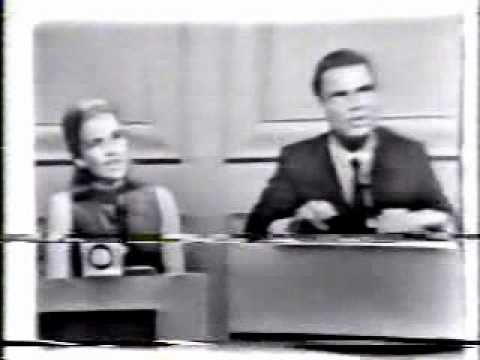
I don’t think Bert Parks was ever really seriously considered for the role of host of this show, but for the pilot pitch to CBS…he’d be an OK choice. Obviously not though. After the pilot sat on Fred Silverman’s desk for six months, Heater & Quigley did another pilot with comedian Sandy Baron. CBS thought Parks to corney and Baron to “New Yorky”.

The director of the pilot, Larry White took the show to NBC after Silverman passed and they liked it, but they too did not like either host. This is when Peter’s name got put in the hat.

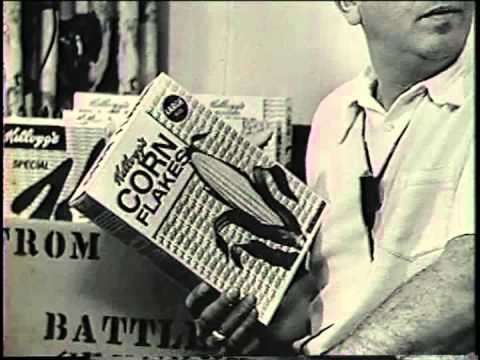
The short version is that Bob Quigley saw Peter in a Kellogg’s commercial and called him. They flew him to Sherman Oaks, showed him the pilot and Marshall liked it, but asked why they were interested in him and not Parks or Baron. Quigley said they wanted a “nonentity”. Marshall replied, “then, I’m your man”! The rest as they say is history.

Marshall’s starting salary was $1250 per week and the stars were paid union scale, which as the time was $750 a week.

Most don’t know it, but this was actually Marshall’s second time to host a game show. The first was a local LA show called ‘Stimulus’ which only ran for ten weeks, but it gave him some good experience.

By the way…Peter had reported long ago that NBC had dumped all of those tape archives, and he was right BUT! Low and behold, a cable channel somewhere found 3,500 episodes in their warehouse. Thanks to them, we can see most of these classic shows. Enjoy and share! -Bobby Ellerbee

Here’s the link to Part 2
https://www.youtube.com/watch?v=syMXK0Gxncc

https://www.youtube.com/watch?v=hrSvImHsUX4

Yep, I finally am back to uploading, and I forgot I had this saved weeks ago! Lazy me… Here’s a great one! It’s the original 1965 pilot of the classic cele…

Source

RARE! ‘Hollywood Squares’ In Studio Shot…First And Only

ULTRA RARE! ‘Hollywood Squares’ In Studio Shot…The First And Only

Yesterday marked the 48th Anniversary of the debut of ‘Hollywood Squares’ on NBC, which began the long run of the original daytime show from October 17, 1966 – June 20, 1980.

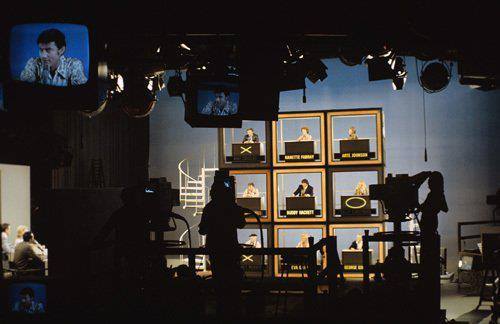
Although I have looked high and low, this is the only backstage shot I have ever seen that shows the cameras and I thank Randy West for sharing it. I’m sure the show started with RCA TK41s and would love to find a picture of that, but till one turns up, here are RCA TK44s on the set. Does anyone know which studio this came from at NBC Burbank? Enjoy and share! -Bobby Ellerbee

Source

This Was Indeed, The Start Of Something BIG! The Roone Arlidge Era


This Was Indeed, The Start Of Something BIG! The Roone Arlidge Era

This video is from the last episode of ABC’s ‘Wide World Of Sports’ debut season which started April 29, 1961. This clip highlights some firsts in football coverage.

This is the first use of a crane camera over the field, microphones on the quarterbacks and possibly, handheld sideline coverage in a professional football game. (NBC used RCA’s Walky Looky on some college games in the late 50s). The video is quite historic.

In January of ’62, WWOS was given a permanent time slot where it remained for over forty years. The show was the creation of Edgar Scherick through his company, Sports Programs, Inc. After selling his company to the American Broadcasting Company, and joining them to run ABC Sports, he hired a young Roone Arledge to produce the show.

Around 1956, after graduating with a masters degree from Columbia College, Arlidge got a stage manager’s job at NBC’s New York City station, which was then WRCA. One of his assignments there was to help produce a children’s puppet show hosted by Shari Lewis.

Sometime in late 1960, Arledge convinced his superiors at WRCA to let him film a pilot of a show he called ‘For Men Only’. While his superiors liked the pilot, they told him they couldn’t find a place in the programming schedule for it. But the WRCA weatherman, Pat Hernon, who hosted the pilot, began showing it and Edgar Scherick was one of the people who saw it.

While Scherick wasn’t interested in ‘For Men Only’, he recognized the talent Arledge had. Arledge realized ABC was the organization he was looking to join. The lack of a formal organization would offer him the opportunity to claim real power when the network matured, so, he signed on with Scherick as an assistant producer for WWOS.

Several months before ABC began broadcasting NCAA college football games, Arledge sent Scherick a remarkable memo, filled with television production concepts which sports broadcasts have adhered to since. Previously, network sporting broadcasts had consisted of simple set-ups and focused on the game itself. The genius of Arledge in this memo was not that he offered another way to broadcast the game to the sports fan. The genius was to recognize television had to take the sports fan to the game. You can see that rare memo at this link THE HOUSE THAT ROONE BUILT – Eyes Of A Generation…Television’s Living History

In addition, Arledge realized that the broadcasts needed to attract and hold the attention of women viewers. At age 29 on September 17, 1960 he put his vision into reality with ABC’s first NCAA college football broadcast from Athens, Georgia between Alabama’s Crimson Tide and the Georgia Bulldogs. Sports broadcasting has not been the same since. Thanks to Chaz Bryant for the clip. Enjoy, share and Go Dawgs! -Bobby Ellerbee

https://www.youtube.com/watch?v=kvgnv7xJidY

Source

NBC Burbank 1958…Here’s A Drive By


Speaking Of NBC Burbank And 1958…Here’s A Drive By

In the last post, we saw a 1958 clip of Steve Allen and company singing and strolling the halls inside 3000 West Alameda…here’s the outside. Thanks to David Crosthwait and DC Video for this trip down memory lane. Enjoy and share! -Bobby Ellerbee

https://www.youtube.com/watch?v=Us2flcoPut0

This is a 1958 videotape of NBC Burbank as recorded on 2″ Quad in a mobile unit. The show opens as the camera travels down California Street, takes a right t…

Source

Steve Allen Special…Singing Tour Of NBC Burbank


Special Updated Version Of NBC Burbank Stroll!

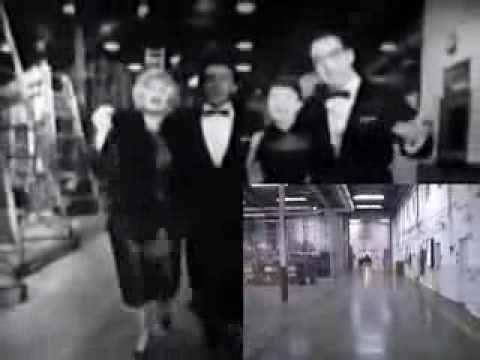
In yesterday’s post of the Jimmy Fallon record release, I mentioned that he was not the first ‘Tonight’ host to have a record charted in Billboard Magazine. Steve Allen was, and here is the song that he wrote and recorded in a very special television version!

This is the original 1958 footage of the famous stroll through NBC Burbank updated in 2013 with a present day look to the same route. Enjoy and share! -Bobby Ellerbee

Source

The Smith Block, Up Close And Personal

In Case You Missed This…The Smith Block, Up Close And Personal

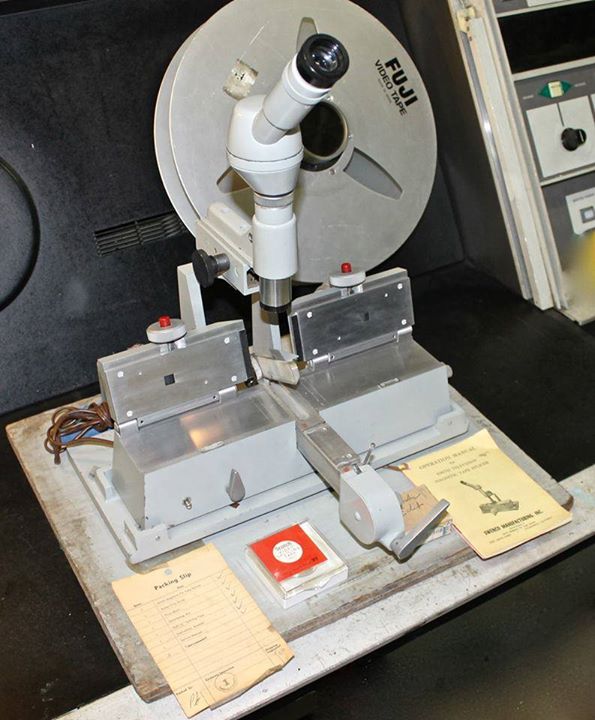
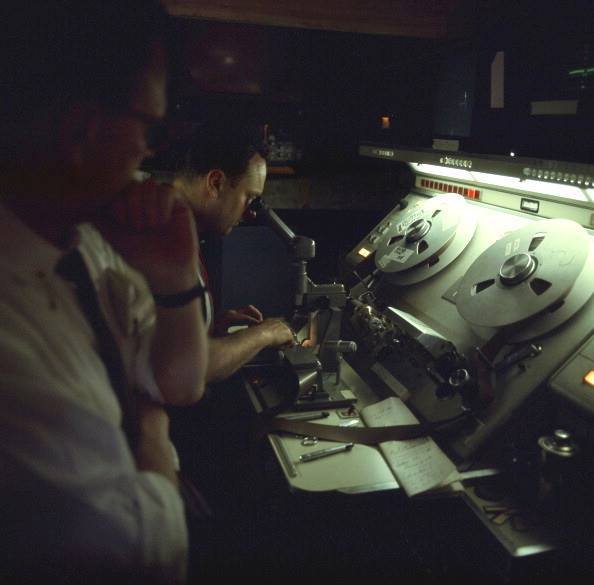
Earlier in the week, I posted a photo of a 1965 NBC videotape edit session using the Smith Block. Thanks to David Crosthwait at DC Video, here are some awesome close ups of the Smith Block which was created by NBC Burbank editor Bob Smith.


Source