- Home
- TV History
- Network Studios History
- Cameras
- Archives
- Viewseum
- About
Behind The Scenes…NBC Sports Olympic Coverage Wrap Up
Two years of planning, 102 shipping containers of gear, 1000 cameras, 2700 monitors, and 3000 people, all came together for NBC to televise 11,000 athletes competing in 28 sports over 37 venues.
Thanks to Andrew Jackson at NBC’s Englewood Cliffs NJ facility, the master control, transmission and uplink HQ for all NBC cable channels, for sharing the video with us. -Bobby Ellerbee
A Musical Trip Down Memory Lane With The Great Johnny Mercer…
If you’ve ever heard “Moon River”, “The Days Of Wine And Roses”, “Autumn Leaves”, “Hooray For Hollywood”, “That Old Black Magic”, “Laura”, “Something’s Gotta Give”, “Birth Of The Blues”, “Jeepers Creepers”, “To Marvelous For Words”, “I’m An Old Cowhand From The Rio Grande”, “Blues In The Night”, “You Must Have Been A Beautiful Baby”, you’ve heard at least 13 of the hundreds of huge songs he wrote.
Everybody from Frank Sinatra, Judy Garland and Ella Fitzgerald to Louis Armstrong, Andy Williams and well…you name it, have recorded his songs, that still live in our memories.
In this 8 minute clip, Steve Alan and Johnny run through a dozen or more of his songs in a kind of “sing off” that will amaze you.
By the way, I’ve added a new Facebook page to share some of my favorite music from my 50 years in radio and television. It’s called Ears Of A Generation, so if you like music that makes you feel good, stop in and take a listen at the link below! -Bobby Ellerbee
https://www.facebook.com/Ears-Of-A-Generation-295938424114838/
https://www.youtube.com/watch?v=2YFT8MixHSE
Songwriting. legend JOHNNY MERCER performing some of his classics…
Creating The SNL Title Sequences…A Detailed Look At The Process
This is heaven for the many pro photographers and videographers among us, but even for laymen, this is quite interesting. Here is the detailed and technical description of the photographic process from the man who did it Alex Buono.
From the lens tricks and cameras used, to the special effects, it’s all here. The most experimental footage was relegated to the interstitial bumpers, watch out for them during the commercial breaks. The one I like best is the custom bokeh technique. This one looks like a magic trick…as the main shot goes out of focus, the background lights come into focus as tiny SNL logos.Enjoy and share! -Bobby Ellerbee
http://www.alex-buono.com/how-we-did-it-snl-titles-sequence/
Alex Buono | HOW WE DID IT — SNL Title Sequence
…And we’re back! After a much-needed summer hiatus, it’s that time of the year again when my comrades in the SNL Film Unit all reconvene on the 17th floor of 30 Rockefeller Plaza for another season of filmmaking speed-drills.
Meet “Miss Patience”…Television’s First Stand In (+ Rare Video)
This is inside television’s first studio…3H at NBC in New York in May 1936. If you look closely, you can see that “Miss Patience” is actually a mannequin, which is why she was so “patient”.
Miss Patience came to be, when Betty Goodwin, television’s first female announcer ( who you’ll hear in the video), and first fashion show consultant, developed blisters on her cheeks from modeling clothes and makeup for hours of camera tests, under the scorching heat of the 1000 foot candles of light it took for the Iconoscope cameras to get the picture.
Betty had been a newspaper reporter in Seattle, but moved to NYC in the depths of the depression to take a job in radio with NBC. After working as a production assistant at the 1936 political conventions, she was reassigned to kind of the same position in the new Television Department, which as the time was very hush-hush.
When RCA set up the experimental Studio 3H in 1935, they had kept it under wraps as competition for tech secrets was fierce. By July of ’36, RCA had decided to go public with their project, and on July 7, their first public broadcast was made from this studio for a group of radio station owners, which were NBC affiliates, watching on the 62nd floor of 30 Rock.
In this video, cued to start at Betty’s narration of a fashion show, you will see historic footage from Studio 3H, captured by a Pathe newsreel cameraman. Enjoy! -Bobby Ellerbee
Sunday Matinee #2…Veteran Stage Manager Doug Quick, BTDT
BTDT = Been There, Done That, and where television is concerned, that pretty much sums it up for 45 year veteran Stage Manager Doug Quick, who’s been running “The Price Is Right” for 35 years. There are lots of great war stories in nearly 7 hours of video.
In a career spanning 45 years, Doug Quick has stage managed a variety of programs for both NBC and CBS and has worked with such legendary figures as Red Skelton, Johnny Carson, Frank Sinatra, Muhammad Ali, Bob Barker, and Carroll O’Connor.
Doug Quick began his production career in the prestigious NBC Page Program in 1969, which included training as Carson’s personal page on “The Tonight Show Starring Johnny Carson”, and as a page on “The Dean Martin Show”. Quick’s enthusiasm, determination and strong work ethic secured him a PA job on Martin’s show, which led to a position as an NBC staff stage manager, where he worked alongside respected stage managers Jerry Masterson and Ted Baker.
Transitioning to freelance in the mid-1970s, Quick worked on “Sanford and Son”, “The Redd Foxx Show”, “The Flip Wilson Show”, “The Dinah Shore Show” and more before becoming a CBS staff stage manager in 1976. Other notable programs he was assigned to include “Archie Bunker’s Place” and a myriad of now classic game shows including “Match Game”, “Family Feud”, “The $25,000 Pyramid”, and the longest running game show in television history, “The Price is Right”, which he has stage managed for more than 35 years. Enjoy and share! -Bobby Ellerbee
http://www.dga.org/Craft/VisualHistory/Interviews/Doug-Quick.aspx?Filter=Full+Interview
Doug Quick – Visual History Interview
Veteran stage manager Doug Quick (The Price is Right; Archie Bunker’s Place; The Young and the Restless) discusses his creative contributions to episodic programming, daytime serials and variety shows, and the extensive rehearsal and planning that goes into the production of game shows.
Sunday Matinee #1…GREAT WEST COAST TV HISTORY VIDEO
In this KTLA 40th Anniversary presentation, there are so many firsts, they are nearly impossible to list, but Bob Hope, Steve Alan, Dinah Shore, Betty White, and many others do a remarkable job of narrating this 2 hour show. Filled with rare film and kinescopes, this is the story of how television developed on the west coast, and includes not just KTLA’s history, but other early stations there too. Enjoy and share! -Bobby Ellerbee
August 19, 1906…The Father Of Electronic Television Was Born
110 years ago today, Philo Taylor Farnsworth was born in Beaver, Utah. By age 14, he had worked out the principles for the Image Dissector tube which occurred to him while plowing back and forth on the family farm.
The video at this link was done by his great granddaughter, Jessica Farnsworth and is full of rare color film of some of Philo’s first demonstrations in San Francisco and Philadelphia and is well worth the ten minutes it takes to watch.
The photo below was taken after Farnsworth’s only appearance on the technology he created. In June of 1957, he was a guest on ‘I’ve Got A Secret’ and this clip is loaded to start at the beginning of his segment. http://youtu.be/3cspYZyGp1A?t=13m21s
The lady is his wife and assistant, Pem Farnsworth. Enjoy and share! – Bobby Ellerbee
August 19, 1949…First CBS Color Test Footage Shot
The day before this, CBS did their first experimental color broadcast in Washington, D.C. for the FCC using the system they were building for Smith, Kline & French which was to be used in operating rooms for medical teaching.
The next week, on August 25, RCA announced their Dot Sequential color system which is the one we used today. CBS was making color with a system that used a spinning red, blue and green color wheel on the cameras and receivers, so the CBS system was mechanical where the RCA system was all electronic. For more of the chronology on the early days of color systems, here is a link to Ed Reitan’s great research. https://www.earlytelevision.org/Reitan/index.html
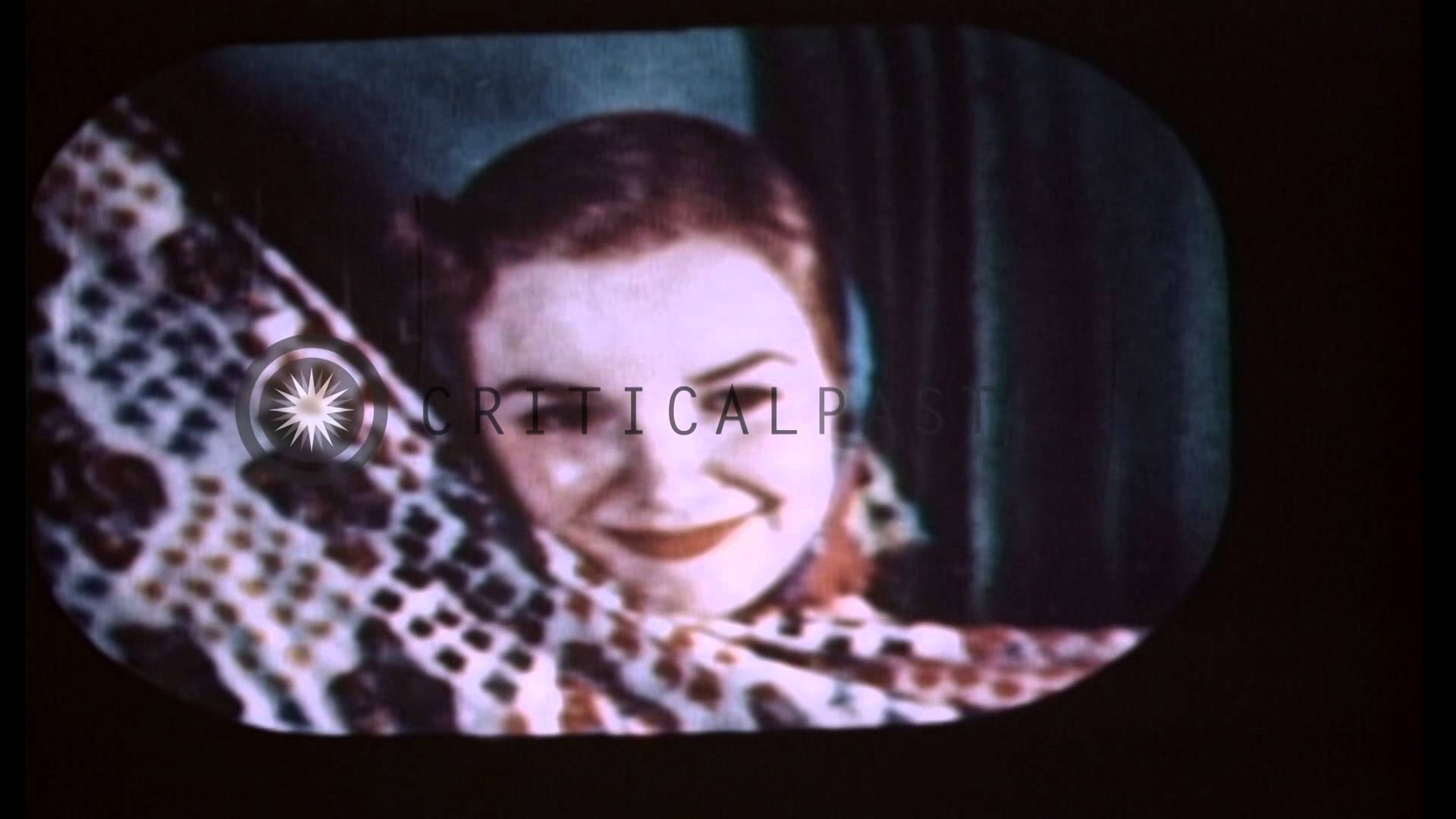
Below is three minutes of the oldest known color recording (on film, but not a kinescope) of a CBS Field Sequential color television test featuring a lady holding colorful scarves. A small low quality sample of this footage has been on the web for many years, this version is full 3 min worth in HD. Thanks to Troy Walters in Australia for bringing this to us. Enjoy and share! -Bobby Ellerbee
#t=15″ target=”_blank”>https://www.youtube.com/watch?v=O5tf6SQjFlQ #t=15
Link to order this clip: http://www.criticalpast.com/video/65675075009_color-television-broadcast_Columbia-Broadcasting-Systems_Color-Television-Monitor-Tube…
Come Play Along With A Special Episode Of “To Tell The Truth”
Can you guess which one is the real Ken Whalen? I’ve read his book and I couldn’t guess, so play along, and there is a surprise for Gary Moore at the end.
Ken was a director and associate director in the Golden Age and worked with Ed Sullivan, Jackie Gleason, Red Buttons, Gary Moore, Perry Como and lot of early game shows like “Strike It Rich” and many more.
His book “How the Golden Age of Television Turned My Hair to Silver: The Mad Memories of an Ex-Television Director”, is a must read. It is loaded with behind the scenes memories, bloopers and very interesting stories of live television in the 1950s.
Thanks to Barry Mitchell for sharing the link. Let us know if you guess the right one. Peggy Cass has some great questions, as do most of the panel members. Enjoy! -Bobby Ellerbee
In the 2nd half of this episode of To Tell the Truth, we get a partial reunion of several cast members from Garry Moore’s old variety series the Garry Moore …
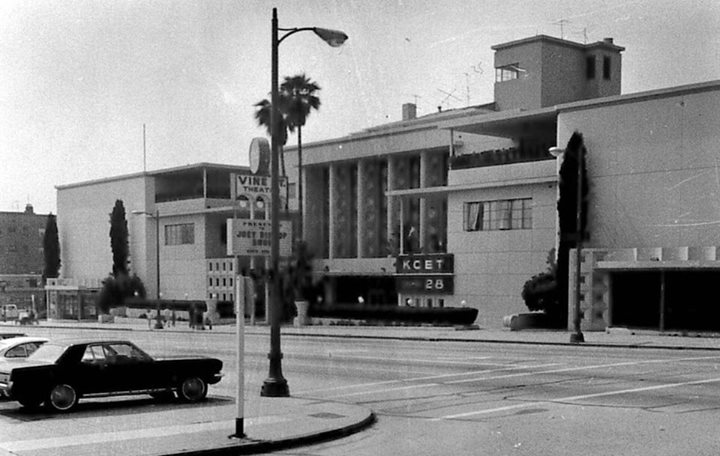
August 18, 1948…Vine Street Studios Debut
Did you know this was originally the home of The Don Lee – Mutual Network? Or, that this is the first place Johnny Carson ever went on network television? This was also the home of “The Dating Game”, “The Joey Bishop Show”, and more.
The building, at 1313 Vine Street in Hollywood, was constructed in 1948 as a radio and television studio facility at a cost of $3 million. The dedication of the Don Lee-Mutual Broadcasting building was held on August 18, 1948. It is the oldest surviving structure in Hollywood that was originally designed specifically with television in mind. As you can see from the layout image, it was huge and very well planned.
Cadillac dealer Don Lee got into broadcasting to stay competitive with his friend Earle C. Anthony, a Packard dealer, who bought radio station KFI as a method of appealing to his customers. Lee bought KFRC in San Francisco and KHJ in Los Angeles, ultimately building the chain to 12 West Coast stations. Though named for him, Lee, who had died 14 years earlier, never saw this building.
The building was the original home of Los Angeles Channel 2, which is now KCBS-TV, through the 1950s. KCBS-TV is one of the oldest television stations in the US. It was signed on by Don Lee Broadcasting, and was first licensed by the FCC as experimental television station W6XAO in June 1931. The station went on the air on December 23, 1931, and by March 1933 was broadcasting programming one hour each day only on Monday through Saturdays.
During World War II, programming was reduced to three hours, every other Monday. The station’s frequency was switched from Channel 1 to Channel 2 in 1945 when the FCC decided to reserve Channel 1 for low-wattage community television stations. The station was granted a commercial license (the second in California, behind KTLA) as KTSL on May 6, 1948, and was named for Thomas S. Lee, the son of Don Lee.
Don Lee’s broadcasting interests were placed for sale in 1950 following the death of Thomas S. Lee. General Tire and Rubber agreed to purchase all of Don Lee’s stations, but General Tire chose to sell KTSL, and the building at 1313 Vine Street to CBS. On October 28, 1951, KTSL changed its call-sign to KNXT to coincide with CBS’ Los Angeles radio outlet, KNX (1070 AM). In April of ’84, it became KCBS.
These are the studios where Johnny Carson’s earliest mid-’50s television appearances, including “Carson’s Cellar” and “The Johnny Carson Show” were done.
ABC bought the building from CBS around 1967, installed GE color cameras and produced shows like “The Joey Bishop Show”, “The Dating Game” and “The Newlywed Game” from 1313 Vine Street.
Today, it is the home of the Academy of Motion Picture Arts and Science’s Pickford Center for Motion Picture Study. It was dedicated in honor of legendary silent film actress Mary Pickford in 2002. Pickford was one of the founding members of the Academy. Enjoy and share! -Bobby Ellerbee
If It Sounds Funny…You Can Thank Treg Brown!
For all of us that grew up with the great cartoons of the 40s, 50s and 60s, here’s a nice story on the man behind the silly sounds, that were such a big part of the fun. The two videos in the attached artilce are full of thing’s you’ve heard all your life…now you know who to thank. Enjoy! -Bobby Ellerbee
Back in the good old days of showbiz, sound effects were created by foley artists who made a racket and recorded their sounds right on the spot, without any digital help or enhancement. And when it came to cartoon sound effects there was one man who made that madcap racket we all know and love from t…
Mark You Calendar! “The Larry Sanders Show” Returns September 23!
It doesn’t appear that the show will have a time slot on the broadcast schedule, but it will at finally be available “on demand”. Hey Now! -Bobby Ellerbee
http://www.ew.com/article/2016/07/30/larry-sanders-show-hbo-return-premiere-date
‘The Larry Sanders Show’ reruns returning to HBO this fall
The entire six-season run of The Larry Sanders Show will return to HBO on Sept. 23, the network announced Saturday, making good on its promise in…
A Rare Look Inside CBS Studio 33…The Cronkite Newsroom
Although Dan Rather was now the anchor, Studio 33 is where Walter Cronkite first reported from, when they moved to the Broadcast Center in 1964.
Prior to the move, the newsroom and set was on the 23rd floor of the Graybar Building which was next to Grand Central, and the show was switched out of the old Studio 42. About a year after this video, the news moved to Studio 47.
The cameras here are Hitachi SK 110s and show us how frantic the pace is just before and during air. Stuffing a day of the world’s news into 22 minutes is not an easy task, and back then, the news was real news…not what we settle for now. By the way, this space is now occupied by CBS Radio. -Bobby Ellerbee
https://www.youtube.com/watch?v=BaLwvDsplMI
It’s Hari Kari Time
“Rocket Rangers”…The First Show With A Purposely Wiped History
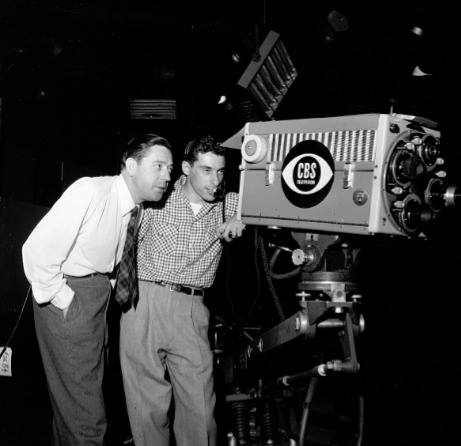
In 1953 and ’54, CBS had a Saturday morning show called “Rocket Rangers” that starred Cliff Robertson as Commander Rod Brown, in 58 episodes of the show. It was done live in New York, and given that Pye cameras were used, I would say this was done in one of the four CBS studios at Leiderkranz Hall. I think that is the only place CBS had Pye cameras, perhaps they only had them in one studio there.
CBS had “Tom Corbett, Space Cadet” for only a couple of months before it moved to ABC, then later DuMont, then later NBC. With space adventure shows at their peak of popularity in 1953, CBS hired Tom Corbett’s original director, John Haggott, and commissioned him to create a clone.
He did, and the result was Rod Brown (Cliff Robertson) of the Rocket Rangers. With the same director, same special effects gizmos, and many of the same writers, this was a somewhat livelier version of Space Cadet. Aliens were very rarely seen on Space Cadet, so Rod Brown gave us virtually a new alien every week. It was an interesting program and it is a shame that no kinescopes survive. Why not?
Well, it seems there was a “Perry Mason” moment in the show’s history. There are no surviving kinescopes of this show, because they were ordered by the court to be destroyed. Seems that the producers of “Tom Corbett, Space Cadet” on Dumont sued, because the characters and premise was too close to their story line. This is thought to be the first event of its kind in television.
Cliff Robertson was on Broadway at the time, and would rise on Saturdays at 4 a.m., drive to the CBS studios, go through dress rehearsal, and do the live broadcast at 11:30 a.m. EST. After the program he went over to the theater where he was performing in “Late Love” with Elizabeth Montgomery for a matinee, and then an evening show. By the end of the day, he would be “stumbling around”, as he later said. Robertson was also attending the Actors Workshop at the time. His salary for the part of “Rod Brown” was approximately $175 week. -Bobby Ellerbee
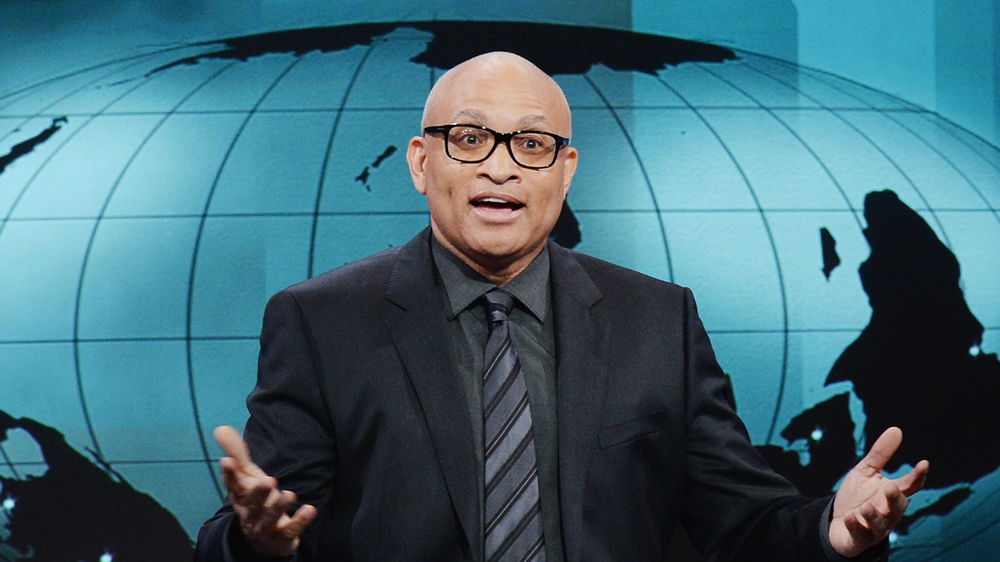
“Nightly Show” Canceled…Last Show Airs Thursday
Larry Wilmore’s ‘Nightly Show’ Cancelled at Comedy Central
“The Nightly Show with Larry Wilmore” will call it a day after Thursday’s episode. Comedy Central has canceled the half-hour series that replaced “The Colbert Report” on Jan. 19, 2015, making…
August 15, 1948…CBS Debuts First, Live Nightly News Broadcast
On this day in 1948, Douglas Edwards became the first, live daily anchor of a network news show. In the 3 minute video below, Dan Rather tells the story nicely, so take a look.
Just to be clear, there was news on CBS and NBC before this, but CBS was first do go with a live, daily 15 minute report. Before this at CBS, Edwards and others had done a live news show twice a week.
NBC was actually first with a daily network news show, but theirs was not live. The most widely celebrated dates in NBC news history are February 16, 1948, and February 16, 1949.
In February ’48 “The NBC Television Newsreel” debuted as a 10 minute weeknight newsreel which was narrated off camera by John Cameron Swayze. The next year, on February 16, Swayze moved in front of the camera and that began “The Camel News Caravan” as a live 15 minute nightly news show.
CBS had put Douglas Edwards on camera on May 3, 1948 in the twice-weekly days of the newscast, making him the permanent host, as the prior “revolving” host format was abandoned.
Both networks had done earlier local news that goes back to 1939, but that is a story for another day. -Bobby Ellerbee
https://www.youtube.com/watch?v=GzCjp8JAAgc
From CBS, an Evening News piece on the retirement of Douglas Edwards, the first CBS anchorman.
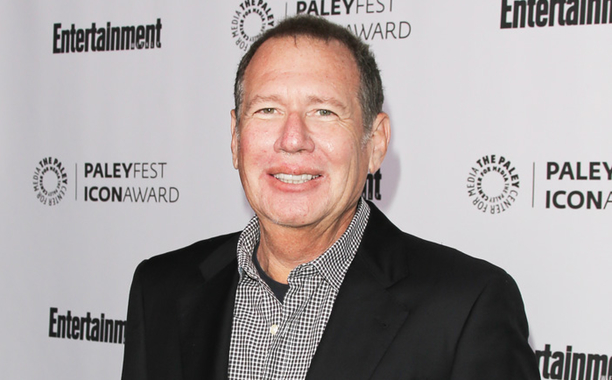
August 15, 1992…”The Larry Sanders Show” Debuts On HBO
It’s hard to believe that it was 24 years ago this week, but it was.
Out of the box, they knew they had a hit with Garry Shandling’s new show. It took us behind the scenes of late night television in a way no one ever has, before or since. With sidekick Jeffrey Tambor as Hank Kingsley, and Rip Torn as the show’s producer as the key cast members, the list of guest stars that came to the show was a who’s who that rivaled the real late night shows.
The show was done at CBS Studio Center on Radford Avenue in Los Angeles and won more awards than you can shake a stick at! There were Writers Guild, Directors Guild, Golden Globes, Emmys, Cable Ace, Peabody, Critics awards and more given in the US, and even more from the UK and international committees. During its six-year run, The Larry Sanders Show won 24 major awards including three Emmys.
After the show ended (May 31,1998), the show received a spot on Time Magazine’s 100 Greatest Shows of All Time. In 2008, Entertainment Weekly ranked The Larry Sanders Show the 28th Greatest Show of the past 25 years. TV Guide named it the 38th Greatest Show of All Time.
Below is a clip from Season 1, Episode 1 called “The Garden Weasel”. In re release, the name of this debut episode was changed to “What Have You Done For Me Lately”. Hey Now! – Bobby Ellerbee
Clips of Larry Sanders reluctantly doing in-show advertisements for the Garden Weasel taken from the first episode of The Larry Sanders Show starring Garry S…
Since around 2006, this is the third or fourth time this has happened. Somehow, the Little League World Series playoffs have become he most dangerous place on earth for a home plate camera. You would think by now, someone would have added a Plexiglas shield to shoot through. If you’ve never seen a picture shot through a broken lens, you are about to. -Bobby Ellerbee
Jack Hopko Shatters Camera Behind Plate
Jack Hopko hits a foul ball that shatters the camera positioned behind home plate in the bottom of the 3rd inning
Source
Time Machine! 25th Anniversay Issue, RCA Broadcast News
For many of our viewers, this will be a real education as in some articles, they can see parts of television operations they may not be familiar with, like the telecine rooms (film chains) and too much more to even try to list, so click the link, and enjoy the trip back in time!
-Bobby Ellerbee
NBC Olympics: TV Ratings Not Great, But Steaming Video HUGE
Heading into Friday night, NBC’s television coverage of the Rio Olympics has been averaging 28.7 million viewers and a 15.9 household rating.
Those numbers are still down from London four years ago, but NBC Sports continues to see record returns from streaming. Live-streamed minutes of the Rio Games have now reached 1.5 billion, and the Stamford facility keeps adding capacity. -Bobby Ellerbee
1.28 Billion Minutes Streamed (and NBC Is Still Counting)
The NBC headquarters is in full Olympics mode, which includes a vastly expanded streaming program that, through Thursday, had offered 1.28 billion minutes of live Rio coverage.