Posts in Category: TV History

Amazing New Berlin Olympics Television Information

If you are lucky, you learn something new every day, and today, we are all lucky! I had no idea that what you are about to read and see here ever happened, but thanks to yesterday’s post on the first mobile units, we have fascinating new images and video to share.

Thanks to David Breneman and James Freeman, we now know that there was indeed a mobile unit in service at the 1936 Berlin Olympics…BUT…not in the classic sense, of being equipped with live electronic video cameras shooting the action.

Instead, the German unit was an “intermediate film” television apparatus, which I had never heard of either.

It works this way…a normal cinema camera, mounted on a transport van, initially records the footage on film, which is sent down the camera’s light tight pedestal into the van. There, the film is immediately developed inside the van and then run through a flying spot scanner camera (so called because it moved a focused beam of light back and forth across the image), and electronically converted from a negative to a positive television image. Scenes from the just developed film could be broadcast with a delay of about a minute.

In this video, you can see the Telefunken cameras and the Berlin van, with an animated diagram of how it works. The photos include a shot of the van, a diagram of the operation, US champion Jessie Owen and a Telefunken Canon camera, and at the end a few seconds of film shot by the van top camera.

John Logie Baird began developing the process in 1932, borrowing the idea of Georg Oskar Schubert from his licensees in Germany, where it was demonstrated by Fernseh AG in 1932 and used for broadcasting in 1934.

The BBC used Baird’s version of the process during the first three months of its then-“high-definition” television service from November 1936 through January 1937, and German television used it during broadcasts of the 1936 Summer Olympics. In both cases, intermediate film cameras alternated with newly introduced direct television cameras.

The intermediate film system, with its expensive film usage and relatively immobile cameras, did have the advantage that it left a filmed record of the program which could be rerun at a different time, with a better image quality than the later kinescope films, which were shot from a video monitor.

Television tubes developed by Farnsworth and Zworykin in the United States, and by EMI in England, with much higher sensitivity to light, made the intermediate film system obsolete by 1937.

I had no idea that motion picture film could be developed that fast, which brings up all kind of questions about NBC’s mad dashes to get kinescope film turned around for rebroadcast on the west coast.

Now…back to Berlin. In addition to the mobile unit camera, three state-of-the-art Iconoscope cameras are also used, among them Telefunken’s ‘Olympic Cannon’, which earns its nickname due to the large lens. There was also a single Fernseh experimental camera there using the Farnsworth Image Dissector tube.

There was a built in control room in the stadium, which fed the coverage to two special lines that went directly to the Berlin TV tower for broadcast. Therefore, there was no need for an electronic television remote unit, in the classic sense.

These cameras broadcast eight hours of moving images per day. There are 75 television sets in Berlin, most of them in the 27 public television parlors. There are two other parlous in Potsdam and Leipzig. At the time, the television broadcasts are sensational events for the audience. But they are barely comparable with today’s public viewing: the screens on the television sets are barely larger than a modern tablet PC display. Thanks for all the help in bringing interesting new information to light! -Bobby Ellerbee

Source

April 17, 1967…50 Years Ago, “The Joey Bishop Show” Debuted

http://www.emmytvlegends.org/news/april-17-1967-fifty-years-ago-today-the-joey-bishop-show-debuted-on-abc

Here is the story I wrote for the Archive Of American Television site…home of the Emmy TV Legends video collection and histories. Enjoy and share! It’s quite an interesting story! -Bobby Ellerbee

April 14, 1956…Videotape Recording Debuts; Ampex VR-1000 Unveiled

On April 14,1956, this prototype Ampex VTR called “Mark IV” started a whole new era in television. In the photo, you see the Ampex Videotape Team…the men who created the VR-1000 and revolutionized broadcasting. Pictured with this six man team is the unit Ampex took to Chicago for the legendary demonstration at the 1956 NAB Convention, to the amazement of all who attended.

In the team photo, Fred Pfost is on the far left. Here is Fred’s description of the events of the week of the demonstration in which Ampex took almost 100 orders for the $50,000 VR-1000.

“On the Saturday, April 14, two days before the convention started, we demonstrated the recorder for about 300 CBS affiliates meeting at the Conrad Hilton Hotel. I recorded (from behind a curtain) the opening speech of Bill Lodge, V.P. of CBS, who described all the activities that CBS had been involved in during the past year, and his announcement of a big surprise, that was about to happen. After I rewound the tape and pushed the play button for this group of executives, they saw the instantaneous replay of the speech.”

“There were about ten seconds of total silence, until they suddenly realized just what they were seeing on the twenty video monitors located around the room. Pandemonium broke out with wild clapping and cheering for five full minutes. This was the first time in history that a large group (outside of Ampex) had ever seen a high quality, instantaneous replay of any event. The experience still brings tears to my eyes when I recall this event.”

“During the week of the convention, the Ampex display area was packed, all day, every day. Orders came so fast and furious, that the Ampex sales staff was writing orders on cocktail napkins.”

It took Ampex a year to fill just the orders taken at the convention. If memory serves me right, CBS got the first 5, NBC got the second 5 and ABC, the third 5, with more on order for all 3 networks. I think CBS put 3 at TVC, and had 2 in NYC. NBC put 3 at Burbank, 1 in NYC and 1 went to RCA Labs in Princeton, with RCA and Ampex starting to share RCA’s color tape ability. I think ABC put 3 at Prospect and 2 in NYC. -Bobby Ellerbee

April 10, 1985…Inside CBS News Studio 33 With Dan Rather

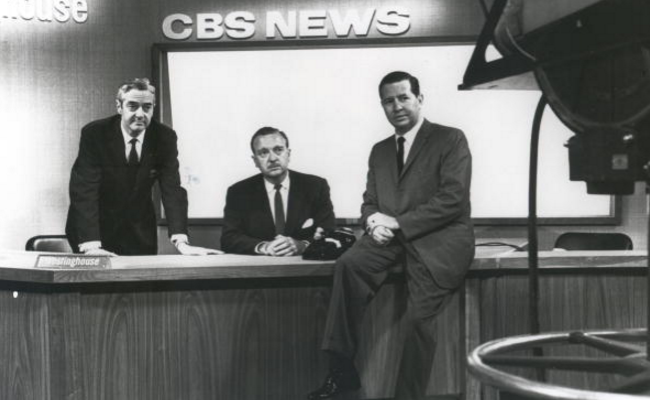
This is a rare look inside CBS Studio 33, or what many call The Cronkite Newsroom. Although Dan Rather was now the anchor, Studio 33 is where Walter Cronkite first reported from, when they moved to the Broadcast Center in 1964.

Prior to the move, the newsroom and set was on the 23rd floor of the Graybar Building which was next to Grand Central, and the show was switched out of the old Studio 42. For the home viewer, it could have been a little hard to tell as the 33 set and the Graybar set were very similar. Even the studio buildout of the new 33 had the same layout including the famous fishbowl office.

About a year after this video, the news moved to Studio 47. Today, Studio 33 is occupied by CBS Radio and across the hall in the space once occupied by the 33 control room, you will find the “60 Minutes” set.

The black man floor managing the show in the studio is CBS News veteran James Wall. Interestingly, his counterpart at NBC News was another black man, Fred Lights who started with Dave Garroway on “Today” and floor managed NBC’s news shows from Huntley-Brinkley to Tom Brokaw.

The cameras here are Hitachi SK 110s and show us how frantic the pace is just before and during air. Stuffing a day of the world’s news into 22 minutes is not an easy task, and back then, the real news took up most of the time…not just the first two segments like now.  -Bobby Ellerbee

NBC Universal Orlando…New Home To My Pat Weaver RCA TK30


This week, “The Tonight Show Experience” will open at Universal Studios Orlando, with Jimmy Fallon and company on hand all week for the grand opening. Among the stars in the first floor “Tonight” museum, are rare artifacts from all the “Tonight” show’s hosts and a very special item from “Tonight” creator, Pat Weaver.

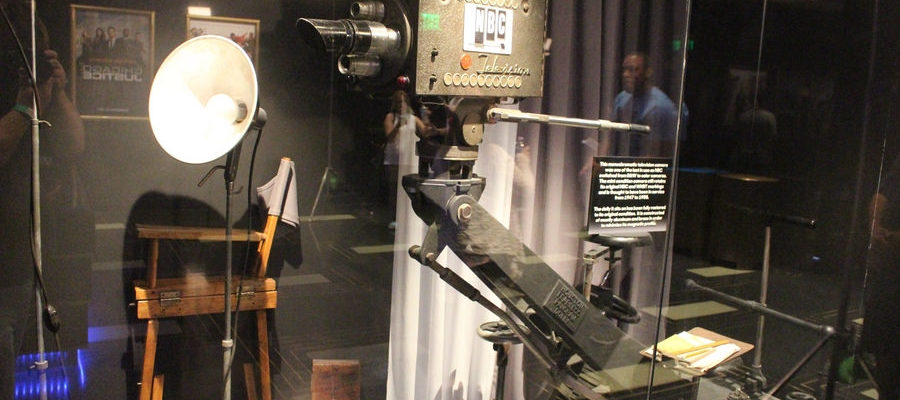
About a year and a half ago, Universal contacted me about buying a few museum quality cameras for their new attraction. Little did they know I had the key to the highway! Here is a shot of me at home with the camera a few years back. To tell the truth, the only other place I would have considered a good home for her, where she could be seen and appreciated, was at NBC New York, but this is actually pretty close. As you’ll see in these and in the linked photos, the interior of the Orlando exhibit is a very good mock up of 30 Rock’s interior. Here is a nice spread of about 100 images to look through.   https://www.flickr.com/photos/getreadytoride/sets/72157677663135424/?share=mail

The Pat Weaver TK30 was the first black and white camera ever to be replaced by a color television camera. The whole fascinating story with more pictures is at this link. http://eyesofageneration.com/camera-collection/the-pat-weaver-rca-tk30/

By the way, don’t pay attention to the signage on the TK30 in these pix…I contacted Friday and they will be correcting card soon. I also sent a second camera to Orlando. A Sony BVP 900 SD camera from Jay Leno’s pre HD years.

The main attraction for the kids is the 3D thrill ride “Race Through New York”, but in the soft opening dry runs, many seem much more interested in the museum level displays. The original thought was that the Weaver TK30 would be in the Steve Allen era showcase and the Sony in the Leno showcase. Things changed, and for the better. Now they both have their own showcases in a very interesting neighborhood…Carson’s Carnac turban lives next door and Jimmy’s Thank You notes are everywhere. What more could anyone want?


To the Universal props and creative departments…VERY WELL DONE! To the “Tonight” show crew and staff in Florida this week…”break a leg”! To NBC and Universal, MANY THANKS! -Bobby Ellerbee

March 27, 1955…NBC Burbank Dedication And Color Kickoff


It was on this day in 1955 NBC Burbank was dedicated…two and a half years after it opened October 4, 1952. Why the long wait? It was all about color.

The new NBC black and white facilities at Burbank were Studios 1 and 3 and were in heavy use from the start, but until the FCC approved RCA’s Dot Sequential, Compatible Color in December of ’53, everything color was on hold. In the east, NBC’s first color facility was The Colonial Theater which came on line as an experimental facility in March 1953. NBC Brooklyn 1 was their second color studio witch debuted September 4, 1954.

Burbank’s color studios were added one by one.  Studio 2 was built first, followed by Studio 4 and were hailed as the only television studios built just for color. I would argue that Studios 1 and 3 were certainly designed for color too, but I guess it made for a better story the other way. Below is the New York Times article on the Burbank dedication and color maiden voyage with a 90 minute special called “Entertainment 1955” marking the opening of Studio 2, while Studio 4’s foundation was being poured.

Above, color chart testing on the new RCA TK41s in Studio 2.  On May 30, 1955 Humphrey Bogart would make his first and last live appearance on television in Studio 2 when he, Lauren Bacall and Henry Fonda starred in “The Petrified Forest”, the first “Producers Showcase” live color drama from NBC Color City West. Enjoy and share! -Bobby Ellerbee

NBC New York Studios History….Volumes 1 & 2

In case you have never seen my ebooks on the NBC, CBS and ABC network studios in both New York and Hollywood, start here!

There are over 700 pages of rare history, photos and first hand accounts and…the only timelines ever created for these studios. These reports are also the only research papers ever to focus exclusively on the facilities themselves. This is Volume 1 of 2 that covers NBC New York with a separate report on NBC’s west coast studios. Same for CBS and ABC’s studios.

In the photo, we see one of the earliest known photos of Milton Berle’s “Texaco Star Theater” in NBC Studio 6B which had just been converted from radio to TV. Enjoy and Share! -Bobby Ellerbee

NBC studios – New York, Volume 1

Did You Know Pat Weaver Saved “Meet The Press” On His First Day At NBC?


On October 5, 1945, “Meet the Press” debuted on The Mutual Radio Network, hosted by it’s creator Martha Roundtree. On November 6, 1947, “‘Meet The Press” debuted on NBC Television as a half hour, Saturday night current affairs show hosted by Roundtree. It was a “sustaining” program, which meant there was not a sponsor.  In June of 1949, Rountree was told by NBC that because they could not find a sponsor, the show would be canceled.

Later that month, David Sarnoff agreed to the terms of Pat Weaver’s contract and hired him as NBC’s first real head of the television department. Weaver ‘s job, as Vice President was to oversee television and become the director of the new television network. Weaver had told the NBC executives who hired him, “I won’t come to NBC just to sell time to ad agencies. I’ll come only if we can create our own shows and own them, and if we can sell every kind of advertising to support the program service.”

On his first day, he came across the recent memo that canceled “Meet The Press”. In one of his first official duties, he personally called Roundtree and re-hired the show as an NBC production. To date, “MTP” is America’s longest running television program.

Martha Rountree started as a reporter at The Tampa Tribune, but she wasn’t reporting on social occasions or homemaking. As a kind of rebel from the start, her duties included writing a sports column under the name “M. J. Rountree,” with Tribune readers none the wiser as to the sex of the journalist who was, after all, writing in a field dominated by men.

A local CBS station was impressed enough by her work that they gave her a chance to write for radio, at which she excelled. From there, she headed north to New York, where she wrote ad copy, but Rountree was not comfortable playing so minor a part of an industry she felt held greater opportunities for her.

“I got the ideas, worked them out; other people got the credit,” she lamented. “I wanted to produce myself. To prove that she meant business, she and her sister Ann, opened a production firm called Radio House, which prepared transcribed programs and singing commercials.

1945 was Rountree’s banner year. She made her mark on radio in a big way, selling the idea for two different panel shows to the Mutual Radio Network, premiering them a day apart in October. One was ‘Leave It to the Girls’, the other was ‘Meet The Press‘ which debuted on October 5, 1945.

Although frequently credited as a co-creation of Rountree and Lawrence E. Spivak, publisher and editor of American Mercury magazine, authoritative sources adamantly state that it was Rountree who developed the premise on her own, with Spivak joining up as co producer and business partner in the enterprise after the show had already debuted.

On November 6, 1947, while still on Mutual Radio, the show came to NBC Television. The first guest was James Farley, who served as Postmaster General, Democratic National Committee chairman and campaign manager to Franklin Delano Roosevelt under the first two terms of the New Deal Administration.

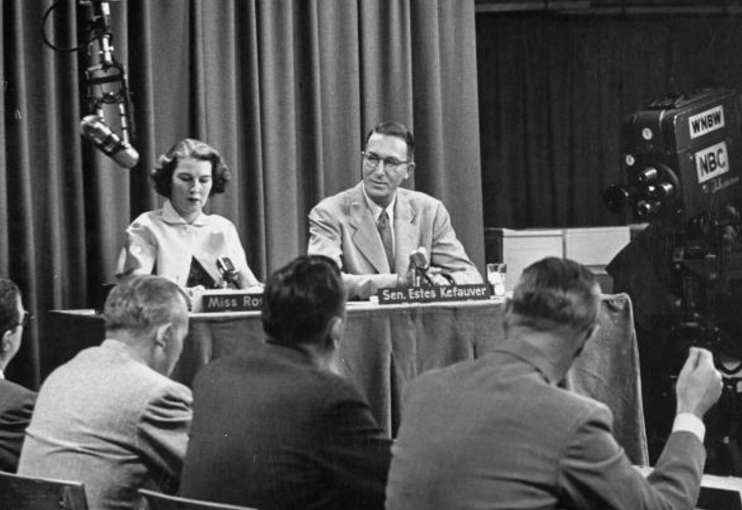
The first host was its creator, Martha Rountree (seen at the top of the page with Sen Kefauver), the program’s only full time female moderator to date. She stepped down on November 1, 1953 and until Ned Brooks could take over, her friend Deena Clark filled in. In this rare shot from NBC’s Colonial Theater on February 14. 1954, we see Deena Clark hosting with Sen. John F. Kennedy as the guest on this rare color presentation of the show.

MEET THE PRESS — “Senator John F. Kennedy” Aired 02/14/1954 — Pictured: (l-r) Marquis Childs, May Craig, Ned Brooks, Lawrence Spivak, Miss Clark, Senator John F. Kennedy

Rountree was succeeded by Ned Brooks (shown below with guest Sen. Joseph McCarthy), who remained as moderator until his retirement on December 26, 1965. Although Spivak became the moderator on January 1, 1966, he did not really want the job. Max Schindler said, “Spivak didn’t want to moderate…he wanted Edwin Neuman, but NBC could not spare him, so he reluctantly took over”. He retired on November 9, 1975, on a special one-hour edition that featured, for the first time, a sitting president, Gerald Ford, as the guest.

Below, Lawrence Spivak with West German Chancellor Willie Brandt.

The next week, Bill Monroe, previously a weekly panelist like Spivak took over as moderator and stayed until June 2, 1984. For the next seven and a half years, the program then went through a series of hosts as it struggled in the ratings against ABC’s “This Week with David Brinkley”. Roger Mudd and Marvin Kalb (as co-moderators) followed Monroe for a year, followed by Chris Wallace from 1987 to 1988. Garrick Utley hosted ‘Meet the Press‘ from 1989 through December 1, 1991 at which time Tim Russert took over, and not long after that, the show went to a one hour format.

Russert’s untimely death gave David Gregory the seat, and now Chuck Todd is host.

Rountree died on August 23, 1999, in Washington, where she had made her name as one of the key figures in political reporting. Tim Russert, summed up her status in the medium by declaring, “She was a news pioneer who helped create a national treasure, Meet the Press.” Enjoy and share! -Bobby Ellerbee

2 Color Rarities From “The Colgate Comedy Hour” + Jerry Lewis Interview

Here, we will see very rare color home movie footage of Colgate hosts Martin & Lewis, Abbott & Costello and Eddie Cantor all arriving at The El Capitan Theater, also a rare color rehearsal shot of Dean and Jerry – plus kinescope footage of the sketch that night. But that’s not all!

Let’s start with this Archive of American Television, Emmy Legend interview with Jerry talking about the Colgate days, and how he and Dean always beat Ed Sullivan.

Next up, in a rare happening, three of the five (rotating weekly) hosts of “Colgate Comedy Hour” are caught in a color home movie arriving at The El Capitan Theater for rehearsal of the celebration of the 100th episode show. Most likely, Hope and O’connor were doing their part in New York, as the show not only rotated hosts, but origination cities.


NBC’s El Capitan Theater was the west coast home of “The Colgate Comedy Hour”. Just before NBC leased it in 1952, Richard Nixon’s “Checkers Speech” was filmed here. In the fall of ’63, ABC bought the theater and renamed it “The Jerry Lewis Theater” which is where his ill fated 13 week show was done from. By January of ’54, this had become “The Hollywood Palace” and was where the show of the same name came from. In late 1964, this is where ABC’s first live color came from. When the fall sesaon of Place debuted, it was before 4 RCA TK41 color cameras. The control truck and cameras were on lease from RCA. In late ’65, a new control room was built with all Norelco equipment. Enjoy and share! -Bobby Ellerbee

March 22, 1929…RCA Begins First Nightly Experimental Broadcasts

With the recent receipt of new images and data, this story has been revised and updated  June 27, 2021.

This is a combination of some newly discovered details with a few very rare and little known places and events that no one that I know of has ever woven together to tell this historic tale. I have written about all of these elements separately, but now, can finally combine them all to tell a broader, richer story.

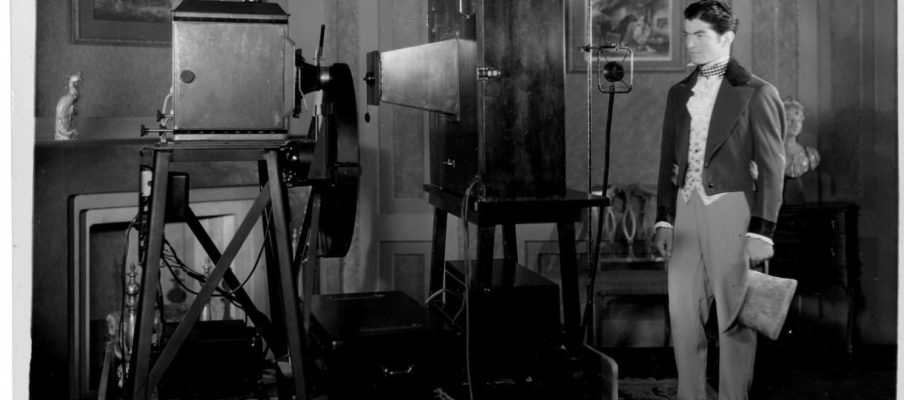
To set the mood, look up top at the 1928 image of an actor/model (manikin) in front of a huge camera like object. Here are some surprises about this image…first, most assume this is a camera shooting through a wooden frame with spotlights. Actually the “spotlights” are photo imaging cells and make the picture. The “camera” is an arc light projector with a rotating disc, which at the time was the basis of mechanical television. I can tell by the decorative parlor, the top photo with the male mannequin was taken at RCA’s second home of W2XBS at 411 5th Avenue.

By the way, this is the Alexanderson system made by General Electric and I have some new photos to add. In this photo below (circa 1927), we see Dr. Alexanderson with RCA’s pioneer in imagery Ray Kell. It is the same system we see in the top photo and this is thought to be the first mechanical television apparatus used at RCA.

Above, we see Ray Kell again (left) with Dr. Ernst Alexanderson with his second and final mechanical scanning television apparatus which was built and demonstrated in Albany NY in 1928. Below, we see NBC and television’s first announcer (yes, a woman) Betty Goodwin taking a look at the original Alexanderson scanning device which is on display in the RCA Pavilion of the 1939 Worlds Fair.

RCA’s very first research facility was at 7 Van Cortlandt Park South, an address I was only able to nail down in January after years of searching. RCA built it in 1924, and until RCA bought the Victor Company plant in Camden in 1930, this was the home of RCA research and development. This is the first home of W2XBS, RCA’s experimental television station that is today, WNBC.

On page 10 is a rare article on 7 Van Cortlandt from a 1956 RCA Radio Age Magazine. Much of this new information is drawn from there, but there are many other interesting aspects of the period to read about there.

The W2XBS call letters were granted in 1928, and the call letters listed 7 Van Cortlandt as the official address, but shortly after, Theodore Smith and his TV team had come up with a 5,000 watt transmitter and they needed to move. Fortunately, RCA Photophone had an office in the 411 5th Avenue building, just down the street from their new corporate HQ at 711 5th Avenue.

Photophone was RCA’s name for their sound to film technology and they had a new studio there plus some extra room which is where Felix The Cat first graced the airwaves. The Felix tests more than likely began shortly after the move to 411.

On March 22, 1929 the Radio Corporation of America announced that “television images are now being broadcast daily from 7 to 9 P.M.”  The company’s vice president, Dr. A. N. Goldsmith said that the program was intended to give “experimenters an opportunity to look in on the development work, which, it is contemplated, will in due course evolve into a service to the public on a commercial basis similar to that of sound broadcasting.”

Near the bottom of this rare article on the 411 Building’s history is detail confirming the RCA article dates and the next steps in experimental television’s history.

http://daytoninmanhattan.blogspot.com/2012/09/the-unique-1915-no-411-fifth-avenue.html

Thanks to the RCA article, we can finally put a date of 1930 to the famous Felix photo, but we don’t know if it was taken at 411 or at W2XBS’s next stop…the Roof Garden Theater atop The Amsterdam Theater where the testing moved in late 1930. It remained there until operations were move to the top of the Empire State Building in 1933. My money’s on the photo being taken at 411 which is also shown here. Enjoy and share! -Bobby Ellerbee

Source

How Television Made Basketball Fans Mad About March!

How Television Made Basketball Fans Mad About March!

It’s “that time again”, when back to back college basketball games are center stage for a few weeks, but without Eddie Einhorn, March Madness, the way we know it, may have never happened.

Before we get to how all this happened, here is an interesting footnote. Originally, “March Madness,” was the term used to describe the excitement surrounding the Illinois State High School Basketball Tournaments, which began in 1908. The phrase was coined by Henry V. Porter in an essay that appeared in the Illinois High School Athlete Journal in March of 1939.

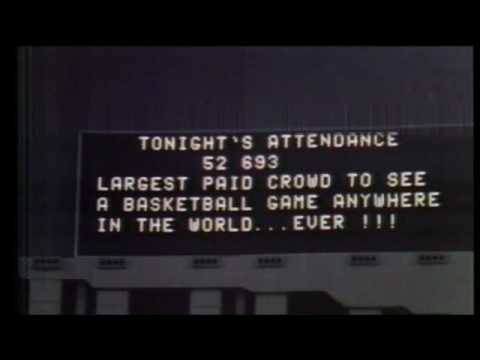
In the clip below, both Elvin Hayes and Lou Alcindor – the competing stars of the game – talk about that game, that day and the odd feeling of playing in the middle of the Astrodome field, 100 feet from the nearest fans. And, there were fans! Over 50,000 there that day, which was another first, but I’ll fill you in on how this became the first ever nationally televised basketball game.

As it was called then, this “Game Of The Century” was the event that lit the fire to televise this annual event nationally, and bring more basketball to television.

The road to the NCAA basketball finals as we know it today, began in Houston at the Astrodome on Saturday, January 20, 1968 when the University of Houston Cougars hosted the UCLA Bruins. Neither team had lost a game that season, UCLA was 13-0, with a 47 game win streak, while University of Houston was 16-0, with a 17 game win streak, and had won 48 consecutive home games. Along with stars from both teams, the game featured, superstars Elvin Hayes at UH and Lou Alcindor, (who we know better as Kareem Abdul-Jabbar) at UCLA.

Before 1968, college basketball was not popular with national TV audiences, and was mostly only televised in local TV markets that had large universities.

Entrepreneur, Eddie Einhorn knew that when he began to broadcast college basketball games on regional radio stations in the late ’50s.
Having scraped up $27,500 to buy the rights to the 1968 NCAA championship game, Einhorn decided this huge match up between two undefeated teams, UCLA and Houston, needed to be on television, and went about the task of putting together a network of TV stations to carry the game. To better his chances, he only pitched the coverage to TV’s “red headed step children”…UHF stations, who needed eyeballs badly. 150 stations signed up.

Along with broadcast support, Houston’s KHTV supplied the color mobile unit with three GE cameras, while KPRC provided the operational personnel for the cameras. KPRC’s Mark Davis directed the telecast. Einhorn hired Dick Enberg & LSU & NBA great, Bob Pettit to call the game.

By putting together this “Game of the Century” broadcast between the Houston Cougars and UCLA Bruins, Einhorn changed college basketball forever. This was the game that made college basketball a television broadcast commodity.

By 1980, Einhorn had sold his interest in the network and became the head of CBS Sports. Eddie went on to become chairman of The Chicago White Sox, but was not finished changing sports broadcasting, as his SportsVision network debuted in 1984. -Bobby Ellerbee

March 19, 1953…The First Televised Academy Awards Ceremony

March 19, 1953…The First Televised Academy Awards Ceremony

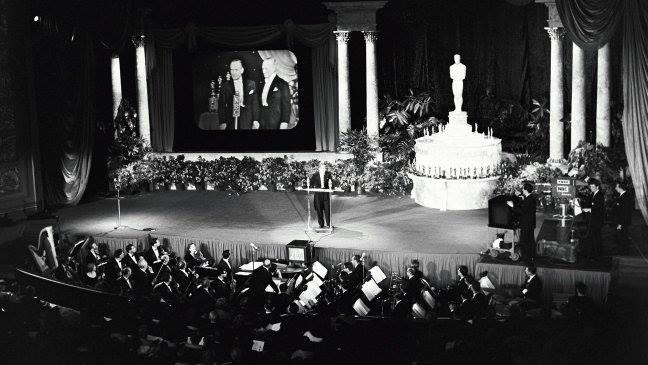
Although we have an interesting video, let’s start with the pictures. That shot of the NBC cameraman on the crane with an umbrella is taking the first shot we see in the first video as it was rainy night at the Pantages Theater in Hollywood.

Up top is the Pantages stage and the huge screen is part of NBC’s “go big or go home” attitude on the television coverage which was a live bi-coastal broadcast that required almost as many AT&T and NBC techs – as there were people at the theaters. It was an oversized affair sponsored by RCA, with the network’s Bob Hope as MC in Hollywood and Frederic March hosting in New York. There, the show was coming from the home of “Your Show Of Shows,” The International Theater on Columbus Circle.

In the nest to last photo, we see The International stage with another huge RCA projection screen hanging above the proscenium. The last image is an article on what many at home thought was the “world’s largest TV set” that was seen on the Pantages stage. It was actually an RCA theater size rear screen projection unit, while the one in New York was a front screen projection unit which as a permanent part of the International Theater. Most theaters that were being used as TV studios had them.

In the video, we see the show open and Bob poking fun at television and everything else. By the way, since this is a year before Hollywood finally began selling some of their films to television, the sting of names of early movie stars (4:07) is a left handed reference to the boycott, which grows more bold.


March 19, 1953 and March 19, 1954…Red Letter Days For Compatible Color

March 19, 1953 and March 19, 1954…Red Letter Days For Compatible Color

On March 19, 1953 RCA and NBC’s new multimillion dollar, experimental color facility at The Colonial Theater went online. Work began in the fall of 1952 with some stage renovation and then the installation of the new control and equipment rooms.

The Colonial was equipped with four prototype RCA TK40 color cameras and chains, an all color telecine system, all kinds of new experimental lighting fixtures, monitors and tons of new synchronizing equipment.

The Colonial remained an experimental color facility until Thursday, December 17, 1953. That day, the FCC gave it’s approval of compatible color which made the Colonial the center of NBC’s color universe.

Without The Colonial, a year long string of firsts, that followed, would not have been possible. That sting started with a bang just 14 days later!

(For MUCH MORE, go here https://eyesofageneration.com/rca-red-book-history-holy-grail-early-color-television-history-part-2-2/)

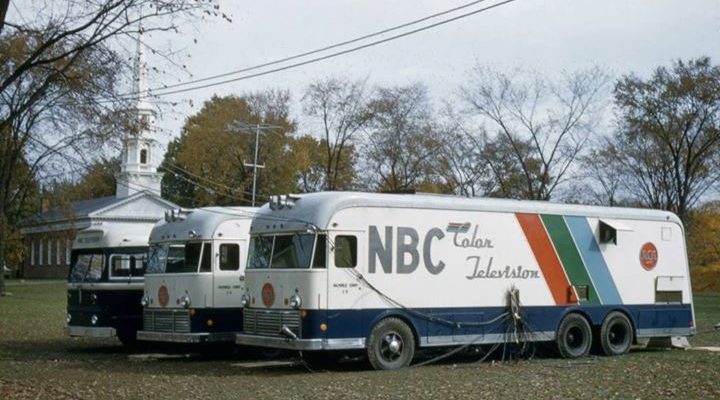
On January 1, NBC put their two new color mobile units (seen above) in service with the first ever coast to coast colorcast of The Rose Parade from Pasadena, California. In 22 color capable cities, it was seen in color, but in glorious compatible black and white everywhere else. The Colonial served as a master control center.

February 16, 1954: NBC transmitted the first newscast in color… “The Camel News Caravan”, including the first integration of 16-mm color film into a live program, was done at The Colonial.

On March 4, 1954, the first shipments of RCA TK40s, and associated studio equipment was made from RCA’s plant in Camden, N.J. This was after two years of testing of the TK40 prototypes at NBC’s Colonial Theater.

Exactly one year after The Colonial went online, on March 19, 1954, the first colorcast of a boxing match from Madison Square Garden, was presented by NBC and was compatible color’s first ever sports event broadcast.  The main event pitted Philadelphia middleweight Joey Giardello against Willie Troy.

March 25, 1954: Production of RCA’s first commercial color TV sets, the CT 100s, equipped with a 15-inch picture tube began at Bloomington, Indiana.

June 25, 1954: NBC made the first network transmission of 35-mm color film, on “The Mrs. USA” program from The Colonial.

July 8 – Aug. 19: NBC aired the first network color series, “The Marriage”, a situation comedy with Jessica Tandy and Hume Cronyn, from The Colonial.

July 15, 1954: RCA announced development of a new and improved 21-inch color kinescope with a picture area of 255 square inches.

Finally, NBC’s second major color facility came on line. On September 12, 1954, NBC presented the first of many 90 minute color spectaculars with the broadcast of “Satins and Spurs” starring Betty Hutton. That was the first production from NBC’s new Brooklyn Studio I.

September 15, 1954: RCA demonstrated its new 21-inch color picture tube and a simplified color TV receiver.

Oct. 14 – Dec. 30: “The Ford Theatre” was the first sponsored color film series to be presented in color on a regular basis. It was broadcast on The Colonial’s color telecine equipment.

November 28,1954: First two-hour color production of a Shakespeare play, “Macbeth” on “The Hallmark Hall of Fame” was done at Brooklyn I.

December 1, 1954: RCA began commercial production of color TV sets with a new 21-inch picture tube. Quite a year, wouldn’t you say? Enjoy and share! -Bobby Ellerbee


Source

How The First Music Video Package Helped Create “American Bandstand”

How The First Music Video Package Helped Create “American Bandstand”

The Snader Telescriptions were not only the first ever music videos…these classic music shorts also played a direct role in the creation of “American Bandstand”!

We’ll get to the Bandstand part after this short fact packed video on the history of the Snader project. It is told by the world’s first VJ, Gene Norman who introduced all the Snader video acts, and Duke Goldstone, who directed them.

If Duke’s name is not familiar, his work is! He also directed the Speedy Alka Seltzer and Green Giant commercials, and many of the early musical variety shows for stars like Liberace, Frankie Lane and even Betty White’s first series, “Life With Elizabeth”.

THE BANDSTAND LINKAGE

If you refer back to my March 5th article on how Howard Hughes broke the Hollywood movie boycott on selling films to television in 1954, you realize that about the only films US stations could get before that were from the UK, and they weren’t really that good to start with. When the price on those British movie package prices went up, WFIL in Philadelphia decided they had had enough and went a different route.

They pulled the plug on their afternoon movie and replaced it with a show called “Parade Of Stars” which was built around the Snader Telescriptions music video package that they got at a very good price. That show started in 1951 and was hosted by the WFIL sports director Tom Moorehead.

In 1952, WFIL radio personality Bob Horn was hired to take over the Stars show. When Horn took over, the station started to let Horn’s radio fans – neighborhood teens, come in and watch him do the TV show and listen to the music, but this was all off camera. Eventually, more kids showed up and even began to dance off camera – but that gave them an idea!

Why not let Horn do what disc jockeys do – play records, and let the kids do what they were already doing – dance, and put it all on camera?

So, on October 2, 1952, Horn and his kids left the Snader package behind and moved from the small Studio C, to the much larger Studio B where a new show called “Bandstand” was born. The show grew and in ’56 when Horn left, he was replaced by Dick Clark.

On August 5, 1957 the show was renamed “American Bandstand” when The American Broadcasting Company took the show nation wide. This was ABC first major building block for their daytime programming.

Just for fun, here is part of the sales pitch clip that was sent to local stations.


Source

The Human Test Patterns Who First Calibrated Color TV

A Wonderful Primer On Early Color Television…

From the Eyes Of A Generation’s archives, here a well done “Atlantic Magazine” story on the ladies that were both known as “Miss Color TV”, NBC’s Marie McNamara, and CBS’s Patty Painter. This also covers the progressions and setbacks encountered by both networks, in their race to bring color to the small screen. Enjoy and share! -Bobby Ellerbee

The Human Test Patterns Who First Calibrated Color TV

The white women known in the 1950s as “Miss Color TV” reinforced longstanding hierarchies of gender and race that were built into generations of technologies.

Source

A Huge Show Few Remember Gave Us The First Use Of Live Chromakey

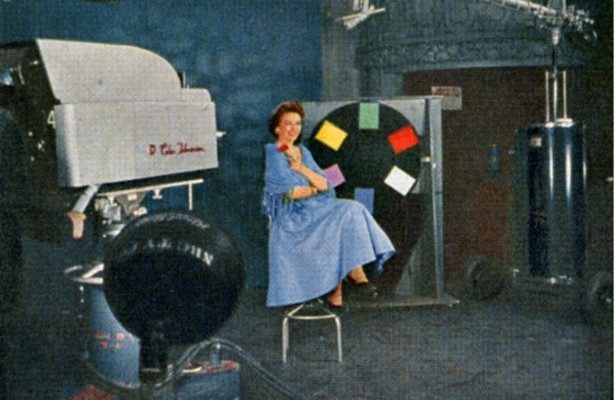
NBC’s “Matinee Theater”…October 31, 1955 – June 27, 1958

This morning, I sat down to write a story on the first ever use of a live chromakey effect on network television. That happened on this show, “Matinee Theater” in June of 1957, but…then I realized what the show was and was as surprised as you may be as you read about that part too.

In a nutshell, “Matinee Theater” was five, live, one hour color plays a week from NBC Burbank, which aired at 3 eastern and noon in the west. All the other live anthology series were weekly, but this undertaking was on every weekday with a whole new play! Let that sink in a minute.

The show’s creator, Albert McCleery hired five directors to oversee production of five separate casts, working on five different teleplays. The show featured over 7,000 actors in over 660 productions which were generally high quality performances.

The show won an Emmy in 1956, but also won over RCA and their dealers because this live color show was on the air during store hours and customers could see it. “Howdy Doody” was the first daily color show and that change happened on September 12, 1955.

At this link to The Archive Of American Television’s interview site, Barbara Billingsley, Robert Kulp, Leonard Nimoy and others talk about their appearances on “Matinee Theater” and how the show was done. http://www.emmytvlegends.org/interviews/shows/matinee-theater#

Now for the chromakey part of the story….

Motion picture production had been using compositing for years prior to the invention of television, but it was an involved process requiring optical printers and intermediate film mattes, hardly suitable for the immediacy of live television.

In July of 1957, chroma key had its first on-air test on one of NBC Burbank’s most ambitious projects, “Matinee Theater”. The source material varied, but often it was an adaptation of some famous literary work.

One of those shows was s television version of the H.G. Wells classic “The Invisible Man,” which lent itself perfectly for the first live use of chroma key. When the title character’s hands and head were wrapped in blue and he stood in front of a blue screen, the chroma key amplifier would replace the blue parts of the video with an image from another camera. All that would be seen in the composite shot was the man’s clothing in front of scenery being shot by the background camera, thus making him appear to be invisible.

Chromakey was developed by Frank Gaskins, NBC Burbank’s technical operations supervisor and Milt Altman, graphics arts supervisor. Some stories say they came across the effect by accident when some TK41 camera maintenance was underway and all of the blue balloons on the set “dissapeared”.

For the real story, here, on page 8 is an article called “Studio: The World…NBC Introduces Chromakey” in RCA’s Electronic Age magazine. Enjoy and please share! -Bobby Ellerbee

http://www.americanradiohistory.com/Archive-Radio-Age/Electronic-Age-1958-Winter.pdf

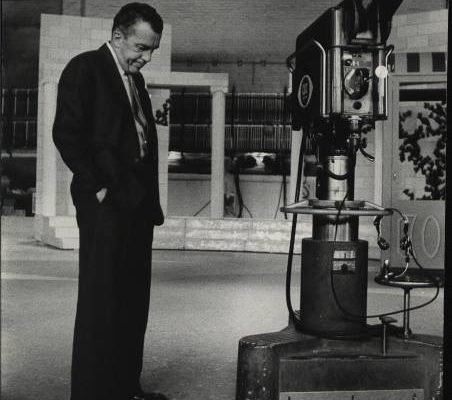
By the way, all the photo here are from rehearsals of “Matinee Theatre” which were done in Burbank’s 2 and 4.


Source

March 1971…The End Of An Era: Ed Sullivan Canceled By CBS

March 1971…The End Of An Era: Ed Sullivan Canceled By CBS

Ed Sullivan began with CBS in 1948, when he was hired to host their first variety show endeavor called “Toast of the Town,” which debuted on June 20, 1948. Sullivan assembled a show for the launch that included the budding comedy act of Dean Martin and Jerry Lewis, Rodgers and Hammerstein, a pianist, a ballerina, a troupe of crooning firemen and a boxing referee whose next assignment was the much anticipated Joe Louis – Jersey Joe Wolcott match the next week.

The first five years of the show came from the first theater CBS had converted for television, The Maxine Elliott Theater, which was designated Studio 51. Still titled “Toast of the Town,” the show moved from Studio 51 to Studio 50 in January of 1953. At the start of the eight season, on September 18,1955, the program was renamed “The Ed Sullivan Show.”

I don’t have to tell you how much history was made on this show, because you already know. Everyone does, but…

Towards the end of the show’s 23 year run, with the country divided by the Vietnam War and polarizing values, the show’s format had lost much of it’s wide range of demographic appeal. In it’s heydays, Sullivan and company had owned the 8 o’clock Sunday night slot, and although occasionally someone could beat their ratings, like “Maverik” or “The Steve Allen Show”, Sullivan always came back. By this time though, counter programming from NBC’s “Wonderful World Of Disney,” and ABC’s “The FBI,” were gaining on the show.

When producer Bob Precht got the call from CBS president Bob Wood, he was in an edit session. When Wood delivered the news, it wasn’t a total surprise to Precht, but it was to Sullivan who did not take the news well.

Bob called Ed at his Delmonico suite with the news and Ed took it as yet another example of the network’s lack of respect for him. “Well I’ll be a son of a bitch…after all I’ve done for the network over the years”, was Ed’s reply.

Precht (who is also Sullivan’s son in law) had already been reading some of the handwriting on the wall. When CBS did not renew “The Red Skelton Show” and canceled “The Jackie Gleason Show” in 1970, that was a warning signal, but around the same time Ed’s show was canceled, so was “The Beverly Hillbillies”, “Green Acres”, “Petticoat Junction” and “Hee Haw”. It was the CBS “rural purge” that was based on the idea of dumping the older, less affluent demographic and shooting more for the younger demo that advertisers would pay more for.

Unfortunately, there is a more heartbreaking side to the story. In what is a very personal and difficult topic for many of us that have experienced the effects of dementia with a loved one, the Sullivan show family was there too.

Edward Vincent Sullivan died October 13, 1974, at New York’s Lenox Hill Hospital. His funeral was attended by 3,000 at St. Patrick’s Cathedral, New York, on a cold, rainy day. Sullivan is interred in a crypt at the Ferncliff Cemetery in Hartsdale, New York.

Although gone, as long as there is such a thing as television and people to study its history…he will never be forgotten. Long Live The King! -Bobby Ellerbee

Source

March 14, 1970…Music-Television Debuts 11 Years Before MTV…

March 14, 1970…Music-Television Debuts 11 Years Before MTV

On Saturday, March 14, 1970, music shows on television changed forever when “The Now Explosion” debuted on Atlanta’s WATL.

Until then, all there had been were teen dance shows like “American Bandstand”, artist appearances on variety shows and ABC’s “Shindig” and NBC’s “Hullabaloo”, which were both gone in just over a year.

One revolutionary part of “Now Explosion” was the fact that it was created to turn struggling UHF TV stations into Top 40 radio stations each weekend. The other revolution was in the production.

The show was created by Bob Whitney, who I spoke with while researching this. Bob had started in broadcasting as a disc jockey, but by the late 60s, was GM of Philadelphia UHF television station owned by Daniel Overmyer. The idea of a video type radio show had been in Bob’s head for a couple of years. UHF stations had notoriously low viewership and a weekend music show like this could attract the younger demo and, fill vast swaths of weekend programming time with an idea youth market advertisers should flock too. http://www.thenowexplosion.com/dallas/

At the link above, you’ll see photos of the pilot being shot at WFAA in Dallas October 18-20, 1969. In early 1970, Bob moved from the US Communications UHF station in Philadelphia to it’s sister UHF station in Atlanta and production started for the March debut.

Before we get to far into this, I need to remind our younger readers,
that back then, there were NO artist performance videos available for rebroadcast by a third party. That meant that the “Now Explosion” people had to make videos to accompany each song…on their own with virtually no help from the acts or record companies.

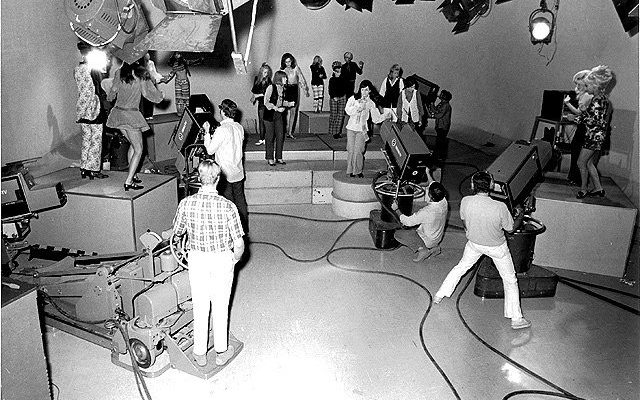
The show came about in the thick of the psychedelic era and this influence was not lost on the production crews and staff. There was a lot of multi camera zooms, pans and fades and advance uses of video feedback. Below is one of the shows most popular music tracks, and their first to feature the video feedback technique. It’s Norman Greenbaum’s “Spirit In The Sky”

The video feedback effect was achieved by, in this case, shooting a dancer in the studio with one camera, then with another camera shooting a monitor shot of the image and mixing the two. The original video and the newly captured pictures from the monitor were combined with a video switcher to create an “infinity” effect as same video repeated itself in a seemingly endless visual loop.

The special effects used in “The Now Explosion” were crude, but state of the art for the early 1970s era. Remember, video tape editing was still quite complex and expensive, so most of these tape sessions were done on the fly with no rehearsals, and only a rough idea of how they wanted the video to look.

Most performers were young amateurs recruited from the Atlanta audience, with many found at Piedmont Park and on “the strip” which ran from 10th to 14th Street along Peachtree Street.

Many appeared with home-grown costumes – often after midnight when station facilities became available. Concert lighting was also used which included the liquid looking electronic collages popular in the day. Collage operators were able to produce complex lighting effects with projectors that were not possible using the video technology of the day.

I remember watching this show and my favorite video was their filmed version of “The Long And Winding Road” which represented another aspect of the show’s productions…story videos shot on film. Bob Rector shot this and many like it as he was the main film story man.

The show ran for 13 weeks on Atlanta’s WATL, where it aired 28 hours each weekend. Programs were bicycled to stations on 2 inch videotape and played back for extended periods from one to six hours.

WPIX-TV in New York played five hours of “The Now Explosion” surrounding telecasts of New York Yankees baseball games in 1970. Stations in Philadelphia, Washington, D.C., San Francisco, Sacramento and Boston had also picked up the show.

After 13 weeks at WATL, Ted Turner contracted to carry the program for a television station he had recently acquired, WTCG-TV, Channel 17.

WATL closed down shortly afterward. The move had also shifted production Fort Lauderdale, where Whitney established a new home production base. Program segments were produced at Miami Teleproductions and 2 inch video editing was undertaken at Videotape Associates in Ft. Lauderdale (now VTA of Atlanta).

After 26 weeks in syndication in early 1971, Whitney cancelled the show when the high costs of production and distribution outpaced the commercial revenue.

The first video disc jockeys were in fact, my old friend “Skinny” Bobby Harper and Bob Todd in Atlanta, both from WQXI Radio. When the show moved to Ft. Lauderdale, my other old friend Rick Shaw took over.

There is much more to see and experience and here are some links. The main web page: http://www.thenowexplosion.com/
The FB page: https://www.facebook.com/groups/thenowexplosion/

Thanks to Bob Whitley and “The Now Explosion” staff and crew for being ahead of their time, and for some fond memories for those of us fortunate enough to have seen the show. -Bobby Ellerbee

Source

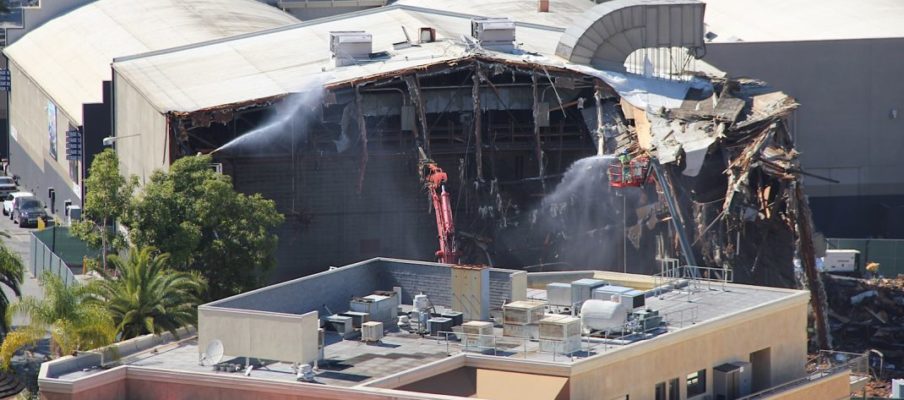
Universal Studios…4 Stages Torn Down And 10 More To Go

Universal Studios…4 Stages Torn Down And 10 More To Go

Recently Stages 22, 23, 24 and 24 were demolished and will not be rebuilt, but the article seems to indicate that the next 10 on the chopping block will be rebuilt on the lot, further from the theme park area.

As a tribute, here are some of the major films and shows done in each of these first four to go, and remember…the famous “Phantom Of The Opera” studio, Stage 28 was demolished in 2014.

Studio 22: “Abbot & Costello Meet Frankenstein”, “To Catch A Thief”, “Thoroughly Modern Millie”, “Airport”, “Play Misty For Me”, “The Sting” and “Murder She Wrote”.

Studio 23: “Harvey”, “Marcus Welby, MD”, “Emergency”, “Incredible Hulk”, “Jurassic Park” and “CSI”.

Studio 24: “Ma And Pa Kettle”, “Pillow Talk”, “Here’s Lucy”, “Airwolf”, “The Flintstones Movie”, “National Treasure” and “Pirates Of The Caribbean”.

Studio 25: “Ellery Queen Mysteries”, “The Blues Brothers”, “Simon & Simon”, “Quincy ME”, and “Meet The Fockers”

At the link is a list of all the Universal Stages…just click on one and it opens to a separate page for each. -Bobby Ellerbee

http://www.thestudiotour.com/ush/frontlot/soundstages.php

http://insideuniversal.net/2017/03/soundstages-22-23-24-25-have-been-demolished-at-universal-studios/

Soundstages 22, 23, 24 and 25 have been demolished at Universal Studios – Inside Universal

Soundstages 22, 23, 24 and 25 on the Universal lot have been demolished. These demolitions are part of the studio’s new five-year plan that aims to revitalize and modernize Universal’s backlot facilities.

Source

What Do “Bonanza”, The Beatles And Bozo Have In Common?…

What Do “Bonanza”, The Beatles And Bozo Have In Common?

Aside from the letter “B”, the amazing Alan Livingston…that’s what!

If you don’t know who he is, you are not alone, but he – alone – touched the lives of literally all of America’s children, teens and adults in some very important and, above all, entertaining ways.

At Capitol Records, Alan Livingston created the character of Bozo The Clown, revived the carrier of Frank Sinatra, signed The Beatles and The Beach Boys, and…as an NBC Programming executive, hired David Dortort to write the pilot episode of “Bonanza”.

While growing up, Alan took saxophone and clarinet lessons, and his brother, Jay Livingston studied piano. Jay’s writing credits include “Buttons and Bows,” “Mona Lisa”, “Silver Bells”, “Tammy” and “Que Sera, Sera” and more. These, and a surprise that will come below, were co written with his wring partner Ray Evans.

While at the University of Pennsylvania, Livingston and his brother paid expenses by forming an orchestra that played at fraternity dances and school events.

After serving in the Army as a second lieutenant during World War II, Livingston made his way to the west coast where he finally convinced Capitol Records to give him a job. In 1946 Alan was hired to launch a series of storytelling records with illustrated read-along books for children. He called the new concept a “record-reader.”

After writing “Bozo at the Circus,” Livingston worked with an artist to create the clown narrator – a composite design of Livingston’s based on various clown pictures – and he hired former circus clown and cartoon voice-over artist Pinto Colvig to supply Bozo’s voice.  The Bozo music was produced by Billy May and Bozo was a big hit, with the series reportedly selling more than 8 million copies over the next several years and spawning Bozo merchandise and Bozo-hosted TV shows. The first of which starred Colvig on KTTV in Los Angeles. By the way, Capitol later sold the Bozo rights to Larry Harmon, who once claimed to have created Bozo, but he eventually set the record straight by crediting Livingston.

Other Livingston-written and produced children’s recordings that allowed Capitol to dominate the children’s record market followed, featuring Woody Woodpecker and various Disney and Warner Bros. cartoon characters.

The next major phase of Alan Livingston’s success came with his
a promotion to vice-president of Capitol. He went from overseeing children’s records to working with adult artists such as Nat King Cole, which yields yet another surprise! “Mona Lisa”.

His songwriting brother Jay had written a song Alan felt was a hit, and very will suited for Cole, but Nat did not care for it. Alan was careful not to make a big deal over it, but kept suggesting and eventually Cole agreed to cut is as a B side of a song Nat thought would be a hit. DJ’s liked the B side better, and before you knew it, the song was Number One, and held there for eight weeks.

Not long after that, Livingston got call from Sammy Weisbourg, who was president of the William Morris Agency. They had taken on a star who’s career was at an all-time low, and were looking for a “fellow gambler” that thought there could be a grand revival.

Weisbourg asked whether Livingston would consider signing Frank Sinatra to a new recording deal and Livingston said yes!

Livingston believed Sinatra was a great singer and, if given the proper material and appropriate instrumental backing, he could be on top again, which lead to a sort of “shotgun marriage”.

Sinatra reluctantly agreed to try a session with Riddle on April 30, 1953. That session produced the classic “I’ve Got The World On A String.” Another session yielded “Young-At-Heart,” which put Frank Sinatra’s comeback in high gear in the spring of 1954.

Livingston left Capitol after a great 10 year run there to become the head of programming for NBC’s west coast Programming Department. That was 1956 and aside from working with Milton Berle, the newly “single” Dean Martin, Dinah Shore and Jimmy Durante, he Tom Sarnoff gave the go ahead to David Dortort’s idea that became NBC’s biggest hit of the ’50s and ’60s…”Bonanza”.

At this link, in an Archive Of American Television interview, Jay Livingston and writing partner Ray Evans talk about Alan and how they came to write the historic theme song for “Bonanza”. https://youtu.be/KiUBFXi81jI?t=19m38s

In 1961, Capitol asked Livingston to come back, and boy did he ever…and brought Capitol with him!

The Beatles’ records were being released in the United Kingdom by EMI, which was Capitol’s major stockholder, which in turn gave Capitol the right of first refusal on all EMI acts for distribution in America. Capitol’s Dave Dexter who reviewed all these artists kept rejecting them, even the Beatles’ early hits, as unsuitable for the American market.

In 1963, Livingston received a call from the Beatles’ manager, Brian Epstein, from London wanting to know why there was no interest in the group. When Livingston said he hadn’t even heard the Beatles sing, Epstein told him to listen to one of their records and call him back.

Livingston did, and the Beatles signed with Capitol, which agreed on a $40,000 budget to promote their first single. In February 1964, the Beatles made their first appearance on “The Ed Sullivan Show,” and Beatlemania in America was in full swing.

He also played roll in signing The Beach Boys, The Steve Miller Band and more.

Livingston, who was married for several years to actress Betty Hutton, left Capitol again in 1968 and formed his own company, Mediarts, which was involved in movies, records and music publishing. Lightning struck again after Alan signed Don McLean and released the smash hit, “American Pie”.

He sold Mediarts to United Artists and joined 20th Century Fox as president of the corporation’s Entertainment Group.

Now THAT is a brilliant carrier! Gone but not forgotten…Alan W. Livingston left us March 13, 2009. Enjoy and share! -Bobby Ellerbee

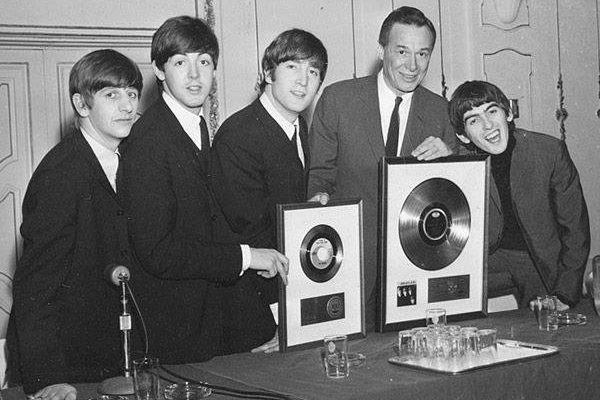
In the photo, we see Livingston presenting The Beatles with their first, of many, gold records from Capitol.

Source