- Home
- TV History
- Network Studios History
- Cameras
- Archives
- Viewseum
- About
September 19, 1952…This Was The News Of The Day On NBC
Here is a time capsule…a look at the news on this day in 1952. This is the full 15 minute broadcast of “The Camel News Caravan” live from Studio C of NBC’s Uptown Studios at 105 East 106th Street. A location NBC leased from Pathe, as they worked closely on film processing and kinescope production.
This live feed of John Cameron Swayze in Studio C, plus film inserts from Studio F at Uptown was sent to Master Control at 30 Rock via coaxial cable, and there, modern technology allowed live reports from Los Angeles, Washington and Chicago to be inserted. Since the coast to coast television linkage had only become possible the year before, this was still novel and quite impressive to viewers.
As you watch, you’ll notice that not much has changed! The democrats and republicans are butting heads over Nixon, and there are even a couple of fluff pieces here on fashion and portable swimming pools. Enjoy! -Bobby Ellerbee
https://www.youtube.com/watch?v=qK_3NBHJyBk
kinescope of a live network news broadcast. News items include Richard Nixon, Charlie Chaplin (at 13:14), fashion, missiles and more, plus original commercia…
September 19, 1960…The “Tonight” Show Goes Color
The “Tonight” Show is a creation of the late Pat Weaver, and has been on the air since 1954. It is the longest currently-running regularly scheduled entertainment program in the United States, and the third longest-running show on NBC, after “Meet the Press” and “Today”.
When the show began it was broadcast live from The Hudson Theater, with Steve Allen as the host. Paar took over in ’57 and while still at The Hudson, on January 12, 1959, the show began to be videotaped for broadcast later the same day.
The first week of January 1960, the show was moved to NBC Studio 6B at 30 Rock in preparation for the switch to color, which came on September 19, 1960 during Jack Paar’s tenure as host.
NBC’s “Broadway Open House”, which began in 1950, first demonstrated the potential for late-night network programming. The format for The “Tonight” Show can be traced to a 40 minute late night local show on WNBT New York, which was hosted by Allen. That show started in 1953. Network president Pat Weaver saw it, liked Allen, and made a deal. Beginning in September 1954, it was renamed “Tonight” and shown on the full NBC network. -Bobby Ellerbee
September 18, 1927…The CBS Radio Network Debuted, In the photo above is CBS News Studio 9 with Murrow in suit and the short man in the background is news director Paul White. On the right, Douglas Edwards looking at wire copy. Below is Studio 9 with Robert Trout looking to news director Paul White for a cue in 1939.
Above is Studio 1 during 1932 election coverage and below is Studio 2 after the update in the early 40s
The two photos above show Studio 3 during an episode of “Gang Busters” and again after the remodeling in the 40s.
July 25, 1964…CBS Radio Bids Farewell To 485 Madison Avenue
On September 18, 1927, the CBS Radio Network, with 18 affiliates went on the air from their studios in The Steinway Building near Carnegie Hall on West 57th Street.
Exactly two years later, CBS Radio moved into the new 485 Madison Avenue building on September 18, 1929.
On July 25, 1964, the last broadcast from the heart of CBS Radio News…Studio 9, was a hosted by Steve Rowan, and the next day, Rowan was the first to broadcast from the new CBS Broadcast Center. At this link is the 2 page CBS press release. http://donswaim.com/cbs-radio-moves-1964.pdf
That last show from 485 Madison, “Farewell to Studio 9” was historic in every way, and included clips from the many world shaping newscasts, and the most iconic newscasters this country has known, including Edward R. Murrow, and many more that you can hear at this link to that last show.
Some Interesting History: When 485 Madison Avenue was first built, CBS occupied only the upper floors. As need grew, CBS expanded throughout the building. Originally, there were six studios.
Studios 1, 2, and 6 were on the 22nd floor. Studio 1 was reached by a staircase as its floor was higher in order to accommodate the higher ceilings of Studios 3 and 5 which were directly underneath. Studios 3, 5, and 4 were located on the 21st floor. Master Control and the upper part of Studio 1 occupied the 23rd floor.
Studios 1 to 6 were remodeled in the mid 30s reflecting acoustic enhancements unknown when first built. Suspended light fixtures became recessed, sound insulation, wooden panels, and rubberized flooring were among the improvements. Also in the mid 30s, Studios 7 and 8 were constructed on the 3rd floor of 485 Madison Avenue.
Studio 9, which was the news studio and the news department were located on the 17th floor. CBS also had radio studios at 49 East 52nd Street, just around the corner from 485 Madison.
CBS television studios were also in the process of moving to the Broadcast Center including 41 through 44 at Grand Central. Studios 53 to 56 at Liederkranz Hall, 111 East 58th Street were also moving to the Broadcast Center. The corporate offices later moved from 485 to Black Rock which opened in 1965 at 51 West 52nd Street. Happy Birthday to the CBS Broadcast Center! -Bobby Ellerbee
September 16, 1949…ABC’s KECA TV In Los Angeles Signs On
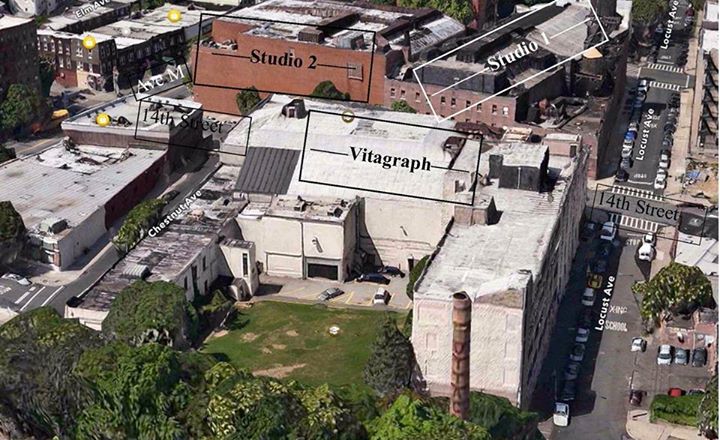
On May 7, 1949, Billboard revealed that ABC would spend $2.5 million to convert the old Vitagraph/Warner East Annex in Hollywood into The Prospect Studios, and construct a transmitter on Mount Wilson in anticipation of the launch of KECA-TV, which went on the air on September 16, 1949. In 1954, the call letters were changed to KABC.
When ABC began television operations on April 19, 1948, it had what CBS, Dumont and NBC did not have…5 major market, Owned and Operated stations. Well, almost…but they did have construction permits from the FCC, and over the next 13 months, they all came to air.
On April 19, 1948, the ABC Television Network began its broadcasts on its first primary affiliate, WFIL-TV in Philadelphia. In August 1948, the network’s flagship owned-and-operated station, WJZ-TV in New York City, began its broadcasts.
WENR-TV in Chicago launched on September 17, 1948, while WXYZ-TV in Detroit went on the air October 9, 1948. KGO-TV in San Francisco went on the air May 5, 1949. Happy Birthday KABC! -Bobby Ellerbee
September 16, 1965…”The Dean Martin Show” Debuts On NBC
This video goes to the heart of why the show was such a big success. It was as spontanious as a taped, network variety show could be, thanks to the unique relationship that Dean and director Greg Garrison had.
The great open secret of The Dean Martin Show was that Dean barely showed up for work. He did for its first season, but the program wasn’t working, and Dean was unhappy with how hard he was working. That was when Greg Garrison, who’d been hired as director only, came up with an idea. To make the show more spontaneous, and to keep Dino interested in doing it at all, he would arrange the schedule so Martin only had to come in one day a week, and not even for the entire day. Rehearsals were done with a stand-in, and everything that didn’t involve Dean was taped when he was nowhere on the premises. There were people who appeared on The Dean Martin Show without ever meeting Dean.
On tape day, Dean would come in, watch a run-through with the stand-in, then go out and replicate the stand-in’s actions. Everything was configured for maximum speed. Dean almost always wore a tuxedo, thereby minimizing costume changes and making it possible for any segment to be edited into any other show. The lines were all on cue cards and the songs, which were performed live, were all tunes that Dean already knew. If something went wrong, Garrison would usually not start over. He’d work some kind of paste-up edit, often inserting a freeze-frame in a manner that made other TV directors wince. Once in a while during a musical number, Dean wouldn’t be able to hear the orchestra and if you watch, you can see him rubbing his ear to signal Garrison to have the audio cranked up a notch. Anyone else would have restarted or edited…but Garrison promised his star he’d be done by 10 PM, and did whatever was necessary to make that happen.
In this particular segment, you’ll see everything you just read demonstrated, but given how this ends, this is one of the few times taping had to stop for a few minutes. Enjoy! -Bobby Ellerbee
https://www.youtube.com/watch?v=VLwHtOzq2M4
with Anna Moffo and Lloyd Bridges and Dean rips his pants LOL
Great Interview…Director, Don Roy King, “Saturday Night Live”
In case you missed this link in the comments section of the SNL story earlier this week, here is a rare treat. In this half hour interview, Don Roy King gives us an incredibly detailed and interesting description of how the show is done, the weekly schedule, and the things that would reduce mere mortals to tears and panic in directing television’s only live 90 minute comedy sketch show.
With the best, and most experienced crews, actors and support staff in live television, they pull it off without a hitch, week after week and year after year, but as you will see…it’s not easy. They just make it look that way! Thanks to Andy Rose for the clip. Enjoy! -Bobby Ellerbee
September 15, 1938…NBC Debuts TV’s First Live Remote Show
On December 12, 1937, the world’s first electronic television remote units were delivered by RCA to NBC in New York City. The dual vehicle system, consisting two, 26 foot buses included one for production and one for transmission. The production bus provided two portable single-lens Iconoscope cameras and the support equipment. The transmission bus contained the 177 MHz transmitter with a 50 foot antenna which could relay a remote pickup to the Empire State Building from as far away as 25 miles.
The units were field tested for about six months before being returned to RCA’s Camden plant for modifications in the synchronizing equipment. Another modification was the installation of an coaxial feed out the transmitter truck, which allowed them to shoot at 30 Rock’s sunken ice skating rink.
The trucks came back in late August, and on September 15, 1938, W2XBS broadcast the first “Man On The Street” episode, by interviewing passers-by in Rockefeller Plaza (via the new coax). It is thought that the “Man On The Street” interviews were done once a week on W2XBS, up until the 1939 World’s Fair opened in New York.
In 1935, a “man on the street” show called “Vox Pop” came to NBC’s Blue radio network and is thought to be the inspiration for the W2XBS remotes. Although there were still very few sets in use, the 15 minute show was a good work out for the crews and trucks.
By the time the 1939 World’s Fair came to town, NBC had a lot of experience with the units and used them heavily at the Fair.
THE PHOTOS, up top is a shot taken just above the ice skating rink, an episode of the NBC/W2XBS “Man On The Street” series is done live with one camera on the ground, and the other on top of the truck. This photo is possibly the Sept 15, 1938 debut. Below is a photo of a monitor, shows NBC head of programming Warren Wade on the left and is speaking with an RCA salesman about the future of television. Wade is the man who gave the OK to Howdy Doody. These two are in the photo up top, and this is possibly on the debut show.
A little further down are links to 3 great time lapse videos that show you how “active” Studio 8H is during each episode of “Saturday Night Live”, but we will start with a rare look at a stage map for the show.
If you have wondered how Studio 8H is arranged for the hive of action that happens in 90 minutes, here is the answer. Of course, the written in sketch names change from week to week, but the stage areas stay the same.
To acclimate you, the south wall is to the left (49th Street) and the north wall to the right (50th Street). The wall where homebase is, is the west wall on the 6th Avenue side. At the bottom is the area where the bleachers are, but they wrap around on the north and south wall sides too.
At the bottom, you see the opening between stages 5 and 4C…this is the tunnel under the bleachers that leads to the page desk area and the dressing rooms. As you’ll see in one of the videos, this is a very busy area at showtime too. By the way, stage 2 is where the musical guests always perform, with the SNL house band at homebase. Where you see the “Three Dog Night, Control Audio” written in, that is the retractable tongue where the opening monologue is done, as well as “Weekend Update”.
Notice that some sketches are stacked in front of others, and that scenery is “pealed off” as the show progresses. Having seen this done live, you would be amazed at how many stage hands are setting and striking scenes during the show. It is ballet at it’s best!
Here are the 3 video links of the time lapsed action in Studio 8H… home of the best of the best in live television. Enjoy and share! -Bobby Ellerbee
https://www.youtube.com/watch?v=i72I9NNTTM0 2014 Time Lapse
https://www.youtube.com/watch?v=PU8k2hoCr2w 2009 Time Lapse
https://www.youtube.com/watch?v=3oRRYJs-Ec0 Page Area Load In/Load Out
September 13, 1947…The RCA Kinescope Machine Debuts
In association with Dumont, Kodak and RCA announced the developed a special film camera to shoot directly off a TV screen. This was the first “time shifting” technology to come to television. Nine years later, video tape would become the second.
Officially titled, the “Eastman Kodak Television Recording Camera”, a Kinescope recorder was basically a special 16mm film camera mounted in a large box aimed at a high quality monochrome video monitor. All things considered the Kinescope made high quality, and respectable TV recordings.
The Kinescope was quite the clever device. It’s film camera ran at a speed of 24 fps. Because the TV image repeated at 60 fields interlaced (30 fps) the film had to move intermittently between video frames and then be rock steady during exposure.
The pull-down period for the film frame was during the vertical interval of less than 2 mili seconds, which was something no mechanical contraption could do at the time.
Together, Dumont, RCA and Eastman Kodak found various ways around the problem by creating a novel shutter system that used an extra six frames of the 30 frame video signal to move the film. This action integrated the video half-images into what seemed like smooth 24 fps film pictures.
Of course, the kines were played back on air using film chains running at 24 fps, so the conversion to film was complete and seamless. Until videotape recorders made their debut, the Kinescope was the only way to transmit delayed television programs that were produced live.
September 13, 1953…Marilyn Monroe’s First Television Appearance
Under the video is a photo of the gift Jack Benny gave Marilyn for appearing on his show. She was reluctant and didn’t really want to do it because on live television, to many things could go wrong, but the “gift” helped, as did the studio executives who saw this as a great promo for her new movie “Gentlemen Prefer Blonds” which went into general release in August of ’53.
This was the first show of Benny’s fourth season and having lost thirty percent of his audience in the third season, he was anxious to step up the guest star power. It worked and the ratings zoomed. -Bobby Ellerbee
https://www.youtube.com/watch?v=_vhQqJXJz-o
Below is Miss. Monroe with her new 1953 Cadillac convertible! The “gift” from Jack Benny…

September 13, 1990…”Law And Order” Debuts On NBC
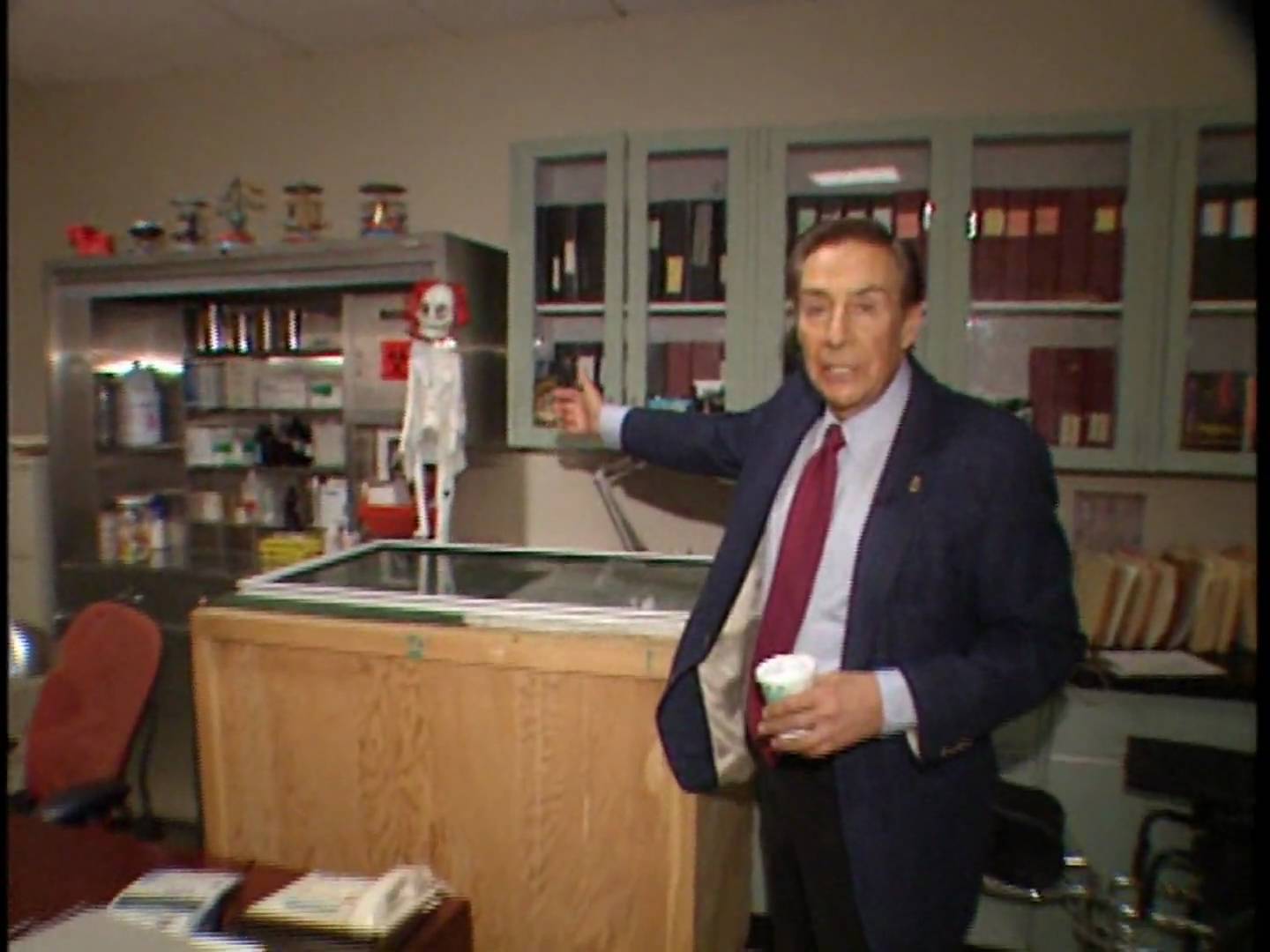
Below is a tour or the set from the beloved Jerry Orbach.
“Law And Order” and “Gunsmoke” are tied for the honor of television’s longest running live action primetime series…both lasted 20 years, but “Gunsmoke” aired more episodes, so it still holds the record. FYI, “The Simpsons” is actually the winner with 28 seasons, and “South Park” also has 20 season, but those are animated. Doh!
“Law And Order” is the only show that was sold to three networks before it got to air. Initially, Fox ordered thirteen episodes based on the concept alone, with no pilot. Then-network head Barry Diller reversed the decision. Although he loved the idea, he didn’t believe it was a “Fox show”.
Dick Wolf then went to CBS, which ordered a pilot, “Everybody’s Favorite Bagman”, written by Wolf about corrupt city officials involved with the mob. The network liked the pilot but did not order it because there were no breakout stars.
In the summer of 1989, NBC’s top executives, Brandon Tartikoff and Warren Littlefield, screened the pilot and liked it; but they were concerned the intensity of the series could not be repeated week after week. However, by 1990, NBC executives had enough confidence that the innovative show could appeal to a wide audience that they ordered the series for a full season.
The rest as they say, is history…and a great one at that! This is my all time favorite show. Yours too? Enjoy and share! – Bobby Ellerbee
September 12, 1955…3K, NBC’s First Color Studio Inside 30 Rock Debuts
On September 12,1955, Studio 3K debuted as NBC’s first “non-experimental“* in-house color facility. It was created by combining historic Studio 3H, television’s first home, and radio Studio 3F. The debut broadcast was of “The Howdy Doody Show“, and 3K became Howdy’s permeant home, making Howd Doody the first ever daily color broadcast. *In 1951, RCA/NBC equipped Studio 3K with experimental color equipment for a year’s worth of testing monitors, cameras and rack equipment and mostly closed-circuit programs were done from 3H until The Colonial Theater was leased and became the home of all the color testing and broadcasts, starting in March of 1953…so, technically, Studio 3H was the first live color studio inside 30 Rock.
Below is the detailed history of Studio 3H, how it came to be, and what it became. Did you know 3K was the home of the famous Kraft Kitchen? That is were all the Kraft commercials came from, and why the third floor always smelled great. Enjoy and share! -Bobby Ellerbee
Inside Studio 3H, 3rd floor level studio above and below, 4th floor level control room that you can see in the photo above.
The “coffin camera” color tests that started in 3H in 1951 (below) with “Color Girl” Marie McNamara.
Me kissing the floor where 3H and 3F came together to make 3K, 2014.
A Brief History Of Television’s First Real Home…NBC’s Studio 3H
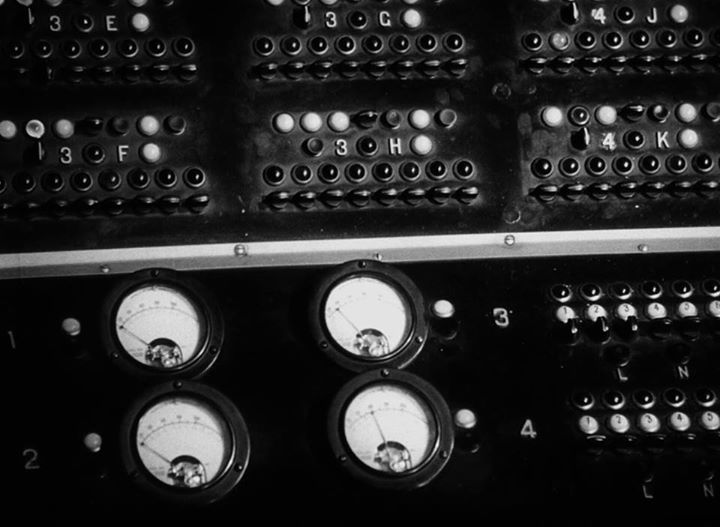
All the way up top is a rare, digitally enhanced photo of the NBC Radio Master Control board from 1933…the year RCA and NBC moved into 30 Rockefeller Plaza.
In the beginning, Studio 3H was a radio studio, just one of six medium sized spaces on the 3rd floor, which were about half the size of 3A and 3B. At the time, there were roughly 50 NBC studios in the building, but RCA had plans for 3H.
In late 1935, two years after Radio City opened, NBC Radio Studio 3H was converted to RCA Television Studio 3H and technically, would remain an RCA domain until 1939, at which time W2XBS and this studio were put under the control of NBC Television.
It was done under a blanket of secrecy. This mysterious new space was kept secret due to competitive developments for a year, while low key experimental broadcasts from 3H were done, but by early in 1936, RCA decided to go public with the news of their electronic television operations.
After the experimental public broadcasts were started with the three live Iconoscope cameras, RCA also took over a space on the 5th floor for film and called that new area Studio 5F, which was linked to the 3H control room.
Until 1951, 3H was used for experimental and regular programming, and was NBC’s only permanently equipped studio till radio studio 8G began television trials in 1946. Some of the earliest network shows from 3H were “The Kraft Music Hall,” “Television Scene Magazine,” “The Howdy Doody Show” and more. All these shows started out in 3H with the big Iconoscope cameras, and in April of 1948, 3H finally got the new RCA TK30s. The next month, 8G was converted to television.
In 1951, Howdy and the other shows done here moved out, and 3H would become the home of the experimental color tests after the Wardman Park color tests concluded in Washington. The Wardman color cameras were not installed in 3H, however the Washington color veterans were brought from there to continue color tests with the new “coffin cameras.” The joke was, these huge new umber gray cameras were big enough to bury a man in. These were the predecessor to the TK40s and this is the first appearance of the rounded top viewfinder. The color tests from 3H, and later, The Colonial Theater were broadcast over RCA’s experimental color station KE2XJV.
Variety like demonstration shows were done weekdays at 10, 2 and 4 and were staged with vivid colored wardrobes and sets. These shows were mostly for the engineers in New York and RCA’s Princeton labs who watched on closed circuit feeds. Not one to ever miss a marketing opportunity though, these shows were also fed to a half dozen custom built color receivers that were on display in the RCA Exhibition Hall in Rockefeller Plaza. In early ’53 these daily shows would move to The Colonial Theater which was where the new prototype TK40 cameras were beginning to be tested.
After the color tests left for the Colonial, 3H was still involved in color monitor tests, but even then, it stayed busy with regular 15-minute daily programs and live commercials coming from the studio with TK30s wheeled in from Studio 3B.
In the summer of 1955 3H was closed as construction crews took out the wall between 3H and 3F to create the first color studio inside Radio City. The new studio was to become 3K and with a double debut, both Studio 3K and Howdy Doody went to live color the afternoon of September 12, 1955.
Today, 3K is mostly used by WNBC, NBC News and others. Enjoy, and there is more to come on 3H. -Bobby Ellerbee
September 11, 1967…”The Carol Burnett Show” Debuts on CBS
After leaving the “Garry Moore Show” in 1962, Burnett signed a 10 year contract with CBS with 2 options. Option 1 required her to do two guest appearances and a special each year, which she did for the first five years.
Option 2 gave her 30 weeks in her own show. After discussion with her husband Joe Hamilton, in the fifth year of the contract, Burnett decided to call CBS and exercise Option 2 of the contract. Mike Dann of CBS Programming, explaining that the variety show Carroll wanted to do was a “man’s genre”, offered Burnett a sitcom called “Here’s Agnes”. Burnett had no interest in doing a sitcom and because of the contract, CBS was obliged to give Burnett her own variety show. The rest as they say is history!
The original show ran on CBS from September 11, 1967, to March 29, 1978, for 278 episodes and originated in CBS Television City’s Studio 33. It won 25 prime-time Emmy Awards, was ranked No. 16 on TV Guide’s 50 Greatest TV Shows of All Time in 2002, and in 2007 was listed as one of Time magazine’s “100 Best TV Shows of All Time.” Enjoy and share! -Bobby Ellerbee
#t=106″ target=”_blank”>https://www.youtube.com/watch?v=JlF4GVVi6Ss #t=106
Bloopers from the classic CBS variety show.
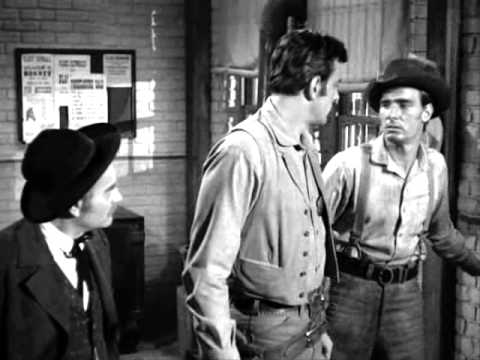
September 10, 1955…”Gunsmoke” Debuts With John Wayne Intro
According to “The Complete Directory to Prime Time Network and Cable TV Shows”, John Wayne was the first choice to play Marshal Matt Dillon, but he declined because he did not want to commit to a weekly TV series. He did, however, recommend his friend James Arness for the role, and gave the on-camera introduction in the pilot, which is included here.
According to a TV Guide article, 26 actors screen-tested for the role of Matt Dillon. William Conrad (voice of radio’s Matt Dillon) was one, but didn’t look the part. Raymond Burr sounded great, but according to producer-director Charles Marquis Warren: “he was too big; when he stood up his chair stood up with him” (Burr later lost considerable weight to play Perry Mason).
John Pickard almost made it, but did poorly in a love scene with Kitty. Warren and producer Norman MacDonnell denied that they even considered John Wayne, but their choice for Marshall Dillon, James Arness, looked and sounded a lot like Wayne. When Arness was reluctant to take the role, Wayne persuaded him and even agreed to introduce the first episode.
‘Gunsmoke’ was created by writer John Meston and producer Norman MacDonnell as a radio series that premiered on CBS in 1952. Many of the early television episodes are adaptations of Meston’s radio scripts. The radio series ran for more than 400 episodes and lasted until 1961.
The gunfight between Matt Dillon and an unknown gunman that opened every episode was shot on the same main street as that used in High Noon (1952). During one filming of this gunfight, as a joke on everyone else, James Arness let the gunman win.
During WWII, James Arness was assigned to the 3rd Infantry Division and took part in the invasion of Anzio where he was severely wounded in the leg and foot by machine-gun fire. He lost part of his foot and the wound plagued him the rest of his life. The injury made it difficult for him to walk for extended stretches, so, when shooting movies or TV shows, any scenes that required extensive walking would be shot early in the morning, before his feet and knees started giving out.
At 20 years and 635 episodes, ‘Gunsmoke’ is one of the longest-running American prime-time drama television series. It was originally produced for the CBS Television Network by Filmcrafters at the Producers Studio (now the Raleigh Studio). Around 1960, CBS took over production and moved it to KTLA Studios, then owned by Paramount Pictures. Around 1963 production was moved to CBS Studio Center, formerly Republic Studios, where it remained for the rest of the show’s run.
Slated to be canceled in 1967 due to low ratings, CBS president William Paley reversed the decision. He moved the show from Saturdays to Mondays (cancelling Gilligan’s Island in the process), placing it back in the Nielsen’s Top Ten. Paley and his wife were both big fans of the show. -Bobby Ellerbee
A week after CBS took Walter Cronkite’s evening news show to 30 minutes, NBC followed. On that first extended broadcast, a taped interview with President Kennedy was included. These are ultra rare photos taken that morning in the Oval Office. Much more below. Enjoy and share! -Bobby Ellerbee


ULTRA RARE! JFK, Huntley-Brinkley Interview In The Oval Office
At the link above are videotape outtakes, from what would be President Kennedy’s last interview on NBC.
The date is September 9, 1963, and these rare behind the scenes photos were taken by long time NBC/WRC-TV production manager, Bill Wells, and are made available to us by his friend, Tom Buckley, and the Wells estate.
As seen in these remarkable photos, NBC reporters Chet Huntley and David Brinkley sat down with the President in the White House for an exclusive interview for their program, “The Huntley-Brinkley Report”.
Kennedy stuck to outlining the policy priorities of his first term throughout the expansive interview, particularly focusing on the conflict in Southeast Asia. But he grew reflective when Huntley asked if, three years into his presidency, he found the office of the presidency unmanageable.
Kennedy gave a strikingly thoughtful, long response assessing America’s place in the world and economic issues and political roadblocks at home – essentially summing up all the challenges facing his presidency. But Kennedy ended on a hopeful and humble note, saying that the country was really managed – not by the White House, but by its citizens.
He concluded that America was making progress and said, “I think we can really look forward to the ’60s with a great deal of hope.” Tragically, of course, Kennedy would not outlive the decade for which he had so much hope, nor the the year of 1963.
In that these images are so rare, I’m sure you have friends that you would like to share them with, so please do. If you can help identify the people shown here, that would be appreciated too. -Bobby Ellerbee
September 9, 1926…RCA Creates NBC: A History Lesson
In the beginning, there was David Sarnoff. By 1919, Sarnoff was the commercial manager of American Marconi in New York. That same year, British Marconi had made an offer to General Electric to buy the worldwide rights to their Alexanderson Alternator technology which was vital for transatlantic communication.
The prospect of a foreign company controlling international communications set off alarm bells in Washington and the government approached GE with a counteroffer. If GE would place the Alternator in a new subsidiary company, they would be allowed to operate the international wireless circuits for both government and commercial traffic.
To sweeten the deal, the Navy agreed to turn over all the wireless patents it received through their wartime research. Who could refuse? The new GE subsidiary company was named the Radio Corporation of America and at the helm was Owen Young as Chairman, Ernst Alexanderson as Chief Engineer and David Sarnoff as General Manager.
Within months, AT&T, Westinghouse and a big customer of international wireless services, United Fruit Company bought up all the RCA shares. By 1921, things had gotten interesting on another front…radio stations. 28 sprang up that year including the Westinghouse owned WJZ in New Jersey.
With the July 2, 1921 World Heavyweight Championship fight between America’s Jack Dempsey and France’s George Carpentier looming, the nation was anxious for a speedy way to know the details and outcome. David Sarnoff decided RCA should broadcast the fight on WJZ. It was a radio first; a publicity coup for RCA and Westinghouse, and sold lots of radios!
With Westinghouse in a good mood, Sarnoff convinced them to allow RCA to take over WJZ, and later that month, RCA built and installed a powerful new transmitter for their first station atop Aeolian Hall in New York. By the end of 1922, 430 more radio station licenses had been granted and Sarnoff was paying attention, but had a different train of thought.
To him, it seemed the bigger opportunity was not in owning local stations, but in creating a national network. In a memo to Chairman Owen Young, Sarnoff said that RCA should provide “a national broadcasting company” that would entertain a nation with high-quality programs of news, sports and music. The plans for The National Broadcasting Company were in place now, but it would take a few more years.
Part of RCA’s original corporate mandate was to issue and collect licensing fees from those manufacturing wireless radio equipment. That meant everyone; including one of RCA’s major shareholders… AT&T. Even though they would be rewarded by their stock ownership, AT&T began to chafe at the bit and in early 1923, began manufacturing receivers without paying the license fees to RCA. On top of that, they had also refused to allow RCA to lease phone lines to begin a network for WJZ. RCA’s only alternative was to use telegraph lines which had very poor voice quality. In the summer of ’24, there were some anti-Semitic remarks aimed at Sarnoff by AT&T head Walter Gilbert, and things got pretty heated, but that actually worked to RCA’s advantage.
After that embarrassing flap, AT&T’s management began to discuss getting out of the radio business, and in July of 1926, AT&T agreed to sell WEAF to RCA. The sale came with the stipulation that from then on, they would rent AT&T lines, which is what Sarnoff wanted all along.
The Beginning of NBC, September 9, 1926…NBC Was Incorporated by RCA The incorporation process was the first step on a long and profitable road for RCA’s new broadcast division.
The nation’s first major broadcasting network came to life on November 15, 1926, with a gala four-hour radio program originating from the ballroom of the original Waldorf-Astoria Hotel at 5th Avenue and 34th Street, which is now the Empire State Building’s location.
After NBC was created, their two stations became the centers of their two semi-independent networks…NBC Blue, based on WJZ, and NBC Red, based on WEAF, each with its respective links to stations in other cities. RCA became the network’s sole owner January 1, 1930, when former partners General Electric and Westinghouse were bought out.
Many believe that NBC created the first radio network but that is not exactly the case. RCA’s old partner AT&T had the first radio network, and their first network radio broadcast was January 4, 1923, between WEAF in NYC and WNAC in Boston. -Bobby Ellerbee
Below is David Sarnoff, The Announcement of the Formation of NBC and at bottom, the Alexanderson Alternator.
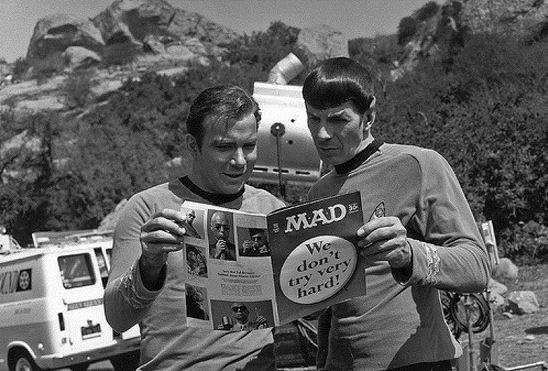
September 8, 1966…”Star Trek” Debuts On NBC
“The Man Trap” was the first episode of a television series that has become a trek unto itself…it aired 50 years ago today.
The first season of ‘Star Trek’ comprised 29 episodes, including the two-part episode “The Menagerie”, which was based on the original pilot, “The Cage” which had starred Jeffrey Hunter as Captain Christopher Pike.
As you probably know, there were two pilots done for this show and the second was “Where No Man Has Gone Before” with William Shatner as Captain Kirk. That pilot was re-edited with some new footage and aired as the third episode of that first season. What? Me worry? – Bobby Ellerbee
September 8, 1951…First Episode Of “I Love Lucy” Was Filmed
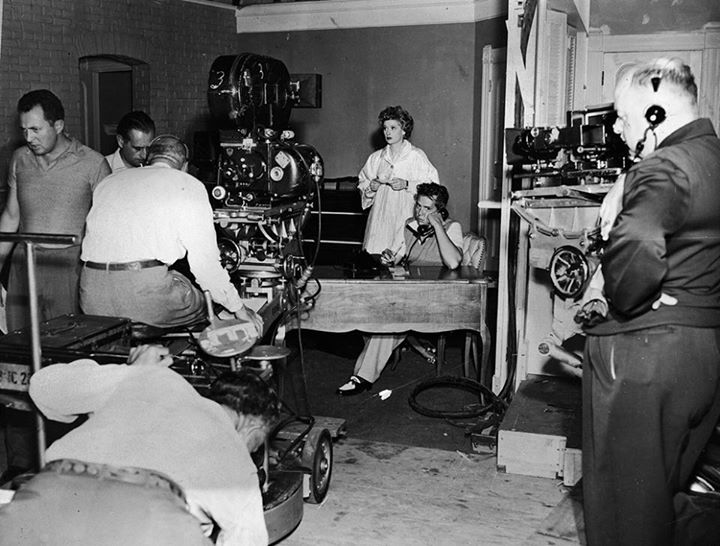
When ‘I Love Lucy’ debuted October 15, 1951, the first episode to air was “The Girls Want To Go To A Nightclub”, but the first episode to be filmed was “Lucy Thinks Ricky Is Trying To Murder Her” which was filmed on September 8, 1951. It aired as the fourth episode on November 5th.
This rare schedule shows the rehearsals and shooting times at The General Services Studios location, which is where the show was done for the first three seasons. Enjoy and share! -Bobby Ellerbee
September 7, 1927…First Electronic Television Demonstrated
While others were trying to perfect mechanical television, Philo T. Farnsworth was creating the Image Dissector tube which was the heart of his electronic television system. RCA’s Vladimir Zworykin developed the Iconoscope tube and later the Orthicon tube, but it was only when he incorporated ideas from Philo’s Image Dissector tube that the great Image Orthicon tube was born. Enjoy and share this excellent 10 minute tribute to Mr. Farnsworth which includes rare color film of his 1939 experiments too. -Bobby Ellerbee
https://www.youtube.com/watch?v=HHy04aN0jfI