Posts in Category: TV History

October 1955…Sid Caesar, With One Of Live TV’s Most Famous “Saves”


October 1955…Sid Caesar, With One Of Live TV’s Most Famous “Saves”

Sid Caesar made television history on “Caesar’s Hour” with this improvised bit of comic genius, which has become one of the most famous “saves” in the history of live television.

During this 13 minute sketch of “Gallipacci” (a take off on the famous opera Pagliacci), Sid was supposed to paint a teardrop on his cheek, but then, the mascara pencil broke (at 8:30 in) at the beginning of his nonsense rendition of “Just One of Those Things”.

Not breaking his stride, Sid proceeds to pick up one of Nanette’s lip brushes and paints an unscripted tic-tac-toe board on his face. This aired October 10, 1955, live from The Century Theater.

Some unverified sources report that ‘Cirque du Soleil’ has credited Sid Caesar as the origin of the made up gibberish the show’s performers use as a way to make any nationality at home with the narration and performance of their presentations.

Caesar was the master of this, and as you’ll see, Nanette Fabray (who took over for Coca), Carl Reiner and Howard Morris have studied hard at their masters knee. This is cued to start a minute before the “save”, but I think you’ll enjoy watching the whole thing from the start, as the made up lyrics are sung to the comically paired with melodies we all know. Enjoy and share! -Bobby Ellerbee

October 18, 1964…Hallmark Brings “The Fantasticks” To Television

October 18, 1964…Hallmark Brings “The Fantasticks” To Television

At the link above is a kinescope of the famous Broadway play, that was the October 18, 1964 presentation of “The Hallmark Hall Of Fame”. Below, the photo shows John Davidson speaking to his father, who is played by Bert Lahr.

This was done live to tape at NBC Brooklyn, but only the kinescope work copy remains. The way tape was edited at the networks then, required a kinescope copy of the raw footage, which was then edited as a master of how to manually edit the tape. The odd look was common in kinescopes of color productions, which black and white film didn’t handle well.

‘The Hallmark Hall of Fame’ debuted on Christmas Eve 1951, with the world premiere of “Amahl and the Night Visitors” on NBC TV. Until 1955, the production schedule was near frantic with an average of 40 new presentations a year. In 1954, the show began color broadcasts and in 1956, it went to a bi monthly format with six or seven shows a year.

The Hallmark anthology series was one of the highest rated and most awarded in television history. For nearly three decades the series was broadcast by NBC, but the network cancelled it in late 1978 due to declining ratings. Since then, the series has been televised occasionally by CBS from 1979 to 1989, then on ABC from 1989 to 1995, then CBS again from 1995 until 2011, when that network cancelled the series due to low ratings. As of 2014, the series has earned 80 Emmys, 9 Golden Globes, 11 Peabody Awards and many others. -Bobby Ellerbee

Source

October 18, 1952…RCA’s First Experimental Color Football Broadcast

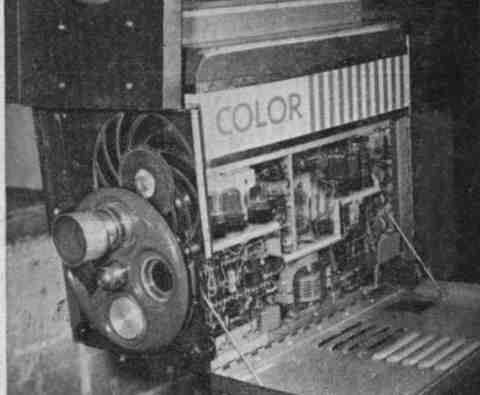
Below is a rare look at RCA/NBC’s first color remote unit, used for this color-cast. Although it was seen by 99.9% of the audience in black and white, it did at least prove the “compatible color” claim RCA made for its Dot Sequential color system. The year before, CBS had broadcast a football game in color, using their Field Sequential system, but there were no receivers available, except the few CBS had built for their experimental tests. Enjoy and share this exclusive peek at the first color mobile unit. -Bobby Ellerbee


EXCLUSIVE…Inside The First Color Television Remote Unit

Thanks to Chuck Pharis, and his very rare RCA “Red Book”, I have new information and images to share with you, that include not only the first color remote unit, but also, new details on the Washington, Studio 3H and Colonial Theater color trials. I will set the stage with some background on color history, and with some new dates which have been confirmed by RCA information.

Remember, Washington was where the first phase of color experiments were done, with two first generation cameras at Wardman Park studios. Both of those cameras were retired and sent back to RCA in Camden in December of 1950.

The second phase of color testing was done in New York in NBC’s Studio 3H. In January of 1951, work began on the color installation there, and was completed by March. Three experimental cameras were installed in 3H and are called the “coffin cameras” due to their size and black color.

The third phase of color testing began at The Colonial Theater in New York. RCA/NBC leased the theater and began installation in late September of 1952 and the first transmission from here was March 19, 1953. There were four prototype models of the RCA TK40 in operation there, that underwent a full year of tests before RCA began production on the TK40 in Camden.

I felt it would help to refresh your memory, as we now know that this mobile unit was used in both the 3H and Colonial field test. As I mentioned in Thursday’s (8/4) post on this unit, this is one of the original NBC Telemobile units built in 1937.

The first use of the color mobile unit was in September of 1951 with a five day remote test from The Merchant Marine Academy at Kings Point, NY. Support equipment was permanently installed in the unit, but a “coffin camera” (seen below), was borrowed from Studio 3H, which for a week, sent pictures three times a day. The morning test was shown in black and white on WNBT, to see how the images looked on the monochrome sets. The two afternoon tests were closed circuit color test seen on color sets at The Center Theater, The RCA Exhibition Hall across from 30 Rock, Studio 3H and in Princeton at the RCA Labs.

In 1952, there were over 30 remote tests, including two from Palisades Park NJ, but the big one was on October 18, when two of the new Colonial Theater TK40 cameras were used to telecast, in color, the Columbia-Pennsylvania football game from Baker Field. One of the cameras was equipped with the new RCA Electa Zoom lens, while the other used the a normal field array of lenses on the turret, as seen below.

Although there were very few color sets, RCA’s main objective with the experimental color broadcasts was to satisfy the FCC, with the fact that their Dot Sequential system was truly “Compatible”- in that it could deliver the same quality image to black and white TV sets, that monochrome broadcasts offered. Via newspaper ads, local viewers was asked to write to NBC with their comments on reception and picture quality of the color segments.

When color operations moved to the Colonial Theater, the 4 new TK40 prototype cameras were delivered (with 2 seen in the above photo), which had very different control equipment. So, the mobile unit had to have a complete refitting, but when remotes were done, cameras were borrowed from The Colonial for a few days at a time. For more, click on the pix. Enjoy and share! -Bobby Ellerbee

Source

Eyes Of A Generation…Celebrating 10,000 Page Likes! THANK YOU!

Eyes Of A Generation…Celebrating 10,000 Page Likes! THANK YOU!

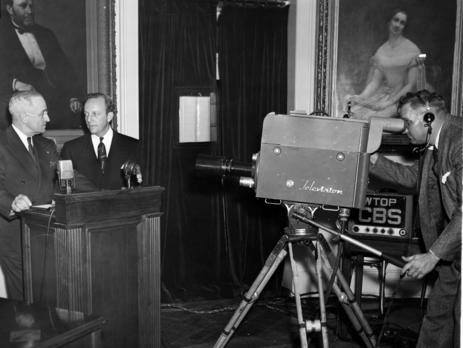
One of the reasons I started this page was to be able to share unique photos and videos that depict television’s glorious history, that also include the back stage element of the business. Like this.

The other reason was to create a home for television history that could make it, a living history…and with your help, eye witness accounts and stories, we have done that…together. Thank You! -Bobby Ellerbee

Thanks to Jim Davis for this new, crystal clear shot of the “Tonight” show set with the great RCA TK41s in use in Studio 6B in New York.

Source

“I Love Lucy” RARE On The Set Video

This is a close to “being there” as we’ll ever get. This clip, from an “I Love Lucy” movie, takes us inside the Desilu Playhouse and gives us an ultra rare glimpse of what it was like on the set of one of television’s most famous shows.

The location is General Services Studios, Studio 2, which in 1952 got its own audience entrance at 6633 Romaine Street. The sign at the new entrance invited you into the Desilu Playhouse. The first few years of the show were done here.

As we have confirmed with other sources, this was pretty much the same warm up that Desi used for the entire six years, including the camera push in. Enjoy and share! -Bobby Ellerbee

Source

October 15, 1973…”Tomorrow” Debuted On NBC

October 15, 1973…”Tomorrow” Debuted On NBC

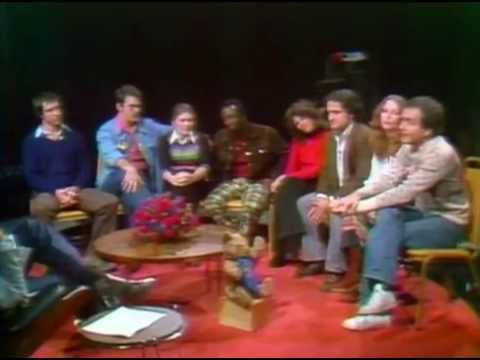
The only way to remember this great show is to remember what made it great…Tom Snyder. On the event of his death in 2007, here are remembrances from Brian Williams, Jay Leno and David Letterman. Incidentally, Letterman’s NBC show replaced “Tomorrow”.

“Tomorrow” followed “Tonight” With Johnny Carson and started as a 60-minute series which aired only four nights a week, Monday through Thursday, in order to accommodate the weekly shows ‘Midnight Special’ (1973–81) and SCTV (1981–82) in that time slot on Fridays.

It was originally broadcast from the NBC studios in Burbank, but relocated to New York in December 1974 when Snyder took on additional anchor duties for NBC News and the network’s flagship station, WNBC-TV.

In June 1977, the show returned to Burbank until 1979, when Snyder once again began originating from 30 Rockefeller Plaza.

On September 16, 1980, when “Tonight” was shortened to 60 minutes, “Tomorrow” was scheduled at 12:30 Eastern and lengthened to a 90 minute format that lasted until its cancellation 16 months later. In February 1982, NBC replaced “Tomorrow Coast-To-Coast” with “Late Night With David Letterman”. Enjoy and share! -Bobby Ellerbee

Source

Cameraman Don Davis at NBC Burbank

Cameraman Don Davis at NBC Burbank

Source

Conan on TBS: Behind the Scene

I’m proud to share with you an exclusive look behind the scenes at Conan’s TBS program from our friend Bruce Oldham.

The cameras used on Conan’s version of Tonight were almost identical to those you’ll see here on Stage 15 at Warner Brothers. Camera rehearsals are a couple of hours before the afternoon tape session, which starts at 4:30 PST Mondays through Thursdays.

ConanWB1

ConanWB3

Below are pictures of the show’s Sony HD 1500 cameras…some snugly nestled in their buildup kits, and a couple of Sony 1500s mounted on jibs and small tripods for quick hand-held situations. All together, there are eight cameras in the studio, including a couple of remote-control stationary cameras for audience shots. The main difference is that there are none of the SONY HD 1000 hard-bodied cameras in use like there were at NBC Universal. (I like their look better, but…)

100_1448

100_1449

100_1450

100_1453

100_1454

100_1475

100_1476

Now, to be honest with you, I get a little lost in the control room and video suites these days, but that’s what’s in this section of our backstage look at Conan’s new digs at WB. Thank goodness they still have audio boards and color bars, because that’s about all I recognize now. I’ll just post these photos below for you to browse through without much comment, but let me add this one little tidbit.

Below, you’ll see some little black boxes with blue screens and handwritten labels that say “VTR.” For anyone who’s ever slung 2-inch tape on Ampex and RCA quad machines, all I can say is…you’ve come a long way, baby! Who would have ever thought VTRs would be small enough to rack-mount two to a row? Yep, these are the latest in Video Tape Recorders. Plus, there is now one for each camera, so a shot is never missed. Remember when car radios were this big?

100_1455

100_1457

100_1462

100_1465

100_1467

The Moon Backdrop

After the show ends, it goes to edit for final adjustments for time, and maybe different takes of what the director punched up in real time. With every camera feeding a VTR, that’s very easy, and it reminds me of how The Honeymooners was done using the Dumont Electronicams with their film/video capabilities. The live show was directed as a live show, and the takes were all recorded on kinescope. Later, using the kine playback as a template, they cut the film tighter for the final show. The Conan show is fed to Atlanta in separate segments for transmission, and actually, it is not unheard of to have the first segment on the air in the east while they are still editing the final segments in LA. Now that’s what I call a tight schedule.

One of the main points of interest on the Conan set is the background, with its city lights and moon. During the show, the moon slowly tracks across the rear ocean/city backdrop almost without notice, just like if it were a real moon. Somehow the moon’s reflection in the water tracks across the sets background with the moon and shimmers subtly. It’s really a cool trick. Below, Bruce explains how the city lights up and how the “moon” moves and shimmers.

moonrig1

“The backdrop is a hand-painted scene that looks really good even in person. It is glued to the curved wall that is made of two parts. The upper half above the sea line is drywall that is smooth and the lower half is transparent plexi.”

moonrig2

“From the rear of the drop, the ‘city lights’ are created by individual fiber strands that are strategically placed in drilled holes through the drop to appear to be lighted buildings and street lights.”

moonrig3

“The moon is lit inside its housing with LEDs powered by battery during the show. An AC cable is attached during the rehearsal day to reduce battery drain. It is suspended from two wires that are attached to pulleys and a track that is motorized and is operated by a remote control a hobby car or hobby plane would use.”

moonrig4

“The moon ‘reflection’ is ingenious. A light bar illuminates a plexiglas cylinder with painted streaks on it. The cylinder rotates with an electric motor and the light shines through the plexi backdrop to simulate a shimmering, reflecting moon on top of the ocean.”

moonrig5

“The cylinder rig is on a track that moves left and right behind the backdrop.”

moonrig6

“You can see the track the cylinder rides on, and this is the MOST amazing part of the unit. There are cables and pulleys that are routed from the overhead moon trolley down the side of the backdrop and along this track. When the moon is moved left and right, the reflecting cylinder rig and light bar moves WITH it and is slaved to its path. The ultimate effect is that the moon’s reflection travels with the moon! Pretty cool stuff!

“These physical effects are one most fascinating parts of our ‘Television Magic’. That’s where the true craftsmanship shows up and I love to see what the prop guys and grips come up with to make things work and look different than they appear. Hope this is as interesting to you as it is to me. – Bruce”


Many thanks to Bruce Oldham and the Conan show for sharing these exclusive images with us! I’m a Coco nut! You too?

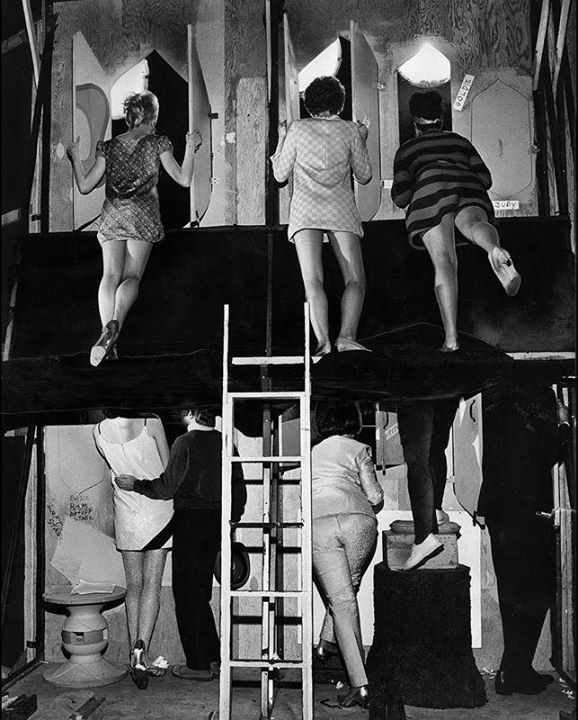
Just For Fun…Rear View…Of The “Laugh In” Joke Wall!

Just For Fun…Rear View…Of The “Laugh In” Joke Wall!

Enjoy and share. -Bobby Ellerbee

Source

Flashback…October 14, 2010; “30 Rock” Live From NBC Studio 8H


Flashback…October 14, 2010; “30 Rock” Live From NBC Studio 8H

This 12 minute piece is full of great stuff, all shot in the real NBC Studio 8H. “30 Rock” was usually filmed at New York’s Silvercup Studios, but on October 14, 2010, the show was done live in 8H. Just like in the days before video tape, it was done a second time live for the west coast audience.

The show’s director was right at home as she was the director on SNL for many years, which the fictional show in the series was based on.

Source

October 13, 1947…”Kukla, Fran & Ollie” Debuts On Chicago’s WBKB

October 13, 1947…”Kukla, Fran & Ollie” Debuts On Chicago’s WBKB

At the link is a timeline of the shows milestones, including their October 13, 1947 debut as “The Junior Jamboree” on WBKB in Chicago, the move to WNBQ and NBC, and their last show, 10 years later, which was also on WBKB. http://kukla.tv/history.html

In the five years that the show ran on NBC nationally, fan mail averaged 5,000 letters a day, and the show’s ratings rivaled Milton Burle’s and even Ed Sullivan’s at CBS.

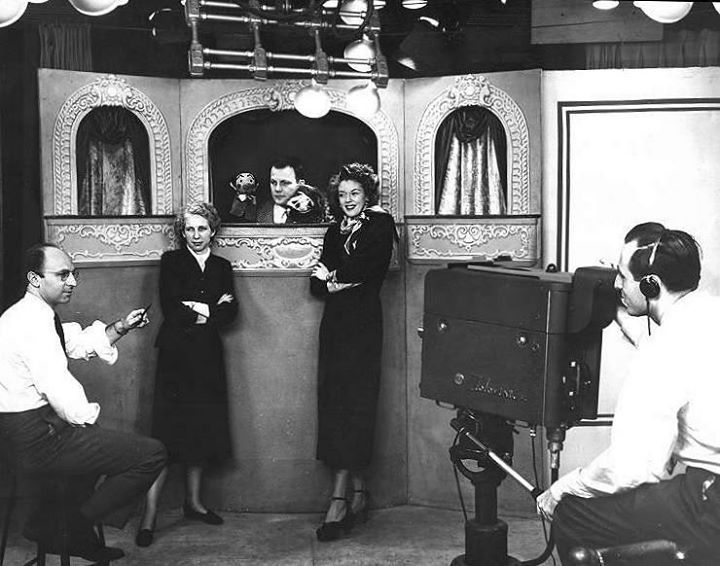
The photo is of one of the early shows at WBKB. The dolly was a home-made rig, with the camera mounted on a barber’s chair. Thanks for the memories, Burr, Fran, Kukla and Ollie! -Bobby Ellerbee

Source

October 13, 1957…A Red Letter Day For Videotape & TV History


October 13, 1957…A Red Letter Day For Videotape & TV History

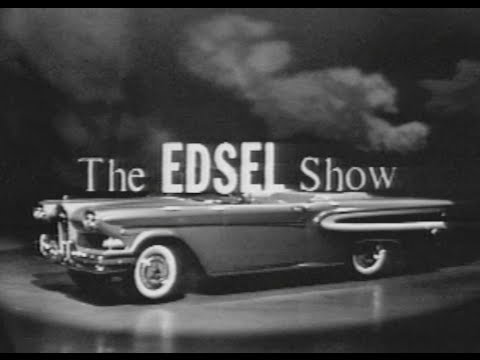
The first 4.5 minutes of the attached video tells the story and includes comparison shots of the videotape and kinescope version of the oldest surviving, intact videotape program, “The Edsel Show”.

Thanks to our friend Kris Trexler’s love of cars, his interest in classic television and his professional abilities as a film and videotape editor, we are able to see this…the oldest surviving video tape. He is the one who tracked down this tape that everyone said did not exist.

“The Edsel Show” was chosen to be the very first CBS entertainment program to be broadcast live to the nation from Hollywood, then “tape-delayed” for re-broadcast in the Pacific Time Zone. The show was performed at CBS Television City in Hollywood from 4pm-5pm Pacific Time for live viewing from 7pm-8pm Eastern Time. The show was simultaneously recorded on videotape at Television City, then played back 3 hours later for West Coast viewers at 7pm Pacific Time.

After the live broadcast, The Ford Motor Company hosted a lavish party at a Hollywood restaurant, where the cast and CBS and Ford execs wined and dined and watched the videotape playback of the show to the West Coast. The evolution from kinescopes to videotape recording was underway!

Not wanting to risk a high profile failure of the new technology, CBS also created a kinescope backup of the show which the engineers at Television City played simultaneously with the videotape, so in case the tape failed, CBS engineers could quickly switch to the kinescope “protection copy” of the show. Videotape was a new technology and there was much to risk if it failed during such an important broadcast, but it didn’t.

Now, back to the fascinating detective work Kris did… http://www.kingoftheroad.net/edsel/edselshow3.html

You can read the details at the link above from Kris’s website, but in a nutshell…the tape was not in the CBS Video Archives. The kinescope was, but the tape copy was on a TVC engineer’s desk who had personally saved the tape. Remember, part of the miracle of videotape was that it could be reused…the engineer knew it would be if he didn’t rescue it and after the playback, he took care of if for the rest of us to see! Thanks to him and Kris Trexler, here is the “The Edsel Show” that was done October 13, 1957 from CBS Television City. Enjoy and share! -Bobby Ellerbee

https://www.youtube.com/watch?v=Ze0Az9tdkHg

This is the oldest videotape recording in existence. The Edsel Show stars Bing Crosby, Frank Sinatra, Louis Armstrong, and Rosemary Clooney. Produced at CBS …

Source

October 12, 1950…Burns And Allen Debuts On CBS Television

October 12, 1950…Burns And Allen Debuts On CBS Television

Their radio show started in 1936 but by 1950, it was time to move to television. When ‘The George Burns and Gracie Allen Show’ began on CBS Television October 12, 1950, it was an immediate success. The show was originally staged live before a studio audience and during its first three months, it originated from the Mansfield Theater in New York, then relocated to CBS’ Columbia Square facilities in Los Angeles.

Ever the businessman, Burns realized it would be more efficient to do the series on film and that started that process in the fall of 1952. The half-hour episodes could then be syndicated. From that point on, the show was shot without a live audience present, however, each installment would be screened before an audience to provide live responses prior to the episodes being broadcast. With 291 episodes, the show had a long network run through 1958 and continued in syndicated reruns for years.

After the live/kinescope series ended, the shows were filmed at General Service Studios. The sets were designed to look like their real-life residence, often using an establishing shot of the actual house at 312 Maple Drive, Beverly Hills, CA 90210.

The format had George watching all the action (standing outside the proscenium arch in early live episodes; watching the show on TV in his study in the filmed episodes), and breaking the fourth wall by commenting to the viewers.

During the course of the eight-year run, the TV show had remarkable consistency in its cast and crew. The episodes were produced and directed by Ralph Levy (1950–53), Fred de Cordova, who would go on to produce NBC’s “The Tonight Show Starring Johnny Carson” (1953-56), and Rod Amateau (1956–58).

In addition to cast members Harry Von Zell (replacing original announcer Bill Goodwin in September 1951), Bea Benaderet (who made the transition from the radio show), and Larry Keating, the original writing staff consisted of Sid Dorfman, Harvey Helm, Paul Henning, and William Burns (George’s brother). -Bobby Ellerbee

Source

October 12, 1943…NBC Sells Blue Network: The Start Of ABC

October 12, 1943…NBC Sells Blue Network: The Start Of ABC

On October 12, 1943, Edward John Noble, the owner of Life Savers candy and radio station WMCA in New York, bought NBC’s Blue Network for $8 million.

This was the start of ABC, but even with Noble’s millions, the first 10 years was a hard slog financially. The one thing ABC did that made the struggling network so appealing to a new buyer was something done on a whim, that cost them nothing.

Without asking Nobles, ABC’s chief engineer had applied to the FCC for Construction Permits for 5 television licenses, all on Channel 7, in New York, Chicago, San Francisco, Los Angeles and Detroit. Shortly after, the FCC froze license applications due to an overwhelming crush of requests. The next part, putting these stations on the air would cost big money, and that is where the financial squeeze got serious. That was 1948.

In much the same way NBC was forced to sell the Blue Network,
the movie theater operator United Paramount Theaters (UPT) was forced to become an independent entity, separating itself from the film studio Paramount Pictures in 1949.

For its part, ABC was on the verge of bankruptcy, with only five stations and nine full-time affiliates. Its revenues failed to compensate for its heavy investments in buying and building stations. In 1951, Noble held a 58% stake in ABC, giving him $5 million with which to prevent ABC from going bankrupt with a loan from the Prudential Insurance Company of America.

Leonard Goldenson, the president of UPT, approached Noble in 1951 and proposed that UPT purchase ABC. Noble received further offers, including one from Bill Paley of CBS, but that would have forced CBS to sell at least its New York and Los Angeles stations. Goldenson and Noble reached a tentative agreement in the late spring of 1951 that ABC would become a subsidiary of UPT, but would remain autonomous in its management.

On June 6, 1951, UPT’s board of directors validated their tentative agreement. However, the transaction had to be approved by the FCC. Insofar as the Paramount Pictures film studio was already a shareholder of the DuMont Television Network, the FCC conducted a series of hearings to ensure whether Paramount was truly separated from United Paramount Theaters, and whether it was violating antitrust laws.

In 1952, when the FCC ended its freeze on applications for new stations, among the issues to be addressed was the approval of the merger between UPT and ABC.

On February 9, 1953, the FCC authorized UPT’s purchase of ABC in exchange for $25 million in shares, and the company was renamed American Broadcasting-Paramount Theaters, Inc.

The new company was based in Paramount’s headquarters at 1501 Broadway in New York, and owned six AM radio stations and many FMs, as well as five TV stations and 644 cinemas in 300 cities throughout the United States.

In consideration of this merger, UPT sold its television station in Chicago, WBKB-TV, to CBS for $6 million. CBS changed the calls to WBBM-TV. They kept ABC’s existing Chicago station, WENR-TV but moved the WBKB call letters to channel 7, which would eventually become WLS-TV. Goldenson began to sell some of the old theaters to finance the new television network.

On May 1, 1953, ABC’s flagship stations – WJZ, WJZ-FM and WJZ-TV in New York – adopted the callsigns of WABC, WABC-FM and WABC-TV, and moved to 7 West 66th Street, one block from Central Park.

At the same time, Goldenson had been trying to convince his movie studio friends to provide content for the network. ABC’s merger with UPT led to the creation of relationships with Hollywood’s film production studios, breaking a long quarantine that had existed between film and television.

Goldenson’s efforts paid off, and on October 27, 1954, the network was able to launch a “New ABC” campaign with the productions of several studios, including Metro-Goldwyn-Mayer, Warner Bros., and 20th Century Fox.

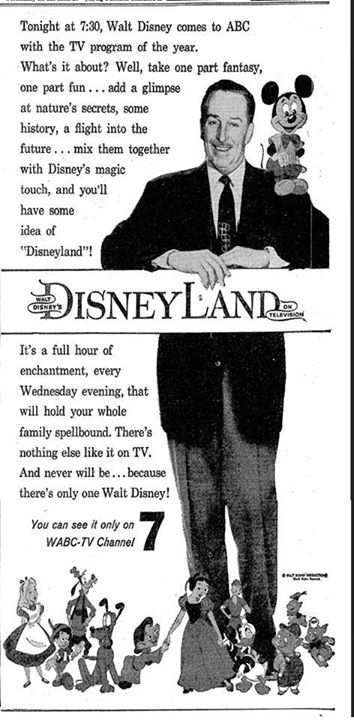
However, the most iconic (and ironic) of ABC’s relationships with Hollywood producers was its agreement with Walt Disney. Walt and his brother Roy contacted Goldenson at the end of 1953 to ask ABC to finance part of the Disneyland project in exchange for Disney’s production of a television series.

Walt wanted ABC to invest $500,000 and a guarantee of $4.5 million in additional loans, a third of the budget intended for the park. Around 1954, ABC agreed to finance Disneyland in exchange for the broadcasting of a new Sunday television program, “Disneyland”, which debuted on the ABC network on October 27, 1954 as the first of many anthology TV programs that Disney would broadcast over the course of the next fifty years. We all know the rest of the story! Enjoy and share! -Bobby Ellerbee

Source

WNBC Moves From Studio 3C To Historic 3K

WNBC Moves From 3C To Historic 3K

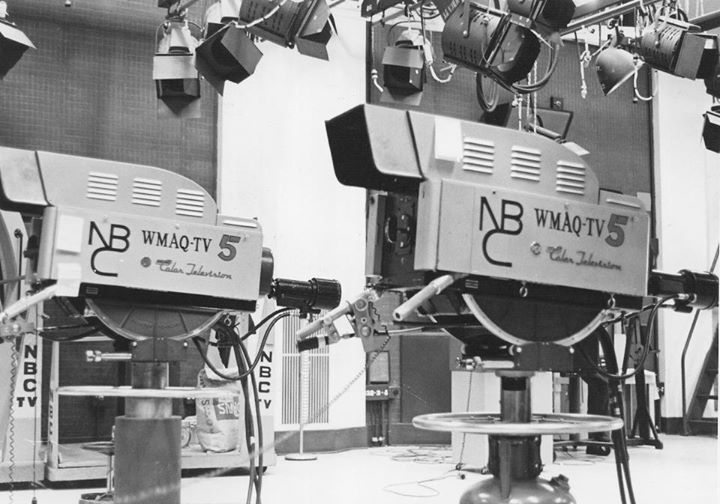
In late 1935, NBC radio studio 3H was converted to become television’s first permanent home. This was where RCA and NBC did all their early experimental broadcasts and was the first home of “The Howdy Doody Show” as well as “Kraft Theater”.

On September 12, 1955, NBC dedicated Studio 3K, which was made by combining 3H and radio studio 3F, into the network’s first in-house color studio, and “Howdy Doody” was the first show done from here. It was also the home of the Kraft Kitchen set, where Ed Herlihy spent so many hours.

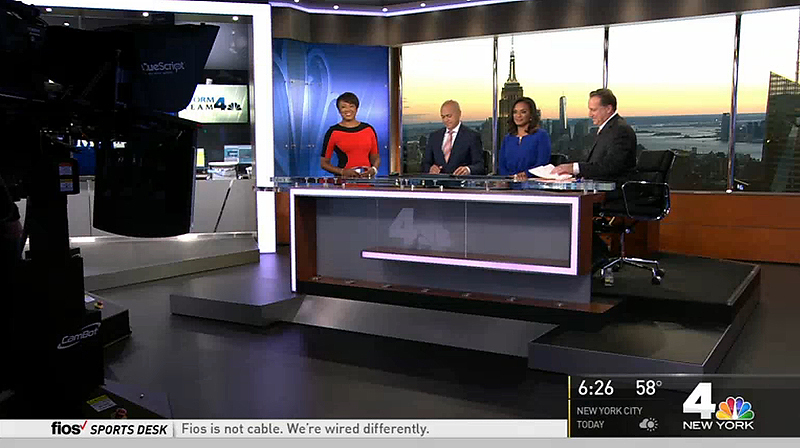
Up until earlier this year, 3K had been an MSNBC studio. Those few 3K shows are now in the new 4th floor news studio. Over a period of 7 weeks, WNBC has built a new news set there that is a kind of 360 use set.

Overnight, the great time-lapse video of the studio under construction was taken down, but here is the link with more info on the studio. Let me know if the video plays for you. -Bobby Ellerbee

http://www.nbcnewyork.com/news/local/Behind-the-Scenes-WNBCs-New-Studio-at-30-Rock–396178341.html?_osource=SocialFlowFB_NYBrand

http://www.newscaststudio.com/2016/10/10/nbc-new-york-debuts-new-home-gains-space-30-rock/

NBC New York debuts new home, gains more space at 30 Rock

NBC’s flagship O&O, WNBC-TV, moved into a new home Sunday night, greatly expanding the station’s … Read More

Source

October 11, 1975…”NBC Saturday Night” Debuts, LIVE In Studio 8H


October 11, 1975…”NBC Saturday Night” Debuts, LIVE In Studio 8H

It would be 8 more months until the show became “Saturday Night Live”, after Howard Cosell’s ABC variety show (which had the same name) folded and give up the name, and the term “not ready for prime time players”.

The video below is a double bonus! First, it is one of the funniest every SNL sketches, from last year’s anniversary show, and second, with your mouse, you can get a 360 degree look at the studio as the sketch unfolds.

Congratulations to all our friends in 8H (some who have been there since the start), on the 41st birthday of one of television history’s most unique adventures! -Bobby Ellerbee

https://www.youtube.com/watch?v=3WyMSrAgPKc


Source

October 10, 2007…The Beginning Of The End For NBC Burbank


October 10, 2007…The Beginning Of The End For NBC Burbank

Some nine years ago, NBC’s Brian Williams broke the news.

“Days Of Our Lives”, which airs on NBC is still there, but it’s their production company that rents space in the building and not NBC. Beautiful downtown Burbank will never be the same.
http://www.youtube.com/watch?v=wgKBAQrvVqs

NBCUniversal plans to sell much of its 34-acre site in Burbank, California — the longtime home of “The Tonight Show,” and move operations to Universal Studi…

Source

October 1950…FCC Approves CBS Color System, RCA Goes To Court

October 1950…FCC Approves CBS Color System, RCA Goes To Court

At the link below is the October 14, 1950 Billboard Magazine, which is a fantastic walk down memory lane, but notice the two stories at that bottom of page 3. This is where the color feud between CBS and NBC/RCA started. It was one of many feuds between the two.

This is one of 4 retro-fitted RCA TK30 black and white cameras CBS used in their Field Sequential color process. Notice the spinning color wheel behind the lens turret. -Bobby Ellerbee

Source

October 9, 1986…’The Late Show With Joan Rivers’ Debuts On Fox


October 9, 1986…’The Late Show With Joan Rivers’ Debuts On Fox

Here is the rare video of that first show with David Lee Roth, Pee Wee Herman, Elton John and Cher. In the story, some surprises I had never known about till now. Read on!

We all know that the Fox announcement of the show caught Johnny Carson by surprise and caused him never to speak with Joan again, BUT…as you will see, Rivers had some pretty good reasons for playing her cards close to her chest.

Rivers had been Carson’s permanent guest host since 1983, and as 1986 neared, some executives at NBC thought it was possible that Johnny Carson would retire after reaching his 25th anniversary on October 1, 1987, as it was such a logical cut-off point. In the spring of 1986, a confidential memo went out to top NBC executives listing about 10 possible replacements in the event of Carson’s retirement. Rivers was shocked to see that she was not on the list.

In an article she wrote for People Magazine, Rivers said that NBC offered her only a one year contract in 1985 as permanent guest host while Carson’s contract had been renewed for two years, which signaled to her that her future was uncertain as her previous one year contracts had run the same length as Carson’s. In addition, Rivers noted numerous snubs from NBC executives over the years, such as not being invited to the annual Carson party until recently, and taking the fall for a controversial joke that management approved during rehearsal.

Rivers had received higher-paying offers from other networks in prior years but declined them out of her loyalty to Carson, but in 1986 as NBC was unwilling to give assurances on her future and negotiations were fruitless, this was the impetus for Rivers to seriously consider the Fox offer.

Fox was looking for a host for a late-night talk show for the network’s launch in October 1986 and offered Rivers the job at a salary higher than what NBC was paying. She accepted, and Carson was blindsided by the news when he saw the press conference on television.

Carson was furious and said that he felt betrayed by Rivers – not because she dared to compete with him, but because she was not honest with him beforehand about her intentions and did not ask him for advice and his blessing.

For her part, Rivers was adamant that her problem was with NBC and not with Carson, who was like a father figure to her. She stated that she didn’t want to tell Carson before the announcement was made because she was afraid Fox would cancel the deal if word leaked out. She had previously been ordered by Carson’s producers and lawyers not to go to him with her problems, as they kept Carson completely insulated since he was a major source of NBC profits. Carson had been completely unaware of Rivers’ problems with NBC.
-Bobby Ellerbee

https://www.youtube.com/watch?v=MckrtLdSIxs Part 1

https://www.youtube.com/watch?v=HHFHuARH0g0 Part 2

Here is the part 1 of the premiere of “The Late Show with Joan Rivers”, as broadcast on October 9, 1986. Joining Joan are guests David Lee Roth, Pee Wee Herm…

Source

How Football Officials Knew When To Call A “TV TIME OUT”

How Football Officials Know When To Call A “TV TIME OUT”


How NFL TV Timeouts Were Handled Early On…

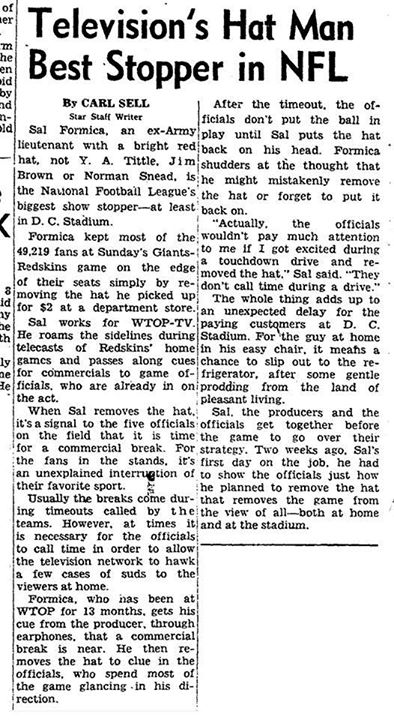
Back in the 50s and 60s, televised pro football had what were called “hat men” on the sidelines. They were connected by headphone to the director and here, from the Washington Evening Star, is an October 8, 1963 article on what their job was. Thanks to Maureen Carney for the image. Enjoy and share! -Bobby Ellerbee

Source