Posts in Category: TV History

Welcome To The Heart Of Eyes Of A Generation!

This 100+ pages of television history is unique in all the world!  This is a living history of broadcasting that spans the decades, as far back as the first radio transmissions, to the latest in the network studios and everything in between. These are stories that I have written and posted on the Eyes Of A Generation Facebook page, that go back to 2011. There are video tours of historic TV landmarks, stories on rescued cameras and VTRs, funny odds and ends and a hundred surprises that come in every shape form and fashion.

One of the most important elements of all of this, is the comments that were made when these stories were written and posted on Facebook. The comments came from industry veterans…the people that were there at the time, either directing, or on camera, in lighting, writing, producing or whatever and those have been wrapped into the original stories that you see here. To see the original comments and stories on Facebook (and if you are a FB user), just right click on the story title, open it in another tab, and click the green SOURCE text at the bottom left of the post to see the original…sometime with more details and photos. Enjoy! -Bobby Ellerbee

History For Hire: A Grand Tour

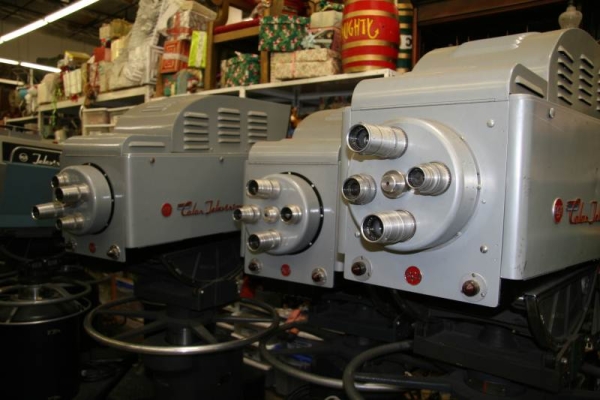
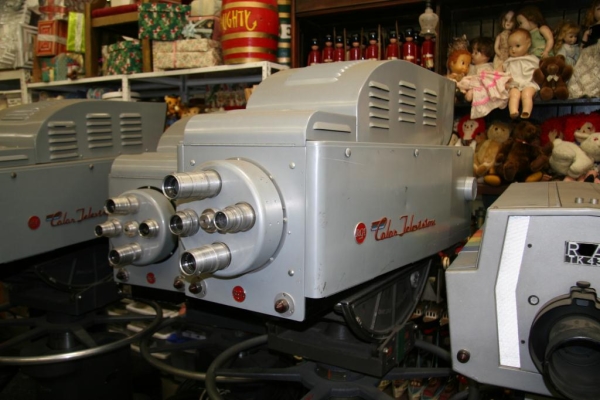
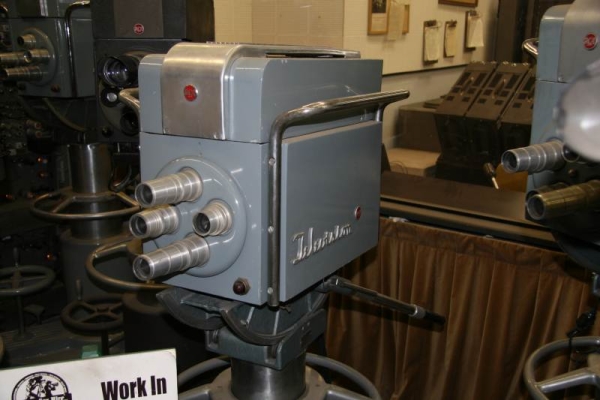
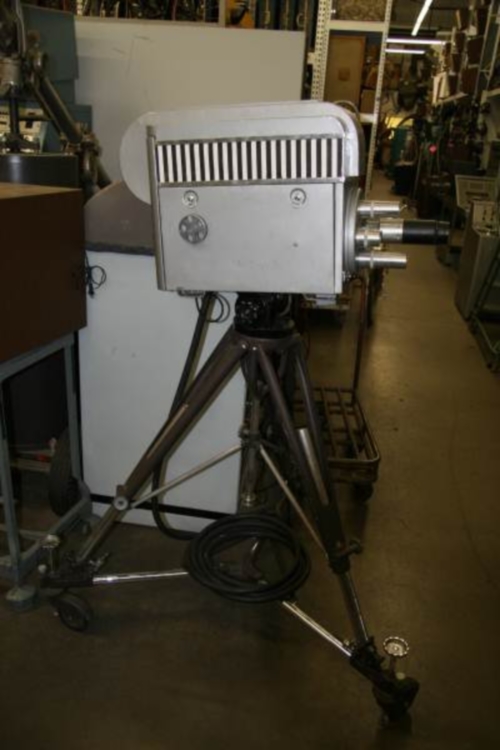
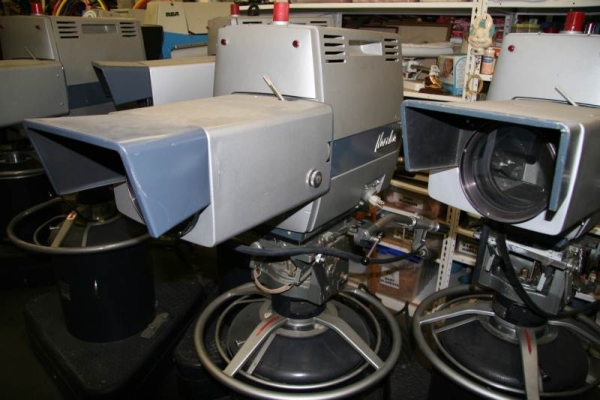
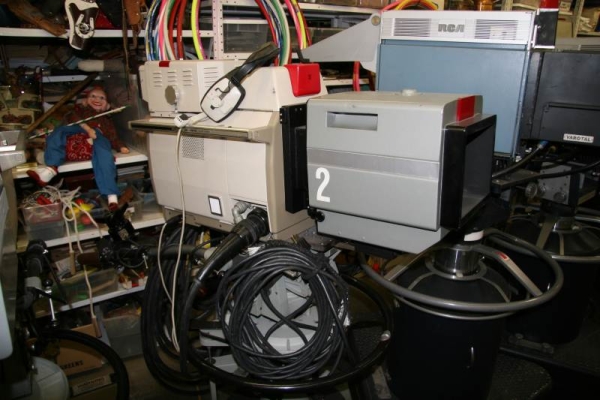
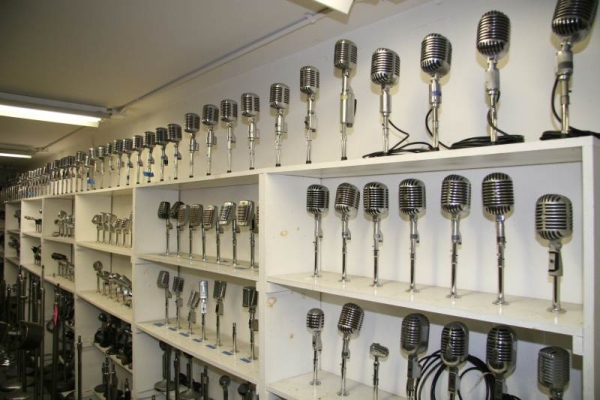
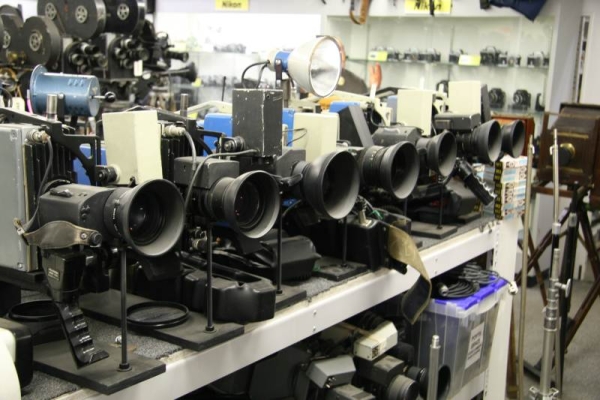
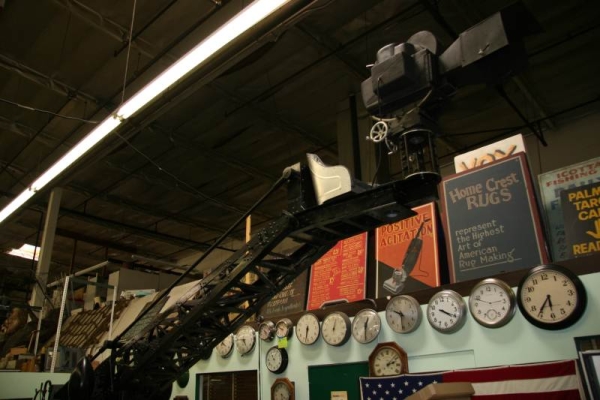
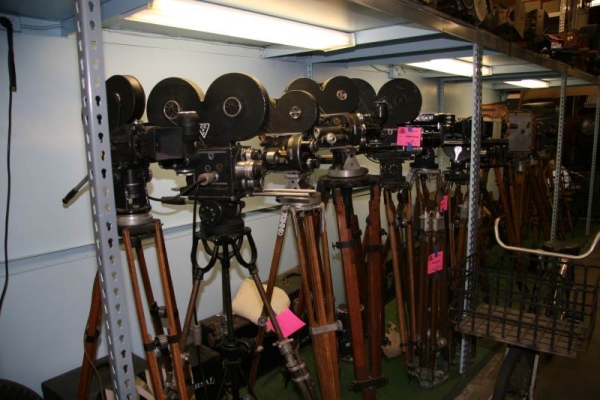
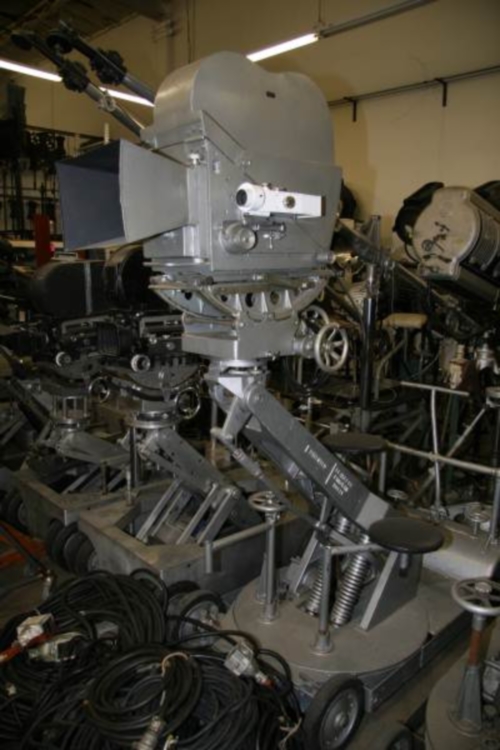
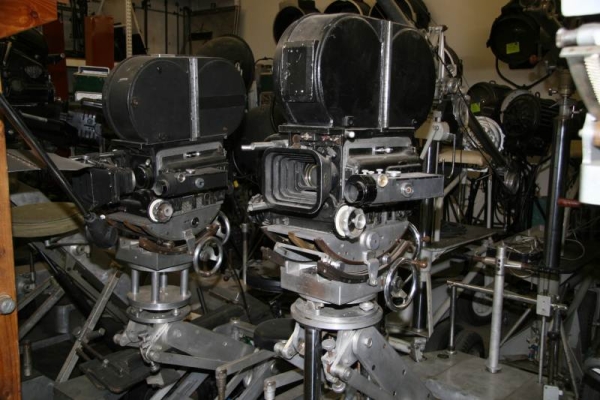
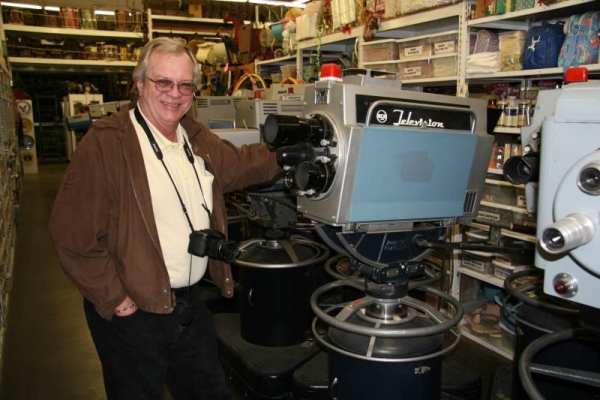
In February 2011, Concord, California camera collector John Bolin took a tour of Hollywood’s top “prop house,” History For Hire. With his camera, he took us all on tour with him. John sent me over 100 photos of his visit, but I’ve included only about thirty here because the place is so huge, even John’s 100-plus images can’t do it justice. I’ve chosen only the ones that have cameras in them, and not even all of them. There are nearly 1,000 microphones that cover every era, different size cranes and dollies, pan heads and peds galore and even a few Mole Richardson perambulators (sound booms).

Basically, if you can name it, History For Hire has it by the hundreds. If not, they can make an exact duplicate…even cigarette packages and bottle labels. Got a war scene? Pick a war, and they can outfit your armies…they even have replicas of “Fat Man” and “Little Boy”, the atomic bombs used in World War II.

Below left is John and his wife at KRTH radio, where they had gone to visit a friend: afternoon driver, Shotgun Tom Kelly (with hat). It was a busy trip for the Bolins because they had gone down to Los Angeles to pick up a TK47 (new add to his collection) from my old friend Manny Rodriguez, whom I met at ABC in New York in the late 1980s. For a long time, Manny was the director of the Ellen DeGeneres show, but is now directing the CBS midday show The Talk. They went to the taping of The Talk. Later that day, they went to the taping of Conan and visited our friend Bruce Oldham who is on camera three. Bruce and John went to school together.

cropped%20IMG_4255 cropped%20IMG_4116

On the right is the owner of History For Hire, Jim Elyea. Chuck Pharis has helped Jim collect and reengineer cameras over the years and told me stories of how big the place was. Jim and I became friends last year when I helped him acquire three pristine Vinten Fulmar pedestals from Singapore. A collector there had short circuited their trip to the salvage yard and need help finding them a new home. They have a new life in Hollywood now, and at this writing, the three peds are being used in the new Muppet Movie.

Before I lay out all the shots below with just a few comments on them, I’ve got to show you a very neat trick. I think Chuck Pharis taught Jim how to do this when they were building the three prop cameras used in American Dreams, which was a TV series that revolved around the early days of American Bandstand. You can see them below in a few pictures.

Since there are almost no working cameras from these early eras, they have to look like they are working. Therefore, all the old insides are taken out, but the parts are saved for collectors. Little flat panel LCD screens are put in the view finder, and to make the illusion complete…not one, but four little lipstick cameras with different focal lengths are installed in front to imitate the different lenses on the turret that change in the viewfinder when you rack the lenses to a new position.

IMG_4078

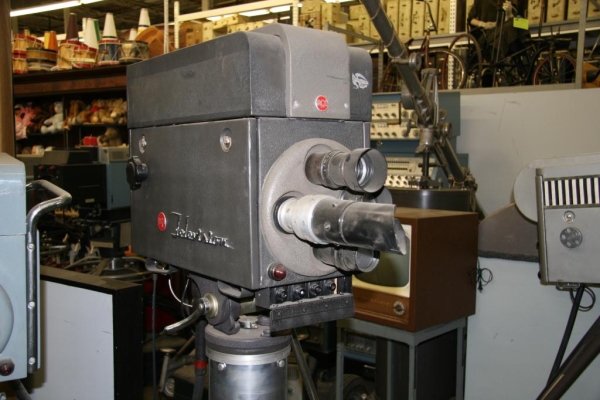
Look carefully at the photo above. First, this is not a real TK30. All of Jim’s other cameras are real, but oddly, he has no real TK30s, so he had to make some. But that’s not why I’m showing you this.

See the small box under the lens turret on the bottom of the camera? It’s very nondescript and looks like it could be one of the many modifications made to these cameras. But now, take a look below. The front of the box is open and reveals four small lipstick camera lenses that feed a picture to the LCD viewfinder screen and even to monitors in a control room if that is what’s called for. When the turret turns, there is a mechanism inside the hollow camera body that changes which lipstick lens is “taking” the shot. All of his cameras have this capability. Cool!
TK30lensopen02

Okay, here we go…enjoy!

IMG_4101

tk4100

These three TK41s above are from CBS and have the lipstick cameras, too…all the cameras have them, even the TK42s below.
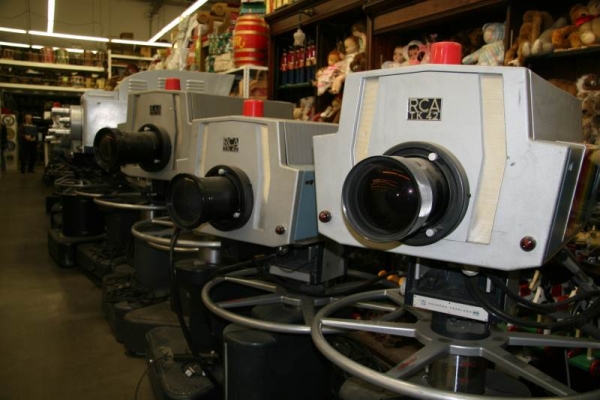
IMG_4102

IMG_4099

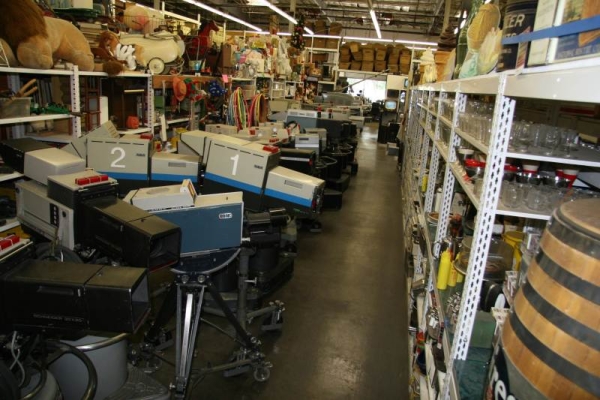
WOW! Camera Row!

IMG_4065

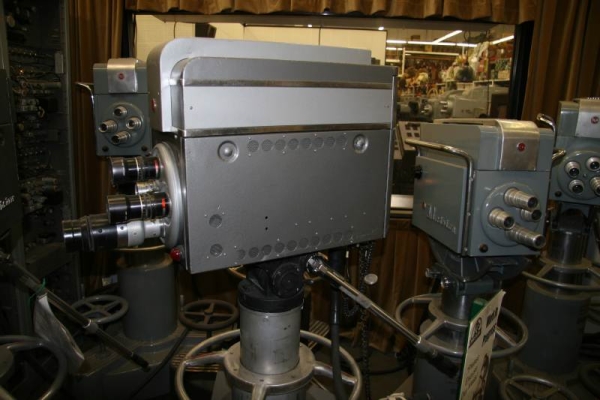
Above are the cameras built for American Dream, and again below, behind a real TK10.
IMG_4067

IMG_4066

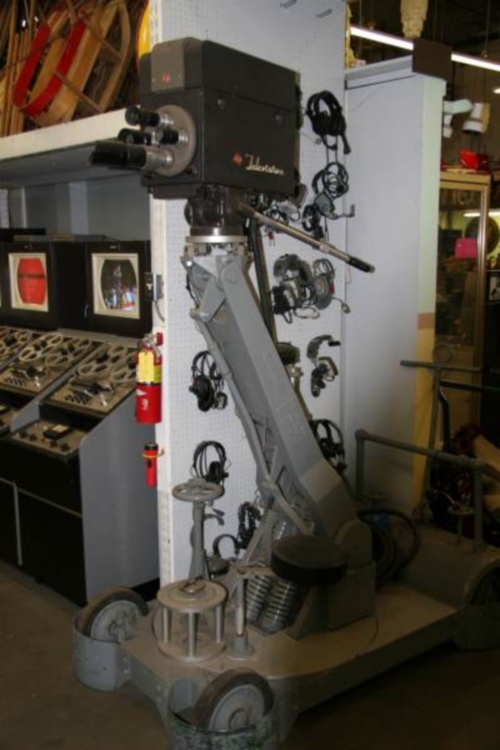
 Above, a real TK10 and below, a real good copy of a TK30 on a Panoram dolly.
IMG_4079

IMG_4081

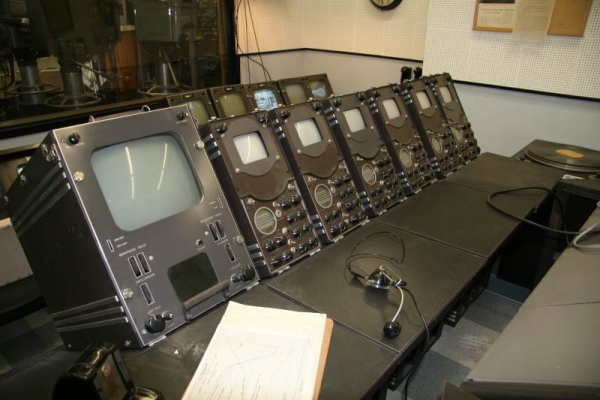
Believe it or not, this is a History for Hire-built 1950s control room console, and it works.
IMG_4085

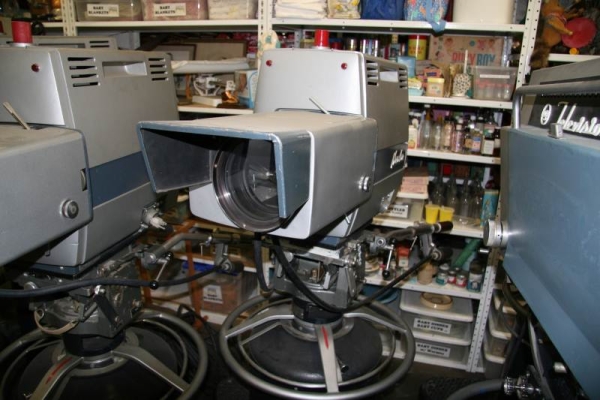
Above, John’s friend Bob Snyder on Camera Row with TK60s. Below, Norelcos!
IMG_4088

IMG_4089

IMG_4092

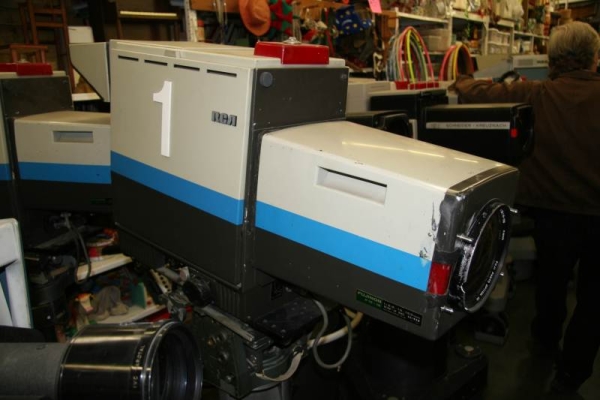
Above I see an Ikegami 323, TK44s…and Howdy Doody? Below is one of their TK46s.
IMG_4096

IMG_4124

IMG_4133

IMG_4137

IMG_4143

IMG_4144

IMG_4145

IMG_4157

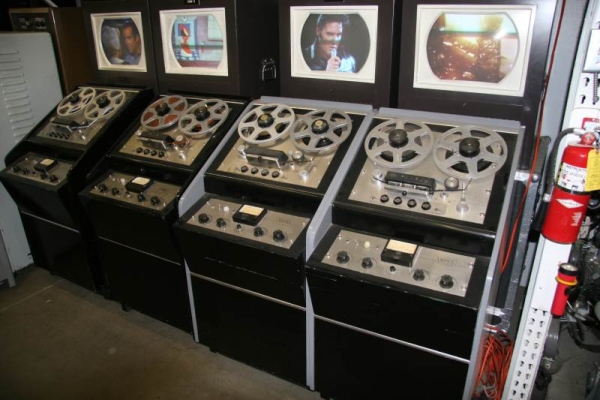
Below are Ampex mono tape recorders…a sight near and dear to my heart. This is what I used in my first days in radio in 1964. I’m still a great audio editor, and these machines are one of the reasons why…it’s where I learned to splice and edit.
IMG_4068

SNL’s First “Fully Formed” Format Appears…Season 1, Episode 4

https://www.bilibili.com/video/BV1mX7b63E1h/?spm_id_from=888.80997.embed_other.whitelist&t=6.551125&bvid=BV1mX7b63E1h

Lorne Michaels has repeatedly said that Episode 4 of Season 1 (host Candice Bergen, November 8, 1975) is the first fully formed, “real” Saturday Night Live episode in the format the show would follow for the next five decades. Episodes 1–3 were prototypes. Episode 4 is the moment the show snaps into its now‑classic structure.

The earliest episodes of Saturday Night Live were still experimental. Michaels and his team were figuring out tone, pacing, and how to balance the host, the cast, and the musical guests. In multiple interviews over the years — including the SNL 25th Anniversary book, Paley Center discussions, and press retrospectives — Michaels has described the first three episodes as variety specials, not yet the weekly sketch-comedy institution he envisioned.

Episode 1 — George Carlin Carlin performed stand‑up; the cast barely appeared. The show felt more like a comedy showcase than an ensemble sketch program.

Episode 2 — Paul Simon This episode was essentially a Paul Simon special. The Not Ready for Prime Time Players were sidelined again, and the format was still drifting.

Episode 3 — Rob Reiner The show was still uneven. Writers and cast were searching for a consistent tone, and the episode didn’t yet resemble the modern SNL rhythm.

Episode 4: The Format Finally Locks Into Place Candice Bergen’s episode is the first time Saturday Night Live presents the structure we now recognize instantly:

  • A cold open ending with “Live from New York, it’s Saturday Night!”
  • A host monologue
  • A full slate of cast‑driven sketches
  • A musical guest integrated into the show rather than dominating it
  • Weekend Update in a recognizable form
  • A closing segment with the host and cast

This is the episode where the Not Ready for Prime Time Players finally become the center of the show. The format stops shifting week to week and becomes repeatable — the template SNL has used ever since.

Why Was Candice Bergen the Turning Point? Lorne Michaels has said that Candice Bergen was the first host who:

  • Immediately understood the tone of the show
  • Felt comfortable performing with the cast rather than in front of them
  • Could handle both comedy and straight hosting duties
  • Helped the writers settle into a weekly rhythm that worked

Her presence allowed the show to behave like the ensemble‑driven sketch program Michaels had envisioned from the beginning. In Other Words, Episodes 1–3 were prototypes. Episode 4 is the first “real” SNL.


FROM LEGEND TO PROOF, FROM THE LOS ANGELES TIMES

“Legend Has It”…The Fence Between Networks at Super Bowl I

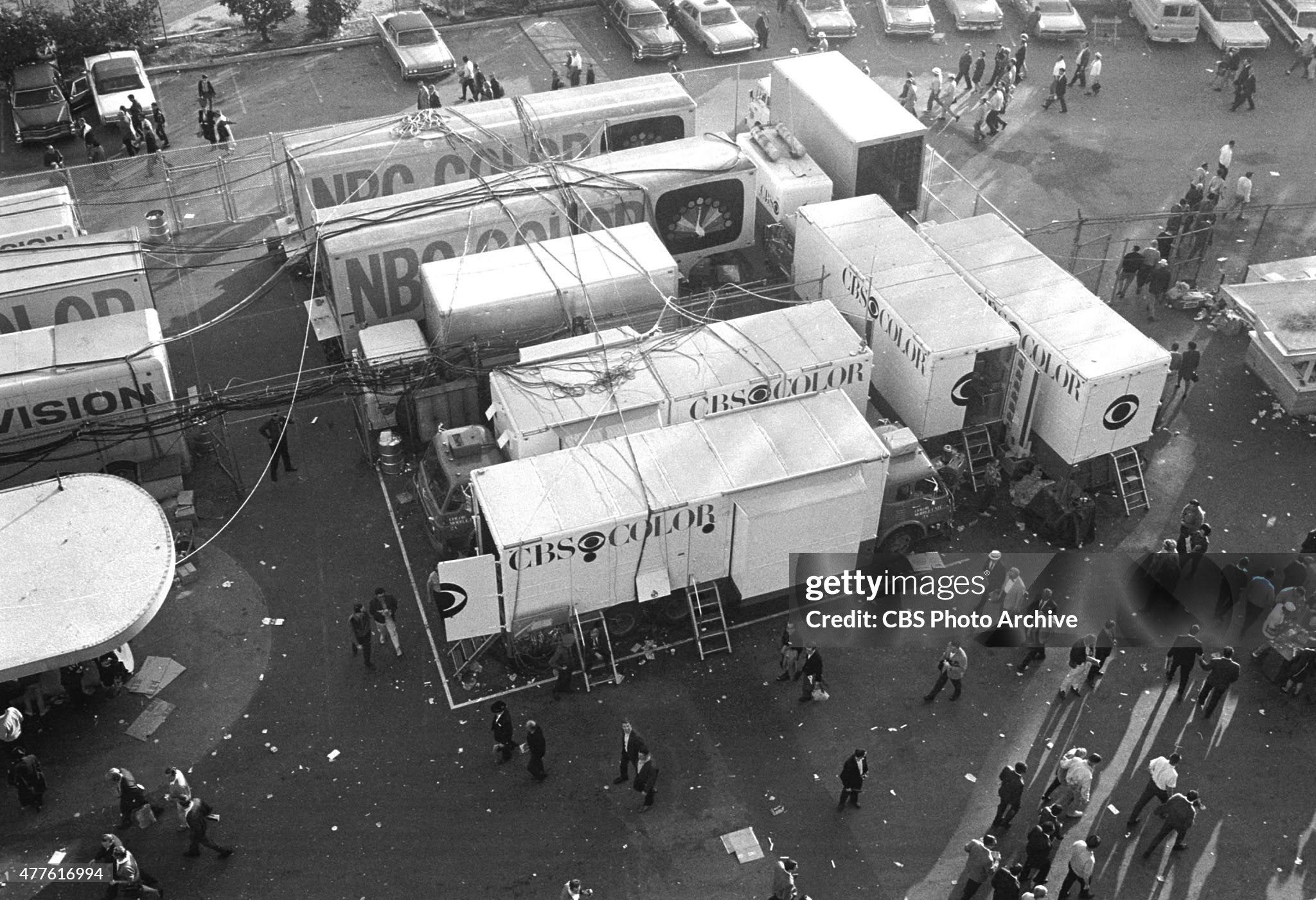
For decades, one of the most persistent bits of broadcast‑industry lore has been the story of the fence—a literal, physical barrier—built between the CBS and NBC crews covering Super Bowl I at the Los Angeles Memorial Coliseum. Engineers talked about it. Cameramen remembered it. Producers swore it happened. But until now, no one had ever produced photographic proof AND newspaper reporting from the Los Angeles Times!
Here is the direct quote from the full and very good article linked below…

One of the first arguments was over camera position. NBC wasn’t happy with where CBS wanted its 11 cameras.

The arguments among the network brass and the technical staff continued through the game.

“There was more animosity among the technical people, who belonged to different unions, than there was between the two teams,” Summerall said. “They had to put up a chain link fence at the Coliseum to separate those guys.”

There was more of a cooperative spirit among the announcers.

’67 Game Matched CBS, NBC; : Final Score: 17-13 or 16-12 : Network Battle of Super Bowl I – Los Angeles Times

At last, that changes.

Super Bowl I, played January 15, 1967, remains the only Super Bowl ever broadcast by two networks simultaneously. CBS held the NFL rights; NBC held the AFL rights. Neither network was willing to concede production control, so both arrived with full crews, full equipment packages, separate announce teams, separate trucks, and completely different production philosophies.

The result was a broadcast compound unlike anything before or since—two rival networks forced to work side‑by‑side while protecting their workflows, their camera positions, and their proprietary equipment. The tension was real enough that stadium officials erected a chain‑link fence between the CBS and NBC areas to keep personnel, cables, and cameras from crossing into the other network’s territory.

The fence became a kind of inside joke among sports‑TV veterans, a symbol of the rivalry between the NFL and AFL and the equally fierce competition between the two broadcast giants. But without a photo, it remained a story told more than shown.

This newly surfaced L A Times article finally anchors the legend in reality. It captures a moment when television history was still being invented on the fly—when two networks, two leagues, and two production cultures collided on the biggest stage in American sports.

It’s a rare reminder that even the most famous broadcasts have untold stories behind the cameras… and sometimes, a fence between them.

The CBS Mystery Cameras Explained


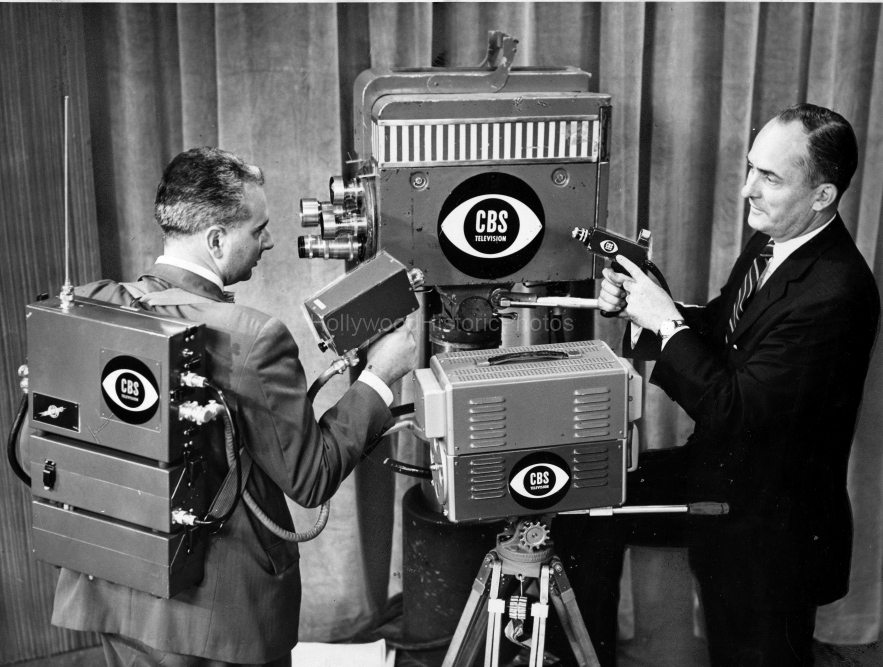
This image of camera equipment deployed to the 1956 political conventions by CBS has led to lots of speculation over the years, but below is the full story of what we see here in this photo.

Although RCA made a great mini cam which NBC used in the 1952 conventions, CBS would not buy them, and we all should now know by know about all the bad blood between them over the color system battles.

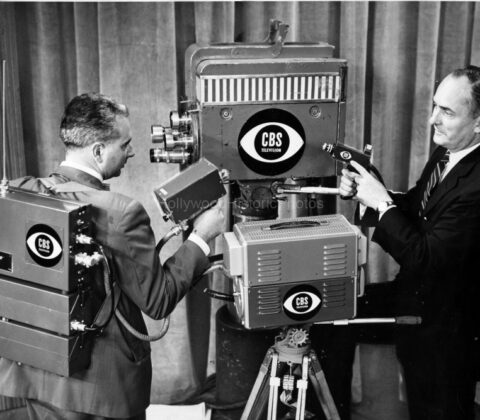
This tiny camera above is most likely a prototype made by the French company, Intercontinental Electronics. The camera was four pounds and came with a thirty-two-pound backpack. The battery to power unit and broadcast the signal, which could go almost a mile, weighed over ten pounds

CBS also used the unit at the Republican convention in San Francisco that year along with a three pound “vest pocket” camera made by Lockheed Engineering. Those items are seen with a Dage Porta Camera in the lower middle.  The big camera is the RCA TK10, on the left is the Intercontinental Electronics camera and backpack and the man with the tiny camera is the legendary Sig Mickelson…the first president of CBS News.

Stop The Presses! NBC/RCA TK43 History Rewrite!

Stop The Presses! NBC/RCA TK43 History Rewrite! UPDATE CERTIFIED INFORMATION July 2026

The new information is at the bottom of the post.

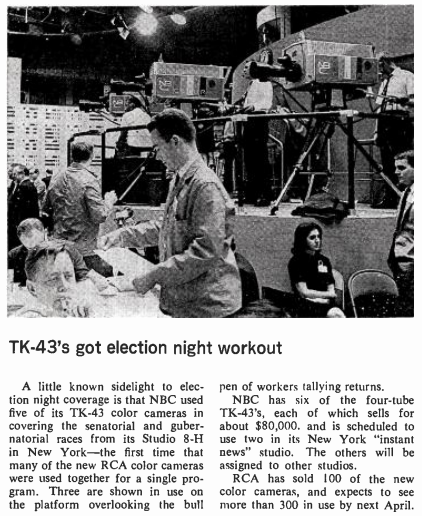
Thanks to Martin Perry, here’s more on the mysterious appearance and disappearance of the RCA TK43s at NBC New York. The article is from “Broadcasting Magazine” dated November 21, 1966. This would be coverage of the Senate and House elections midway through LBJ’s first elected term.

I have heard several variations on the TK43s arrival and use that night and until now, had thought there were only two delivered but it seems there were six. I had heard that, over the objections of NBC Chief Video Engineer Fred Himelfarb, the cameras were delivered by RCA a couple of days before and he was instructed by management to use them in a conspicuous location where they could be seen in wide shots, complete with NBC logos.

I’ve also heard that the TK43 images were not actually used on the air. The set up process and time needed to tweak the pictures was notoriously long and I’ve heard that time ran out and the cameramen were just going through the motions with about six TK41s handling the coverage from the floor and the 9th floor balcony in 8H.

This was the first and only time TK43s were used at any US television network, and if what I’ve heard is true, their pictures never made it to air. I think RCA picked up five of the cameras and left one behind which NBC used in Studio 5H which was the always hot, breaking news studio and also an overnight update studio for WNBC.

OK…From the real expert: Mr. Jay Ballard, NBC, ABC television veteran/legend. RCA was under pressure from sales because the local stations wanting TK42s were very concerned that the networks were not buying them, so RCA decided to “stage” some photos for immediate publication. 6 TK42s were sent to NBC New York for the above event, then, 2 of those TK42s were sent to NBC Washington’s WRC Studio 2 and the other 2 were shipped to NBC Burbank. The two that remained at 30 Rock were sent to Studio 5HN, which was an “always on” network studio for breaking news and late updates by WNBC. 

Source

All You Ever Wanted to Know About NORELCO CAMERAS

This is mostly technical but a little political in places as this unnamed engineer was involved in the sale of 35 Norelco cameras to NBC Sports, who had their own demands. He was also involved in the installation of Norelco’s at CBS Television City and at The Ed Sullivan Theater with all its electro/magnetic problems. These notes were a bit jumbled, but I’ve used a special program to help get them in a more readable form. In case you have ever been curious about Norelco’s early history in the US, I hope there is something here of value for you.

RCA TK760 + SPECIAL NOTES ON TK41 HISTORY

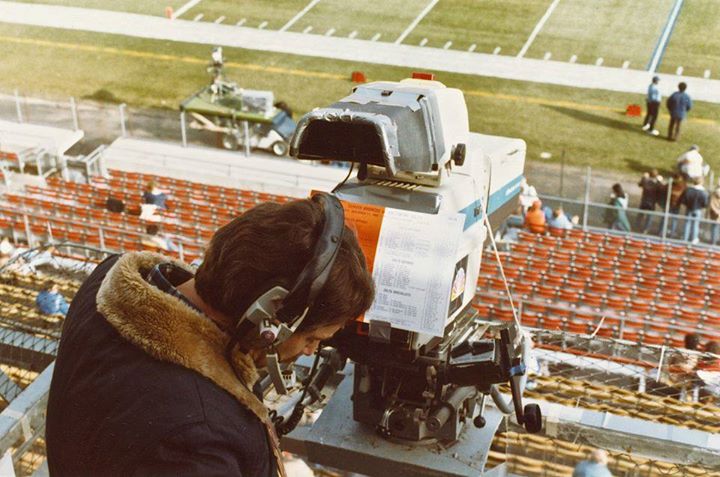
RCA TK760

This camera is basically an RCA TK76 ENG camera, which RCA presented in 1976, and was re-presented again in 1977 in a field and studio configuration. Before there were large lens adaptor and large viewfinder adapters, this is how it was done. This photo was taken at Denver’s Mile High Stadium in 1978 as NBC prepares for a Broncos football game. Thanks to David Crosthwait for the picture.

Special Note 1:

Until 1975, NBC Sports used a permanent inventory of RCA TK-41 color cameras at the original Mile High Stadium in Denver. These details are from RCA/NBC Burbank veteran videotape guru Jim Smith who was at Burbank for over 30 years and used the equipment in Denver we are about to talk about. 

The NBC Mile High Setup was as follows:

• The operation: Unlike typical temporary remote broadcasts that used mobile production trucks, NBC kept a dedicated stash of five RCA TK-41 color cameras permanently stored directly at the stadium. The TK41s had come from the 3rd floor at 30 Rock which had many news and large production studios. There was also a full-blown control room there, built into one of the lower floors. Occasionally, additional graphics equipment would have to be sent in from Burbank for big, nationwide games from Denver.
• The Timeline: The television network operated a total of five TK-41 units inside the “Denver Mile High” football facility from 1970 through 1974.
• The Final Broadcast: The absolute final time NBC ever utilized the historic, 375-plus pound TK-41 for a broadcast was during a Denver Broncos game in December 1975.

Following the retirement of the TK-41s at the venue, NBC transitioned to deploying upgraded mobile production trucks utilizing lightweight RCA TK-760 and Norelco* cameras for their subsequent Denver Broncos broadcasts.

WHY DID THEY DO THIS? East coast games have trucks sent from New York area, west coast game trucks come from Los Angeles and from the west, Denver is one of the hardest major cities for big trucks to reach because of the Rockies and early snow.

*In 1968, NBC Sports took delivery of 35 Norelco PC70 cameras for its remote trucks. If you put 6 cameras per truck, you get only 5 trucks, which could be cutting it pretty thin on very busy weekends and having a “freebee” in Denver helped a lot and took the load off scheduling to get a truck up a 1-mile climb and sometimes in a foot of snow.

SPECIAL NOTE 2:

We have it on good authority that ABC kept a TK41 truck in service until around 1981 or 82. Only ever meant to be used in a squeeze, the truck sat mostly on the east coast and if pressed into service it would most likely have been in the summer months for baseball and track meets as the only football ABC did was on Monday Nights! 


Source

A Genuine Rarity!

+ AN EXCLUSIVE NEW LIST OF WHERE NBC NIGHY NEWS HAS ORIGINATED 1956-2026

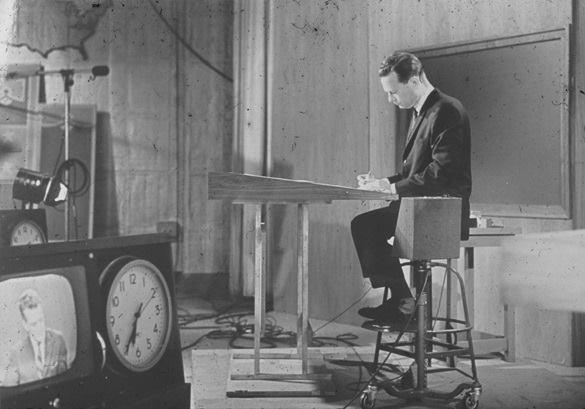
This is the only photo I have ever seen that shows part of the regular ‘Huntley-Brinkley Report’ individual studio sets. All the other “set” photos I’ve seen of them show them together on sets at special events like space shots or political conventions. This is David Brinkley at his WRC-TV Washington desk. Both the floor manager and Brinkley have monitor and clock carts to see the New York feed with Chet Huntley shown in the monitor.

In re-editing this in 2026, I have new information to share on Chet Huntley’s locations in New York at 30 Rock. “The Huntley Brinkley Report” aired each weekday evening from October 29, 1956, to July 31, 1970. During that time, Chet Huntly reported mostly from NBC Studio 3A from 1956 till 1967, when he moved to Studio 8G, where he would remain until his retirement in 1967.

Since I have the firsthand documentation on the studio locations of the NBC Nightly News, this seems like a good place to share them:

  • 1967-1970 NBC Studio 8G
  • 1970-1982 NBC Studio 3C
  • 1983-1992 NBC Studio 3B
  • 1992-2007 NBC Studio 3C
  • 2007-2011 NBC Studio 8G
  • 2011-2017 NBC Studio 3B
  • 2017-2021 NBC Studio 3C
  • 2021-2026 NBC Studio 1A
  • 2006 brings the news back to NBC Studio 3A

Many thanks to our friends at NBC for the updated information!

Source

ULTRA RARE! ‘You Bet Your Life’ Pilot Show Video!


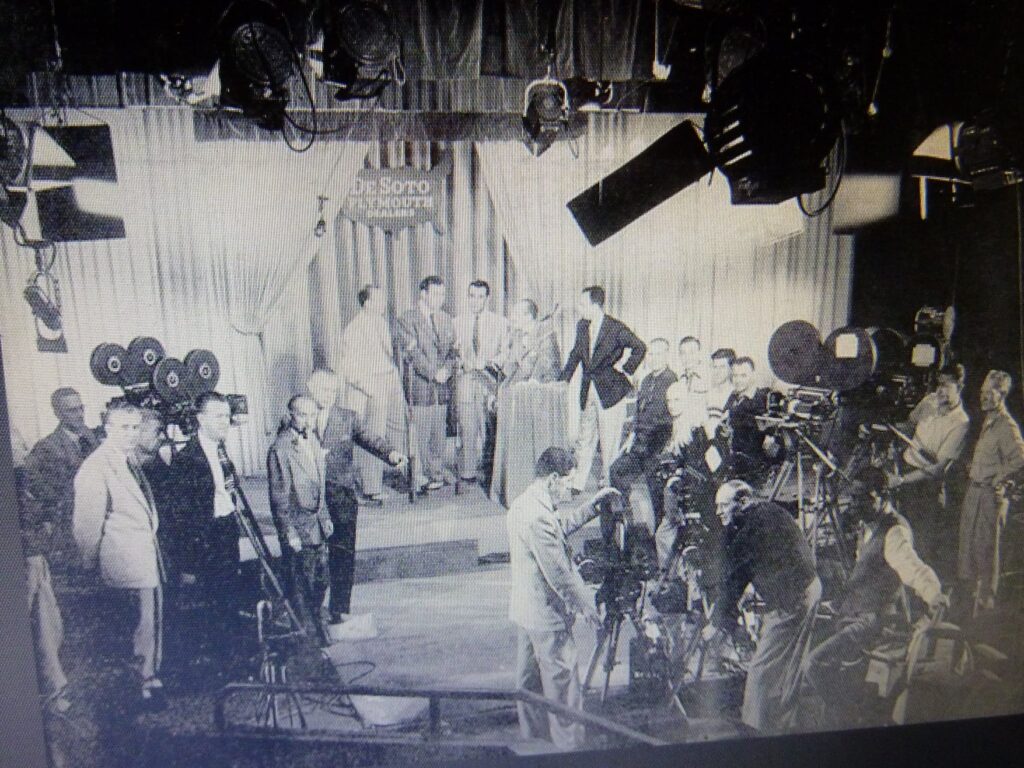
Although the TV show aired on NBC from 1950 – 1961, it was a CBS radio show when this very casual demo was shot. Notice Groucho is wearing a sport shirt, and techs are adjusting the mics like it was only radio. Here is a bit of background on the show you will see below, and some very interesting production notes.

During a radio appearance with Bob Hope in March 1947, Marx ad-libbed most of his performance, which gave the show’s producer an idea. John Guedel, the Hope program’s producer, formed an idea for a quiz show and approached Marx about the subject. After initial reluctance by Marx, Guedel was able to convince him to host the program after Marx realized the quiz would be only a backdrop for his contestant interviews and the storm of ad-libbing that they would elicit by trying to get them to ‘say the secret word’. Guedel also convinced Marx to invest in 50% of the show, in part by saying that he was “untouchable” at ad-libbing, but not at following a script.

A year before ‘I Love Lucy’ started with three film cameras on the set, Groucho was shooting with eight! Eight 35mm cameras were used, duplicated in pairs, in four locations. While one set of cameras shot the program with 10-minute reels, the other set were re-loaded and put into action as the reels ran out.

Reportedly, the reason why this show was prerecorded for broadcast was because the network was afraid that Groucho Marx’s ad-libs would run afoul of the censors. In reality, the main reason was to condense the interviews to fit the allotted time with the most entertaining material. All the shows were done in front of studio audiences and those sessions were usually from 35 to 40 minutes long for them.

Although the popular impression is that Groucho Marx entirely improvised his jokes, in reality the show also had gag writers who interviewed the contestants beforehand and prepared questions and comments for Groucho to use in addition to his own improvisations. To feed them to him subtly, a Tele-Score bowling alley projector, located stage left and out of camera range, was used…ever notice him ‘looking off into space’? He was probably looking at the Tele-Score screen.


Source

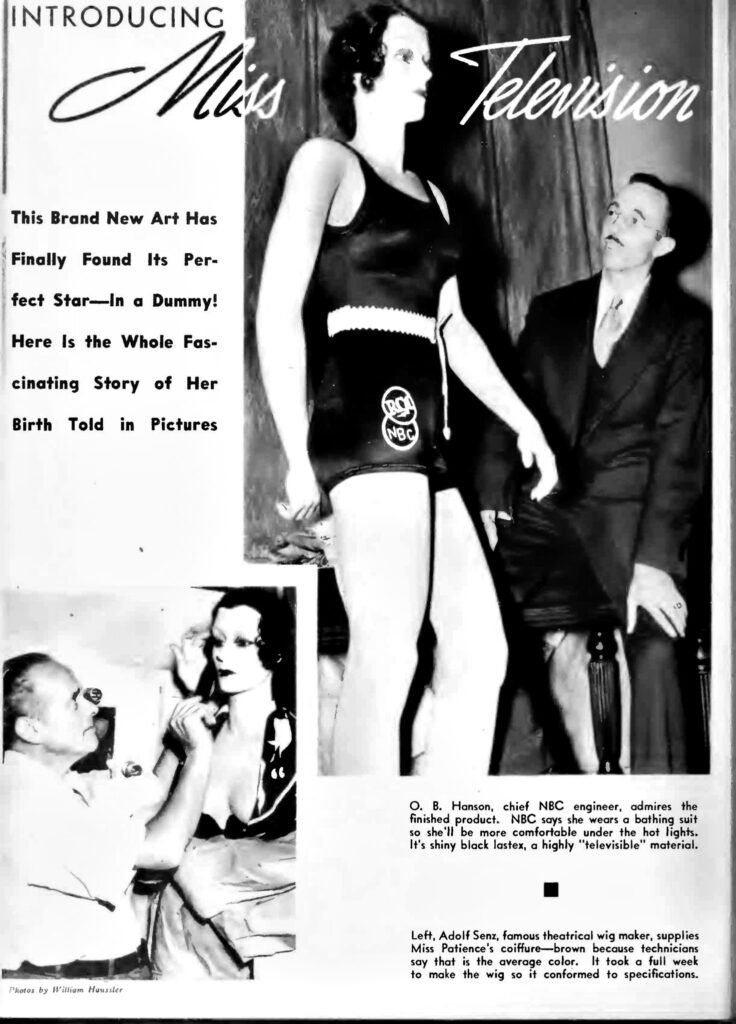
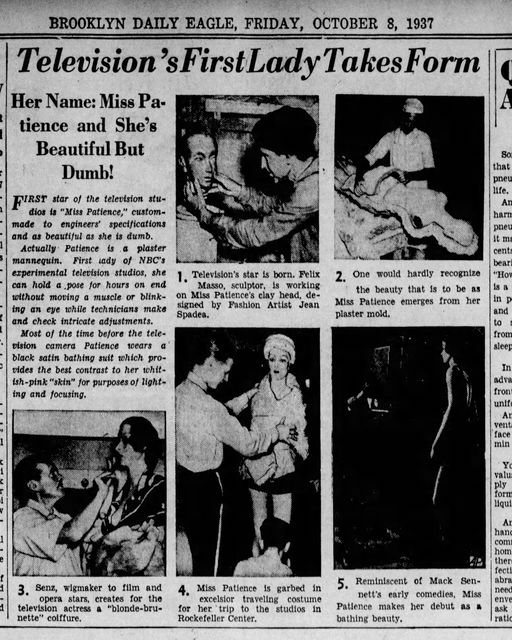
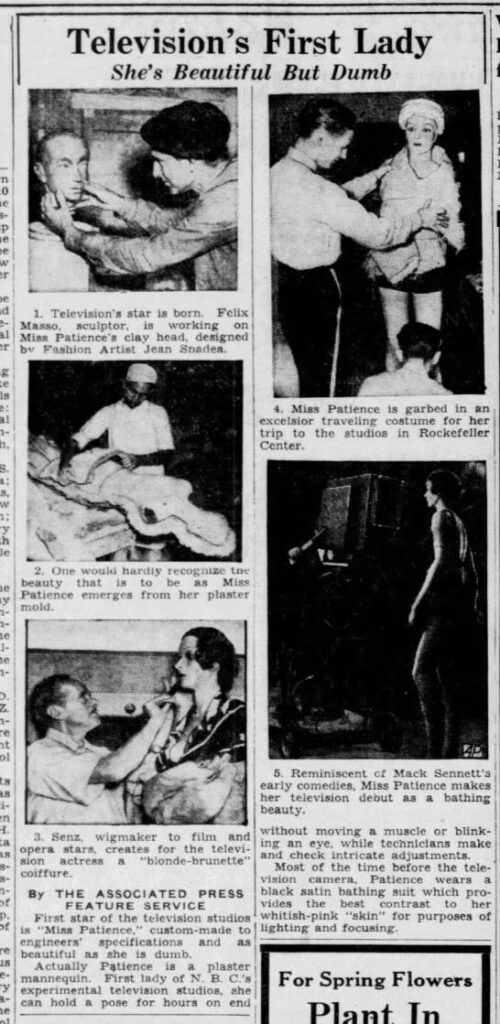
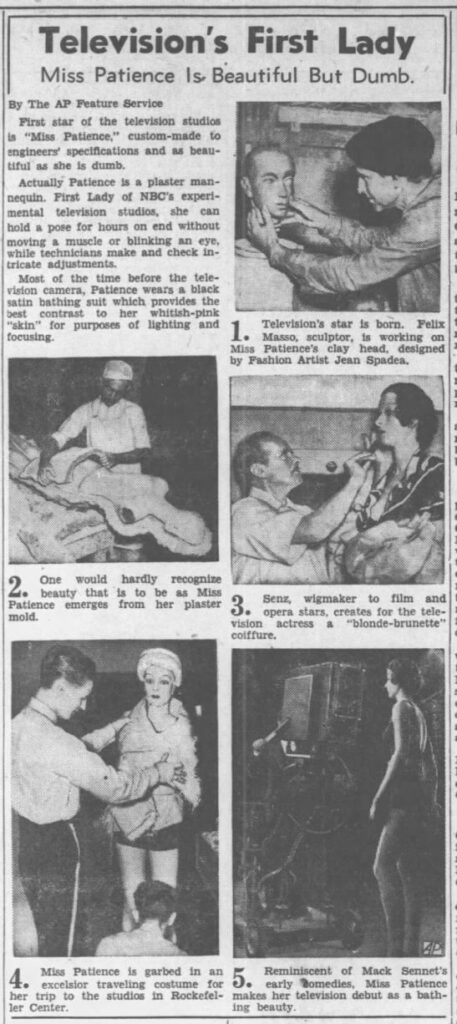
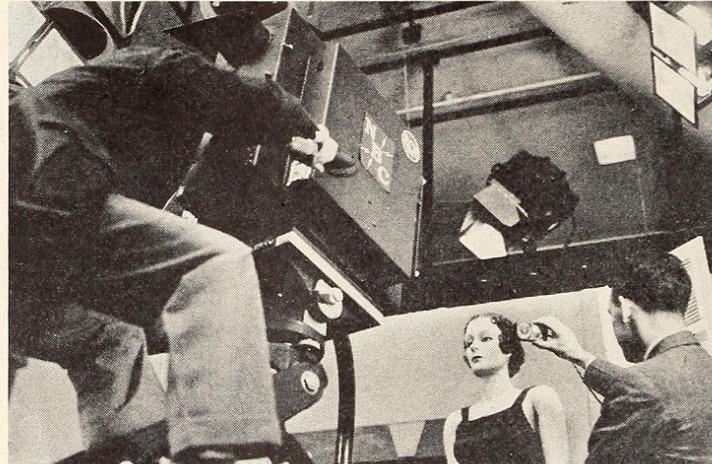
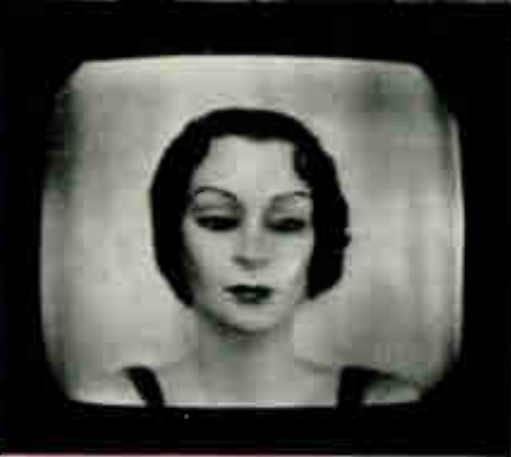
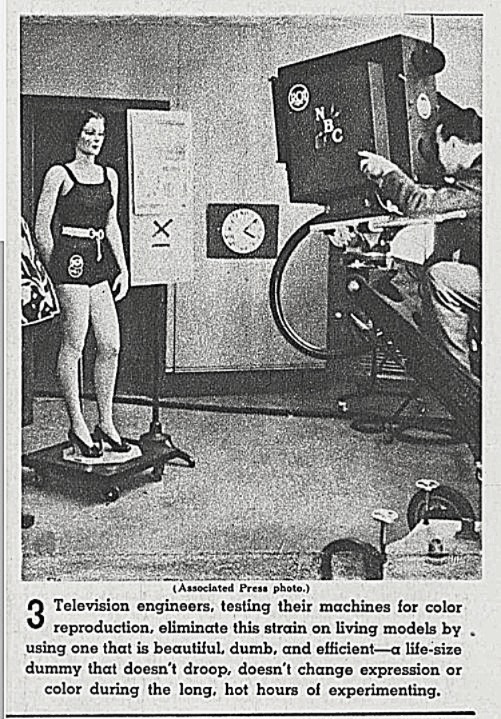
Meet Miss Patience…A Cool Gal for a HOT Job

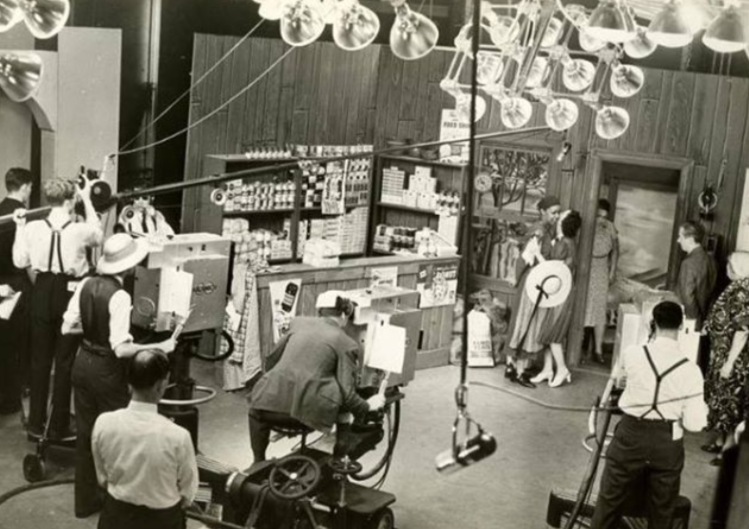
When the cameramen are draping handkerchiefs over their heads, when they’re wearing pith helmets like they’re on safari, when actors’ makeup is sliding off their faces and sweat is raining off everyone in the room… you don’t need a thermometer to know the place is boiling. NBC’s Studio 3H, home to three iconoscope cameras, often felt less like a studio and more like an oven.

And the culprit? The lights. In the late 1930s and early ’40s, television lighting was a brute‑force affair: carbon arcs in the earliest days, followed by banks of high‑wattage incandescent lamps. The iconoscope needed intense illumination to produce a usable picture, and those lamps were basically space heaters on stands. Temperatures routinely pushed past 100°F, made worse by poor ventilation in converted spaces like 3H, GE’s WRGB studios in Schenectady, and CBS’s Studio 41 at Grand Central Terminal.

The live models simply couldn’t endure more than a few minutes under those blistering lamps. So, the wardrobe, wigs, and makeup demonstrations were handed off to someone who never complained, never perspired, and never fainted under the heat: Miss Patience.  For your amusement, here are the newspaper stories breathlessly reporting this “earth‑shaking” development.


Ultra Rare! Color Shots Of Early NBC Mobile Color Tests…

Ultra Rare! Color Shots Of Early NBC Mobile Color Tests…

On January 1, 1954, two NBC Color Mobile Units telecast The Rose Parade from Pasadena, to the nation, in color. Very few saw it in color, but that was the first use of these trucks.

As you will see in the attached “NBC Chimes” magazine article, the NBC Color Caravan set out on a 10 week journey, with dozens of color remote stops along the way. The caravan started June 10 in St. Louis and ended in Maryland August 11.

On July 15 and 16, the 18 man crew was in Washington DC for a look at the nation’s shrines, but before the left, that is where they “rehearsed” a few things.

These photos are from April of 1954, and show the trucks and crew testing some new remote innovations, like this this cool dolly track, before they hit the road. You can tell by the trees, this was around cherry blossom time.

These rare images are from NBC Washington TD Bill Wells, who was there from 1947 till the mid 70s. Thanks to Tom Buckley for sharing these with us. -Bobby Ellerbee

In April of 1954, color is so new, the camera is mounted on a friction type pan head…the new double wide cradle heads were not available until the first shipments of TK40s went out in later that month, but this TK40 does have the vented viewfinder hood that the factory began to make for the TK41 which debuted later in ’54.

You have to admit, this track idea is pretty cool. I’ve never seen one of these before or since. Anyone ever seen these in use for television remotes? The movie guys used them all the time, but this is quite unique.

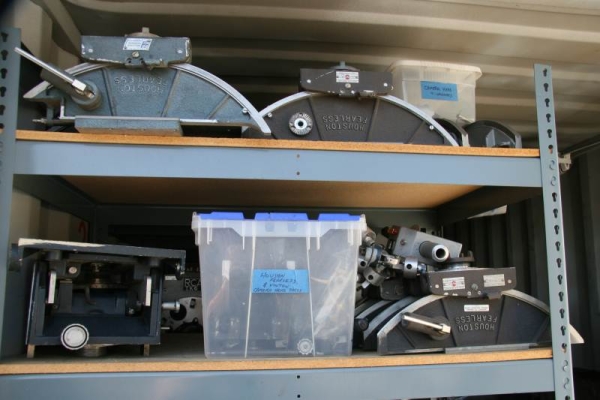
OK, now we see the single wide cradle heads, but not the double wide for the TK40. Houston Fearless made the first single wide prototypes in 1953 for the TK40 at The Colonial Theater. They were better than the friction heads for these 350 pound cameras, but the double wide was needed. HF had designed the cradle for the , b/w cameras, and thought they may work with the color version, but the weight and width demanded more.

Wouldn’t you love to see the inside of this? I don’t think I’ve ever seen pix of the inside, have you?

Classic


Source

1 PICTURE…SO MANY QUESTIONS?!


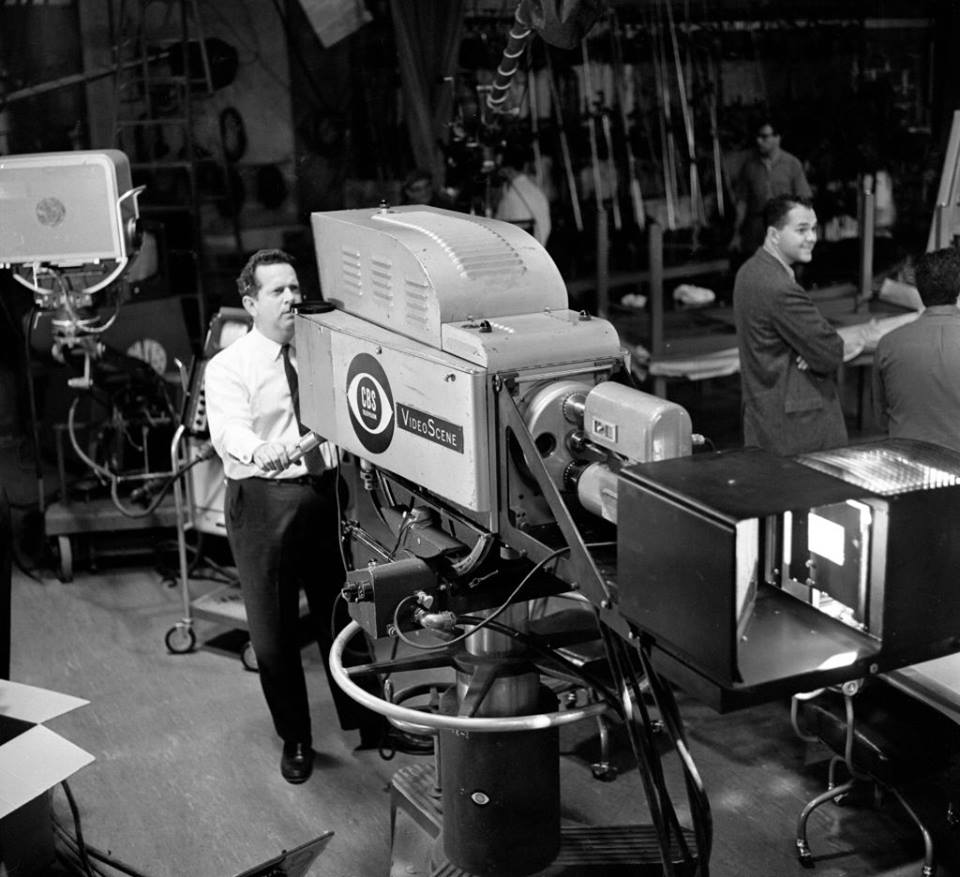
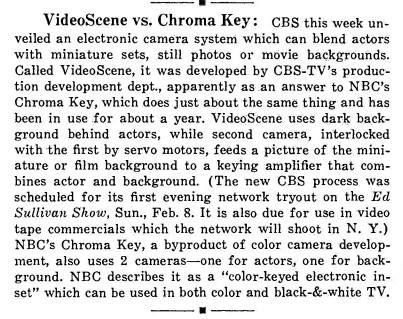
Since I saw this photo, I’ve been mesmerized by it. I’ve asked all the experts to weigh in on exactly what we are seeing here in the demonstration of the CBS VideoScene technology and before we enter the Rube Goldberg photo phase, here is some background on what the process is.

OK, now that we know more, we also need to know that NBC’s Chroma Key works in color, but this CBS VideoScene only works in monochrome, or black and white. Well then what are the RCA TK41 color cameras doing in the middle of this? The technology required the use of 2 of the TK41’s tubes to pull it off, so…here we go in explaining what we see here.

The only thing we know for sure in this photo is that we see either an RCA TK40 or TK41A color camera in the foreground. Note that is mounted on an electronically controlled pan head, that was designed to be slaved to another, or other units. On the lens turret, the bottom lens (the taking lens) is shooting into/through a 45 degree mirror box. It looks like to the right of the mirror is a light source and possibly a transparency of a static miniature set (see the article for this) OR…the box on the right side of the mirror is a tiny rear screen projector pushing a live image from another slaved camera here so that the cameramen can match the movements of the actor and the background. For now, we’ll call this TK41, Camera 2 and call the other TK41 (not shown, but necessary) Camera 1.

BUT…that’s not all! It appears that on the left side of the photo there is a camera mounted on a Panoram dolly…but this is NOT a camera! It is a Grey Telop projector. AND, that on the tech cart just behind the cameraman (where an oscilloscope would usually be), there is an RCA TK11 mounted there with TV33 cable coming out the back.

What it is doing there is just as big a mystery as what the projector is doing on a dolly. None of my 3 experts have any idea why this is BUT…I am going to guess here.

It could be that the large projector (on the dolly) is feeding a televised image of a live miniature set it is receiving from the second TK41 (Camera 1) into the TK11 electronically, and that the TK11s black and white image is being fed to the lightbox on the TK41 we see (Camera 2). If that light box on the TK41 really is a small rear projector, maybe the only way they had to step it down was with this convoluted rig we see, which we’ll call Camera 3.

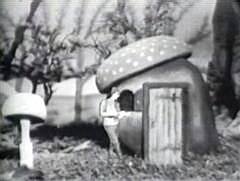
OH, BY THE WAY…what the heck is in the top hole of the turret? It is a Watson-Barnett Diascope which was the best way to do camera setups and with this process, camera matching would have been critical. BTW, this is what the compiled image looked like, as we see in a shot from WBBM’s Magic Door program.

ABC Studio 15, a/k/a The Elysee Theatre Unique Facility Tour

Every so often, a television show comes along that quietly resets the tone of an entire genre. For kids’ programming in the late 1970s, that show was Kids Are People Too. ABC launched it on September 10, 1978, and for the next four years — right up through September 5, 1982 — it became the network’s Sunday‑morning handshake with a generation of kids who were suddenly being treated less like children and more like young adults with opinions, questions, and a growing appetite for pop culture. Behind the scenes, the show was also a proving ground. One of the young directors cutting his teeth there was Don Roy King, working out of ABC’s Studio 15. King would go on to become one of the most celebrated live‑television directors of his generation, eventually taking the helm at Saturday Night Live — a job he held for 16 seasons, from 2006 to 2021. By the time he stepped away, he had earned 11 Emmy Awards and a reputation as one of the best live directors televisions has ever had. Not a bad trajectory for someone who started by wrangling cameras and kids on a Sunday‑morning youth show.

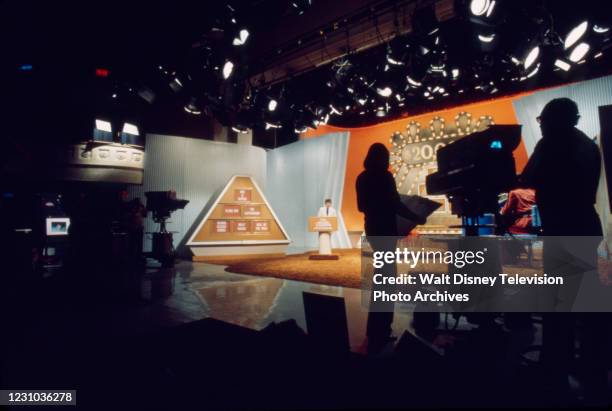
This is a look at the Elysee Theater like we have never seen before, because we get the FULL TOUR here including the control room! The theater was also the home of The Dick Cavett Show, $10,000 Pyramid, David Frost Specials and way back there, Masquerade Party.

This clip is from our dear friend Burt Dubrow, who you’ll see here as the Studio Producer, but is perhaps best known as the man who discovered Sally Jessy Raphael, and produced her show for 18 years BUT, Bert’s heart is in the 1950s because he is among the foremost authorities on Howdy Doody in the world. Burt is the man who brought Buffalo Bob Smith out of retirement and into the college arena tours that were packed at every stop.

This show didn’t talk down to its audience. That was the magic. Where earlier programs leaned on games, gags, and giveaways, Kids Are People Too leaned forward. It mixed celebrity interviews, live music, comedy, and a surprisingly thoughtful advice segment called “Dear Alex and Annie.” The studio audience — older kids and early teens — wasn’t just window dressing. They were part of the conversation, asking questions, reacting, and giving the show an energy that felt closer to a teen talk show than anything that had existed before.

When Nickelodeon began shaping its early identity in the 1980s, you can see the fingerprints of Kids Are People Too all over the place. Shows like Livewire and Nick Rocks borrowed the same idea: treat kids like real people, give them real guests, real music, and real conversations.  The series earned multiple Emmy nominations and even took home the 1978 Emmy for Outstanding Children’s Entertainment Series, but its real legacy is quieter and more personal. For the kids who watched it, the show felt like television finally understood them. And for the industry, it proved that “children’s programming” didn’t have to be childish — it could be smart, stylish, and surprisingly grown‑up.

The $2,000,000 Broadcast Coverage of the LBJ Inauguration

Here is the February 1965 issue of the IBEW Technical Engineer magazine that spends 14 pages on the details of the massive 175 camera coverage of the events of the January ’65 ceremonies in Washington D.C. Almost 750 people were involved in the distribution of live and recorded pictures, and, for the first time, TELSTAR II beamed 26 minutes of the coverage to Europe live via the BBC.

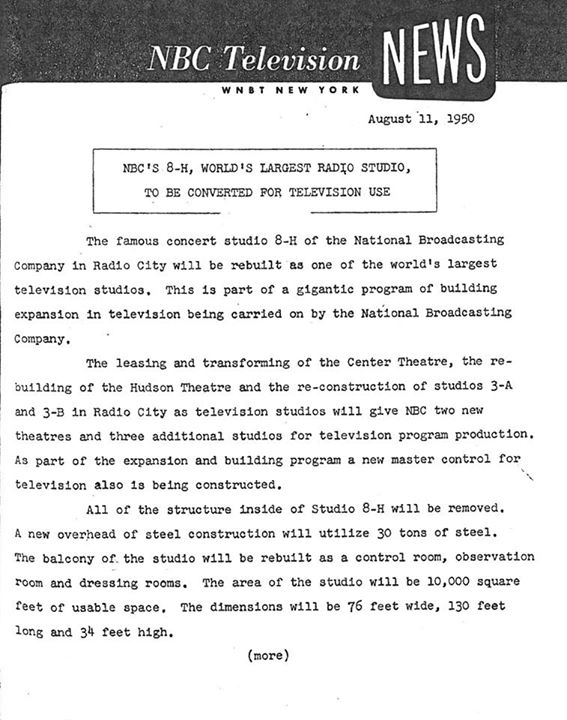
Happy 75th Birthday…NBC Studio 8H

Happy 75th Birthday…NBC Studio 8H

On January 30, 1951, Studio 8H was dedicated as a television studio. I am three months older!

On November 7, 1933, 8H was the home of the first NBC Radio broadcast from the new 30 Rockefeller Plaza headquarters and was then known as the Auditorium Studio.

As early as April 19, 1944, television had occasionally come from here with broadcasts/simulcasts of “The Voice of Firestone”. The 1944 occasion was only a local event, but in 1949 there were a few network television simulcasts of Firestone. All were covered as remotes, even thought they were in the building.

The story continues on the many pages of very rare historical documents and photos, so please click on each. Enjoy and Share! -Bobby Ellerbee


Above and up top is the August 1950 NBC Press Release that announces the 8H conversion news. Notice it also discusses the rebuilding of The Hudson Theater in preparation for ‘The Kate Smith Show’. The Center Theater as well as 3A and B are all in the process of conversions too.


On November 7, 1933 NBC held dedication ceremonies and special programs at its new 30 Rockefeller Plaza head quarters at Radio City. There were 27 studios in service, with 8 more yet to come which would occupy two entire floors (6&7) which were left unfinished till the late ’30s. What we know as 8H was referred to as the “Auditorium Studio” and 8G was called “The Radio Guild Studio”. The first broadcast was at 8PM Saturday night, Nov 11. The inaugurating sound was that of the national anthem performed by the NBC Symphony Orchestra conducted by Frank Black from Studio 8H with 1,200 special guest. This is the story from the December 1933 issue of “Radio Engineering


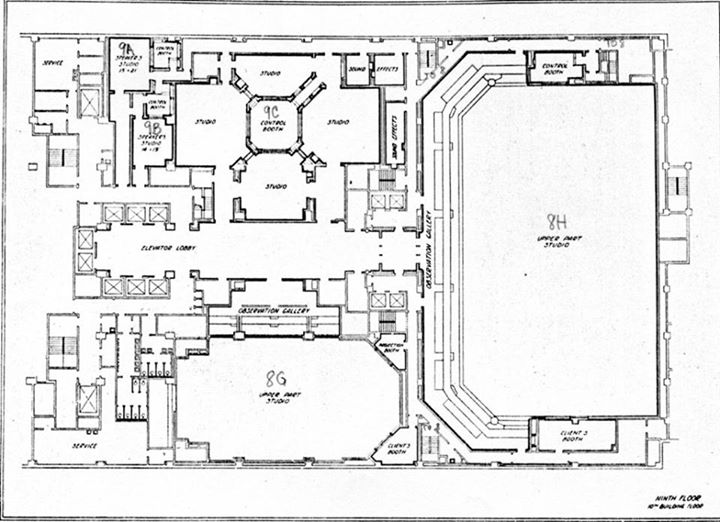
These are the 8th and 9th floor layouts as it was in 1933


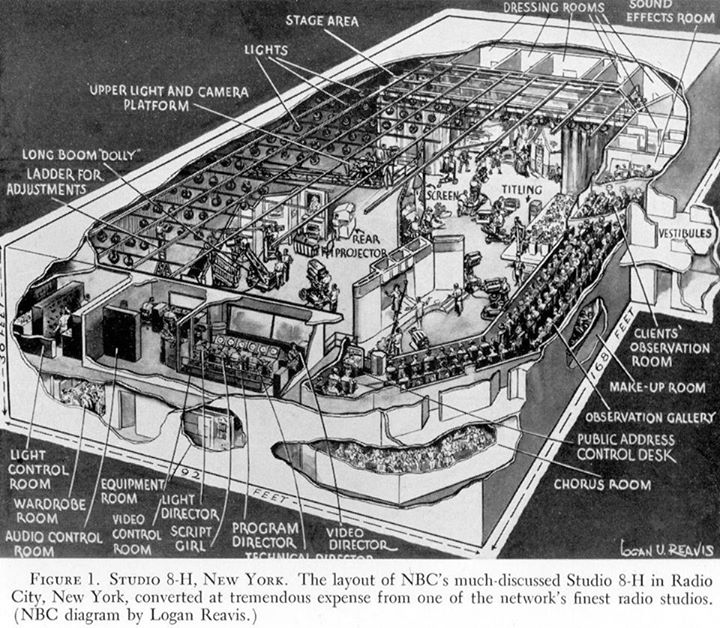
This is 8H during the Apollo 8 mission coverage with Frank McGee in the center. On June 24, 1963, 8H went color using the 4 TK41s from the Ziegfeld Theater which had been the home of Perry Como.

Below is the network debut performance of the ‘Voice of Firestone’ on television, September 5, 1949. FYI, the 8H ceiling is actually three stories high and goes all the way to the 10th floor

Source

“Battle Over Television” – Mechanix Illustrated, 1945

Thanks to Barry Mitchell, here’s some glimpses into how the future of television looked in January 1945. These excerpts from Mechanix Illustrated are interesting in several ways, not only for their photographic coverage of early television equipment and production techniques, and not only for their descriptions of early television equipment, but they are also a snapshot of the rivalry between RCA and CBS over different technical approaches to television.

The main article, by RCA spokesman Jack O’Brine, tells of RCA being “the recognized leader in television” and of the millions it has spent in the field. “Television has become an electronic art and practical possibility largely through the development in RCA laboratories of the Iconoscope and Kinescope,” O’Brine writes.

In a rebuttal, CBS vice-president J.H. Ream throws cold water on O’Brine’s claims and argues that RCA’s plans to jump in the postwar television market using prewar standards, “though understandable, is short-sighted” and will leave viewers unhappy. Ream advocates for using a higher-frequency band in the radio spectrum that would not only broadcast a 735-line picture (versus RCA’s 525-line system) but make color broadcasting easier.

We can also see the first shots of the “color war” in this piece. A picture of the experimental CBS color camera is featured, as well as a diagram of the mechanical color system. The caption notes that RCA has developed a special tube for electronic color broadcasting, and holds that “mechanical color systems are unsatisfactory.”

As a bonus, there’s an artist’s rendering, spread over two color pages, of what a television studio of the future could look like: a circular structure partitioned into four studios, with a turntable stage and a transmitting tower on top.

(One more item: Note on the final page the small piece about Mechanix Illustrated becoming the first science magazine to sponsor a television show when it presented a half-hour program from DuMont’s New York station. Check out as well the picture showing 1944’s idea of what the fashions of 1970 would look like.)

Thanks again to Barry Mitchell for this look into the state of the art from nearly eight decades ago. Enjoy!

HOW TELEVISION GRAPHICS CAME TO BE

Not long ago, I came across some excelent historical images of television’s first experiments into shadow box technology and precursor elements to telecine and telop technology. I knew that the experts at The Museum of Broadcast Technology in Woonsocket, Rhode Island would be the key to explaining what we were seeing, so I asked our friends there to write this up. Tom Spraigue, Paul Beck, Jay Ballard and Pete Fasciani are MBT’s core and ALL have amazing backgrounds, and I have long been impressed by their work and mission. In this case, Paul Beck took the lead and brings to life how these great images show the transition from imagination to real world capability in an industry that had to be made up as you went along. THANKS to Paul and The Museum of Broadcast Technology for thier help. -Bobby Ellerbee

OH YES, THEY DID!!!

As your Editor In Chief of Eyes of A Generation, I pride myself on trying to display the best, most interesting images of our industry in action, but AT FIRST GLANCE, this series of pictures BLEW MY MIND! No one in their right mind would try to cover a football game with a Chapman Electra studio crane on the sidelines, EXCEPT – if there was a paved running track on the sidelines, which…there is here. In another rarity, CBS is using RCA TK41s (instead of Norelcos) to cover the event and odds are, they are using KTLA’s mobile units for this event. The same RCA built units that Red Skelton owned in the early ’60s. This is the 16th Annual NFL Pro Bowl at Los Angeles Memorial Coliesum in January of 1966. Enjoy! -Bobby Ellerbee

HOW NFL FOOTBALL CAME TO TELEVISION IN 1956

Sig Mickelson was the first president of CBS News, and it is from that insider’s view that we get this amazing story.

In only 8 pages, he explains how CBS public affairs management’s best laid plans to make Sunday afternoons their bull’s eye for public service programming got shot out of a cannon, and how pro football came to find its new home there. I have read Mr. Mickelson’s book, “The Decade That Shaped Television News – CBS in the 1950s” several times, but this time around, his writing on this major event really popped out, and I felt the best way to share this amazing story with you, is to present these 8 pages from his book for you to read for yourself.

NBC COLOR PERFECT PROMOS FROM THE ’60S

Here, back to back, are two :60 second promo’s from NBC, touting their color abilities in the mid 1960s. You have to give them and RCA credit as the leaders in color. No one was better, but unfortunately, when these transfers were made from film to video a few years ago, the master prints had sufferd some major fading and these did not look at all “perfect”. Thanks to our NBC bretheren, we are able to verify that the director shown in the first promo is the great sports director Harry Coyle and the lighting director in the second promo is Bill Klages.

We’ve had some help from our friend Marc Wielage, who is a master Hollywood colorist, to help these look better. Marc says the 16mm print had turned magenta over time and there are basicly no greens or blues left, but with his careful touch, these rare gems do look much better than they did when we sent them to him. In addition to Marc’s help, many thanks to Mike Clark in Los Angeles for finding these in the first place.