Posts in Category: TV History

December 17, 1969…Tiny Tim Marries Miss Vicki On ‘Tonight’


December 17, 1969…Tiny Tim Marries Miss Vicki On ‘Tonight’

Remember this? I was a senior in high school and although it was a Wednesday night, I got permission to stay up and watch, along with about 40 million others. Probably one of the greatest publicity stunts of all time. I met him a few times and yes…he’s just as odd off stage as on. Enjoy and share! -Bobby Ellerbee

http://www.youtube.com/watch?v=v8gloxeHOLk

Tiny Tim married Miss Vicki on the Johnny Carson show with 40 million television viewers watching, on December 17, 1969. WATCH MORE Johnny Carson on YouTube:…

Source

December 17, 1953…FCC Approves RCA Color, A First Hand Account


December 17, 1953…FCC Approves RCA Color, A First Hand Account

Thursday afternoon on the 17th, the FCC approved the RCA Dot Sequential color system as the national standard. Our friend and former NBC engineer Frank Merklein was actually the one that broke the news to David Sarnoff. Below is part of an email from Frank to me on these subjects.

“General Sarnoff was the force behind trashing the CBS mechanical wheel and to forming the NTSC color committee of all the US manufacturers. NBC had been doing daily closed circuit color test shows (the same show every day for 2 1/2 years) from 3H and the Colonial Theater. I was part of that testing and Sarnoff had made me a member of one of the committees”

“When the FCC chose the RCA system, the General was in our studio, 3H. I was on the phone with the FCC, I turned to the General and gave him a prepared message. “General Sarnoff, the FCC informs you that they have unanimously approved of the NTSC system for color.” He grinned, blew smoke from those over-sized cigars he inhaled and thanked everyone… Great memory.”

The next day RCA had full page ads in several major newspapers and rumor has it, there was a color slide that Friday just before ‘The Howdy Doody Show’ (see the slide in comments below). More than likely, John Cameron Swayze also made mention of it in Friday’s ‘Camel News Caravan’ broadcast.

The next day was Saturday and NBC’s biggest audience of the week would gather around their sets for ‘Your Show Of Shows’ and that’s when the big announcement was made as seen in this video clip of the occasion. Enjoy and share! -Bobby Ellerbee

A Salute To The Rockettes And Radio City…Two Rare Videos


A Salute To The Rockettes And Radio City…Two Rare Videos


At the link above is some great archival footage with a few surprises! Who knew they practiced on the roof of Radio City? Looking at the cars, this appears to be from the late 1940s. The audio comes in at :28 and color footage comes in at 2:00.

In this second video, we get a brief 75 year overview with vintage footage that seems to start in the mid 1930s. Without The Rockettes and Radio City, it just wouldn’t be Christmas, but as you’ll see…that almost happened in the ’70s. Enjoy and share! -Bobby Ellerbee

http://www.youtube.com/watch?v=fW6QQvZWPwI

I did this film for Radio City Music Hall’s Christmas Spectacular. It was a quick history of the 75 years of Radio City and the Rockettes. It’s a fascinating…

Source

December 16, 1951…’Dragent’ Debuts On NBC Television

December 16, 1951…’Dragent’ Debuts On NBC Television


At this link is the very first episode of ‘Dragnet’. Be ready for a surprise at 2:40 as we see a young actor (made up to look older) that will become one of TV’s biggest stars. Playing the role of Chief Of Detectives, Thad Brown is none other than Raymond Burr.

The original ‘Dragnet’ starring Jack Webb as Sgt. Friday, actually began on NBC Radio on June 3, 1949 and ran till February 26, 1957. The television series began on television December 16, 1951 and ran till August 23, 1959.

In 1967, Webb revived the series for NBC which ran from January 12 of that year till April 16, 1970. NBC’s radio network carried it as well. Below are some shots from the radio and television series with more details on each. Enjoy and share! Dun Da Dum Dum! -Bobby Ellerbee


Source

FANTASTIC! One Show, Start To Finish…Rare 1949 CBS Picture Book

This is the entire 1949 picture book “Close Up” that was written and published by CBS. It is the real time story of how this primetime drama came from an idea to a sixty minute live television play. This will also show us some rare photos of the old CBS facility at Grand Central Terminal, including Studio 42 and the telecine room. I have a hard cover copy given to me by Jodie Peeler, but have seen pictures from the book for years and some will be quite familiar.

On of many things we’ll learn here is that CBS was the first to use florescent lights in the studio to cool them off. Temperatures of over 100 degrees were not uncommon in those early days.

The ‘Studio One’ production depicted here is a sixty minute live drama called ‘The Glass Key’ and we start with the story and the sets, but the studio pix come along in the last third of these 30 or so pages. Thanks to David Gleason at American Radio History for his massive archive efforts and to Jerry Clegg for sharing this with us. Enjoy and SHARE! -Bobby Ellerbee

In Case You Missed It…Funniest SNL Christmas Bit In Years!


In Case You Missed It…Funniest SNL Christmas Bit In Years!

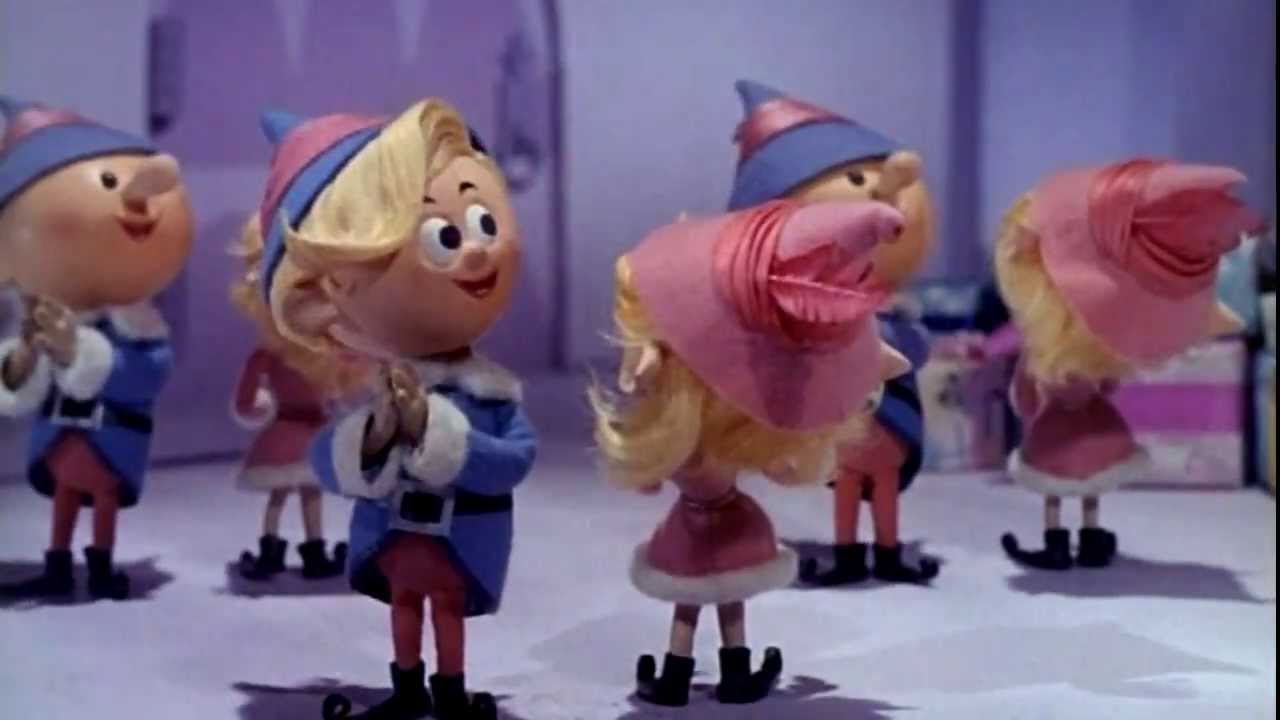
Kenan “What’s Up With That” Thomson is at it again. This was part of a very good show this past Saturday. I haven’t laughed this hard at an SNL holiday skit since ‘Schwetty Balls’. Enjoy and share! -Bobby Ellerbee

https://www.youtube.com/watch?v=jWnP2jO06gc

If you’ve been crossed off Santa’s nice list, here comes Sump’n Claus (Kenan Thompson). Get more SNL on Hulu Plus: http://www.hulu.com/saturday-night-live Ge…

Source

December 14, 1934… Laurel And Hardy’s ‘Babes In Toyland’ Debuts


December 14, 1934… Laurel And Hardy’s ‘Babes In Toyland’ Debuts

80 years ago yesterday, a classic was born. As kids, a lot of saw this on our local stations around the holidays and knew it as ‘March Of the Wooden Soldiers’ which was the title of the 1948 re-release. The original title was ‘Babes In Toyland’.

WPIX in New York still runs this every Thanksgiving and Christmas day. Here’s the trailer and notice the special effects insert shot of Stan and Oliver watching the toy soldiers march by. Thanks to Rick Scheckman for bringing this to our attention. Enjoy and share! -Bobby Ellerbee

#t=10″ target=”_blank”>https://www.youtube.com/watch?v=vBmgwbdTJWA #t=10

Ollie Dee and Stanley Dum try to borrow money from their employer, the toymaker, to pay off the mortgage on Mother Peep’s shoe and keep it and Little Bo Peep…

Source

Making ‘Gone With The Wind’…Linda Ellerbee & Ray Gandolf


Making ‘Gone With The Wind’…Linda Ellerbee & Ray Gandolf, ABC

To celebrate the debut, here is a most excellent ABC ‘Our World’ special on the making of ‘Gone With The Wind’ from 1987. There is a lot of rare film and many little known facts in this 5 part presentation. For example, did you know Lucile Ball was one of the actress screen tested for the role of Scarlett O’Hara? When Vivian Leigh did her screen test, she said the dress was still warm from the last actress to audition for the part of Scarlett. Enjoy and share! -Bobby Ellerbee

http://www.youtube.com/watch?v=j1pCe6P_DxA Part 5
http://www.youtube.com/watch?v=14qUhkjEXy4 Part 4
http://www.youtube.com/watch?v=6MrU_gw5AEI Part 3
http://www.youtube.com/watch?v=ZNkiSLSOMw4 Part 2
http://www.youtube.com/watch?v=DroCn55mgnU Part 1

“Our World,” an excellent ABC News history series that ran for one season (1986-87), chronicles the making of the 1939 movie classic “Gone With The Wind” (2/…

Source

December 15, 1939…’Gone With The Wind’ Debuts In Atlanta


December 15, 1939…’Gone With The Wind’ Debuts In Atlanta

Even now, ‘Gone With The Wind’ remains one of the biggest books ever published and one of the top movies every made. In the late 70’s, I spent a lot of time in Margret Mitchel’s Atlanta home, which back then was owned by my friend Bob Ruddy. The theme from Tara played in my head every time I was there. Enjoy and share! -Bobby Ellerbee

http://www.youtube.com/watch?v=FIBz-5QQOso

Source

The Infamous TSM Auto Cams At WNBC

Picture Parade 4…The Infamous TSM Auto Cams At WNBC

Connie Chung says the news casters named them “Larry, Moe and Curly”, but soon, everyone called them that. These rambunctious robots had a mind of their own and often ran afoul at the worst possible moments. These came soon after the last big NABET strike and were seen by many as a “rub it in your face” gesture by the new owners…GE. I had been looking for this since I posted the BBC robocam horror show a week or so ago. Does anyone have more pix of these? This is the only one I know of. Enjoy and share. -Bobby Ellerbee

Source

A Sad Day At Boston’s WGBH

Picture Parade 3…A Sad Day At Boston’s WGBH

October 14, 1961, a fire started in Studio A and it was a complete loss. In the center of the photo are a couple of RCA TK11/31s and amazingly the TVP pedestal’s compressed air tank did not blow up. This was a Friday, but they were back on the air by Monday. Local broadcasters helped with studio space and equipment. -Bobby Ellerbee

Source

Guys And Dolls In Television At WBKB, Chicago

Picture Parade 2…Guys And Dolls In Television At WBKB, Chicago

These pictures were taken during WW II and show how women stepped into jobs of all kinds across the country. Some here were engineers while others worked cameras and control room equipment. The cameras were made before the war at WBKB, as was the dolly that uses an old barber chair base to raise and lower the camera. Enjoy and share! -Bobby Ellerbee


Source

The Identities Are Revealed

Picture Parade 1…The Identities Are Revealed

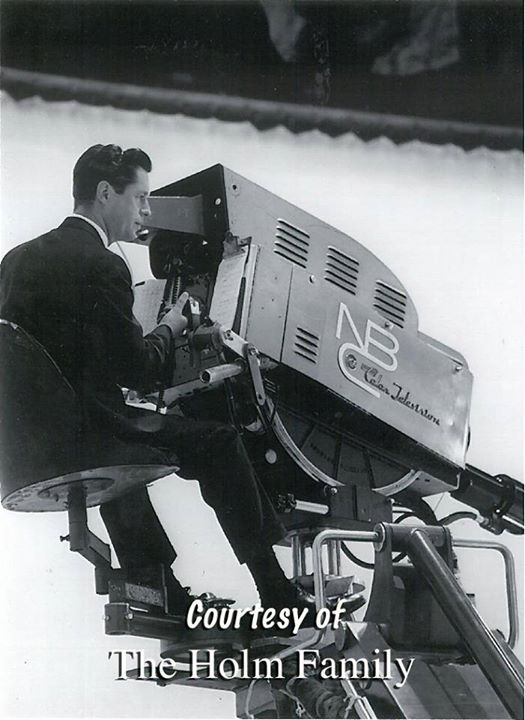
This photo gets posted a lot, but never with the names and event, so, let’s fix that. The photo was one of a few dozen taken this day for use by RCA in trade ads to promote their new TK30 Image Orthicon camera in early 1947. The cameraman is Andreas Fininger and the actress in the background is Eva Marie Saint.

As seen here, she did a lot of bit parts in early NBC dramas which lead to her role in ‘On The Waterfront’ and later, she had NBC television roles opposite Paul Newman and Frank Sinatra in a production of “Our Town” for ‘Producers’ Showcase’ and “Middle of the Night” for ‘Philco TV Playhouse, which brought her a Emmy nomination in 1955. Saint also scored a professional triumph on Broadway opposite the legendary Lillian Gish in “The Trip to Bountiful,” which earned her a Drama Critics Award in 1953. Saint’s solid reputation among critics was becoming reinforced so often that she was referred to as “the Helen Hayes of television.” Enjoy and share! -Bobby Ellerbee

Source

December 14, 1984…Howard Cosell Retires From Monday Night Football


December 14, 1984…Howard Cosell Retires From Monday Night Football

I think the best way to mark the occasion is with this video. The great Billy Crystal story on Howard that he told to David Letterman.

http://www.youtube.com/watch?v=xjL9_9aS51U

Billy Crystal’s Story About A Drunk, Weeping Howard Cosell

Source

The One Time Sinatra Hosted The Tonight Show

Ultra Rare…Frank Sinatra Guest Hosts ‘Tonight’…A One Time Event

As far as I can tell, this Monday night in 1977 was the first and only time Sinatra guest hosted the show.  Guests that night were George Burns, Carol O’Connor and Don Rickles which is quite a lineup.

Sinatra had actually retired in 1971, but after a couple of restless years, came back in 1973 with an album and TV special which were both titled ‘Old Blue Eyes Is Back’. Thanks to Geoffrey DeVoe for sharing this. Enjoy and share! -Bobby Ellerbee

Source

White Shoes And Color News

Picture Parade 4…White Shoes And Color News

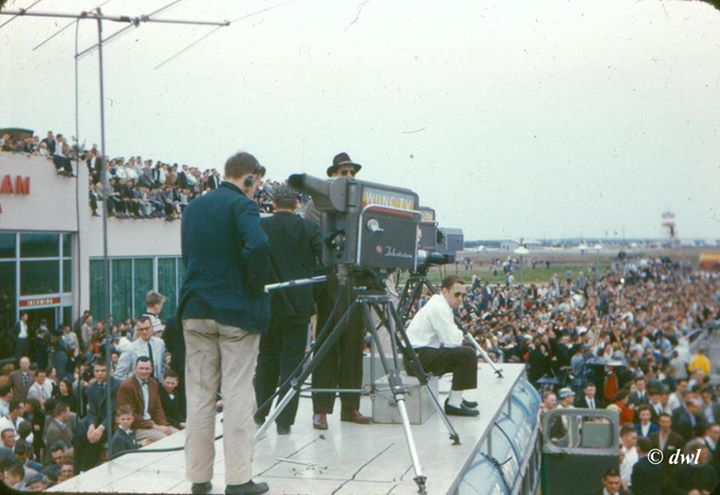
This is the 1968 Republican National Convention in Miami. Pictured with Mike Wallace is the governor of Florida, Miss Florida and an overloaded cameraman. That hefty bundle is the Norelco PCP 90 with a 35 pound camera and a 25 pound back pack transmitter. Enjoy and share! -Bobby Ellerbee

Source

Space Cadets, A Whole Nation Of Us!

Picture Parade 3…Space Cadets, A Whole Nation Of Us!

In the 60s, space missions were huge events and networks had cameras everywhere explaining not only the mission but the science behind all this and we ate it up. It was a great time in America. Here’s CBS owned KMOX giving us a look at a Gemini capsule at the hometown plant where they were made… McDonald Douglas in St. Louis. Enjoy and share! -Bobby Ellerbee

Source

‘Playhouse 90’, “A Heritage Of Anger”, 1956

Picture Parade 2…’Playhouse 90′, “A Heritage Of Anger”, 1956

Interestingly, like the Richard Pryor – SNL story I posted earlier, this is also a Season 1, Episode 7, event, but on a much different track. These are some great photos of the rehearsals as CBS Television City on November 15, 1956. The stars were Ralph Bellamy, Lloyd Bridges, John Ericsson and Tom Brown. The cameras are RCA TK11/31s and the cranes are Houston Fearless 30B models. Enjoy and share! -Bobby Ellerbee


Source

The Voice Of Christmas Past

Picture Parade 1…The Voice Of Christmas Past

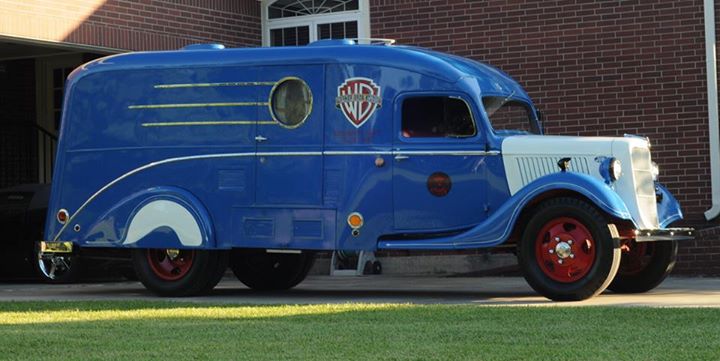
Here’s a look back at some of the surprises under the tree many of us at least hoped for. I’d never seen a CBS or ABC truck till I went looking for these pictures. This internet thingy has more pictures than a Sears catalog ;>) Enjoy and share! -Bobby Ellerbee


Source

Richard Pryor, NBC & The 7 Second Tape Delay

The whole backstory of that week in the studio is beautifully told by a Salon Magazine article that I have included here, below the video frame. 

This was to be the 7th episode of the brand new, late night NBC weekend comedy show “Saturday Night” scheduled to air December 13, 1975, and the one that really put it on the map. A lot of juicy details are in the article, but not the technical part, which in itself was quite an achievement…and a nightmare on many levels.

Why? Because in 1975,  there was no such thing as a video delay and that meant it had to be engineered into existence somehow. This newly discovered photo shows us for the first time just what the video engineers on the fifth floor came up with. 


First, the tape machines on the 5th floor at 30 Rock were built into custom recesses in the walls and in order to get two of them side by side, to make the delay happen, two machines had to be slid out of their cuby holes  then, the only way to get a tape delay was to record on one machine and stretch the tape over to a second machine for playback.

There had to be precision in the tape path, tape tension and the distance apart which gave the amount of delay as the tape moved from the record head on one two inch quad machine to the playback head on the other. 

This video is one of the all time classics from SNL…Chey Chase and Richard Pryor in the ‘Word Association’ sketch. Enjoy and share! -Bobby Ellerbee

Here is the Salon Magazine article as excerpted from “Furious Cool: Richard Pryor and the World That Made Him”


Up until the mid-1970s, the networks had little interest in Saturday late-night shows. After the eleven o’clock news, the airwaves were a bone-yard for local affiliates, the final resting place for schlock movies from the 1950s and ’60s. NBC stations had the option of rerunning recent episodes of “The Tonight Show” to predictably tepid ratings, which did not please either the affiliates or Johnny Carson. When Carson pulled the weekend reruns, preferring to repackage them as “best of ” programs to air on weeknights so that he could enjoy some time off, NBC president Herbert Schlosser and vice president of late night programming Dick Ebersol tapped Lorne Michaels, a veteran of Rowan and Martin’s “Laugh-In,” to create something edgy and new.

Johnny Carson dismissed “Saturday Night” as crude and sophomoric. He was right. That he considered the jibe a debilitating argument against the show only underscores how out of step “the lonesome hero of middle America” (as a 1970 Life magazine cover proclaimed him) had become. Crude and sophomoric was exactly what Saturday Night’s demographic craved.

Conventional wisdom held that it would be ludicrous to expect the show’s target audience to sit at home watching TV at eleven thirty on a Saturday night. Michaels knew different. The audience he was after had grown up watching TV. Too much TV. It was their collective point of reference, the communal campfire around which they all gathered in the new global village. They lived and breathed TV with an ironic self-awareness that Michaels and his team used to frame the jokes within the Big Joke that would define the show and leave most Americans born before 1948 muttering to themselves and scratching their heads.

NBC’s “Saturday Night” was arguably the first television show about television. Then, as now, the show was dominated by ironic takedowns of commercials, newscasts, sitcoms, talk shows, PBS-styled cultural programming, punditry, and presidential debates. Even those skits that ventured beyond television’s domain would typically break through the fourth wall to skewer — or at least wink at — the familiar conventions of variety-show sketch comedy. Perhaps that’s why Richard’s turn as guest host proved such a sensation. His stand-up bits were a bracing blast of fresh air for a generation accustomed to peering out at the world through a peephole the size of a TV screen and snickering at what they saw. The characters Richard brought out during his solo spots that night bore little resemblance to television’s stock types. The decent guy who turns into a violent drunk on weekends, the Hennessy-quaffing cat who accepts a hit of acid at a party, the junkie-berating wino — all were renegades who rode into the medium’s gated community with news from the outside world.

That’s why Lorne Michaels had to have Richard Pryor. The show’s claims to hip edginess or even bare relevance would ring hollow without him. It’s no exaggeration to equate the back-to-back salvos of “That Nigger’s Crazy” (back in print on Warner Bros.’ Reprise label just a month earlier) and “… Is It Something I Said?” (released late in July) with Bob Dylan’s electric epiphanies of “Highway 61 Revisited” and “Blonde on Blonde.” Just as every folk singer circa 1966 scrambled to plug into that same arc welder, lower the dark glasses, and send off a wild mercurial spray of white sparks into the sky, now it seemed every club comic carried a ghetto-talking phrasebook in his back pocket, as if that were the secret to doing what Richard did. “That’s the difference between Pryor and the pretenders who use profanity just to get laughs instead of making it a part of the characters and scenes they are trying to create,” says David Brenner. “Pryor could take the same bits he did at the Comedy Store or the Improv, vacuum out all the shits and motherfuckers for TV, and be just as funny.”

With Richard as host, sufficient numbers of the alienated youth Michaels sought could be counted on to eject Pink Floyd from their eight-tracks, switch off the strobe lights, carry their bongs up from the basement, or switch over from their local UHF station’s ghoulish movie host just to see what Richard might do.

The trouble was, NBC flat-out refused to allow Richard Pryor anywhere near a live studio camera. Richard, everyone knew, was a wildly unpredictable, uncontrollable cokehead. (So was just about everyone else on the show, but Richard didn’t bother to hide it.) What was to stop him from letting loose a string of shits and motherfuckers on live TV, as he would sometimes do during rehearsal, just to mess with them?

Michaels resigned in protest. “I said, ‘I can’t do a contemporary comedy show without Richard Pryor.’ And so I walked off. There was a lot of me walking off in those days.” NBC finally relented on the condition that the broadcast be put on a ten-second delay. Michaels knew that Richard would never agree to that. It was insulting. After all, they’d let George Carlin go out live, as they had every other host (all six thus far). Richard would go apeshit if he found out they were treating him any differently. (He did and he did but not until later.) Michaels went back and forth with the network, finally agreeing to a five-second delay, as if the duration of the time lag had anything to do with it. Director Dave Wilson now says the show in fact was live. His crew couldn’t figure out how to work the delay.

Meanwhile, Michaels found just as much aggravation in closing the other end of the deal. As his scheduled week drew near, Richard was still playing hard to get. In an effort to negotiate, the producers made a junket to Miami where Richard was performing at a jai-alai arena.

Richard insisted that they hire Paul Mooney as his writer. His ex-wife, Shelley, and his new girlfriend, Kathy McKee, both had to be on the show. And he wanted tickets. Lots and lots of tickets. Enough to pack the studio audience with friends and family. Associate producer Craig Kellem says, “Lorne loved Richard. He thought he was quote-unquote the funniest man on the planet.” But it was tough going. “As wonderful and as adorable as he was, it was also very tense being around him. It took so much work and effort to go through this process of booking him that Lorne, in a moment of extreme stress, sort of candidly looked around and said, ‘He better be funny.’ ”

Herb Sargent and Craig Kellem arrived at Richard’s Park Avenue hotel room the week of the show and found him in a foul mood. He was pissed because the network people had subjected Mooney to a condescending “job interview” — more like a parole-board hearing — before they would agree to hire him on for the show, which, of course, everyone knew they were going to do anyway because that’s what Richard wanted.

Richard had questions they couldn’t answer. Things got tense. Richard wanted to see a script. But there was no script. The staff was still in recovery mode from the previous week’s show. Richard threatened to walk, but Sargent beat him to it. Kellem watched speechless as Sargent hopped up and made for the door saying he’d just dash over to the office and get the script. He never came back.

When they weren’t working on the show, Richard and Kathy McKee enjoyed their time together in New York. They saw Aretha Franklin at the Apollo and visited Miles Davis in the hospital. (In his opening monologue, Richard dedicated the show to Miles.) But Richard never told Kathy that Shelley was going to be on the show, too. “I’m with Richard,” she says. “I’m his girlfriend, I’m traveling with him. You might think, when we got on the plane to New York, he would look over at me and say, ‘Oh, by the way, Kathy, Shelley’s going to be there.’ Nope. Not a word. I never found out until I got to rehearsal.

“Richard didn’t know how to manage his women the way Sammy [Davis Jr.] did,” McKee explains. “Sammy Davis was a master at bringing his women together. Richard didn’t know how to do that. He couldn’t swing. He couldn’t bring Deborah and me or Pam Grier together. It always ended up being trouble for him. So we were kept separate.”

It may have been that Richard still had feelings for Shelley and wanted to give her acting career a boost. Penelope Spheeris suggests the more likely scenario of a quid pro quo arrangement to make some of his child-support issues go away. Introduced as Shelley Pryor, she performed one of her poems, an interracial allegory of two differently colored carousel horses that brave society’s scorn when they fall in love.

Chevy Chase kept dogging Mooney all week to write something for him and Richard to do together. Just as Michaels needed Richard to establish his show’s bona fides, Chevy needed airtime with him. Everybody else had a skit with Richard. He and John Belushi faced off as samurai hotel clerks; Jane Curtin interviewed him as an author who lightened his skin to see what life is like for a white man; Laraine Newman, as the devil-possessed Regan in a take-off on “The Exorcist,” threw a bowl of pea soup in his face; Dan Aykroyd debriefed him as a special-ops major; Garrett Morris, claiming that he was acting on Richard’s request, did Chevy’s trademark pratfall to open the show; and Gilda Radner, in a running gag throughout the show, repeatedly picked him out of police lineups. But Chevy had nothing. He kept sending emissaries to Mooney asking, “Could you please write something for Chevy and Richard?”

Paul Mooney recalls the genesis of the skit that critics and viewers alike continue to rank among the best ever in the history of “Saturday Night Live:”

Toward the end of the week, as the Saturday show time approaches, he starts following me around himself, like a lamb after Bo Peep. “Richard hates me, doesn’t he?” Chevy asks me. “He doesn’t hate you,” I say, even though I know Richard does indeed despise Chevy.

Soon enough he’s back tugging on my sleeve. “Write something for us, will you?” he pleads. “I have to get some air time with Richard.”

Finally, in the early afternoon on Thursday, I hand Lorne a sheet of paper.

“What’s this?” “You’ve all been asking me to put Chevy and Richard together,” I say. After all the bullshit I’ve been put through to get here, the fucking cross-examination Lorne subjects me to, I decide to do a job interview of my own. Chevy’s the boss, interviewing Richard for a janitor’s job. The white personnel interviewer suggests they do some word association, so he can test if the black man’s fit to employ.

The first words are innocuous enough. Chase says “dog.” Richard says “tree.” Fast/slow, rain/snow, white/black, bean/pod, then:

Negro.
Whitey.

Tarbaby.
What’d you say?

Tarbaby.
Ofay.

Colored.
Redneck.

Junglebunny.
(bringing it) Peckerwood!

Burrhead.
Cracker.

Spearchucker.
White trash.

Junglebunny.
Honky.

Spade.
Honky honky!

Nigger!
Dead honky!

As they wait for the long wave of laughter and applause to subside, Richard’s face begins to spasm, his nose twitching like a maniacal rabbit. His character gets the job at three times the offered salary, plus two weeks’ vacation up front. “Just don’t hurt me,” Mooney has Chevy say.

“It’s like an H-bomb that Richard and I toss into America’s consciousness,” Mooney wrote. “All that shit going on behind closed doors is now out in the open. There’s no putting the genie back in the bottle. The N-word as a weapon, turned back against those who use it, has been born on national TV.”

It was, Mooney says, the easiest bit he ever wrote. All he had done was spell out what had been going on beneath the surface of his “job interview” with Lorne Michaels and the NBC execs.

Just as Michaels had hoped, Richard’s appearance lifted “Saturday Night” out of the programming ghetto and established it as a cultural phenomenon. Two weeks later, Chevy Chase made the cover of New York magazine, which dubbed him “the funniest man in America” and quoted an unnamed network executive championing him as “the first real potential successor to Johnny Carson,” and predicting he’d be guest-hosting Tonight within six months.

Carson, understandably, offered a less-than-glowing assessment of Chevy’s skills. “He couldn’t ad-lib a fart after a baked-bean dinner.”

Source