Posts in Category: TV History

Seth Meyers Debuts The New Set…NBC Studio 8G REVISED

UPDATE 2021: Unfortunately, the original video of the studio tour is gone, BUT…in its place is a fun bit Seth did with now retired NBC veteran Bob Friend, so take a look and laugh along with his friend, and mine, Bob, the man who kept NBC Studio 8G alive and well for many, many years!

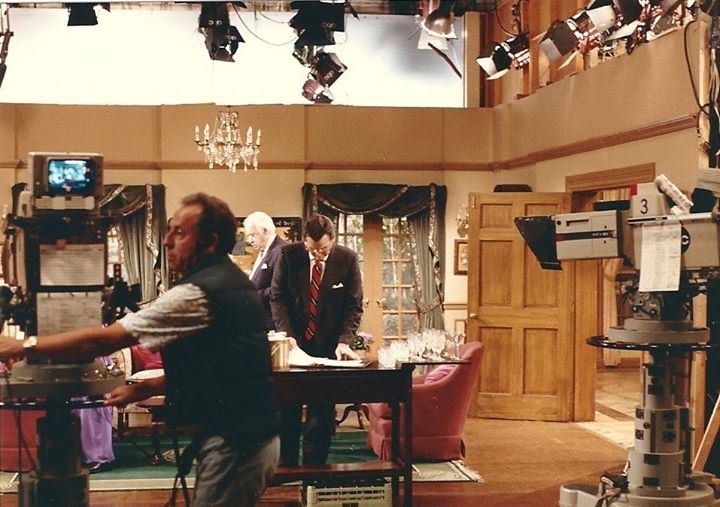
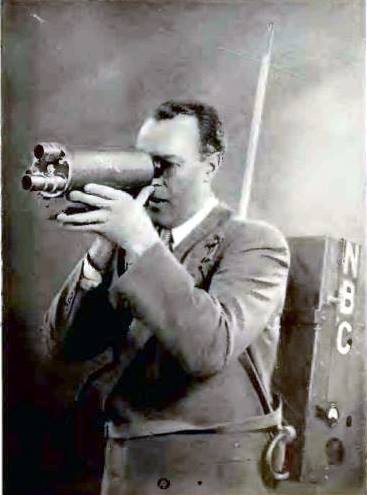
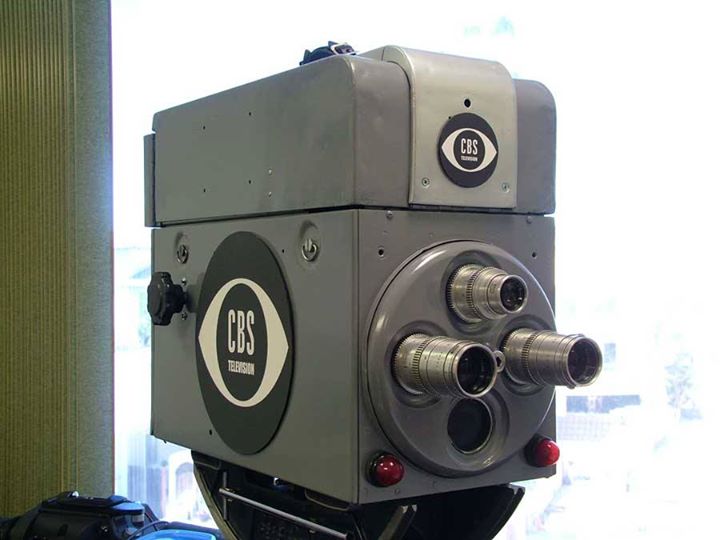
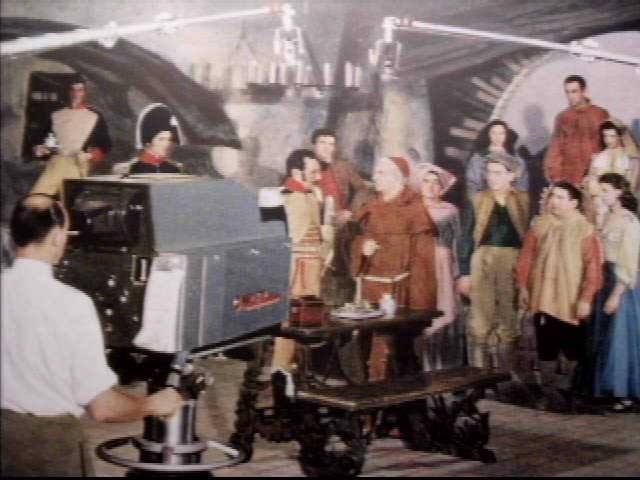
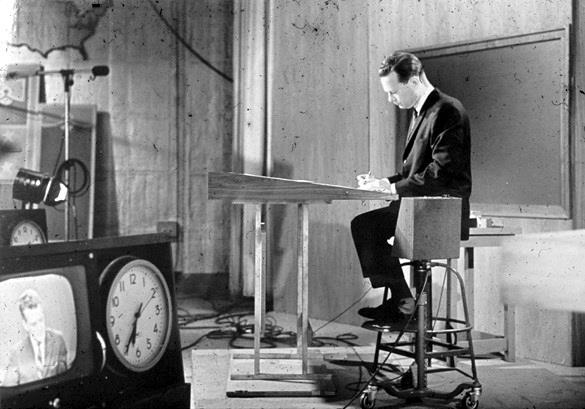
In Studio 8G, that desk platform was called “the shoe”. There are photos of the new set below and a shot of 8G from 1948 with it’s unique NBC built cameras.

Bob Friend and his electrical crew had a very busy couple of weeks rewiring and relighting this space, as did the set designers. Our other friends there, Mike Knarre and Bryan Durr got the time off but as camera and video men, probably had some catch up practicing to do to get used to the new layout.

NBC Studio 8G was 30 Rock’s second studio conversion from radio to television, with the first being NBC’s 3H which was created in 1935. Although the official 8G dedication was April 22, 1948, television had been done there since May of 1946. The “official dedication” date marks the date the studio was self sustaining with permanent lights, it’s own control room and cameras. As a side note, NBC Burbank was actually in operation two years before it was “officially dedicated”.

The first show ever to come from 8G was also television’s first variety show…’Hourglass’, which debuted May 9, 1946 when 8G was still officially a radio studio. Later that year, ‘Let’s Celebrate’ was done here as a one time show on December 15, 1946 with Yankee’s announcer Mel Allen as host. Contestants competed in stunts for prizes. ‘The Swift Show’ (a Swift Company sponsored game show), and ‘Americana’ (a game show about American history) started here in 1947.

I don’t think 8G, as a radio studio, had built in audience seating but it was thankfully three times the size of NBC’s only other television studio, 3H. “Radio Age” states that 8G could handle four consecutive shows, which meant the often fifteen minute and half hour shows, with only one small set, could be staged one after the other from different walls of the studio. Congratulations on the new digs guys!

When the studio floors were redone in 8G and 6B last year, I wish I had thought to ask for a few pieces of the concrete that got jackhammered and dumped. Some amazing history has happened on those floors! Enjoy and share! – Bobby Ellerbee


Source

The State Of Television In 1952…Hosted By Dave Garroway


The State Of Television In 1952…Hosted By Dave Garroway

This is a film made by RCA for use in theaters…a kind of “short subject” infotainment project designed to sell the virtues of that new thing called television, and more directly, RCA television sets.

Until Milton Berle came to television as host of ‘The Texaco Star Theater’ in June of 1948, television set sales moved at a snail’s pace. After that, sales took off, but the sets were still expensive. RCA and others manufacturers ate a lot of the costs and had to be aggressive in their marketing and going into theaters to sell their wares was part of the game.

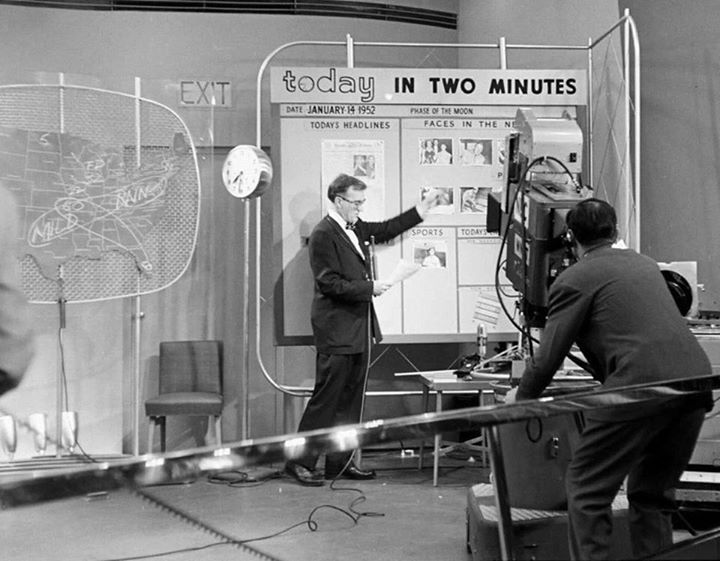
As this opens, we see Garroway of the set of ‘Today’ in it’s first year, with an RCA TK30 and a huge lavalier mic. You’ll notice that a lot of the subject matter revolves around sports…that was one of the few areas that networks had for bringing immediacy to their broadcasts. All four, Dumont, ABC, CBS and NBC depended heavily on boxing and in particular, wrestling as a draw for the male demo in those early years. Enjoy and share! – Bobby Ellerbee

https://www.youtube.com/watch?v=s84AUSFbWIw

From 1952, here is the first host of the “Today” Show, Dave Garroway, talking about the relatively new medium of Television, showing many of the shows that w…

Source

Memories Are Made Of This! 1959 Tour Of KOA TV, Denver


Memories Are Made Of This! 1959 Tour Of KOA TV, Denver

This will start as we are lead into the telecine room, complete with a telop machine…something many have never seen before. Soon we are in video control and at next up, we see two brand new Ampex VR 1000 video tape recorders. After that, we see some film editing and a UPI photo fax machine and then, we are in KOA Radio.

At 8:29 we get down to business in the television studios, equipped with the latest transistorized lighting board, rear screen projection and new RCA TK11/31 cameras. Thanks to John Schipp for reminding us of this clip…arguably one of the best local station tours ever. Enjoy and share! – Bobby Ellerbee

Source

A THANK YOU, And A Welcome To A New “Old Friend”

A THANK YOU, And A Welcome To A New “Old Friend”

Until yesterday, Christina Skaggs never knew about Eyes Of A Generation, but thanks to one of television’s top hockey cameramen, Kevin Vahey, she does now. Over the years, we’ve seen Christina here as the female camera operator on ‘The Match Game’ and two clips with her were posted here yesterday. She’s added some comments to those and will be sending along some pictures soon.

This is where I say THANK YOU! Not only to Kevin, but to the many that have passed along Eyes Of A Generation to their friends and coworkers. I am constantly amazed how many of television’s top people are here every day. More than that though, I can’t even begin to tell you how appreciated your one of a kind “eyewitness” input and comments are!

At this very moment, people at ABC, CBS, NBC, CNN, Fox, Warner Brothers, Universal, the BBC and many more networks and production houses are looking at this site, as are many on the sets of some of the biggest shows. Camera operators, video editors, writers, producers, directors, engineers, lighting and set designers and more are all here and I thank you all for coming! We even have network talent and executives among us, and lots of friends in Argentina, Brazil and Australia.

I try to curate television history here by telling stories, but it is you who bring it all to life with your comments, photos and additions. Collectively, we as a kind of family, fill in a lot of blank pages about television’s past and present…something that no one else anywhere is doing. I thank each of you for your interest, passion and input! Thank YOU being a part of Eyes Of A Generation! – Bobby Ellerbee

PS. Welcome also to Jack Young who’s recently joined in.

Source

Eyes Of A Generation…Masthead Companion Photo And Names

Eyes Of A Generation…Masthead Companion Photo And Names

This is the companion to the photo I use as profile picture for this site. It was taken at the same time and thanks to some veterans in The NBC East Group, we now know the names of these cameramen.

This is at NBC Brooklyn on the set of ‘Sing Along with Mitch’ and at the bottom is one of NBC’s legends, Frank Gaeta. In the middle is Gene Martin who we can’t really see in this photo, but you can in the photo at the top of the page. Speaking of the top, that’s Jack Bennett on the Chapman crane. To see the profile picture in full, just click on it.

I think the man in the sleeveless shirt is a dancer. Notice the cable from the sound boom goes up to the ceiling. At the time, all the TK41s three cable…they were huge heave bundles and needed extra utility men to handle them. The only way to try and keep the floor as clear as possible was to run the boom cables into rotating spring arms on the light grid. Is that Schrafft’s or Chock Full O Nuts coffee?

Source

Paul Shaffer’s Life With Letterman

Dave And Paul…Side By Side Since 1982

I thought you may like to see this. It’s one of the best articles I’ve seen on Paul Shaffer’s time with David Letterman. Enjoy and share!
– Bobby Ellerbee

http://www.thedailybeast.com/articles/2014/08/29/paul-shaffer-s-life-with-letterman.html

Paul Shaffer’s Life With Letterman

Like an increasing number of baby-boomers, Paul Shaffer will be 65 and out of a job next year. Actually, it’s much more than a mere job; it’s his life-long vocation (granted, really half his life), the beating heart of his self-identity, and his dependable sanctuary of fellowship and fun—the sudden absence of which might be compared to the death of a treasured friend.

“Well, how can you grieve when you’ve had such a long run?” Shaffer asks me over dinner at Remi, one of his favorite haunts a block from The Ed Sullivan Theater, where he has led the CBS Orchestra for the Late Show With David Letterman for the past two decades.

Before that, he spent a decade on Letterman’s 12:30 a.m. NBC show, conducting “The World’s Most Dangerous Band” from his rock’n’roll keyboard. “It’ll be 33 years by the time we’re done. It’s been fantastic. It’s been absolutely wonderful. Anybody who would be complaining about that should be put away.”

Perhaps Shaffer isn’t in denial—the first of Elisabeth Kubler-Ross’s “Five Stages of Grief”—yet members of Letterman’s staff were openly crying in April when Dave, now 66, announced on the air that next season will be his last. “You have some weepers back there,” that night’s guest, Johnny Depp, told the late-night comic, while Shaffer quipped: “Do I have a minute to call my accountant?”

Chewing on a breadstick at Remi, having just taped Monday’s installment featuring actor Michael Cera and frisky dogs broad-jumping into a 20,000-gallon pool of water out on West 53rd Street, Shaffer says: “Of course we’re—or at least I am—enjoying every show much more now, knowing that there are a finite number left.”

These days naked-pated and a teensy bit stouter than when he started out as Dave’s musical director and comic sidekick (a tonsorial and corporeal evolution that is unsparingly documented on YouTube), Shaffer talks in the smooth, reedy, dulcet tones that are known to millions of viewers—a less cartoonish version of the voice he uses to send up slick showbiz insincerity.

Who can forget Shaffer’s scene-stealing cameo in the classic 1984 mockumentary This Is Spinal Tap—as Polymer records executive Artie Fufkin? His voice is occasionally punctuated by that famous laugh—Shaffer’s trademark rasping honk—and that endearing, mole-like squint.

“We were young when we started,” Shaffer says, acknowledging that the last days—before Comedy Central’s Stephen Colbert takes over the time slot in September 2015—will be poignant and possibly emotionally draining. “Yes, absolutely. It’s been so long that I can’t remember a time when I didn’t do this show,” he says. “There are upsides to it [the final curtain], of course. There’s the freedom to do lots of other things—to travel somewhere. I want to do all kinds of things. I want to keep doing music primarily, of course. I’d like to act, too. But it has really has been our whole life for all of us on the show, day in and day out.”

Years ago, however, Shaffer had believed that he might not be long for the job after getting visibly angry at his boss on the air—a remarkable departure from the bandleader’s normally genial if ironic onstage persona.

“I really lost my temper,” he recalls, recounting how he vented at Letterman when frequent musical guest Todd Rundgren showed up at the studio too late to rehearse, and Dave (perhaps needling Paul) kept announcing that the band would play a string of completely unprepared Rundgren hits.

“Well, I couldn’t play all his songs because we hadn’t had a chance to rehearse, but Dave kept coming back to it,” Shaffer recalls. “He just kept firing it in, and I lost it and I started yelling at him on the air. I said, ‘Listen, anything you want, I give you! You want a song by the Gin Blossoms, you got it!’ Then I felt terrible afterwards. What have I done? The man pays my salary.”

After the show, Shaffer phoned Letterman in his office to apologize, “and he was laughing. He said, ‘That was hilarious. Feel free to do as much as you want whenever you want to do it. You can come over and sit on my head if you want.’ ” Shaffer adds: “I thought he was pretty damn nice, because I thought I was gonna get fired.”

Not a chance. The Canadian-born Shaffer—who grew up in Thunder Bay, Ontario, where he started watching Johnny Carson in the early 1960s via the NBC affiliate in Duluth, Minn.—sees his role with Dave as an updated composite of Carson’s bandleader Doc Severinson and sidekick Ed McMahon. “Doc and Ed—D’ed,” Shaffer says.

“It can take a certain amount of adjustment for a musician, whether jazz or rock, to get his head around the job of providing cues for comedic situations,” says Shaffer, who parsimoniously punctuates Letterman’s monologue jokes and celebrity interviews with the odd comic chord, or otherwise chimes in with a comment, question, or a simple “uh-huh” or “oh yeah,” as needed. “Sometimes, rather than speak to the camera, Dave will turn and speak to me,” Shaffer says, “and I got to realize he needed sort of a bed of sound.”

In one memorable moment, prodded by Letterman, Shaffer asked Julia Roberts, who had recently broken up with a boyfriend, “You getting laid these days?” Hilarity ensued.

“Not everybody wants to do it”—that is, cue up the laughs—“or understands that it could possibly be important to do. But it was always my favorite thing to do,” Shaffer says, adding that “less is more.” Regarding a rival talk show, no longer on the air, he says: “I remember the Leno band and what their punctuations would sound like—a certain disjointed timing sometimes.”

The fierce and often bitter competition with Jay Leno, who took NBC’s Tonight Show, the prize Dave was denied, and came from behind after Dave’s 1993 CBS debut to consistently beat him, had the all trappings of a late-night cold war.

“Yes, of course,” Shaffer says. “What can be said? Dave was the best that ever did it. He would say Johnny Carson was, but I’ve worked for Dave every night and he’s just the smartest and most on-top-of-it, the quickest. It’s the most spontaneous show on television. Maybe Jay was more commercial, or more universal. I don’t know.”

Shaffer acknowledges that with the march of time—through Letterman’s quintuple bypass surgery and a harrowing blackmail incident (during which the host admitted on the air that he’d “horribly hurt” his wife by sleeping with female members of the staff), the program’s anti-showbiz sensibility has softened considerably.

“I don’t think we can deny that we became the establishment,” Shaffer says. “We were making fun of the format—and then we became it. You have to kind of admit that. And I think Dave wants to be age-appropriate.”

But also real, unscripted, and sometimes painfully honest, as when Dave owned up to his extramarital misbehavior. “The show, to him, has always been something like a forum,” Shaffer says. “His attitude, I think, is if we can talk about it, how bad can it be? When he does that kind of thing, I think it becomes more than just a show. It is the real reality show. I think the Kardashians may set up a few of these situations.”

Shaffer, who was a something of a musical prodigy, studied classical piano and played in a high school rock band, and then a progressive jazz band at the University of Toronto, where he also DJ’ed on the campus radio station. (His attendance at John Lennon and Yoko Ono’s December 1969 press conference touting a peace festival is memorialized in a CBC documentary at around the 34-minute mark. Shaffer, who recalls that he was too intimated to ask a question, is the skinny kid with shoulder-length hair and a Fu Manchu mustache.)

He was named musical director of a full-dress production of Godspell at the tender age of 22, when he became fast friends with cast members (and future stars) Gilda Radner, Martin Short, Andrea Martin, Dave Thomas and Victor Garber. By the mid-1970s he was a member of the house band and an occasional performer on Saturday Night Live, where he was the piano player for Bill Murray’s oleaginous lounge-singer act.

He left the show in 1977 to star in a short-lived sitcom flop, in which one of his fellow cast members was Mickey Rooney, and returned to SNL after the cancellation.

Shaffer says he hit it off immediately with Letterman in 1982 when he was summoned to a meeting at 30 Rock, where Dave was looking for a bandleader for his soon-to-launch program. Their musical tastes were in synch, and Letterman was deeply knowledgeable, Shaffer says.

When he told Letterman that he wanted to play instrumentals of Motown hits and soul music, the former standup comic’s face lit up. “Well that sounds great,” he recalls Letterman saying. “I’ve always considered myself the Wayne Cochran of comedy anyway,” Letterman added, referring to the over-the-top soul singer-turned-Christian minister who favored extravagant outfits and a towering white pompadour.

Shaffer is among a happy crew of Letterman loyalists—including producers Maria Pope, Barbara Gaines and Jude Brennan, and bass guitarists Will Lee and Sid McGinnis, and drummer Anton Fig—who were present at the creation in the early 1980s and 1990s, when Dave launched and developed his groundbreaking, showbiz-satirizing Late Night program that aired after the more traditional Tonight Show Starring Johnny Carson.

When NBC declined to make Letterman Carson’s successor—as chronicled in a best-selling book and an HBO movie—he took much of his staff to CBS and there’s been astonishingly little turnover since the Late Show’s debut in 1993.

“He’s a very loyal employer—loyalty is big one for Dave,” Shaffer says. “I don’t think it’s any secret that he’s not comfortable around a lot of people. He’s not a social guy. So his core team are people among whom he does feel comfortable, and he will socialize with them for that reason.”

Indeed, Shaffer is not simply an employee, he’s a close-enough friend to have been invited repeatedly with his family to Letterman’s Montana ranch, where he and his two kids—a 21-year-old daughter and a 15-year-old son—spent quality time with Dave, horseback-riding and such, during the recent two-week August hiatus. “My wife didn’t come because she had a broken foot,” Shaffer says, referring to former Good Morning America booker Cathy Vasapoli.

And now, the show, the life, the camaraderie, is slowly but surely slipping away. “We’ll have to have a reunion,” Shaffer says of the Letterman-less future. “We have to, and I think we will”—even if Shaffer must organize it. “I’ll do whatever I have to do.”

Paul Shaffer’s Life With Letterman

He’s the bald guy who leads the CBS Orchestra every night on the Late Show with David Letterman—and soon, like his boss and buddy, he’s going to be out of a job.

Source

‘CBS Evening News’…29th Floor, Graybar Building Location

‘CBS Evening News’…29th Floor, Graybar Building Location

As I wrote earlier today, in the post just before this, the famous newsroom we see here was located in The Graybar Building which is adjacent to Grand Central Terminal.

The first time we see this is during the debut of television’s first daily half hour news broadcast on CBS, September 2, 1963. As I mentioned earlier, this set was recreated almost exactly when the show moved to the CBS Broadcast Center in late 1964. The biggest change would be the line of teletype machines that would be installed on the wall to the right of Cronkite as you view him through the camera.

The map wall to his left, and even the “fishbowl” office would be part of the surroundings, but the fishbowl something we never saw…till now.

Please click on each individual photo to read the detailed captions I have included. There is some very interesting new information there! Enjoy and share! – Bobby Ellerbee

Source

September 2, 1963…CBS Leads Television News To Half Hour

September 2, 1963…CBS Leads Television News To Half Hour

It was 51 years ago today that television news went from fifteen minutes to thirty minutes and Walter Cronkite lead the way. One week later on September 9, NBC’s ‘Huntley Brinkley Report’ followed. It would take till 1967 for ABC to join in.

Before I get too far along, I want to give you some new information on just where this broadcast took place. It was done from the CBS Newsroom which was on the 29th floor of The Graybar Building, which adjoins Grand Central Terminal.

As you will see in the CBS News video from last year, there is a segment that describes the mad dashes from the newsroom to the studio via the Grand Central cat walks. Up until a few weeks before the September 2 half hour kick off, Cronkite had done the news from Studio 42 in Grand Central and the dash was from the newsroom in the Graybar Building to the studio.

The set we see here, which is the same one we saw in all the famous Kennedy Assassination video of Cronkite, is the redone Graybar newsroom. Interestingly, the Greybar newsroom also had a “fishbowl” office which was across from, and to Walter’s right. This exact same setup was recreated at the CBS Broadcast Center news studio when it moved in late 1964…complete with the famous “fishbowl” office. It was actually the producer’s office and had big glass windows…during the broadcast, the staff would gather there to watch. Afterward, they would gather there with Walter to critique the show. More in this soon. Enjoy and share! – Bobby Ellerbee

http://www.cbsnews.com/news/evening-news-marks-golden-anniversary-of-30-minute-broadcast/

“Evening News” marks golden anniversary of 30-minute broadcast

On Sept. 2, 1963, the “CBS Evening News” revolutionized journalism when it doubled in length — just in time for some of the most momentous stories in U.S. history

Source

September 2, 1983…The Tom Brokaw Era Begins At NBC


September 2, 1983…The Tom Brokaw Era Begins At NBC

In 1983, September 2 was a Friday. That was the day it was announced on the ‘NBC Nightly News’ that beginning Monday, Tom Brokaw would take over as the sole anchor.

On April 5, 1982, Brokaw began co-anchoring NBC Nightly News from New York with Roger Mudd in Washington. After a year, NBC News president Reuven Frank concluded that the dual-anchor program was not working and selected Brokaw to take over.

Along with Peter Jennings at ABC and Dan Rather at CBS, Brokaw helped usher in the era of the TV news anchor as a lavishly compensated, globe-trotting star in the 1980s. The magnitude of a news event could be measured by whether Brokaw and his counterparts on the other two networks showed up on the scene. Brokaw’s retirement in December 2004, followed by Rather’s ouster from the CBS Evening News in March 2005, and Jennings’ death in August 2005, brought that era to a close.

In the clip, Tom talks about his 50 years at NBC News.

Source

Even More ‘Match Game’ Follies…The Oldest Trick In The Book


Even More ‘Match Game’ Follies…The Oldest Trick In The Book

As we all know, if nothing else works…banging on the side of the TV, or even the camera usually does it! Enjoy and share! – Bobby Ellerbee

https://www.youtube.com/watch?v=o1FDyV8kYSE

A behind-the-scenes look at how Christina the cameraman keeps Camera 3 working with a bang during a game round.

Source

More ‘Match Game’ Follies…The Show’s Female Camera Op


UPDATE 2026: She replied and thanks to Christina for a number of other great photos she sent us! Here is the link to her first of several replies with great pix! Christina Skaggs…CBS Veteran And Pioneer Female Camera Op – Eyes Of A Generation…Television’s Living History

I think this lady’s name is Christina but I don’t know her last name…anyone know? Also, is that Hector Rameriz behind them? Hector has been nominated for more Emmy Awards than anyone. This a nice look at the Norelco PC60s and in the background you can see the title board with the logo that is superd over the show’s “spinning block” open. Enjoy and share! – Bobby Ellerbee

https://www.youtube.com/watch?v=1CxJoOuOrC4


Source

‘The Match Game’ Follies…Gene Attacks The Camera


‘The Match Game’ Follies…Gene Attacks The Camera

In this clip, Gene decides to direct the show “manually” as he tries to persuade the cameraman to give Charles Nelson Reilly a bit more time to prepare his answer “costume”. Enjoy and share! – Bobby Ellerbee

Source

Meet Earl…The ‘Match Game’ Answer Board Operator


Meet Earl…The ‘Match Game’ Answer Board Operator

This is part of the reason Gene Rayburn and ‘The Match Game’ were such a perfect match, and hit! More clips from the show to come today! Stay tuned, enjoy and share! – Bobby Ellerbee

https://www.youtube.com/watch?v=-Up_ONDV22E

Gene Rayburn provides the audience with a rare glimpse of Earl.

Source

Classic Letterman! Entering 6A From Backstage…February 1982


Classic Letterman! Entering 6A From Backstage…February 1982

This great clip is from the second week of the show and is a beautifully shot hand held entrance from Dave’s point of view. For long time fans and NBC vets, there will be many familiar faces here! Enjoy and share! – Bobby Ellerbee

https://www.youtube.com/watch?v=T_-EUjOEFr8

An interesting opening from “Late Night With David Letterman”, from the host’s perspective. Aired February 15, 1982 – the 9th show of the series.

Source

A Special 4 Star Whammy…Carson And Three Top Cartoon Voices


A Special 4 Star Whammy…Carson And Three Top Cartoon Voices

First off, the lead segment of this 1955 kinescope of ‘The Johnny Carson Show’ on CBS is some of the best quality I’ve ever seen. The last part with Johnny as a reporter is more typical of kine quality, or lack there off.

Johnny’s wife is played by the great June Foray who as we all know by now was most famous for her roles as Rocky and Natasha on ‘The Adventures Of Rocky And Bullwinkle’.

In the clip’s Bonus Footage section, we get to see Sara Berner as the older lady in the French sketch. Among other things, she was the voice of Andy Panda, Chilly Willie and Jerry The Mouse who was Fred Astaire’s animated dancing partner in ‘Anchors Aweigh’. Like June Foray, she did hundreds of other voices in MGM and Warner Brothers cartoons.

John Stephenson plays a news man here, and is probably best known as Fred Flintstone’s boss…Mr. Slate. He also did a lot of voices on ‘Scooby Doo’ and ‘Johnny Quest’. Stevenson also shared the narration duties on ‘Dragnet’ with George Fenneman. Enjoy and share! – Bobby Ellerbee

https://www.youtube.com/watch?v=ZDd1TU-Paa0

June Foray making a rare on-screen appearance on the Johnny Carson show on CBS some time around September 1955 and sounding very much like Rocky the Flying S…

Source

Ultra Rare! ‘Rocky & Bullwinkle’….Recording Session Tape


Ultra Rare! ‘Rocky & Bullwinkle’….Recording Session Tape

In all of broadcast history, there has never been a show quite like this…not before or or after. What we have here is a one of a kind trip behind the scenes into this one of a kind show.

For the next 16 minutes, we’ll be in the record booth with William Conrad as the narrator, Paul Frees as an unnamed character from Frostbite Falls, June Foray as Rocky and Bill Scott as Bullwinkle.

As a cartoon voice artist, I can tell you this is typically how these sessions go. Everyone is sharp and crisp at first, then, by the middle of this things get loose and giddy. The cussing and real fun comes in the last couple of minutes. Enjoy and share! – Bobby Ellerbee

https://www.youtube.com/watch?v=yUDzuGECfdQ

Here’s something I hope you’ll really like!…Outtakes from a recording session for the 1963 “Rocky & Bullwinkle” episode “The Weather Lady”. You’ll hear Wil…

Source

‘Late Night With David Letterman’…NBC Debut, February 1, 1982


‘Late Night With David Letterman’…NBC Debut, February 1, 1982

In honor of yesterday’s 21st Anniversary of the show’s move to CBS, here is more of Dave’s history…this is how it all started. The embedded clip is the first of three parts that are available online and is the show’s “grand opening”. In part two we get a Letterman style tour of NBC Studio 6A.
https://www.youtube.com/watch?v=4uebc1Mtq2c Part 2

In part three, Dave’s trapped producer tries to get from one side of the stage to the other by crawling on the floor and the show’s first ever guest, Bill Murray makes his entrance. Enjoy and share! https://www.youtube.com/watch?v=GR4ltdzKfmY Part 3

https://www.youtube.com/watch?v=ZNplNAjlEz8 Part 1

Monologue

Source

Meet The Voices Of Rocky And Bullwinkle…June Foray and Bill Scott


Meet The Voices Of Rocky And Bullwinkle…June Foray and Bill Scott

All you have to do is watch and the magic will unfold so I don’t need to say more, except this….tomorrow, I’ll have more from them and the whole cast! It’s a rare recording that fans will love! Enjoy and share!

https://www.youtube.com/watch?v=ieOGZtGUjRQ

This is a classic view of Bill Scott and June Foray. Bill sadly is no longer with us but June still is! This has local Boston content June has roots in Bosto…

Source

Who Knew? The Untold Story Of The ‘John And Marsha’ Commercial


Who Knew? The Untold Story Of The ‘John And Marsha’ Commercial

Some of us remember this Snowdrift Shortening commercial from our childhood, others may remember it from seeing it used in ‘Mad Men’, but I’ll bet NONE of us knew THIS!

Surprised? Me too! I had no idea the the award winning commercial from 1956 was based on Stan Freberg’s 1951 novelty hit, but it turns out, this is the very first recording Freberg did for Capitol Records. The February 10, 1951 release, “John and Marsha” was a soap opera parody that consisted of the title characters (both played by Freberg) doing nothing but repeating each other’s names with intonations to match the moods. It never was a big hit, but did get a lot radio airplay and obviously left a lasting impression.

Producer/Director John Hubley and Animator/Artist Art Babbitt were given the New York Art Directors Award for Best Animated Short for the spot in June of 1956. I still remember all of the words…you too? Enjoy and share! – Bobby Ellerbee


Source

The First Live Videotape Delay System…

The First Live Videotape Delay System…

When videotape was introduced in 1956, the phrase “time shift” entered the broadcasters lexicon. The original meaning of “time shift” was more of a production management term in that now, a week of game shows and the like could be taped in a day or so and even over weekends instead of having to be set up and done live daily.

Somewhere along the line, the need for a live time shift came into play and this is how it was done. The only way to add a delay into a live program, until the late 70s, was to record on one machine (left) and playing back the signal on another machine (right). The RCA TRT-1 and TRT-2 machines were perfect for this because they were rackmounted.

If the flat decked Ampex VR1000s were next to each other, you could do it there too, but when tape decks began to be mounted at an angle, you couldn’t do this anymore because the tape path tension could not be maintained. That is why NBC, try as they may, could not add a 6 second delay to SNL when Richard Pryor hosted in 1975. Enjoy and share! – Bobby Ellerbee

Source