- Home
- TV History
- Network Studios History
- Cameras
- Archives
- Viewseum
- About

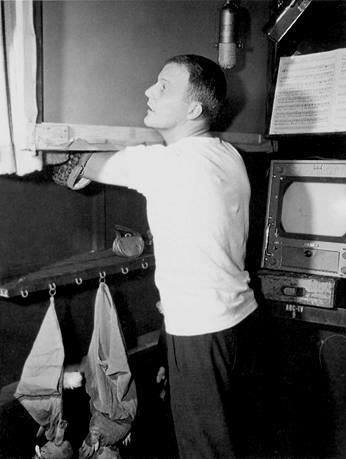
Before all the live shots below were made on a Sunday night in December of 1958, there was a rehearsal. Here, from earlier in the day, is Ed checking the script of his live GE spot against the script on a paper roll teleprompter mounted on a TK30.
Photo courtesy Life Magazine.

Above is ventriloquist Rickey Layne live on The Ed Sullivan Show. Interestingly, one of CBS’s new TK 11/31s is being used as a prop. Too bad it has a homemade cardboard “helper” on the viewfinder hood. In my humble opinion, the best viewfinder hood style ever developed came on the TK60s, 42s and 44s; it was nice and deep, but the bottom was open and made it easy to see the viewfinder…but, I digress. Notice a TK30 in the foreground for stage level shots.

Look closely and you can count six cameras in this picture. The picture just below helps confirm models. There are two TK30s and four TK11/31s on the stage Studio 50. Two TK11/31s are in the upper right, and in the group of three shooting Ed, there’s an 11/31 on the crane, an 11/31 on the camera ramp and a TK30 on the audience floor just below the monitor. There is a TK30 stage right as well, as can be seen below. This facility has had an incredible history and if you want to know all about it, just keep reading this page…it’s all below.

This great shot from the back of the theatre shows a couple of the new TK11/31s together. One is on a Houston Fearless crane and one is on a pedestal, with one of the TK30s in the wings and one on the floor for a stage level shot (just under the crane cameraman’s seat). There are two more TK11/31s on stage left, ready for live spots, as you can see area for commercials on the far left. One of those cameras on stage left is probably only used for shooting title cards.

Here is a great shot from the control room.

The pictures above and this one from the balcony give us a really great view of how the stage was laid out, and this shows how the balcony audience got to see the show. The round black object in the right foreground is the head of an RCA front screen video projection unit. In the right hand corner, just above the balcony’s rim, you can see a few members of the Ray Bloch Orchestra. On that same side, under the balcony and at the end of the orchestra section, is the audio booth where Art Shine made every singer and band shine for the entire 23-year run of The Ed Sullivan Show. Art also worked the Jackie Gleason program and the Dorsey Brothers’ Stage Show that originated here on Saturday nights.
Below is a history of the show and below that, a history of this still vibrant television landmark. Both are from the official Ed Sullivan web site. It is excellent and brimming with details of every aspect of the show. You can go there by clicking here.
HISTORY OF THE ED SULLIVAN SHOW
The Ed Sullivan Show aired from 1948 until 1971 and changed the landscape of American television. Sullivan’s stage was home to iconic performances by groundbreaking artists from rock ‘n’ roll, comedy, novelty, pop music, politics, sports, opera and more.
There were historic rock ‘n’ roll performances by The Beatles, Elvis Presley, Rolling Stones and The Doors; sensational Motown acts by The Jackson 5, Supremes and Temptations; hilarious stand-up comedy acts by Richard Pryor, Rodney Dangerfield, George Carlin and Carol Burnett; unforgettable Broadway performances by the stars of musicals like My Fair Lady and West Side Story. This list of who stepped on The Ed Sullivan Show stage goes on and on.
You might be wondering – how did The Ed Sullivan Show become the home to the top talent and historical performances of its era?
Often, talk show hosts are charming and competent on camera, yet maybe not the most business-savvy off-screen. Ed Sullivan was just the opposite-pasty in the bright lights, shifty in his stance, and notorious for bungling introductions and monologues.
Ironically, that high discomfort factor helped develop the cult of Ed. There was just something novel about an awkward host, and like a fender bender on the side of the highway, people just couldn’t avert their gaze.
Off camera, Sullivan was a brilliant tracker and arranger of talent. A variety show always has variety, but nothing was as eclectic as the mish-mash that Sullivan put together, from puppet shows to opera, the show had it all.
There were countless acts and performers who made their debuts-or their most famous TV outings-on his show. Ed Sullivan had his finger right on the pulse of what was hot and intriguing in the way of talent, even if he himself didn’t have a discernable pulse onstage. Ed knew how to book ’em better than anyone.
In 1948, CBS hired Sullivan to host its first variety show endeavor, a new format that combined vaudeville with television and was nicknamed “vaudeo.” The show was called The Toast of the Town.
For his inaugural program, Sullivan assembled Dean Martin and Jerry Lewis, Rodgers and Hammerstein, a pianist, a ballerina, a troupe of crooning firemen and a boxing referee whose next gig was the Joe Louis-Jersey Joe Wolcott match. If you wanted to see the phrase “something for everyone” incarnate, there it was.
The critics were rough on Sullivan-they lambasted him for his wooden hosting style and the scattershot tone of his guest menageries. But the show did well anyway.
In 1955, its name changed to The Ed Sullivan Show, and the following year, it broke all of TV’s single night ratings counts when a young Elvis Presley swiveled that famous pelvis on Sullivan’s stage.
June Taylor provided her six dancing “Toastettes,” Ray Bloch led his orchestra, and Sullivan was a Sunday night institution soon enough. Producer Marlo Lewis decided during rehearsals how long each act would last, what order the acts would appear in, and what, out of each performer’s cache of material, should be performed.
A sampling of the people who made their American TV debuts on Sullivan’s show includes: Bob Hope, Lena Horne, Martin and Lewis, Dinah Shore, Albert Schweitzer, Irving Berlin, Fred Astaire and Jane Powell, Eddie Fisher, and most famously, The Beatles.
Most Americans got their first exposure to The Beatles from the historic Ed Sullivan Show broadcast on February 9, 1964. That episode remains one of the most highly watched single shows in TV history. Following which, the “Beatlemania” phenomenon commenced, and the floodgates for other British bands coming to America were opened.
Since hip, cutting-edge musical acts were clearly treating him right, Sullivan responded by booking The Rolling Stones, The Doors, Janis Joplin, Marvin Gaye and Bob Dylan, though Dylan jumped ship when the network wouldn’t let him sing “Talkin’ John Birch Society Blues,” a song about an over-zealous Communist seeker. Not that this was Sullivan’s only problem with emerging rockers: The Stones were banned (temporarily, it turned out) after their rowdy first appearance, and the show’s director asked The Doors to leave out the line “girl we couldn’t get much higher” from “Light My Fire” (they agreed, sang it anyway, and likewise got banned).
Sullivan’s celebrity guests sat in the audience, not backstage in a fancily-catered green room, and sometimes when the acts were introduced, they came right from the audience to the stage. Once in a while, with no prior planning, he’d invite them back up for additional performance.
His interplay with mechanical Italian mouse Topo Gigio, and Senor Wences and his talking box (“S-all right? S-all right!”) showed a soft side on camera, but once again, since the man was a dichotomy, don’t ever think he was all softie.
The Ed Sullivan Show was the quintessential variety show. Whether it was Broadway for the parents, rock ‘n’ roll for the teenagers or Topo Gigio for the kids, the show had something for everyone. From 1948 to 1971, The Ed Sullivan Show was special in that it brought people and families together every Sunday evening. The Ed Sullivan Show was the longest-running variety show in TV history, and an undisputed institution. Towards the end of that long run, with the country divided by Vietnam and shifting value systems, Sullivan’s catchall format didn’t cross the demographic lines like it used to. Time slot rivals The Walt Disney Show and The F.B.I. were gaining momentum, and CBS, eager for youth-oriented programming and fearful that Sullivan was a vestige of older generations, canceled the show.
No matter. Guts and diversity like that, which goes for the show and the man, tend to stick around in a person’s (and a country’s) consciousness.
The Studio 50/Ed Sullivan Theater history and Time Line
The Ed Sullivan Theater is located at 1697-1699 Broadway between West 53rd and West 54th, in Manhattan, New York. The theater is a 13-story brick building that was designed by architect Herbert Krapp and built by Arthur Hammerstein. Arthur Hammerstein named the theater in honor of his father, Oscar Hammerstein.
Hammerstein’s Theater opened its doors on November 30, 1927 with a three-hour musical play called “The Golden Dawn.” One of the stars of the show that evening was Archie Leach, who later became better known as the famous actor Cary Grant.
In 1931, Arthur Hammerstein, who was facing financial troubles, lost ownership of the building. Over the next five years the theater underwent numerous name changes until in 1935, when CBS secured a long-term contract on the building and began using the theater for radio broadcasts. In 1950, with the growing popularity of a new medium, CBS converted the theater into a television studio named CBS-TV Studio 50.
Ed Sullivan, who had been hosting his variety show “Toast of the Town” out of CBS’s Maxine Elliott Theater (also known as CBS Studio 51), moved into Studio 50 in 1953. The studio went on to become the home of The Ed Sullivan Show for the rest of the variety show’s 23-year run.
On December 10, 1967, to mark The Ed Sullivan Show‘s 20th year, the studio was named The Ed Sullivan Theater in honor of the great host. Like its namesake, The Ed Sullivan Theater has withstood the test of time and to this day remains the studio’s name.

A Timeline of The Ed Sullivan Theater

September 2, 1999…A Hard Day At NBC; “Studio 1H” Closes
Inside 30 Rockefeller Plaza, Hurley’s Bar was lovingly called “Studio 1H”. As you can see in the photo below, Hurley’s (which opened in 1892) was just a half a block away from NBC’s studio entrance, making it the nearest watering hole for everyone from stars to stage hands. It became the favorite for radio, television, newspaper and sports celebrities as well as tourists and midtown workers.
Liz Trotta noted “You never knew who would be standing next to your lifting elbow at Hurley’s. Jason Robards, Jonathan Winters, jazz musicians from the local clubs and the ‘Tonight’ show, starlets, football players, the lot.”
Johnny Carson made the Hurley name nationally familiar while he did his show live from Rockefeller Center. It was the bar in all of his Ed McMahon drinking jokes. David Letterman did several on-air visits to the bar.
Hurley’s was known as a place where status was left at the door. Mayor John Lindsay stopped in once, only to be hissed by the patrons. When Henry Kissinger and two bodyguards got noisy, they were ejected by the bartender “for rowdy behavior.”
The bar had been here since 1892 and had always done well, even during prohibition when a florist shop was used to disguise the bar and it’s new back door, but all that history ended September 2, 1999. That night owner Adrien Barbey served the last glass of beer in the bar that had stood at Sixth Avenue and 49th Street for 102 years.
Today, the old Hurely’s location is a bakery (in the aqua circle), and NBC’s 49th Street entrance is a half a block down (in the red circle). The 11 story NBC studio building is just behind Hurley’s. -Bobby Ellerbee
September 2, 1983…The Tom Brokaw Era Begins At NBC
In 1983, September 2 was a Friday. That was the day it was announced on the “NBC Nightly News” that beginning Monday, Tom Brokaw would take over as the sole anchor.
On April 5, 1982, Brokaw began co-anchoring NBC Nightly News from New York, with Roger Mudd in Washington. After a year, NBC News president Reuven Frank concluded that the dual-anchor program was not working and selected Brokaw to take over.
Along with Peter Jennings at ABC and Dan Rather at CBS, Brokaw helped usher in the era of the TV news anchor as a lavishly compensated, globe-trotting star in the 1980s. The magnitude of a news event could be measured by whether Brokaw and his counterparts on the other two networks showed up on the scene.
Brokaw’s retirement in December 2004, followed by Rather’s ouster from the CBS Evening News in March 2005, and Jennings’ death in August 2005, brought that era to a close.
In the clip, Tom talks about his early days in Omaha at KMTV and WSB in Atlanta. I remember him from Atlanta, along with fellow reporter Judy Woodruff who was there at the same time. – Bobby Ellerbee
https://www.youtube.com/watch?v=xfR6TXbnNTA
As a new college graduate, journalist Tom Brokaw was newly married to a doctor’s daughter and desperate for a job. Watch as Tom reflects on starting out maki…
September 2, 1963…A Red Letter Days At CBS News
On a Monday evening 53 years ago today, the first half hour network news show debuted. From the CBS newsroom studio in the Graybar Building, adjacent to the Grand Central studios, Walter Cronkite reported for twice as long as anyone ever had on an evening news show.
The next Monday, September 7, NBC’s “Huntley Brinkley Report” did the same. Compared to today, their 22 minutes were full of the news they thought you needed to know, as opposed to today’s news fare which is “news” they think you would like to see.
The real news is in the first two blocks…the rest of it, you can find here on Facebook. -Bobby Ellerbee
“Evening News” marks golden anniversary of 30-minute broadcast
On Sept. 2, 1963, the “CBS Evening News” revolutionized journalism when it doubled in length — just in time for some of the most momentous stories in U.S. history
September 1, 1952…Art Linkletter Comes To TV + Surprise Video
“Art Linkletter’s House Party” premiered on CBS television on September 1, 1952, and had become television’s longest-running daytime variety show by the time it completed its 15 year run on September 5, 1969. But there was more to come!
The “Kids Say The Darnedest Things” segment of House Party was the most famous of all, and Linkletter interviewed an estimated 23,000 children. The popularity of the segment led to a TV series with the same title hosted by Bill Cosby on CBS from January 1998 to June 2000.
The video below has a GREAT surprise ending, so please take a look at Bill Cosby’s tribute to Art. Enjoy and share! -Bobby Ellerbee
https://www.youtube.com/watch?v=EBMOhM31EyM&feature=related
Video with Bill Crosby of a show
Television’s First Live Animation Project…January 1940, NBC Studio 3H
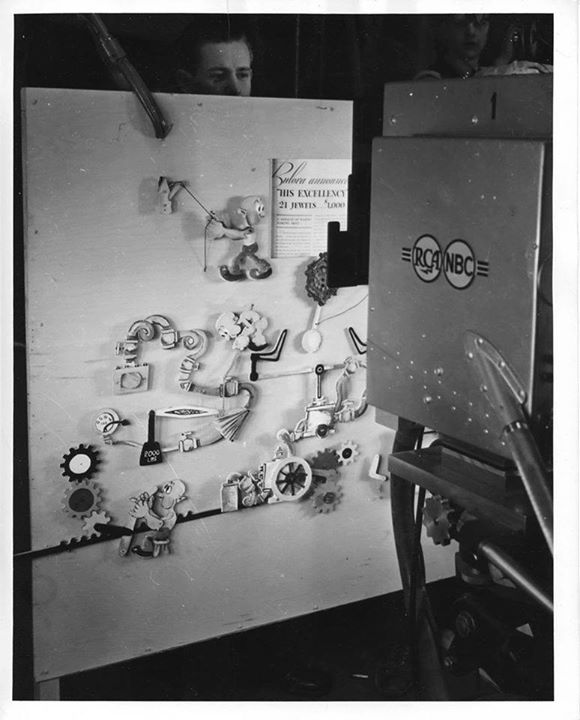
Although commercial television was sill about 18 months away, NBC was preparing for it. In this sequence of photos, we see a “Rube Goldberg” style presentation board on which all the parts move, to tell the story of Bulova’s new 23 jewel-movement watch.
At the time Bulova was the nation’s top advertiser over all media, including print and radio, and at their annual convention in New York in January of 1940, their ad agency was planning for the future. On the second day of the convention, the agency arranged a closed circuit television program to demonstrate the power of television ads. It originated in NBC Studio 3H and was viewed by Bulova executives several floors above the studio.
NBC knew television’s ability do demonstrate and showcase products would be revolutionary to advertisers, so to help them allocate budgets and think about their creative messages, the network set out to work with national accounts to showcase TV’s abilities. This must have worked, because the day NBC’s W2XBS became WNBT, the first commercial was for Bulova.
This was one of the first of the NBC closed circuit presentations, but others followed soon after, including Ford, American Tobacco, Colgate, Proctor & Gamble, Coca Cola and more. -Bobby Ellerbee
August 30, 1957…Ten Years Of “Kukla, Fran & Ollie” Come To An End
At the link is KFO creator Burr Tillstrom’s timeline of the shows milestones, starting with their October 13, 1947 debut as “The Junior Jamboree” on WBKB in Chicago, to their last show, which was also on WBKB.
http://www.richsamuels.com/nbcmm/kuklapolitans/kuklapolitan_chronology.html
In the five years that the show ran on NBC nationally, fan mail averaged 5,000 letters a day, and the show’s ratings rivaled Milton Burle’s and even Ed Sullivan’s at CBS. Be sure and click through the attached images…there is a surprise on one of them.
Thanks for the memories, Burr, Fran, Kukla and Ollie! By the way, KFO are also a big part of a post here from earlier today on an NBC color milestone, so visit the page by clicking on the blue EOAG text at the top left of this post. -Bobby Ellerbee
August 30, 1953…A Milestone For RCA Compatible Color Television
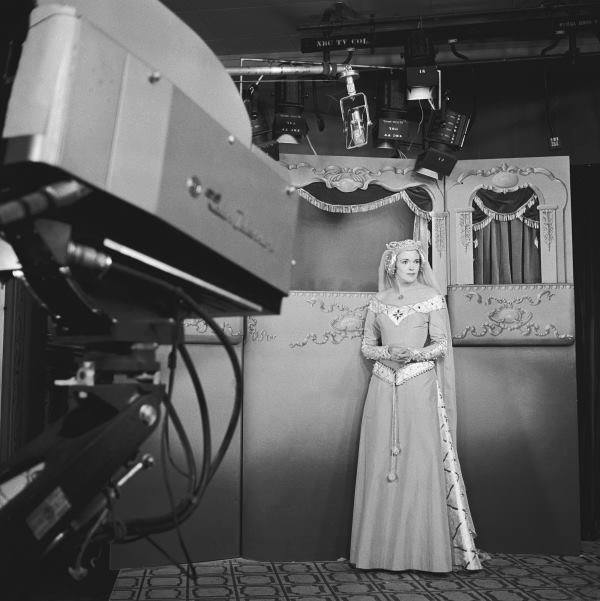
On this day in 1953, the first publicly announced experimental broadcast in compatible color (all the other tests had been unannounced), of a network program, was presented by NBC. It was the production of an original play called “St. George And The Dragon” on the “Kukla, Fran, and Ollie Show”.
Based on the 11th century tale, it was written by KFO founder Burr Tillstrom, with The Boston Pops Orchestra providing the pre-recorded musical score. The show originated at the The Colonial Theater in New York. A few weeks later, KFO went to Boston to perform this with the Pops before a live audience.
With so few color sets available, you may wonder why they would broadcast this in color, but the answer is in the “compatible” part of the common name for the RCA Dot Sequential System. RCA’s big advantage over the CBS Field Sequential System was that RCA’s promise, was to offer a color signal that would be compatible with the many black and white sets that had already been sold. CBS’s would require a new set, or a special conversion kit to existing sets.
The “TV Guide” story from May 15, 1953 offers a fuller description of that April 15th performance, and comparative color and black and white monitor shots.
The Colonial Theater…A Refresher Course
NBC/RCA leased the building in October 1951 in anticipation of moving their color tests here. In early ’52, RCA exhibited a color TV receiver-projector here which provided color pictures on a 9 x 12 foot theater screen.
In May of ’52, RCA/NBC began the process of making the theater into the first all color television studio. By October of ’52, it was ready, and 4 RCA TK40 prototype cameras, plus new color film chains were in use. Daily closed circuit test shows then moved from the experimental color Studio 3H at 30 Rock to The Colonial.
The second public NBC colorcast came from this studio on October 31, 1953 and was a one hour presentation the opera “Carmen”. The third colorcast was the November 22, 1953 “Colgate Comedy Hour”, with Donald O’Connor (the first commercial colorcast).
There is more on Kukla, Fran & Ollie coming today. Enjoy and share! -Bobby Ellerbee
August 30, 1993…”Late Show With David Letterman” Debuts On CBS
Here is the entire first show from The Ed Sullivan Theater with some great surprises along the way. I love the edited clips from Sullivan introducing the show, and at around 12:30, Dave goes to the spirit world to talk with Ed, and there is a big surprise there.
At around 5:40, NBC’s Tom Brokaw drops in for a funny bit and around the 7:30 mark, Dave talks about the theater renovation and shows a couple of minutes of that process.
Dave’s first guest is the same first guest he had on the original NBC debut show, Bill Murray. Billy Joel is the musical guest. Enjoy and share! – Bobby Ellerbee
https://www.youtube.com/watch?v=N_H3sKdH_S8
Late Show With David Letterman: Dave’s First Show At CBS, August 30, 1993. Guests: Bill Murray & Billy Joel. Originally recorded on VHS from CBS affiliate KO…
August 29, 1940…CBS Color System First Demonstrated
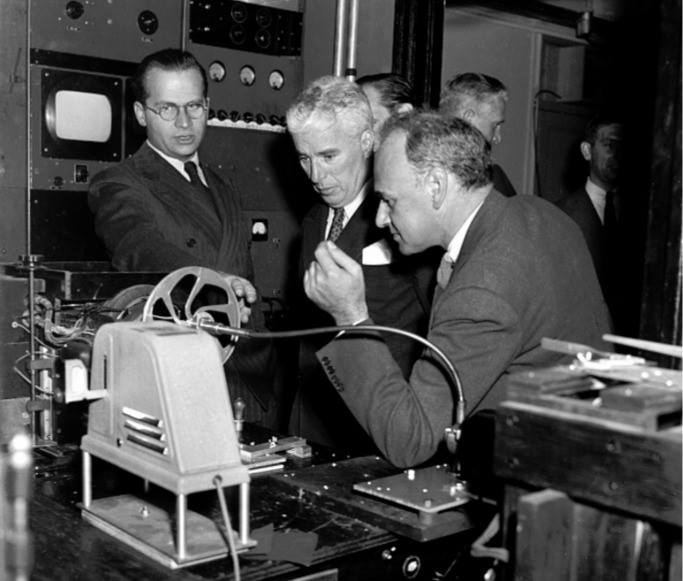
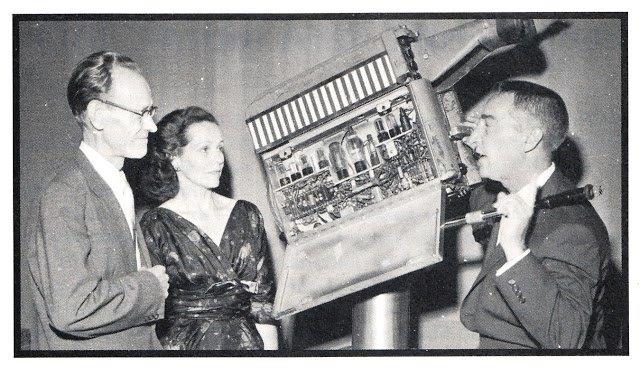
In the rare photos below, we see the first incarnation of the CBS Field Sequential color system, with none other than Charlie Chaplin (silver hair) taking a look. Creator, Peter Goldmark (with glasses) and CBS Program Director, Gilbert Seldes (elbow on the deck) are explaining the system to their famous visitor.
Goldmark was the technical head of the CBS Television effort that started in 1939. On a belated honeymoon to Canada in March 1940, Goldmark and his bride decided to see the Technicolor movie, “Gone with the Wind”.
At the time, color movies were few and far in between and Goldmark was awed by the beauty and richness of Technicolor. Immediately, approaches to achieving television in color started spinning in his brain. Returning to New York he approached his supervisors to support experiments in developing a system.
By June 1940 he was able to show still pictures from a color slide on a 5-inch color monitor. In this photo, we see the slide projector lower left, and the 5-inch monitor with the external spinning color wheel in front of it. The slide projector is sending an image into a Farnsworth Image Dissector tube, which you can see attached to the monitor’s left side. The picture transmitted that day was a 343 line image broadcast over W2XAB on a 25 Watt transmitter. The broadcast came from the experimental color studio at CBS HQ, at 485 Madison Avenue. The first demonstration to the press came on September 4, 1940.
It has been quoted many times that the mechanical Field Sequential color system developed by Goldmark rivaled the quality of the Technicolor Process for films. Pictures published in Life Magazine in 1941 and 1950 comparing Kodachrome photographs of the original subject and photographs of a CBS color receiver show excellent color fidelity of even this earliest color television system. Enjoy and share. -Bobby Ellerbee
August 28, 1922…The First Radio Commercial Airs On WEAF
Did you know that AT&T invented radio advertising? It’s true, and their first and only involvement with broadcast radio, as a station owner, left a lasting legacy.
It’s only fitting that the story be told here by radio, and this five minute NPR piece tells it in detail using what radio is most famous for…theater of the mind. To hear it, click the large blue play button at the top left on the page that is linked below. Enjoy and share! – Bobby Ellerbee
http://www.npr.org/2012/08/29/160265990/first-radio-commercial-hit-airwaves-90-years-ago
Great Behind The Scenes Footage…”Let’s Make A Deal” 1977
At the link is a 6 minute clip from the 1977 documentary “Deal” that gives us a good look at the show in ABC’s Studio 54 at the Prospect lot in Los Angeles.
I’ve added this photo, so you can more easily identify 40 year camera vet Jan Lowery, in this video. The announcer is Jay Stewart, but aside from Monty Hall, Jan and Jay, I can’t identify the other people…can you fill in the blanks? The cameras are Norelco PC60s, and this clip come from our friend James Shea. Thanks James! Enjoy and share! -Bobby Ellerbee
August 27, 1968…48 Years Ago Today
Dan Rather was manhandled at the Democratic National Convention in Chicago. For us Boomers, this is classic footage of a well remembered event. -Bobby Ellerbee
https://www.youtube.com/watch?v=wItUjFU1i4M
For more presidential election videos go to electionwall.org
The “TONIGHT” Show’s Oldest Surviving Color Video…Sept 1, 1964
Above is a very rare piece of tape, that survived only because Stan Zabka, a former AD on the show, and a musical guest on this occasion, had a pal roll tape on his segment. A few years ago, he had our friends at DC Video in LA transfer the tape to a digital format.
This was in NBC’s Studio 6B in New York, just three years after Johnny and Ed took over. The cameras were the great RCA TK41s, which for that day and age, made very good color pictures.
As I write this, I am reminded of a story told to me by NBC’s John Pinto, who came to “Saturday Night Live” the year it started, and is now Camera 1, on the crane. John started in the summer, just before the show started, and to give him something to do for a few weeks, NBC sent him to New Jersey, where he spent a whole week bulk erasing “Tonight” show tapes. John said “his heart hurt” every time he hit the button. So glad the Armed Forces Radio and Television Service had archived many years of the show, or all of it would be gone! Enjoy and share! -Bobby Ellerbee
August 26, 1939…First MLB Game On TV + Other Sports TV Firsts
The first ever Major League Baseball game was televised on August 26, 1939 on experimental station W2XBS, which is now WNBC. With Red Barber announcing, the Brooklyn Dodgers and the Cincinnati Reds played a doubleheader at Ebbets Field. The Reds won the first, 5–2 while the Dodgers won the second, 6–1.
Barber called the first game on NBC Radio and moved to TV for the second game which he did without the benefit of a monitor, and with only two cameras capturing the game. One camera was close to Barber who had to sit in the stands near home base. The other was on the first base side up high. During the game, Red’s headset also went out so he was winging more than just the play by play action.
At the time, the New York World’s Fair was in full swing, as was RCA and NBC’s first big television push. Including the sets RCA had installed at the fair and around town, there were only about 400 receivers in the NYC area.
The first-ever televised baseball game had actually come four months earlier on May 17, 1939. That was a college game between Princeton and Columbia; Princeton beat Columbia 2–1 at Columbia’s Baker Field. The contest was aired on W2XBS and was announced by Bill Stern. Stern almost did not make the opening pitch of that game as he rushed home to get his hair piece.
On May 20, 1939, the first television picture was sent over telephone lines as NBC sent television images from Madison Square Gardens, to 30 Rockefeller Plaza via AT&T lines. Over the course of the six day bicycle race event, three broadcasts were done, with each being a little better than the last, due to some tweaking along the way by both AT&T and NBC.
On June 1, NBC would go on to bring boxing to television for the first time with the Lou Nova-Max Baer fight at Yankee Stadium.
September 30, NBC broadcast the first college football game, followed on October 22, by the first pro football game. Hockey made it television debut on NBC February 25, 1940, and basketball came to TV February 28th, with track and field events debuting on March 2, from MSG.
Remember, all this activity started in April of 1939 with the opening of The World’s Fair, when David Sarnoff told the nation that RCA had “added radio sight to sound”, and officially kicked off the age of television. -Bobby Ellerbee

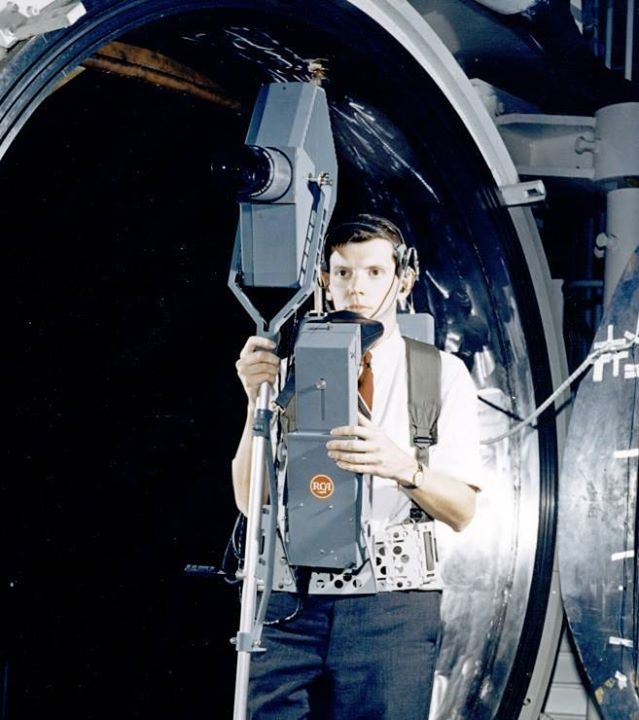
The day before the riotous Democratic National Convention opened in Chicago, NBC broadcast color images from the convention floor, using these new cameras.
Although not a product of the RCA Broadcast Electronics Division, this portable color mini camera, as it turns out, was developed by RCA’s Astro Electronics Division.
The Astro Electronics Division of RCA was formed in 1958 and was responsible for building SCORE…the world’s first communications satellite, five years before Telstar. Project SCORE (Signal Communications by Orbiting Relay Equipment) was launched on December 18, 1958, and placed the United States at an even technological par with the Soviet Union as a highly functional response to the Sputnik satellites.
This camera was developed in 1967 for use on the moon missions. It used three one inch Vidicon tubes, the same electrostatic types used in the RCA TK-27 film chain cameras to reduce power consumption. – Bobby Ellerbee
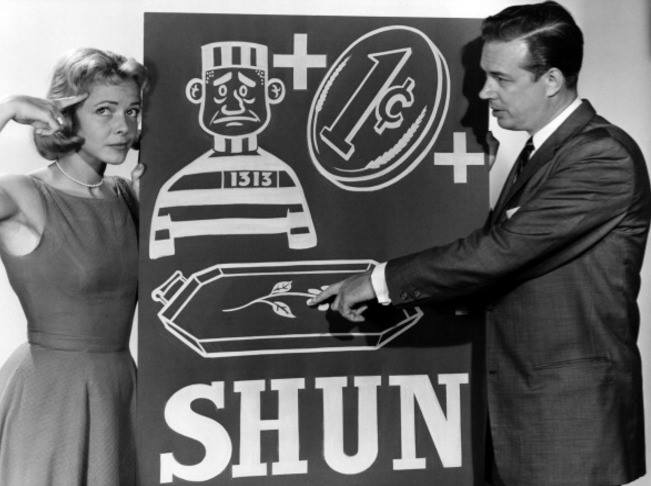
August 25, 1958…”Concentration” Debuts On NBC
The original network daytime series, “Concentration”, appeared on NBC for 14 years, 7 months. With 3,796 telecasts, this was NBC’s longest running game show. Hugh Downs was the original host and served from ’58 till ’69. During this time, Hugh was also Jack Paar’s side kick on “Tonight” but in ’63, Downs became the new anchor on “Today”. In ’85, The Guinness Book Of Records recognized Hugh Downs for holding the record for the greatest number of hours on network television.
“Concentration” had a lot of homes, but the daytime version was always inside 30 Rock. From ’58 till ’65 Studio 3A was home. 1965 till 1967, it was 3B, and 8G from ’67 till ’73. This was the last show on the NBC roster to go color and that happened November 7, 1966.
There were two short lived night time versions…one was hosted by Jack Barry in 1958 for four weeks from Studio A at NBC’s 67th Street location, which was where the “Home” show was done. The second primetime version was April to September of ’61 from the Ziegfeld Theater on Monday nights with Bob Clayton as host.
When Downs left in ’69, Bob Clayton took over, but three months later Ed Mcmahon hosted for six months during Clayton’s leave of absence for an illness.
The show ended in ’73, but six months later, it was back on NBC as a Goodson – Todman syndicated production from the west coast with Jack Narz as host, and ran till ’78. Art James was the original announcer. By the way, the girl in the photo is PA Patty Prebble who later married Jack Barry. -Bobby Ellerbee
“The Tonight Show” Crew In Action…A Behind The Scenes Look
In the embedded video below, you’ll see what the audience in Studio 6B saw, when Jimmy Fallon and Jon Hamm did a fast paced blackout routine live. At this link, you can see how it looked to us at home, which is quite different. https://youtu.be/TcKT0vbMhkU
Our friends on camera include Kurt Decker on #1 (far left), Pat Casey #2, Mike Cimino #3 (baseball cap), Bruce Dines #4, Rich Carter #5 (the Merlin mini jib) and Edward Pladdys who runs the 4 remote robo cameras, one of which shot this scene. One of the best camera crews in the business! Thanks to Bob Sewvello for these fun links! Enjoy and share! -Bobby Ellerbee
https://www.youtube.com/watch?v=xwXQRhZsIIg&feature=youtu.be
A peek at what happens behind the scenes during a taping of Jimmy and Jon Hamm’s ’80s TV show. Subscribe NOW to The Tonight Show Starring Jimmy Fallon: http:…
Remember This? I Had One, Who Else Had One?
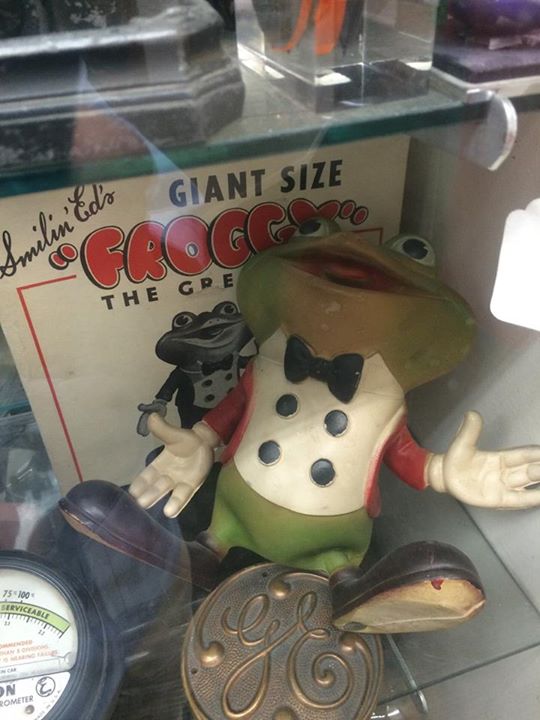
“Plunk your magic twanger, Froggy”! Sound familiar? Ever seen it said in COLOR? No? Then click this link for a surprise, and read on for more surprises. https://www.youtube.com/watch?v=L9pPFCjRPvM
I watched “Andy’s Gang” on NBC, which ran from August 20, 1955, to December 31, 1960. It was hosted by actor Andy Devine and was the successor to the radio and television programs “Smilin’ Ed McConnell And His Buster Brown Gang”, later shortened to “Smilin’ Ed’s Gang”. Devine took over the television program when Ed McConnell died suddenly from a heart attack in 1954. McConnell took it to TV in 1951. Devine inherited a number of the characters on the show and the sponsor, Buster Brown shoes.
When Devine took over, some episodes of the show began to be shot in color at The Nassour Studios in Los Angeles, which later became Metromedia Square. This was the first television job for a lady that would become one of the top cartoon voices in the business…June Foray (voice of Rocky on “Rocky & Bullwinkle”, among many others).
Thanks to Barry Mitchell for sending this picture of Froggy, which is in the window at Antiques & Collectibles at 40 West 25th Street, New York, in case you need another. Froggy squeaks and sticks his tongue out when you squeeze him…much like Arch Presby, the show’s announcer and voice of Froggy. Enjoy and share! -Bobby Ellerbee