Posts in Category: TV History

Election Day In Television Land…Special Coverage Sets

Election Day In Television Land…Special Coverage Sets

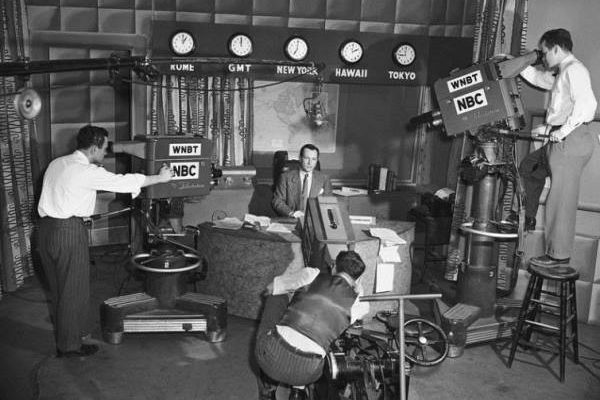
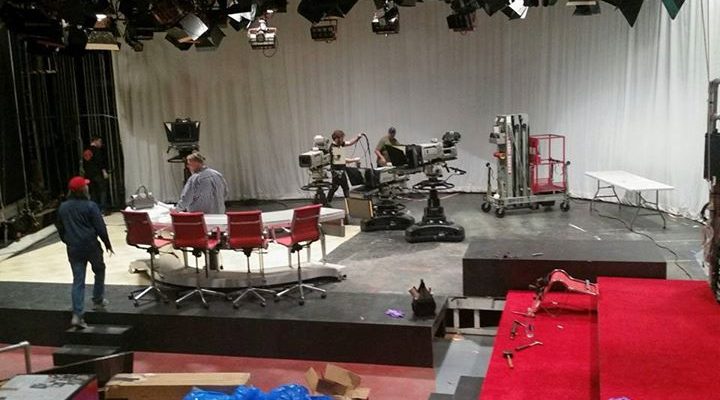
In these photos from friends prepping now in New York, here is a look at some of the sets that will be used today, starting with MSNBC’s “Morning Joe” set being built in Studio 8H for a special live audience show tomorrow. There is more on each photo, so click through. AND, in the comments section below, there is a video from Ethan Harp at The Javits Center showing the layout of the facility and stage for the Hillary Clinton event tonight. Thanks to all our friends for the pix, and for all your long hours today! Oh, and please share your electoion day pix below! -Bobby Ellerbee


Source

November 7, 1948…”Studio One” Debuts On CBS

November 7, 1948…”Studio One” Debuts On CBS

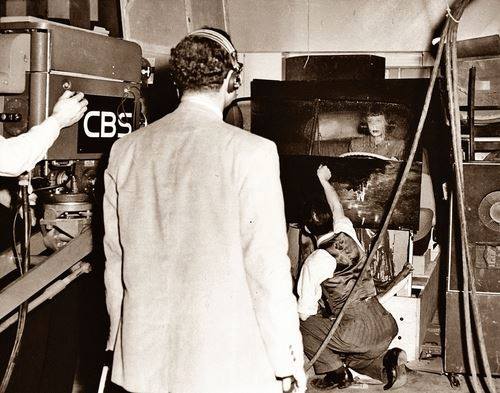
The first episode, brought with it another first…one of TV’s first live special effects shots. In the photo, we see star, Margaret Sullivan, “driving in the rain” on the first telecast. That first presentation was titled “The Storm” and originated from Studios 41 and 42 at Grand Central. It was produced by Worthington Minor, and directed by Yul Brynner. In the other photo, we see Sullivan with co-star Dean Jagger on the set.

“Studio One” was one of the most significant U.S. anthology drama series during the 1950s. Like other anthology series of the time… “Robert Montgomery Presents”, “Goodyear Television Playhouse”, “Philco Theater”, “Kraft Television Theater”, and others, the format was organised around the weekly presentation of a one hour, live, television play. Several hours of live drama were provided by the networks per week, each play different: such risk and diversity is hard to come by today.

Offering a wide range of dramas, “Studio One” received Emmy nominations every year from 1950 to 1958, and staged many notable and memorable teleplays among its 467 episodes from 1948 till 1958.

Some created such an impact they were adapted into theatrical films. William Templeton’s 1953 adaptation of George Orwell’s novel “Nineteen Eighty-Four”, starring Eddie Albert as Winston Smith, led to the 1956 feature film version with Edmond O’Brien in the principal role.

Reginald Rose’s drama “Twelve Angry Men”, about the conflicts of jurors deciding a murder case, originated on Studio One on September 20,1954 and the 1957 motion picture remake with Henry Fonda was nominated for three Academy Awards. -Bobby Ellerbee


Source

November 7, 1933…RCA/NBC Dedicates 30 Rockefeller Plaza

November 7, 1933…RCA/NBC Dedicates 30 Rockefeller Plaza Bldg.

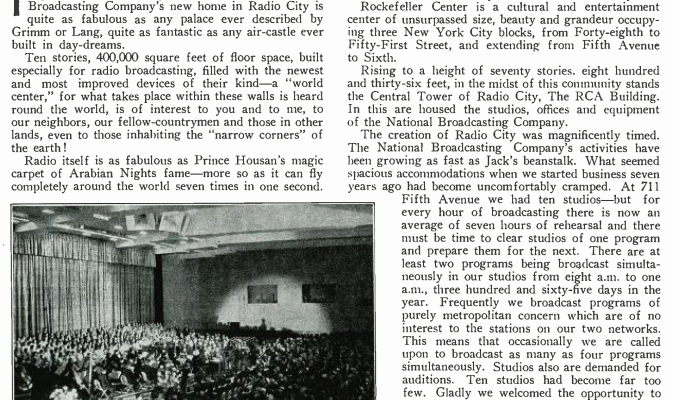
On November 7, 1933 NBC held dedication ceremonies and special programs at its new 30 Rockefeller Plaza head quarters at Radio City. Thus began a five day, round the clock, parade of movers from their 711 Fifth Avenue home to their new one at Radio City.

There were 27 new state of the art studios in service, with more yet to come which would occupy two entire floors (6&7), which were left unfinished till November of 1941, when radio studios 6A and 6B were completed.

What we know as Studio 8H was referred to as the “Auditorium Studio” and 8G was called “The Radio Guild Studio”. The first broadcast was at 8PM Saturday night, Nov 11. The inaugurating sound was that of the national anthem performed by the NBC Symphony Orchestra conducted by Frank Black from Studio 8H with 1,200 special guest.

This is the story from the December 1933 issue of “Radio Engineering Magazine”. Happy Birthday 30 Rock! -Bobby Ellerbee


Source

November 7, 1954…”Face The Nation” Debuts On CBS


November 7, 1954…”Face The Nation” Debuts On CBS

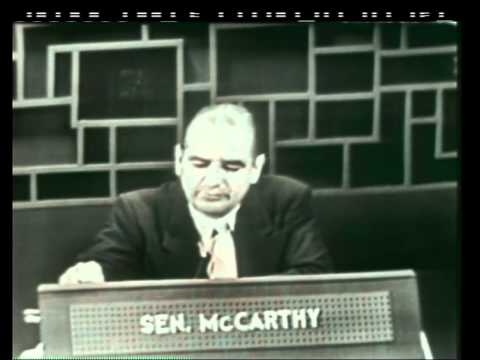
Wait till you see this video of the first ever presentation of “Face The Nation”! The first thing you see is a closeup of a camera’s lens turret, in a widening shot, that would be the standard open for several years. The “guest” camera is behind the set wall, shooting over the shoulders of the panel.

On that Sunday, November 7, 1954. That first ‘Face The Nation’ guest was Sen. Joe McCarthy. In the early days, the show was broadcast on Sunday afternoons at 2:30 eastern. The program’s original host was Tedd Koop, then the Washington D.C. bureau chief for CBS News and originated from the network owned WTOP in Washington.

The show as created by the late Frank Stanton, who ran the network for over 20 years. When asked why he started it, he said simply, “Because NBC had ‘Meet the Press,’ and I thought we needed a program like that.”

We miss Bob Scheiffer, but his replacement, John Dickerson is quite good and it feels like he’s been there for years. Enjoy and share! -Bobby Ellerbee

https://www.youtube.com/watch?v=FtVJFBSMXDk

In the first Face the Nation broadcast on television, Sen. Joseph McCarthy responds to questions about his infamous hearings. (CBS NEWS)

Source

November 6, 1947…’Meet The Press’ Debuts, NBC

November 6, 1947…’Meet The Press’ Debuts, NBC

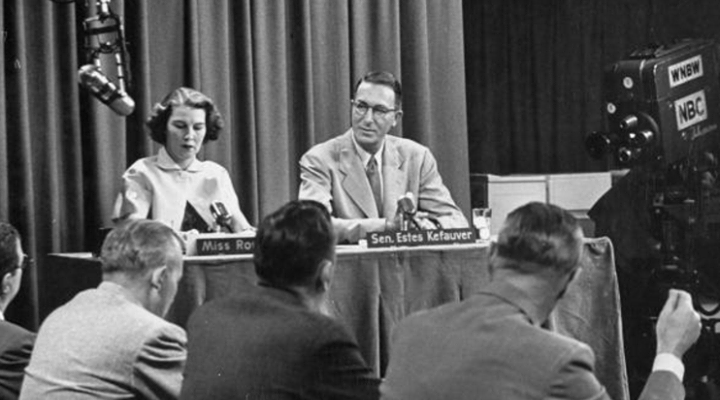
This is America’s longest running television program. Almost everyone thinks of it as a Sunday morning show, but when it started, it was a Saturday night show, and hosted by a woman.

Her name was Martha Rountree and she started as a reporter at The Tampa Tribune, but she wasn’t reporting on social occasions or homemaking. As a kind of rebel from the start, her duties included writing a sports column under the name “M. J. Rountree,” with Tribune readers none the wiser as to the sex of the journalist who was, after all, writing in a field dominated by men.

A local CBS station was impressed enough by her work that they gave her a chance to write for radio, at which she excelled. From there, she headed north to New York, where she wrote ad copy, but Rountree was not comfortable playing so minor a part of an industry she felt held greater opportunities for her.

“I got the ideas, worked them out; other people got the credit,” she lamented. “I wanted to produce myself. To prove that she meant business, she and her sister Ann, opened a production firm called Radio House, which prepared transcribed programs and singing commercials.

1945 was Rountree’s banner year. She made her mark on radio in a big way, selling the idea for two different panel shows to the Mutual Radio Network, premiering them a day apart in October. One was ‘Leave It to the Girls’, the other was ‘Meet The Press’ which debuted first on October 5, 1945.

Although frequently credited as a co-creation of Rountree and Lawrence E. Spivak, publisher and editor of American Mercury magazine, authoritative sources adamantly state that it was Rountree who developed the premise on her own, with Spivak joining up as co producer and business partner in the enterprise after the show had already debuted.

Our friend Max Schindler, who directed the show for over 20 years, had this to say about the creator credit, “Whoever conceived it, it was Spivak who made it a success…he dedicated his life to it”.

Here is more from Max, on directing the show. https://interviews.televisionacademy.com/shows/meet-the-press?clip=15097#highlights

On November 6, 1947, while still on Mutual Radio, the show came to NBC Television. ‘Meet the Press’ was originally presented on Saturday night at 7:30 as a half hour show with a single guest and a panel of questioners. The first guest was James Farley, who served as Postmaster General, Democratic National Committee chairman and campaign manager to Franklin Delano Roosevelt under the first two terms of the New Deal Administration.

The first host was its creator, Martha Rountree, the program’s only full time female moderator to date. She stepped down on November 1, 1953 and until Ned Brooks could take over, her friend Deena Clark filled in.

Rountree was succeeded by Ned Brooks, who remained as moderator until his retirement on December 26, 1965. Although Spivak became the moderator on January 1, 1966, he did not really want the job. Max Schindler said, “Spivak didn’t want to moderate…he wanted Edwin Neuman, but NBC could not spare him, so he reluctantly took over”. He retired on November 9, 1975, on a special one-hour edition that featured, for the first time, a sitting president, Gerald Ford, as the guest.

The next week, Bill Monroe, previously a weekly panelist like Spivak took over as moderator and stayed until June 2, 1984. For the next seven and a half years, the program then went through a series of hosts as it struggled in the ratings against ABC’s ‘This Week with David Brinkley’. Roger Mudd and Marvin Kalb (as co-moderators) followed Monroe for a year, followed by Chris Wallace from 1987 to 1988. Garrick Utley hosted ‘Meet the Press’ from 1989 through December 1, 1991 at which time Tim Russert took over, and not long after that, the show went to a one hour format.

Russert’s untimely death gave David Gregory the seat, and now Chuck Todd is host.

Rountree died on August 23, 1999, in Washington, where she had made her name as one of the key figures in political reporting. Tim Russert, summed up her status in the medium by declaring, “She was a news pioneer who helped create a national treasure, Meet the Press.” Enjoy and share! -Bobby Ellerbee


Source

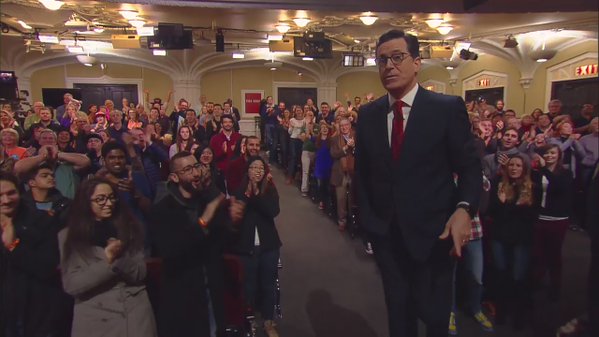
Happy Trails! Colbert’s Gentle Sendoff To John Meiklejohn……


Happy Trails! Colbert’s Gentle Sendoff To John Meiklejohn…

One of the best cameramen in the business retired last night, and Stephen gave his 11 year friend this send off. I’ve heard that as far back as 1966, they were telling JMJ stories.

This reminds me of the send off David Letterman gave to our friend, and CBS legend Dave Dorsett. Like Dave, I suspect John may be back from time to time to “fill in”. Happy Trails! -Bobby Ellerbee

https://twitter.com/colbertlateshow/status/793310612386254849

Source

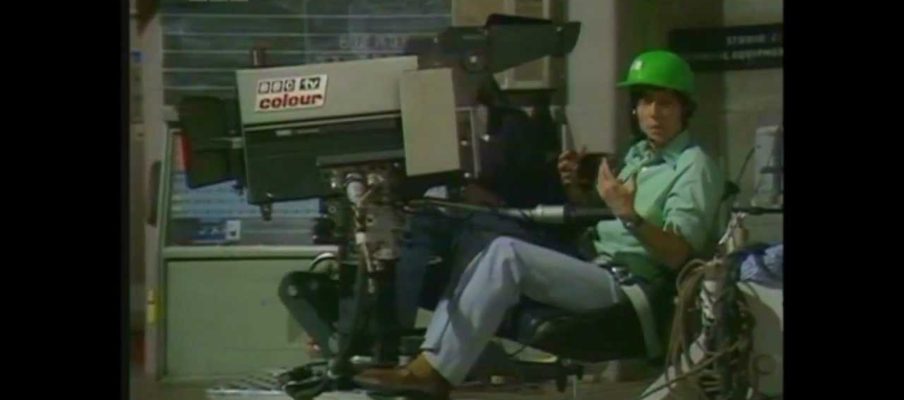
Inside The BBC’s Huge Studio 1…1974


Inside The BBC’s Huge Studio 1…1974

This is about as full a tour as you could ask for, as we are privy to every element, from the EMI 2001 cameras, to the control room and even a look at the BBC’s biggest crane in action. Thanks to Petter Olden of NRK TV in Norway for sharing this with us. -Bobby Ellerbee

https://www.youtube.com/watch?v=fJ3wYiNZJIQ

BBC

Source

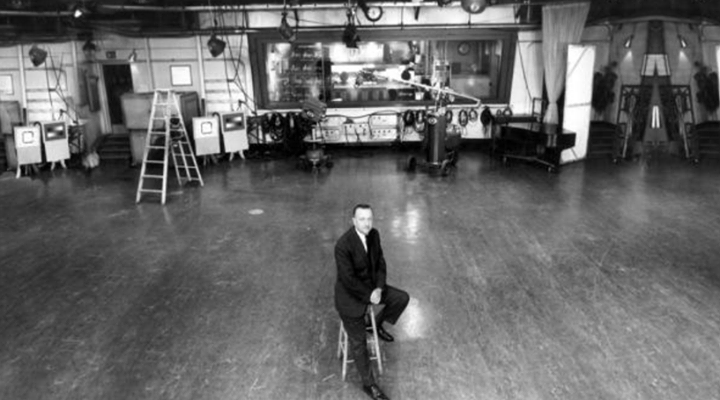
Remembering Walter Cronkite…November 4, 1916 – July 17, 2009

Today, he would have been 100 years old.

“Whatever the cost of education, the price is cheap compared with an ignorant nation”. -Walter Cronkite

This is Mr. Cronkite in Studio 42 at the CBS Grand Central studios.

Source

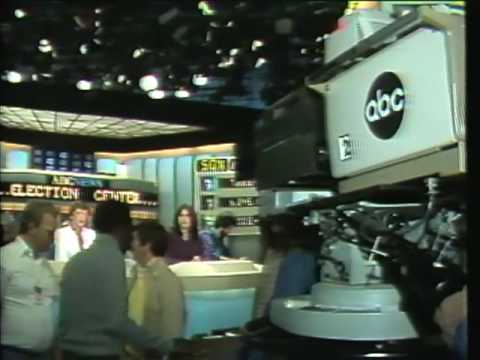
November 4, 1980…ABC Readies For Election Night, Behind The Scenes


November 4, 1980…ABC Readies For Election Night, Behind The Scenes

This WABC news clip from November 4, 1980 takes us behind the scenes at ABC’s TV 2 studio in New York as network coverage of the Carter, Reagan, Anderson presidential election nears.

As you may have read in yesterday’s Los Angeles Times article posted here, it was 40 years ago that NBC became the first to use the colorized maps in the 1976 election, and this was the first year ABC and CBS used them, but all were not on the same “color page”. It would take another 16 years for eveyone to agree on Blue for Democrats, and Red for Republicans. Voted yet? -Bobby Ellerbee

https://www.youtube.com/watch?v=smHM4Inl62I

Channel 7 Eyewitness News (WABC-TV) Political Correspondent Roger Sharp takes viewers behind the scenes of ABC’s 1980 Election Night coverage.

Source

HBO’s “Vice” News…Shout Out To Eyes Of A Generation


HBO’s “Vice” News…Shout Out To Eyes Of A Generation

On Wednesday night, this shot of this Facebook page showed up on the HBO nightly news program “Vice”, in a story on the difference between FB desktop and mobile users. This was shot over two weeks ago, since I have changed the headline photo to a color image since, but all the same, thanks to the “Vice” producers, and the man who brought the show to HBO, Bill Maher. Thanks to our friend Jeff Jaffares for sending the clip he captured on his phone. -Bobby Ellerbee


Source

Television’s 1st Prime Time Season; 1948…With My Detailed Notes


Television’s 1st Prime Time Season; 1948…With My Detailed Notes

This is just amazing…what you will see here are some of the first shows to run in the first real TV season, with all four networks in operation…NBC, CBS, ABC and Dumont. Back then, “networks” with live feeds, were basicly a handful of stations in the northeast, with outlying affiliates able to take shows via kinescope, which is how these clips survived. Oh, and the only network programming was from 7 – 10 PM.

Live network coverage was about to expand though, as an NBC VO announces at the start of this, that the midwest network links will be open and operating by Christmas, 1948.

“The Gay Nineties” show was on ABC on Wednesday nights from 8 – 8:30.

At 1:50 we see some of an early “Texaco Star Theater” with Milton Berle from NBC’s newly converted Studio 6B. This was the first show to come from 6B after it was converted from radio to television June 8, 1948. The woman with the great laugh is Milton’s mother who was at every show.

Just after that is “The Ed Wynn Show” which NBC did as a remote from The New Amsterdam, before it was converted in 1951.

At 3:32, “The Admiral Broadway Revue” was the first television show produced by Max Leibman, and starred Sid Caesar and Imogene Coca…this is the forerunner of “Your Show Of Shows”, and both were done at The International Theater at 5 Columbus Circle.

More rare footage starts at 4:44 with the intro of “The Fireball Fun For All” starring Olsen and Johnson. This ran one season, and was one of the first shows to come from CBS Studio 52. The assistant director is the legendary CBS director Ralph Levy in his second ever TV job. Levy went on to direct Jack Benny, Burns And Allen and the Lucy pilot. Levy’s first AD job was on the first show done at Studio 52, a summer show called “The 54th Street Revue” that ran eight weeks.

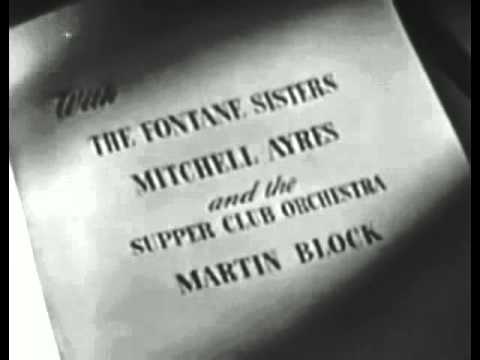
There’s more history at 6:10…”The Chesterfield Supper Club” starring Perry Como, was the first television show to broadcast from NBC Studio 6A. The studio was not converted officially till May 19, 1950. When this was shot, 6A was still a radio studio with a three camera remote unit and very few lights, which you notice here.

More history at 6:50! This is “The Fred Waring Show” from CBS Studio 41 at Grand Central, and this aired on Sunday night, just after “Toast Of The Town” with Ed Sullivan, which then came from Studio 51, The Maxine Elliott Theater.

Remember the opening announcement about the midwest network link up? “Your Show Time” had premiered on NBC’s East Coast stations in September 1948, and began to include NBC’s Midwest stations on January 21.

“Armchair Detective” was a Dumont show done at WABD.

At 9:06 notice the producer title…William Boyd. Boyd was Hopalong Cassidy, and a very smart showman! This show was an hour long and aired on NBC Friday nights at 8, starting in 1949.

“The Lone Ranger” debuted on ABC in September of 1949 and aired at 7:30 Wednesday nights.

Remember the Hungry Jack Biscuit commercials with the “Hungry…Hungry Jack” call? Here’s where it came from…the opening of “The Aldrich Family” at 10:23. This was on NBC at 7:30 Sundays.

At 10:55, one of television’s biggest shows appears…”The Goldbergs”, which was on CBS, and came from Studio 42 at Grand Central. This started in 1949, and aired Monday nights at 9:30.

Just after that is another huge CBS show, “Mama” which also started in 1949 and aired Friday nights at 8, against “Hopalong Cassidy” on NBC.

“The Ruggles” began on ABC, November 3, 1949 – a month after the radio hit “The Life of Riley” had moved to television on NBC, and interestingly, that is the next clip…but if you were expecting William Bendix as Riley, surprise…Riley is played by Jackie Gleason! This was his first starring role.

At 13:10 we see the open for “Suspense” which aired on CBS from ’49 till ’54. It was on Tuesday night opposite “The Life Of Riley”.

Finally, the last clip is from “Studio 1”. It was a big hit, and an important early anthology series on CBS, which debuted in September of 1948, and ran 10 seasons ending in 1958. Enjoy and share! -Bobby Ellerbee

#t=514″ target=”_blank”>https://www.youtube.com/watch?v=H6sOTBtcCcA #t=514

Some of the shows that began their run in 1948 and 1949.

Source

November 2, 1959…The Game Show Scandal Breaks Wide Open

November 2, 1959…The Game Show Scandal Breaks Wide Open

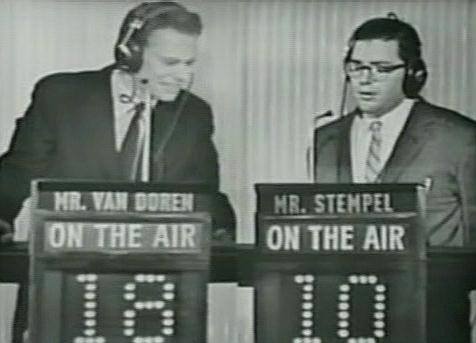
It was on this day in 1959 that Charles Van Doren admitted before a congressional committee that he had indeed received the answers to the questions on “Twenty One”.

Here is Herb Stempel discussing loosing to Charles Van Doren by missing the “Marty’ Question. For all of us that have seen the movie “Quiz Show”, you must admit that the movie was very accurate in it’s portrayal of this whole story.

One of the key players in the “Twenty One” story, was producer Dan Enright. At this link is a very interesting and detailed article on Enright’s part, his rise and fall, and his eventual return to television with the shows “Jokers Wild” and “Tic, Tac, Dough”.

http://www.pbs.org/wgbh/amex/quizshow/peopleevents/pande04.html

Actually, “Dotto” with host Jack Narz was the first show to be found rigged, and went off the air in August 1958. Narz was cleared of any wrong doing, but game shows were not, and over a three month period, all were canceled on every network, including “Twenty One”, which last aired October 16, 1958. -Bobby Ellerbee

Source

You Won’t Believe Your Eyes! How To Make Miniature TV Studio…

You Won’t Believe Your Eyes! How To Make Miniature TV Studio

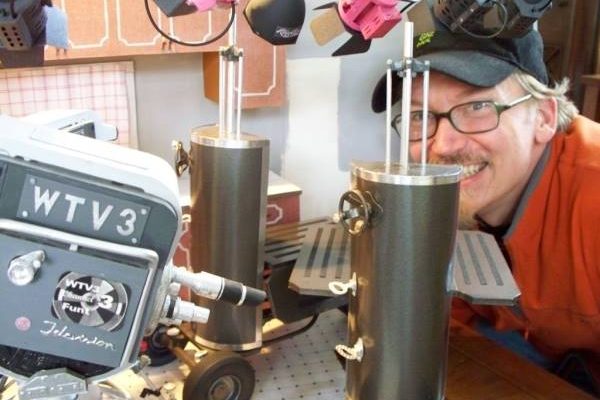
A few years back, our friend Jim Wickey made a beautiful, perfectly detailed studio for a real TV show. The RCA TK11 scale models are stunningly realistic, but are made of cardboard. Here are some shots of the finished product, and…his how to instructions. Enjoy! -Bobby Ellerbee


Source

October 31, 1953 & 1965…Two Color Television Firsts!

October 31, 1953 & 1965…Two Color Television Firsts!

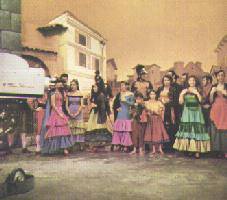
On October 31, 1953, NBC broadcast the first one hour color program to the full network. The production was a truncated version of the opera, “Carmen”. It was done from NBC/RCA’s only color facility, The Colonial Theater in New York.

At the time, the only color transmitter was an experimental model at WNBT in New York, but the goal was not measure how many people saw it in color…the goal was to measure how well the millions of monochrome sets received the “color compatible” signal.

The cameras used were the four RCA TK40 prototypes. The one hour presentation also included an audio trick or two. In passages where the vocal performance was critical, but extreme movement in dance numbers was too, look-alike actors were subtly inserted on stage to dance and lip synch while the principal operatic stars sang off stage. The principals would quietly return to stage and sing in more static shots.

On October 31, 1965, “The Ed Sullivan Show” debuted in color from its home at CBS Studio 50, with at least four new Norelco PC60s. On a few occasions before this, the show had been colorcast, but those were done from Television City, when the show was visiting the west coast.

18 months later, Studio 50 was re-equipped with Marconi Mark VII color cameras. Hallow Happyween! -Bobby Ellerbee


Source

October 30, 1931…NBC Begins Work On Empire State Tower

October 30, 1931…NBC Begins Work On Empire State Tower

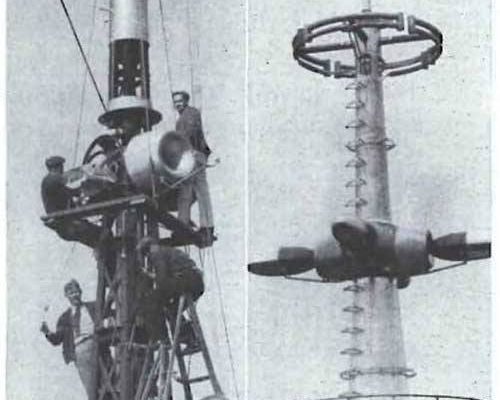
On this day in 1931, NBC began putting a TV transmitter and antenna on top of the Empire State Building. The first experimental TV broadcast from the building was on December 22, 1931.

As you can see in these photos, which were all taken before 1935, there was no tall mast on the building at the time…just kind of a rounded dome. The RCA tower was built on top of that.

RCA’s first experimental television transmissions began in 1928 on station W2XBS located near the Van Cortlandt Park area in the Bronx. Within a year it was moved to the New Amsterdam Theater Building, transmitting 60 line pictures in the new 2-3 mHz band allocated to television.

A 13 inch Felix the Cat figure made of paper mache was placed on a record player turntable and was broadcast using a mechanical scanning disk to a scanning disk receiver. The image received was only 2 inches tall, and the broadcasts lasted about 2 hours per day. By 1930 the station became part of NBC and began to transmit from NBC’s new home at 711 5th Avenue.

The Empire State Building was completed in May of 1931, and RCA leased the 85th floor for a studio and transmitter location for experimental television broadcasts. RCA, through its broadcasting division NBC, applied to the Federal Radio Commission on July 1, 1931 for construction permits for the sight and sound channels of a television station, which were issued on July 24, 1931.

The call sign W2XF was issued in December 1931 for the “sight” channel of that station on an assigned frequency of 44Mc. The RCA transmitter had an input power to the final stage of about 5Kw, giving an estimated power output to the antenna of about 2Kw.

The sound channel of the TV station was separately licensed as W2XK for a 2.5Kw transmitter to operate on 61Mc. Both transmitters were located on the 85th floor and used separate vertical dipole antennas.

In 1936, the tall tower like structure was added as a mooring mast for blimps. The winds proved to be too strong and there were several near accidents in mooring tests, but it did make for a great new antenna mount. -Bobby Ellerbee


Source

EOAG Exclusive Photos…’The Doctors’, NBC Studio 3B

EOAG Exclusive Photos…’The Doctors’, NBC Studio 3B

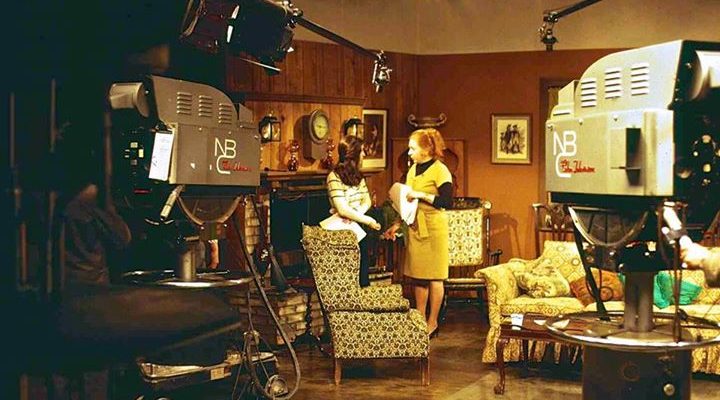
Thanks to Bob Batsche, and Glenn Mack, we have these these rare color photos that they took on the set in 3B, and thanks to Chuck Snitchler, we have a shot of the slate from the first color episode which would air December 4, 1967, but was taped almost a month before.

On April 1, 1963, ‘The Doctors’ replaced Merv Griffin’s first daytime talk show in the 2:30 time slot, where it remained for nearly sixteen years. This is an extraordinary feat considering the competition, which included long-running favorites such as ‘House Party with Art Linkletter’ on CBS and ABC’s ‘Dating Game’. On occasion, it was also up against one of the longest-running soap operas in television history,’The Guiding Light’ on CBS.

In a move the proved fatal, NBC moved ‘The Doctors’ to 12 noon eastern on March 29, 1982. The show aired its final episode on December 31, 1982, some three months before it would have celebrated its 20th anniversary on NBC.

Frankly, I am stunned that NBC, or any network, would offer any programing at noon on a weekday in the 80s, as there was always a half hour of local news at noon. I have seen a mid 70s CBS daytime schedule that leaves open the 12 – 12:30 block for local programing. I wonder why NBC didn’t do that? Enjoy and share! -Bobby Ellerbee


Source

How The Great Neumann U87 Is Made


How The Great Neumann U87 Is Made…

My favorite mic. Enjoy. -Bobby Ellerbee

https://www.youtube.com/watch?v=cvtjHhtxmpI

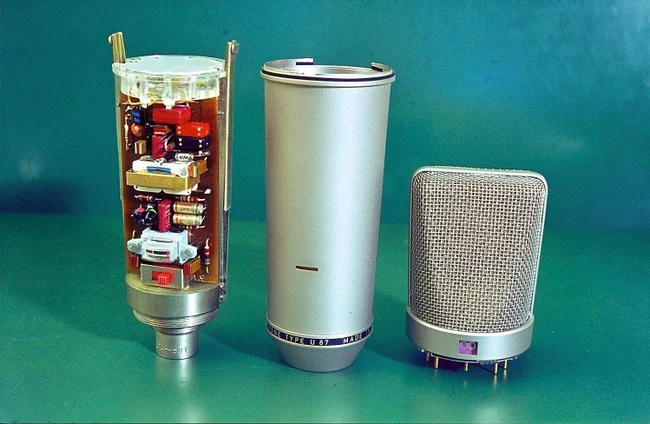
Interesting little clip about how a Neumann U87 microphone is manufactured. Pretty fiddly, with a ton of hand labor – no wonder they’re so freaking expensive!

Source

Making Ribbon Microphones…The Detailed Process


Making Ribbon Microphones…The Detailed Process

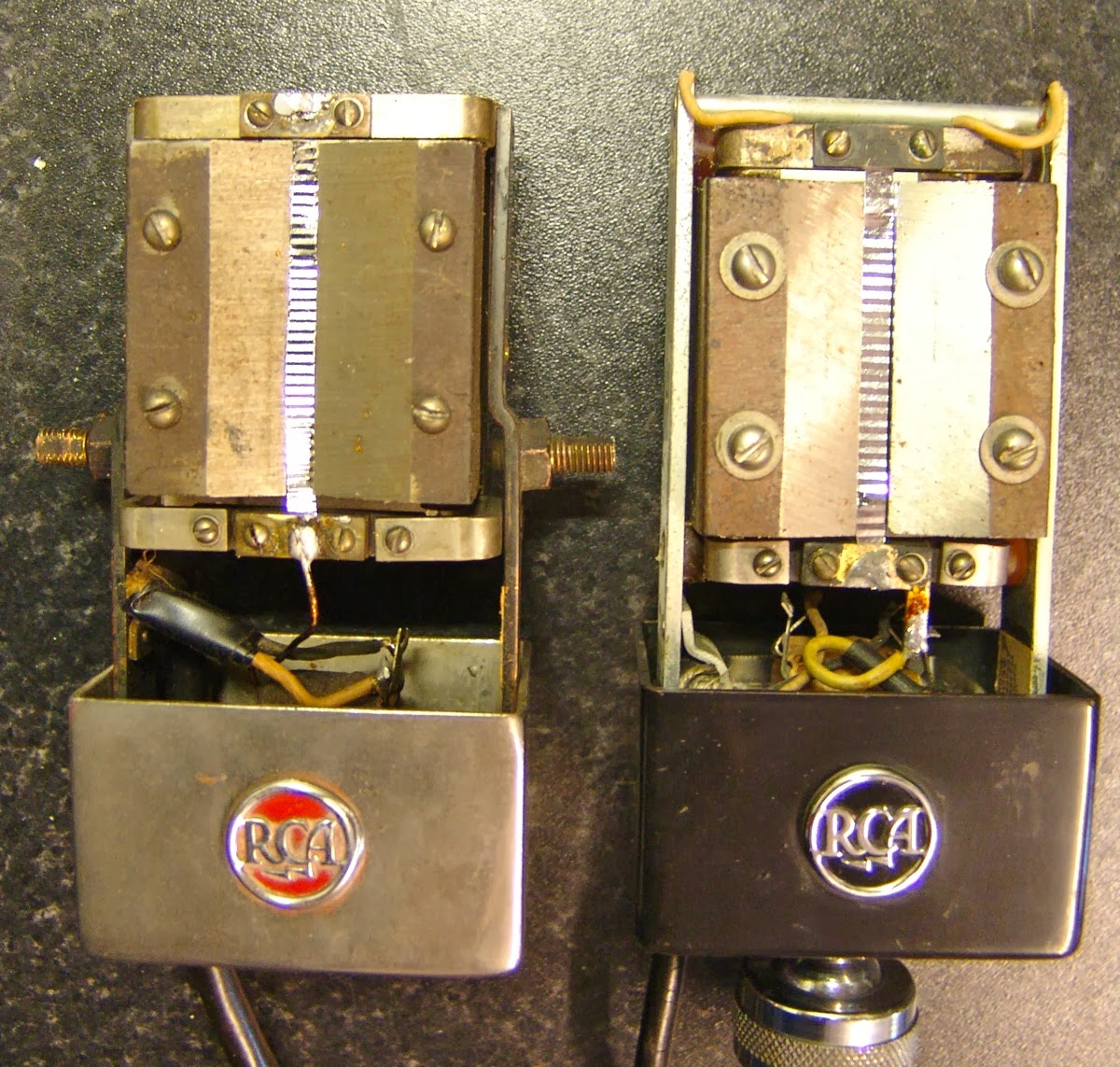
As a tribute to the sound of the RCA 44, a Pasadena company is making a modern day version, and here is the fascinating process. Thanks to Barry Mitchell for the clip. -Bobby Ellerbee

https://www.youtube.com/watch?v=SHkOkqnJjy0

Here’s another excellent “How It’s Made” episode showing the assembly of an AEA ribbon microphone. This mic is almost $4000.

Source

October 25, 1956…NBC’s “Camel New Caravan” Ends

October 25, 1956…NBC’s “Camel New Caravan” Ends

From February 16, 1949 until October 25, 1956, John Cameron Swayze hosted the 15 minute, week night NBC network news broadcast. The show was done from Studio C in the NBC Uptown Studios building on 106th Street, near Park Avenue.

In this photo from 1949, notice a few things. First, the exaggerated angles the cameras used to shoot him, early on. Second, notice the work-around pan heads on the pedestal cameras.

These are first generation pedestals, made for the RCA Iconoscope cameras that fed the camera cable inside the center column. The pan head for those Iconoscope cameras was not suitable for the much heavier RCA TK30s we see here, and the new friction heads and Mitchel style high hat mounts were not the same size as the column. That meant they had to weld a flat piece to the top to the column and attach these three leg mounts, until the new Houston Fearless TD 1 pedestals were put into Studio C.

This was the first NBC news program to use NBC filmed news stories rather than movie newsreels, which is why the NBC Television News Department was also located at the Uptown Studios. In December of 1948, NBC bought the 11 story studio building from Pathe, who had two huge film processing labs just next door. This was done with an eye toward using Pathe as a distribution partner in getting the NBC Kinescopes processed and shipped.

This live anchor news show, that aired at 7:45 weeknights, grew out of a show that started the year before. Launched on February 16, 1948, by NBC, “Camel Newsreel Theater” was a 10-minute program that featured Fox Movietone News newsreels, with John Cameron Swayze providing off camera voice-over for the series.

The following Monday evening, October 29, 1956, “The Camel News Caravan” was replaced by “The Huntley-Brinkley Report”. President Dwight D. Eisenhower had word passed to NBC’s White House correspondent that the president was displeased by the switch. Ike later grew to like Chet and David. -Bobby Ellerbee


Source

Computers And Automation vs Manpower And Innovation

Computers And Automation vs Manpower And Innovation

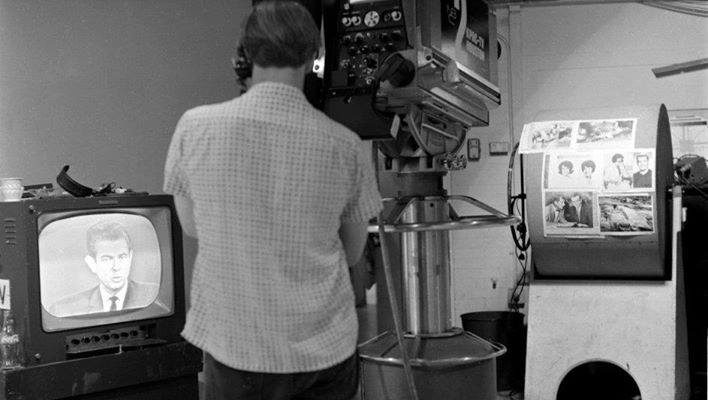
This shot from Houston’s KPRC is a great example of how news graphics were done in the 50s and 60s. Some stations had a nice drum like this, but others had easels, or old music stands. The images were faxed in daily from either AP or UPI. The camera is a GE PC 12, but there is more here than meets the eye.

For the younger generation of broadcasters, this must look like a scene from another world. And, it was another world. Radio and TV stations were owned by individuals that lived in the cities they served, and owners were making money, but profits were not always the holy grail…talented people and skilled staffs were. Those people and their innovations in ideas differentiated stations in a way that has gone the way of this graphics drum, in our cookie cutter media world. -Bobby Ellerbee


Source