- Home
- TV History
- Network Studios History
- Cameras
- Archives
- Viewseum
- About
Ever Wonder Where NBC’s Studio 6B Control Room Is?
Here is your answer! As part of a surprise military homecoming, Dwayne Johnson and Jimmy Fallon go up the left isle in the audience and at about 1:25, go behind the sound booth that feeds the house monitors, and into a 7th floor door that leads to the “Tonight” show’s control room.
The surprise unfolds at the second tier producers console, with the director and TD down on the first tier console. Thanks to “Tonight” cameraman Rich Carter for the video. -Bobby Ellerbee
ULTRA RARE…FIRST “TONIGHT” SHOW, PART 1 of 2
In Part 2, which will follow shortly, you will see the first half hour of the first ever “Tonight” show, which began at 11:30 PM EST on the NBC Television Network on September 27, 1954…BUT…
WHAT YOU ARE ABOUT TO SEE HERE IS, IN ESSENCE, THE FIRST 15 MINUTES OF THE FIRST EVER “TONIGHT” SHOW.
This is something most have never seen, or even knew of, because from this debut video on, till 1965, the 105 minute block of “Tonight” show programming began at 11:15. This is the first 15 minutes of the debut night of September 27, 1954.
It is a little confusing, but I’ll lay it out for you as best I can. This video is the first ever 15 minute version of “The Steve Allen Show”. It is from their new home at The Hudson Theater, where “Tonight” stayed until the show moved to Studio 6B with Jack Paar when the show went color.
For the past year or more, Allan’s show had been a 40 minute local New York show (11:20-12:00), done from the NBC studios leased from WOR at 101 West 67th Street. It was Allen’s success there that caused NBC boss Pat Weaver to create “Tonight”, with Allen as host.
As you will see on the NBC log below, in the Comment section, the 11:15-11:30 segment was officially called “The Steve Allen Show”, but in reality, it was the start of the 105 minute “Tonight” show block of programming.
Initially that portion was only seen on WNBC in New York, but over time, stations watching on network preview monitors began to ask to join at 11:15 to follow thier local newscast.
Other affiliates joined at 11:30 at the “second opening” which you will see alluded to here, and at the top of the next video in Part 2.
By early 1965, only 43 of the 190 affiliated stations carried the entire 105 minute show. After February 1965, Johnny Carson refused to appear until 11:30, and Ed McMahon “hosted” the 11:15 segment. Carson had never been happy with this 11:15 arrangement, and he finally insisted that the show’s start time be changed to 11:30. As a result, the two-opening practice was eliminated in December 1966. More to come! -Bobby Ellerbee
ULTRA RARE…FIRST “TONIGHT” SHOW, Part 2 of 2
To get the full effect of this historic footage, that is just now become available online, make sure you see and read Part 1, posted earlier today.
This is Monday, September 27. 1954…debut night, and full of surprises for everyone…including those of us watching now. Steve Allen’s surprises seem to be a never-ending cascade, starting with all sort of last minute changes, and a flat tire on the NBC Cadillac mobile unit shooting Times Square live outside.
Another surprise comes at 6:30 when Steve notices the open bottle of Knickerbocker Beer is gone, that we see him with in Part 1, the first 15 minutes of the show. Early on, the 15 minute “Steve Allen Show” was fed only to WNBT, but local stations watching the network preview monitor started asking for it at 11:15 as in those days, most late news casts were only 15 minutes. Unfortunately, there are many mixed details about that part.
At around 15:30 we see sidekick, and announcer Gene Rayburn do a comedy routine with Steve, and at 24:40, we get a look at something we had only heard about, but never seen, as Steve throws it to Gene for a news update.
Until today, I had never seen either of these two historic videos, but was thrilled to find them and watch. I was not even sure if they existed, as all I’ve ever seen is a few short clips, but thanks to Anthony DeFlorio, who just posted them online, we can finally see what we have only heard and read about for so long, play out on our screens. Enjoy and share! -Bobby Ellerbee
Happy Trails To The Great Verne Lundquist…
Verne Lundquist, whose voice has filled living rooms and bars all over the country on every fall Saturday over the last 17 years as the lead college football voice of CBS, called his final game.
We’ll miss you Uncle Verne! -Bobby Ellerbee
December 10, 1932…The First Ever, Technicolor Christmas Feature
Walt Disney’s ‘Santa’s Workshop’ was released to theaters on this day in 1932 and it was a huge hit. This was the third animated technicolor feature ever done, with the first being Disney’s ‘Flowers And Trees’ which debuted in July of ’32…an Academy Award winner.
Disney’s Silly Symphonies cartoon features were doing well and when he saw the new three strip technicolor process, he had to have it. As a matter of fact, his deal with Technicolor was a three year exclusive which allowed only Disney to use the process for animation. Merry Christmas! -Bobby Ellerbee
“The Big Picture” Presents….Television In The Army
Remember “The Big Picture” series? Here is their half hour show on how the Army uses TV, from the early ’50s. Given that there are RCA TK11 cameras here (as well as the older TK30s), this has to be sometime after 1952.
At the Production Center, they are making training films, via kinescope and in the field, I noticed the dual remote units still have the same configurations as the early NBC/RCA units with one unit for camera control and the other for transmission.
The small turret camera in the middle of this is, I think, a small Dage model. Near the end, they take us to an airborne camera that looks a lot like the old Iconoscope models used in WW II for guided ordnance and recon. On the ground, RCA’s Walkie Lookie mini cam is use too. -Bobby Ellerbee
How Howard Cosell Broke The News About John Lennon’s Death
It was on this day, December 9, 1980 that most of us learned of John Lennon’s death, but those that were up late…watching ABC’s “Monday Night Football” game, heard the astounding news from Howard Cosell around 11:30 December 8, near the end of that night’s very long game from Miami.
From ESPN, here is the amazing backstory of how it came to be that Howard Cosell broke the news of John Lennon’s death to the nation.
There is even audio of the conversation about whether to announce it between Cosell and Frank Gifford in the booth recorded during a commercial break. ABC broke the news after one of their producers was taken to the emergency room in NY after a motorcycle accident…he was there when Lennon arrived and saw him come in. -Bobby Ellerbee
1926-2016…Celebrating 90 Years Of Talking Pictures
Thanks to Western Electric’s Vitaphone technology, moving pictures with sound became a commercial success, but the story does not start with “The Jazz Singer”, and it doesn’t even start with the spoken word.
Believe it or not, the very first sound with film efforts were thought of as a way to add some reality by including sound effects, and…and this is a big and…do away with the expense of hiring musicians to play an accompaniment to the film, by recording the music and sound effects together. Theater owners liked the idea of saving money on musicians, but passed because it would cost them money to install the system.
Vitaphone added sound via a turntable slaved to the projector. The 16″ discs played from “the inside to the outside” and had cue arrows on where to set the needle, with each disc starting at the head of each film reel. Notice in the photo below, there is a single projector, which was OK for shorts, but when feature length movies came around, twin projectors were needed.
Here is a brief history of how sound and film began their remarkable union. On April 20, 1926, Western Electric, the manufacturing arm of the American Telephone & Telegraph Company, and the Warner Brothers film studio officially introduced Vitaphone, a new process that enabled the addition of sound to film (but not “on film”).
By the mid-1920s, several competing systems had been developed to add sound to motion pictures. In 1923, inventor Lee de Forest demonstrated Phonofilm, in which music was recorded on a narrow strip at the edge of the film. When De Forest tried to sell Phonofilm to the major Hollywood movie studios, they rejected it, dismissing “talking pictures” as a novelty that was not worth the cost. De Forest’s sound-on-film system evolved into the Movietone sound process, introduced in 1927.
The major studios also turned away Western Electric, makers of Vitaphone, in 1925. The Vitaphone system logged sound on a record linked electronically to the projector, keeping sound synchronized with image. Because the precise alignment of projector and phonograph had to be set by hand, the system was prone to human error; fitting a movie theater for a Vitaphone sound system was also extremely costly. Warner Brothers, then a minor studio, decided to act aggressively. It sank $3 million into the promotion of Vitaphone, which the studio announced it would use to provide synchronized musical accompaniment for all its films.
Vitaphone debuted in August 1926 with the costume drama “Don Juan”, starring John Barrymore and featuring an orchestral score by the New York Philharmonic. The following year, Warner Brothers released its second Vitaphone feature, “The Jazz Singer”, which included classical and popular music, as well as about 350 words of dialogue.
The success of these two films led directly to the motion-picture industry’s conversion to sound, as the major studios quickly lobbied to gain the rights to use Vitaphone as well. Warner Brothers agreed to give up its exclusive rights to the system in exchange for a share of the royalties, and by the spring of 1928 virtually every Hollywood studio had jumped on the sound bandwagon, but not necissarly the Vitaphone wagon…
By then Lee de Forrest’s Movietone, sound on film process was more developed and debuted with “Steamboat Willie”. That was Disney’s first sound film, featuring Mickey Mouse whose animation was drawn by the beat of a metronome, with a fully-synchronized soundtrack of music and sound effects and dialogue, recorded optically as sound-on-film. The rest as they say, is history. -Bobby Ellerbee
“Hairspray Live!”…Bravo Again For Live Television!
This was NBC’s fourth venture into holiday event live musicals, but their first go at a broadcast with an audience and studio sets as opposed to a more traditional proscenium-style approach.
Perhaps taking a cue from Fox’s live broadcast of “Grease” last winter, NBC did this show from two sound stages at their Universal Studios in LA, rather than the huge Grumman Studios in Long Island. The addition of the live audience was a new twist too, and like it or not, it did give a little extra time between scenes for actors to be ferried from set to set on golf carts.
Live TV is live TV, and that is part of the electric atmosphere for the performers and 750 crew members. With a dozen plus cameras in use, many of them handheld and Steadicams moving in and out of scenes, shows like this are hard to direct, and occasionally things get a bit frantic, but Atlanta’s Kenny Leon (director), and his all pro crew did a masterful job on the production.
As for the cast…BRAVO! Perfect in every way! The period/prop cameras are mock up RCA TK 11s…sort of. The side handles are wrong but they do resemble GE camera handles, which makes these a mashup of “period appropriate” cameras. These were built by History For Hire for the “American Bandstand” themed TV series from 2003, “American Dreams”.
What did you think? -Bobby Ellerbee
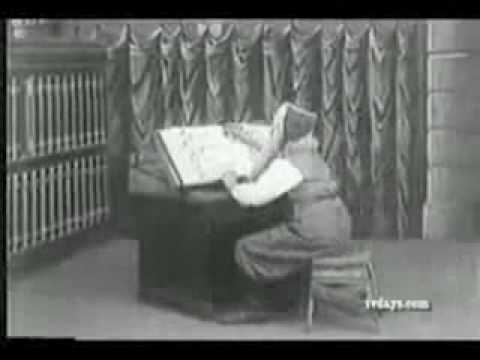
First Film Production Of “The Night Before Christmas”
From the Edison Company, here is what is believed to be, the first filmed presentation of the famous Clement Clark Moore poem. This silent short film, directed by Edward S. Porter was released December 16, 1905 in New York City. Happy Holidays! -Bobby Ellerbee
December 7, 1963…The First Instant Reply Is Shown
Today is the 53nd anniversary of instant reply. Thanks to director Tony Verna, football changed for the better for fans at home. Below is Sam Gardner’s Fox Sports article from the 50th Anniversay of that day AND a great NFL Sports Video. -Bobby Ellerbee
______________________________________________________
On Dec. 7, 1963, fans glued to the annual Army-Navy game on CBS watched Army quarterback Rollie Stichweh score on a one-yard touchdown run with 6:19 left in the fourth quarter to cut the Navy lead to 21-13.
Seconds later, to the bewilderment of most of the millions watching at home — Army-Navy then was what the Super Bowl is now — they saw him do it again.
This was the birth of instant replay, the brainchild of up-and-coming 30-year-old producer Tony Verna. And it was a concept so foreign to viewers, who traditionally had to wait much longer to see a play again if they saw it at all, that play-by-play announcer Lindsey Nelson had to clarify to the audience that West Point hadn’t scored a second touchdown (though Stichweh would score on a two-point conversion to make it 21-15 on the next play).
“Terry Brennan, who was my color analyst, said he almost fell off his stool when it came back; he never expected to see the play again,” Verna, now 80, said of the first instant replay in an interview with FOX Sports this week.
“And Lindsey responded to the surprise by saying, ‘Ladies and gentlemen, Army has not scored again.’ It sounded like the man had lost his mind, but you’ve got to remember and put into perspective all that was going on. He just wanted to make it clear.”
These days, a half-century after its first use, instant replay is omnipresent in televised sports, and for most, it’s hard to imagine a world without it.
The technology Verna used, a clunky, unreliable Ampex 1000 with three tape heads, is long since obsolete, replaced by newer, faster, more intuitive, user-friendly devices. And the viewer experience has seen even greater change, with slow-motion, freeze frames and split screens now the norm.
Verna’s creation is now used in officiating in most professional leagues, and it has changed the way announcers call games over the last five decades — with analysts able to visually highlight the finer points of the action, rather than simply describe it. But once upon a time, immediate playback was the hot new thing, and it was only because Verna had the nerve to try it.
“The reason for any invention is a need, and I needed something to improve my telecasting, because people at home were still not getting the full value, the cause and effect of a play, or to watch it from another angle,” Verna said. “But to show a play 10 or 15 minutes later didn’t mean anything. It had to be instant, it had to be right after the play, otherwise, you couldn’t relate to it.”
Verna’s initial thought was to unveil instant replay at the 1963 NFL championship game, but that option was off the table because NBC had the rights to that year’s game. Instead, he chose to try it at Army-Navy, a game that had been postponed for a week by the assassination of President John F. Kennedy and featured a Heisman-winning quarterback in Roger Staubach.
By that point, Verna had developed a method of identifying points on a tape using sound, putting tones on the tape’s sound track that would tell him the approximate location of the play he wanted to re-air. The only challenge from there was getting all three tape heads in sync so he could be certain he was showing the correct replay, and that it was being clearly displayed to the viewer.
Verna got permission to bring in a half-ton tape machine from CBS’ control room in Grand Central Station for the game at Municipal Stadium in Philadelphia — a challenge that, he admits, was actually simplified by the game’s postponement — and after struggling to get the three tape heads in showing the same output for most of the game, Verna finally had success during Stichweh’s final score.
“The middle head of the three would continue to show ‘I Love Lucy,’ which was the old tape that I was given to record over, so you’d see Roger Staubach, maybe, in my control room, and then you’d see Lucy and Desi in the middle, and then in the bottom, you’d see the players,” Verna said.
“It was very disconcerting, but finally in the second half, I got all three heads stabilized and I heard my (signaling) beeps come back with the frequency I needed. … I was dependent on those audio signals to tell me what was happening on the tape, and finally I got one in sync, and I heard it and I said to Lindsey, ‘This is it.’”
The news that a replay was coming wasn’t a complete shock to Nelson, who had been informed of the possibility on the cab ride to the game, but it was to virtually everyone else. Bill McPhail, the head of CBS Sports at the time, didn’t want to promote the gimmick given the solemnity of the game so soon after JFK’s death, so the fans were unaware of exactly what they were seeing.
“In those days there was no slow-motion and it was just in black and white, and you couldn’t tell the difference between tape and live at all,” Verna said. “So when the replay came back, it came back like a freight train.”
However, unfamiliarity didn’t keep viewers from enjoying the new technology’s debut, and the positive response to the first instant replay was almost immediate.
“I was still on the air, and Tex Schramm, who was then the general manager of the Dallas Cowboys, called me in the truck — he was the guy that hired me as a kid at CBS — and he said, ‘Verna, you don’t know what you’ve done; this is going to be great for officiating,’ which I hadn’t thought of,” Verna said.
“When that call came in, I had to say, ‘Tex, I can’t talk to you right now, I’ve got a hell of a game going on,’ but that was the first indication that it was a success.”
Soon after, McPhail called telling Verna that he would have to share his development with the rest of CBS’ directors and producers — a sign Verna took to mean that his creation had instantly become a necessity. He also heard from the newsroom at CBS, which lamented that Verna’s technology wasn’t available two weeks earlier, when it took them 11 minutes to turn around video of Jack Ruby shooting Lee Harvey Oswald.
On the cab ride home from the stadium, Nelson, the man who called TV’s first instant replay also put it all in perspective.
“Lindsey said to me, ‘You know, Tony, what you’ve done today is non-retractable,’” Verna recalled. “In other words, people are going to expect instant replays in games and it’s never going to go away, because it fits the sport, no matter what it is, to see it again and get some perspective.”
Verna used instant replay again at the Cotton Bowl between No. 1 Texas and No. 2 Navy on Jan. 1 — Navy lost and didn’t play in another bowl game until 1978 — and it was used during the Triple Crown, as well as the the 1964 Major League Baseball season, opening the floodgates to replay’s use across the sports landscape.
“I used to do Dizzy Dean and Pee Wee Reese’s game of the week, and (replay) allowed Dizzy to shut up,” Verna joked. “He would always talk about what you couldn’t see at home, thinking that he was giving people a boost in the viewing, but all he was doing was confusing people. Now that was taken care of.”
Verna got out of sports television in his late 40s and went on to find success in other ventures, including the production of “Live Aid” in 1985 and Pope John Paul II’s “A Prayer for World Peace” in 1987. And though he’s been out of producing for some time now, Verna continues to innovate as he ages, and has been granted recent patents on Instant Footballer and Talking Replays.
But still — despite all of the advancements made in TV production as well as his own career in the decades since Dec. 7, 1963 — Verna’s name is and will always be synonymous with that first instant replay.
“Without being braggadocio, I was given a certain ability, and I was able to use that somehow to help people in a certain way,” Verna said. “The idea of being able to watch a play again instantly is now embedded deeply into the collective unconsciousness of the viewers.
“The improvements, of course, happened, and they were expected to happen, but (the original instant replay) is like chewing gum. It’s always been there, and it’s been part of my life from that day on.”
And if that’s the legacy Verna, a south Philly kid who grew up selling programs at Army-Navy, takes with him, that’s quite all right.
“There used to be a guy named Howard Cosell,” Verna said without a hint of sarcasm. “And I would to go drinking with him and my best man Chet Forte, who ended up on Monday Night Football. We used to go drinking and Howard would say how he would go down in the annals of sports.
“Now, Howard couldn’t handle gin and he would have these martinis, and Chet knew how to put the knife into Howard, so he’d say, ‘Howard, no one is going to remember you 10 years after you’re dead. Verna they’ll always know, because he’ll always be attached to instant replay.’
“So that kind of thinking I felt good about,” Verna said. “When you create something that wasn’t there before, and you air it, that makes you pretty proud of yourself.”
December 6, 1964…A Christmas Classic Was Born!
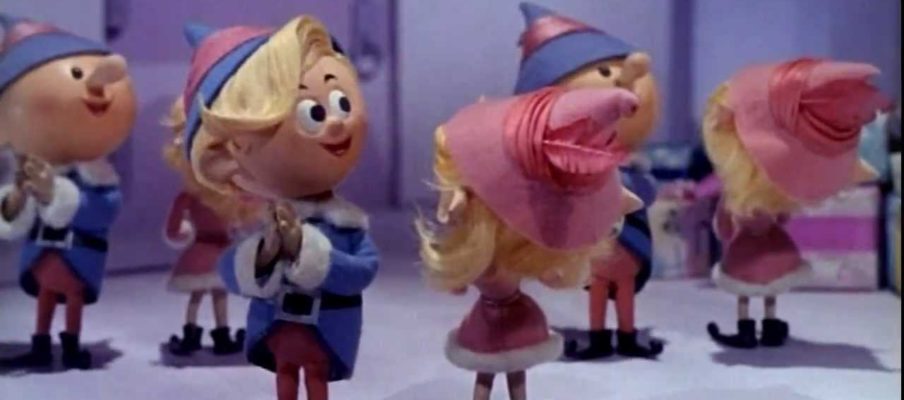
The evening of December 6, 1964, kids across the country tuned into NBC for the debut of “Rudolph The Red Nosed Reindeer” in living color. It has aired every year since.
The Christmas television special was produced in stop motion animation by Rankin/Bass Productions, and was sponsored by General Electric under the umbrella title of “The General Electric Fantasy Hour”. The GE commercials in the first two years also featured the Rankin/Bass characters. All the classic Norelco commercials with Santa riding an electric razor are based on this Rankin/Bass process and look.
At this link is a story on two surviving articulated models used in the filming of the classic from “Antiques Road Show”, where they were presented for appraisal a few years back.
https://www.pbs.org/wgbh/roadshow/stories/articles/2006/5/15/is-this-the-real-rudolph
Below, the special that we all loved as kids is ready to view! Happy Birthday Rudolph! -Bobby Ellerbee
December 6, 1948…CBS Studio 50’s Television Debut
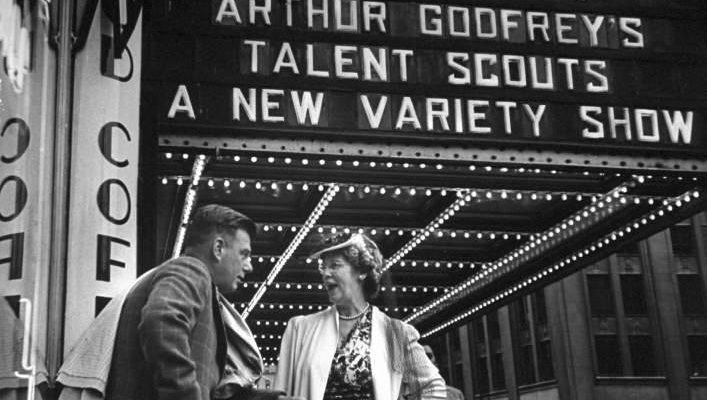
On this day in 1948, what had been the CBS Radio Theater #3 since 1936, became CBS Television Studio 50. At 8:30 that Monday night, “Arthur Godfrey’s Talent Scouts” became the first program to be televised from the studio we now call The Ed Sullivan Theater, at 1697 Broadway.
This was the second CBS radio theater to be converted to television. In order to get the new “Toast of the Town” show with Ed Sullivan on the air on June 20, 1948, The Maxine Elliott Theater was the first transformation. Sullivan’s show, still titled “Toast of the Town,” moved from Studio 51 to Studio 50 in January of 1953. Sullivan got to move in when “This Is Show Business” moved to another night.
The first TV show to come from Studio 50 was actually a holdover from the radio days. When LIFE profiled Arthur Godfrey in 1948, his voice was ubiquitous on the American airwaves, reaching 40 million listeners each week on three different CBS Godfrey shows.
The “Talent Scouts” radio show started in 1946 and was a sort of amateur hour for young professionals. It ran for 25 minutes on Monday nights with the sponsorship of Lipton tea. During the show, the “scouts”—who could be anyone from a manager to a parent—brought out their “talent” to perform in front of a live audience. Winners were decided by an old-fashioned applause meter, with a new star declared each night. Here is a rare surviving clip of the show, with the applause meter at the end.
“He will probably be on television very shortly,” LIFE predicted, and the prophecy came true on December 6, 1948. After two years on the radio, “Arthur Godfrey’s Talent Scouts” became a regular show on CBS-TV. It was simulcast on radio from the studio it had been in those two years…CBS Radio Theater #3 which, when converted to television became Studio 50. This was the first television show to originate from Studio 50.
Ironically, the first radio show from CBS Radio Theater #3 in 1936 was the “Major Bowes’ Amateur Hour”, which the Godfrey show’s format was based on. Below, in comments, is a photo of the new TV control room. -Bobby Ellerbee
December 6, 1877…Thomas Edison Makes The First Sound Recording
Edison’s recitation of “Mary Had A Little Lamb” was the first voice recording ever made, but on the tin foil cylinder it was recorded on, it is preceded by a few seconds of music, and followed by a person laughing, then “Old Mother Hubbard” and more laughing. You are about to hear the whole thing.
The video here will start just before the disc is played in public for the first time since 1879. For audiophiles, this entire video is just amazing and reveals the science behind these earliest ever recordings, as well as how they have been restored and captured digitally. The notes on the You Tube post are quite good too. -Bobby Ellerbee
The recording was originally made on a Thomas Edison-invented phonograph in St. Louis in 1878. At a time when music lovers can carry thousands of digital son…
December 5, 1962…’The Match Game’ Pilot Taped
This rare unaired video was taped in NBC’s 8H on December 5, 1962 with Peggy Cass and Peter Lind Hayes as guest panelist. Gene Rayburn is the host and Johnny Olson the announcer, but as you will see, the game has changed a lot and so have the questions.
In the closing credits, many of the names of those positions that require a credit are blank, but our friend Dick DeBartolo’s name is there. Dick was the man that wrote the questions, and when NBC threatened to cancel the show with six weeks left to go on that first season, Dick saved the day.
It was his idea to change the mundane line of questions from things like “name a kind of muffin” to questions that opened up a more risque train of thought, like “Mary has a nice set of ____”. I filled in the blank with “china”…what was your answer? LOL!
‘The Match Game’ debuted on December 31, 1962 with Arlene Francis and Skitch Henderson as celebrity panelists. The final NBC episode was September 26, 1969. – Bobby Ellerbee
“Rowan & Martin’s Laugh In”…Three Backstories Rolled Into One
(1) Fun (2) Editing on film and videotape (3) The Editor, Art “Jump Cut” Schneider
There is not a better way to illustrate how “Laugh In” was done than to start with this embedded blooper reel, which will be fun and instructive at the same time. As you watch these outtakes on kinescope film, notice the man in the at 1:25 mark with Marcel Marceau (the pantomime king) is the show’s creator George Schlatter.
Believe it or not, the show was simultaneously recorded on black and white kinescope film and color video tape. Using the kinescope footage, Art Schneider (the videotape editor) and George Schlatter cut the show together the way they wanted it to be seen on the air. Only when that process was complete could Art begin to edit the color videotape.
With an average of 400 edits per episode, which no other show had ever attempted, editing “Laugh In” was in a league by itself…as was the editor. As a matter of fact, when Art left NBC after the second year of the show, it took 7 editors to replace him.
To give you and idea how hard it was to edit videotape in those days, here is Art Schneider editing with a Smith Block at NBC. The video will start at the part that features Art, but the whole thing is very good.
Below is a 1989 article from “WRAP Magazine” on Art…
For Art Schneider, A.C.E., it was one of the most memorable moments in his life. Bob Hope was taping a 1965 comedy special
at NBC and Schneider, Hope’s videotape editor since the late 1950s, was standing offstage when Hope called him out. “Most of you don’t know what goes on behind the scenes during the editing of our show,” began Hope. “We have a man in the basement … who fixes all our mistakes, and we’d like to honor him tonight with the annual Bob Hope Show Crossed Scissors Award for Jump Cutting Above and Beyond the Call of Duty”.
To many in the industry, Schneider has always been known as “Jump Cut,” the editor’s editor, racking up screen credits and awards almost since the beginning of television. As an NBC staff engineer from 1951 to 1968, Schneider edited over 500 variety shows, documentaries, music specials, series and news programs, winning four Emmys in the process. His work helped define the medium.
From the start, Schneider’s modus operandi has been to edit quickly, efficiently and seamlessly. To improve video editing in the ’50s-a cumbersome process, which involved the hand-splicing of tape, he worked with his colleagues at NBC to develop the first offline editing process as well as an early time-code system. As chief editor of the network’s “Rowan and Martin’s Laugh In” in the late ’60s, he was notorious for his organization and imagination.
“To edit ‘Laugh In’, we had to adapt the technology to our concepts and not vice versa,” says Creator and Producer George Schlatter. “At the time, video editing was primitive and considered a technician’s job. Art helped change that. It became an artistic job.”
Schneider’s ambitions once lay elsewhere. When he was 18 and a model-airplane enthusiast, he entered the University of Southern California with the goal of becoming an aeronautical engineer. He explains, however, that he couldn’t master the math required for the field. “I changed my major three times before I finally settled on cinema studies,” he recalls. “There’s not much math in that.”
Schneider soon found he had a knack for cutting film, and it was during his senior year that a professor introduced him to an NBC executive searching for a film editor. “The job they offered was simple-editing leaders onto kinescopes, but they didn’t want to spend the time training beginners how to edit,” recalls Schneider. “They wanted someone who already knew how to do it.”
A four-hour job interview led to what would be a 17-year career at the network. Although eventually he became the network’s supervising editor, he began as a “Group 2 Engineer”, hand splicing videotape and film, and operating kinescope machines and cameras because the term “editor” was not officially sanctioned by NBC until the ’60s.
Schneider worked constantly, averaging 40 to 50 shows a year and racking up such credits as 51 Bob Hope shows, three critically acclaimed Fred Astaire programs, and specials starring Judy Garland, Pat Boone, Milton Berle and Jack Benny. “My USC training in cinema really helped,” he says-particularly for specials, “which were tricky. You couldn’t just grind them out like you might on a series. The star wanted to put the best foot forward.”
In 1967, Schlatter, a former colleague from NBC’s Colgate Comedy Hour, approached him with the ‘Laugh In’ pilot. “I thought it had a funny name and a pretty thick script,” Schneider recalls, “but I said, ‘Fine, I’ll do it.’ ” The script was four inches thick, to be exact, and, at a time when 80 edits an hour for video was considered excessively complicated, Laugh-in weighed in at about 400. “It was a gargantuan task,” says Schlatter, “and ‘Laugh In’ may have been the first show on TV whose editor was recognized for the contribution he brought to the whole.”
With its quick blackouts, short sketches and zany music pieces, Laugh-in was an editor’s nightmare. Schneider, with Schlatter at his side, spent three weeks of 20-hour-a-day edits to produce the pilot. “At the end of the first assembly [which took five days], George didn’t like what he saw. He sat back and cried, ‘What have I wrought?’ ” recalls Schneider, who wound up recutting the program five times. “After the fifth, George was satisfied, but I was still bothered by something that didn’t quite click. I couldn’t sleep, thinking about it.” Then, as he lay in bed, he had an inspiration:
He would add a tag scene after the closing credits…a discarded piece of footage of Arte Johnson as a Nazi saying, “Verrrry interesting.” Not only did Schlatter love the touch, the bit became a catchphrase of the series.
In 1968, Schneider left NBC to form, with Schlatter, Burbank Film Editing (where he continued to work on ‘Laugh In’). Schneider left in 1970 to work at CFI, where he stayed until 1976 and helped develop the first CMX 300 on-line editing system. From there he freelanced on a variety of projects, including off-net hours for syndication and documentaries on pollution. In addition, he served on the board of the Academy of Television Arts and Sciences; became a member of the SMPTE education committee; and began writing (over 50 articles) and lecturing on his profession.
“To be successful,” Schneider concludes, “you have to be very, very dedicated. And you have to work your butt off.”
Enjoy and share! -Bobby Ellerbee
Just For Fun…Be Ready To LOL!
I don’t know if all of these clips made it to air or not, but I’m glad they didn’t die on the tape room floor. These are all great, but John Davidson gets things rolling, and at 3:00, Marty Allen has one of my all time favorite answers. Enjoy and share! -Bobby Ellerbee
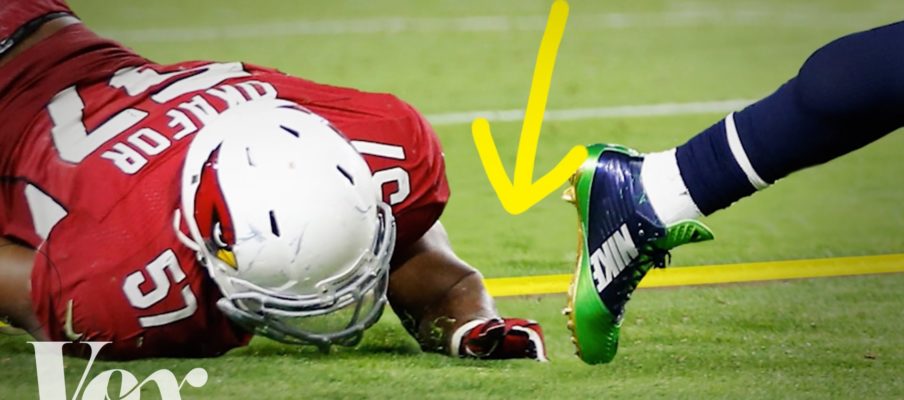
How Football’s Magic Yellow Line Technology Works…Two Videos
Here are two videos to lay out how the yellow first down line is applied to live action on the field. This first one is a good history and general overview of the process.
https://www.youtube.com/watch?v=1Oqm6eO6deU
This second one shows us how the equipment is linked to the cameras in the stadium and some of the software used in the truck.
https://www.youtube.com/watch?v=Vh9af_gXxlM
Hope your team wins this weekend! -Bobby Ellerbee
The clever engineering behind the virtual first-down line. Subscribe to our channel! http://goo.gl/0bsAjO — Since the late 1990s, the virtual yellow line h…
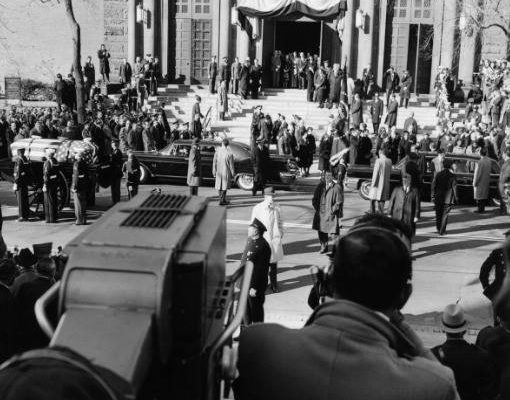
How TV Covered Death Of President Kennedy…Broadcasting Magazine
Here is the The December 2, 1963 issue of Broadcasting, which includes an article over 10 pages deep (starts on page 36) that gives us a rare look at how the networks swung into action after receiving the news from Dallas.
The main article covers many of the details and back stories of the efforts at ABC, CBS and NBC to get their news departments and crews up and running for this marathon coverage. There are also other single articles on associated stories, like “The Dimension President Kennedy Added To Television”, which is a tribute to his use of TV in all of his campaigns and in his press conferences. -Bobby Ellerbee
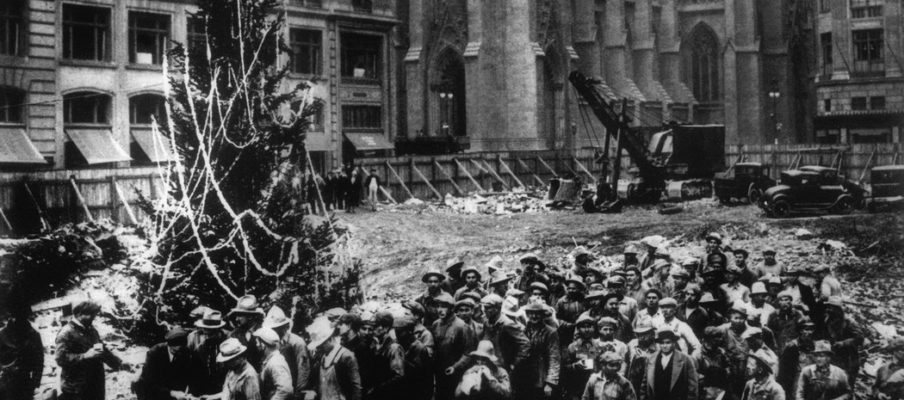
TONIGHT! Tree Lighting At 30 Rockefeller Plaza + Some Surprises
From 8 – 9 tonight, NBC carries the holiday tradition nation wide, live from Rockefeller Plaza…well…almost live. I have been told that Dolly Parton’s performance was done months ago, but great care was taken to make it a seamless fit into tonight’s show, so keep a sharp eye out.
As for the first ever 30 Rock Christmas tree…we can thank Cesidio Perruzza, an Italian excavation worker who helped dig the foundation in 1931. Merry Christmas! -Bobby Ellerbee
Nearly lost to history are the tree’s origins with men who worked in construction, most of them Italian immigrants, who were glad for a job during the Depression.