Posts in Category: TV History

An Hour With Rocky & Bullwinkle…The Whys, Hows & Whos Of The Show


An Hour With Rocky & Bullwinkle…The Whys, Hows & Whos Of The Show

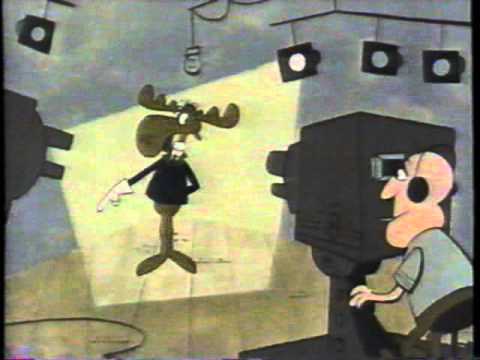
The Wayback Machine is set for 1963 and everybody is here! On top of tons of cartoon footage, we meet the voices, writers and masterminds – Bill Scott and Jay Ward – of the most beloved TV cartoon characters of our generation.

Rocky, Bullwinkle, Dudley, Nell, Snidely, Mr. Peabody, Sherman, Boris, Natasha, the Fractured Fairy Tales, the inside jokes, fun with the censors, and even a real life story involving President Kennedy and the Cuban Missile Crisis are all part of this trip down memory lane. Enjoy and share! -Bobby Ellerbee

Behind the scenes of the greatest animated cartoon series ever created.

Source

Meet The Voice Of The “Law & Order” Franchise…Steve Zirnkilton

Meet The Voice Of The “Law & Order” Franchise…Steve Zirnkilton

How many times have you heard “In the criminal justice system”, and wondered just who that great voice belongs to? Well the answer is Steve Zirnkilton.

There are a lot of stories about how he happened to get the job, but here is his version, as told to Backstage Magazine in 2014.

“As it happened, Dick Wolf was buying a house up here in Maine, and at that time, I had my real estate brokers license and my insurance license. I approached him and asked if I could act as his buyer’s representative to make sure that everything would go smoothly.

When the transaction was complete he said, “What do I owe you?” I immediately passed him a cassette tape which was my VO demo. I handed it to him and he wasn’t quite sure what to do with it. I didn’t hear anything and then some months later, his secretary called saying that he wanted me to do the bumpers for a show called “Nasty Boys,” a spring launch for NBC.

That lasted about six episodes. I figured I’d had my shot. Then I got a call from Mr. Wolf’s secretary saying that Mr. Wolf has a show called “Law & Order,” and he’d like you to play a detective in the show. I played a detective in the pilot and shared a trailer with William H. Macy.

Nobody wanted the show. CBS and Fox both passed. Nearly a year went by and then Brandon Tartikoff at NBC decided to give it a try. Mr. Wolf’s secretary called me again and said, “Please meet Mr. Wolf at the recording studio. He has something he’d like you to read.” And that was the opening. I had no idea if the show would have any legs, but happily it hung around for a while.”

For uniformity’s sake, Dick Wolf has used his voice on all of the other Law & Order shows and Zirnkilton is the only person, other than Wolf, to appear in the credits for every episode of every show. Although the pilot episode of “Law & Order” did not have the voice over opening, he got screen credit for his role as an on camera detective. Since then, he has been listed as the narrator.

If his residuals are anything like what Paul Anka and Johnny Carson split for their authorship of Johnny’s “Tonight Show” theme, this is one very fat cat! Well done Steve! -Bobby Ellerbee


Source

Meet “Blackbird”…Via CGI, It Is Any Car You Want It To Be (2 Videos)


Meet “Blackbird”…Via CGI, It Is Any Car You Want It To Be (2 Videos)

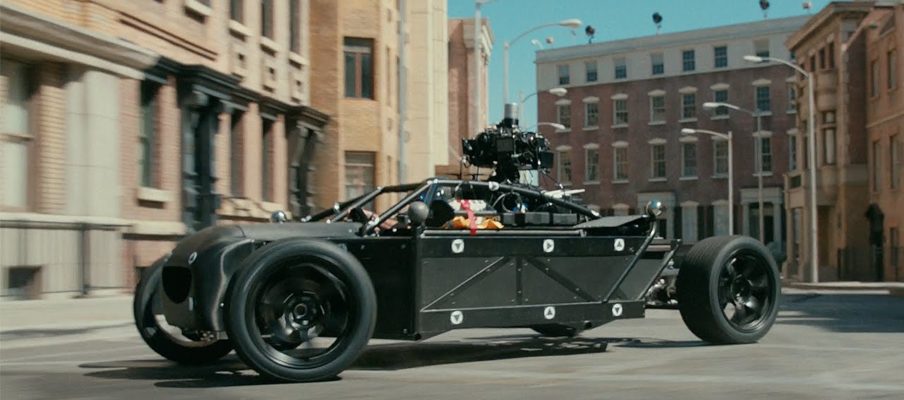
Had this technology been available in the ’60s, George Barris would never have had to build the Batmobile, the Munster’s car or the Beverly Hillbillies truck, because this car can become any car!

Here’s a short video that shows how adding a “skin” or real car look works.

In essence, the Blackbird is a mobile camera rig designed to morph into any car in the world. At the push of a button the fully adjustable chassis can modify its length by 4 feet and width by 10 inches. It can fit any wheel set and be altered for any type of suspension and chassis design. You can see all this and more demonstrated in the second video below.

Two years in development, the Blackbird was hand built by the world’s top technicians from JemFX in the same hangar that the Blackbird SR-71 supersonic jet was once manufactured. The car rig’s name is a nod to this legacy of stealth design.

Although this is very cool, so is seeing the original Batmobile in person. These days, its hard to believe your own eyes. -Bobby Ellerbee

Special effects company The Mill has come up with a technology so intriguing, we just had to give it a go. Meet the ‘Blackbird’, which is all about taking mo…

Source

The Chaplin Studios…A Mega Magical Place In Time


The Chaplin Studios…A Mega Magical Place In Time

It is hard to know where to start, because we have a rare opportunity to see this historic landmark as is is now, and as it was when it was first built at 1416 N. La Brea Avenue in Hollywood.

I’ve written a short history here which comes to life in these three videos.

In 1919, construction was completed on the land bought in 1917 by silent screen icon Charlie Chaplin, including his personal residence on the site. Many of Chaplin’s classic films were shot at the studios, including “The Kid” (1921), “The Gold Rush” (1925), “City Lights” (1931), “Modern Times” (1936), “The Great Dictator” (1940), “Monsieur Verdoux” (1947), and “Limelight” (1952).

This remarkable video shows the studio site in 1917, when it was just an orange grove and includes a rare time lapse of the studio being built. It continues with Chaplin “making a movie” which gives us a look at almost every part of the lot, including his office, the sound stage, The Barn, film lab and much more…even Fatty Arbuckle plays a part. This is fascinating!!

For comparison, here is a recent tourist video that kind of gushes, but is none the less quite detailed and shows us some things verified in the first video, like the door Charlie used, which is not a door anymore. 

In that in the tourist video we didn’t see inside the sound stage, here is a KABC story on the property from a few years back that takes is inside. 

Now…back to our history.

In 1953, a New York real estate investor bought the studio from Chaplin, who had left America permanently in October 1952. The new owner had planned to tear down the studio, but instead, leased it to a television production company and it became known as Kling Studios. This is where the first couple of years of “The Adventures Of Superman” were shot. When the series went from B/W to color, the production moved.

In 1959, Red Skelton began producing his CBS television series at the facility, and in April 1960 Skelton purchased the studio. Skelton also purchased three large mobile units for taping color television shows, making a total investment estimated at $3.5 million. Skelton had a large “Skelton Studios” sign erected over the main gate on La Brea Avenue. Here is an article on the Skelton Studios color mobile unit on page 18.
http://www.americanradiohistory.com/Archive-RCA-Broadcast-News/RCA-110.pdf

Skelton sold the studio to CBS in 1962, and CBS shot the Perry Mason television series there from 1962–1966.

In 1966, Herb Alpert and Jerry Moss purchased the studio from CBS to serve as a headquarters for A&M Records.

In 1985, the hit single and video “We Are the World” was recorded in A&M’s Studio A.

From 1981 to 1985, Soul Train taped at The Chaplin Stage.

In February 2000, Jim Henson’s children purchased the studio for $12.5 million to serve as the new home of The Jim Henson Company.

There is a lot here to take in, but I hope you will take the time to see all the attached video and read the articles. It is not often that you get a chance to really understand the history of such important places, and this is one indeed sacred ground in the world of entertainment. There is more at the links below. 

http://patch.com/california/echopark/historic-chaplin-studio-still-stands-in-hollywood-e7630558

http://dearoldhollywood.blogspot.com/2009/02/chaplin-studios.html

Source

February 1, 1982…”Late Night With David Letterman” Debuts

February 1, 1982…”Late Night With David Letterman” Debuts

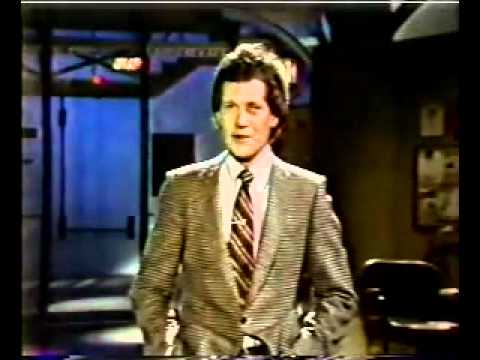
On this date in 1982, Dave’s show replaced Tom Snyder’s ‘Tomorrow’ show, and at the end of the first week, the ratings were 30% better than Snyder’s.

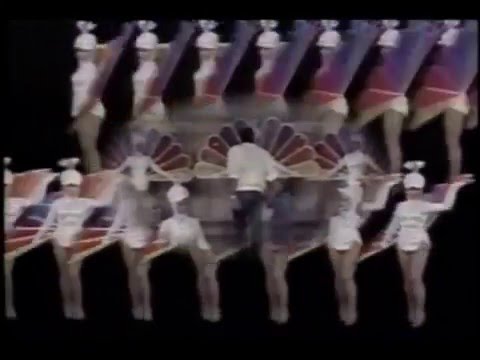
These three clips are from the debut night and show us the start, a tour of Studio 6A which ends in the control room with Director Hal Gurney leading the singers (you’ll see) and Dave’s first guest Bill Murray.

There are too many thing to list that made the show a hit and “different”, but here’s an example from that first week that had everyone talking. On the third night, baseball great Hank Arron was on and after his time with Dave, a camera followed him backstage where Marv Albert did a “post interview, interview” to see how it had gone, just like a post game interview.

We love you and miss you Dave, and thank you for all the laughs along the way! Enjoy your retirement…you’ve earned a rest. -Bobby Ellerbee

Show Open

Studio 6A Tour

First Guest, Bull Murry

Source

ABC, CBS, NBC Anniversary Shows…Saturday Through Tuesday!

ABC, CBS, NBC Anniversary Shows…Saturday Through Tuesday!

Over the next four days, we’ll have the commercial free anniversary shows from the Big 3! Tomorrow, we start with the oldest network, NBC. On Sunday, it’s CBS and on Monday, ABC. Then on Tuesday, we’ve got Television City’s 50th anniversary show for you. Be ready for some great history and many major memories! -Bobby Ellerbee

Source

NBC 60th Anniversay Show…Mega Memory Tour #1


NBC 60th Anniversay Show…Mega Memory Tour #1

From now through Tuesday, we’ll have the NBC, CBS and ABC network anniversary shows for you here, plus a couple of surprises, but now, it’s time for tour #1.

This is 2 1/2 hours of NBC’s glorious history without commercials…well, almost. Ed Herlihy is here to tell you about the Kraft commercials he did, and we’ll see him in this NBC Tour themed production that has kind of a clunky intro, but all through this, there are a lot of looks at 30 Rock and Burbank, where it was all shot.

NBC has presented more recent anniversary specials, but none of those are available in their entirety like this one. As part of the tour, Milton Berle stands outside Studio 6B and confirms that the first TV show from that studio was his “Texaco Star Theater”.

Hope, Paar, Carson, Jolsen, Vallie, Chancelor, Allen, Huntley, Brinkley, Pauley, Cantor, Martin, Lewis, Abbott, Costello, Landon…westerns, dramas, soaps, sitcoms, news, radio, milestones, sports…it’s all here! Enjoy and share! -Bobby Ellerbee

https://www.youtube.com/watch?v=PiQT81Pe0uY

On May 12, 1986, more than 100 stars celebrated the National Broadcasting Company’s 60 years on the air in this special that features the debut of the new (a…

Source

CBS 75th Anniversay Show…Mega Memory Tour #2

CBS 75th Anniversay Show…Mega Memory Tour #2

From now through Tuesday, we’ll continue NBC, CBS and ABC network anniversary shows for you here, plus a couple of surprises, but now, it’s time for tour #2.

This is 2 hours of CBS’s glorious history as it was presented in 2003, and like NBC, CBS has presented more recent anniversary specials, but none of those are available in their entirety like this one.

Gleason, Benny, Burnett, Cronkite, Griffith, Sullivan, Newhart, MTM, Barker, Skelton, Letterman and all the great shows from westerns, dramas, soaps, sitcoms, news, radio, milestones, sports are all here! Enjoy and share! -Bobby Ellerbee

ABC 50th Anniversay Show…Mega Memory Tour #3


ABC 50th Anniversay Show…Mega Memory Tour #3

Today and tomorrow, we’ll continue NBC, CBS and ABC network anniversary shows for you here, plus a couple of surprises, but now, it’s time for tour #3.

This is 3 hours of ABC’s glorious history as it was presented in 2003, and like NBC and CBS, ABC has presented more recent anniversary specials, but none of those are available in their entirety like this one.

Dick Clark, Barbra Walters, Hugh Downs, John Trivolta, The Beaver, The Fonz, Cosel, Luke and Laura, and all the great shows from westerns, dramas, soaps, sitcoms, news, milestones, sports are all here! Even a nice TK41 as a backdrop. Enjoy and share! -Bobby Ellerbee

https://www.youtube.com/watch?v=I5OSbgbmo6Y

Includes commercials and a WFTV news open (seen on sister channel OTownNews). All copyrights are acknowledged. NO COPYRIGHT INFRINGEMENT INTENDED! SOLELY FOR…

Source

January 30, 1950…NBC Studio 8H Debuts As A Television Studio

January 30, 1950…NBC Studio 8H Debuts As A Television Studio

Actually, “The Voice Of Firestone” radio show had been simulcast from Studio 8H on September 5, 1949, and before that, at least two simulcasts of Arturo Toscanini conducting the NBC Symphony Orchestra were done from 8H as early as 1943. All of those broadcasts had all been handled as remotes though, as there were no television facilities in the studio then.

Around the end of August of ’49, 8H was closed and totally redone at a cost of over a million dollars.

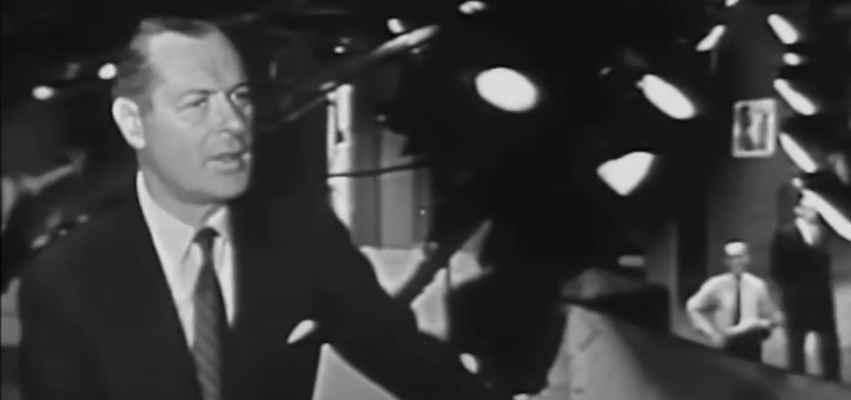
The first show that we know of that came from the new television studio was NBC’s new one hour anthology series, “Robert Montgomery Presents”, with the debut episode “The Letter” being broadcast at 8 PM January 30, 1950, for a double debut of sorts.

Seen above it Robert Montgomery opening the show in it’s usual way, perched above the studio floor where the live production is about to take place in 8H.

When NBC began broadcasting from it’s new 30 Rockefeller Plaza location on November 11, 1933, the first radio show came from 8H, or as it was called then, The Auditorium Studio. It was the largest of the 27 studios in the building with 8G, also known as The Radio Guild Studio, second in size.

HAPPY BIRTHDAY 8H! -Bobby Ellerbee

Source

Inside Breaking News…Live At CNN For The Challenger Disaster

Inside Breaking News…Live At CNN For The Challenger Disaster

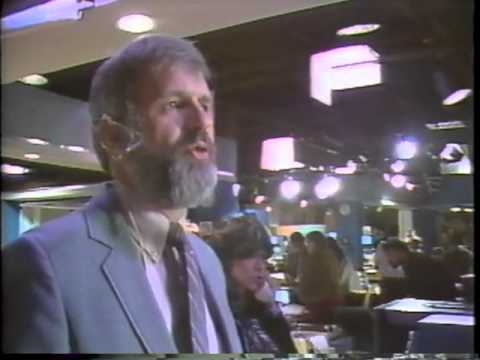
On January 28, 1986, about a half hour before the Challenger space shuttle was launched, a CNN tape crew had come into the main news studio to shoot a feature on how the news is covered. What their camera recorded in Atlanta was the same kind of chaos erupting across the country in other news rooms. Where were you when you heard the news? -Bobby Ellerbee

A crew just happened to be in the CNN Newsroom/ Studio shooting promotional/documentary footage of a random day’s work at the network. This is their montage …

Source

January 27, 1991…Whitney Houston Mesmerizes America

January 27, 1991…Whitney Houston Mesmerizes America

The Story Of The Best Ever Version Of “The Star Spangled Banner”

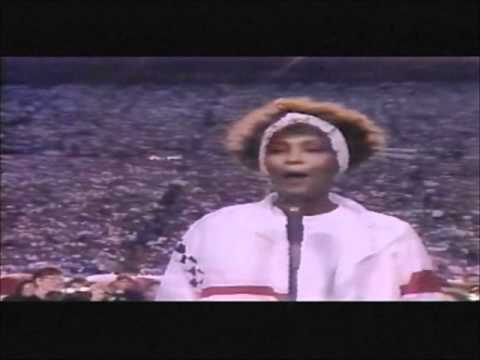
Here is our national anthem sung like never before, and the backstory of how it came to be. Please watch it with the volume high and don’t be surprised if you tear up to, what most consider, the most moving rendition ever.

Few know that the entire performance was prerecorded…music and voice. In order to keep the performance from sounding thin, as most stadium performances tend to be, Houston wanted the great arrangement, to be as powerful and moving as it was when she first heard it ten days earlier.

This performance was the opening of Super Bowl XXV at Tampa Stadium, January 27, 1991…10 days into the Persian Gulf War. Whitney was backed by the Florida Orchestra along with music director Jahja Ling, before 73,813 fans, 115 million viewers in the United States and a worldwide television audience of 750 million.

When asked to perform, Houston knew instantly how she wanted to interpret the tune. Rickey Minor, her longtime musical director, and later Jay Leno’s band leader, said that in a crowd that large and loud, it would be impossible for Houston to hear herself, so in order to have the most powerful performance, the decision was made to prerecord both the music and vocals.

Although there was no audio from her mic, there is no question that she sang this with all her heart live, but it was her pre-recorded voice that the audience heard. She did it in one take in the studio!

The NFL had no qualms about the song being prerecorded, even if Houston would be criticized for it. The NFL’s issue was with the meter. “The Star-Spangled Banner” is written in 3/4 time — not quite brisk, but waltzy. Houston and vocal arranger Minor, as well as bassist-arranger John L. Clayton, changed it to 4/4, slowing it down.

“All was in place for what many of us thought would be one of the greatest versions of the national anthem ever performed,” said Jim Steeg, who for 25 years had been in charge of the Super Bowl for the NFL.

“Then on Jan. 17,” as Steeg further recalled it, “senior executives with the NFL asked to hear the recording. A tape was overnighted to Buffalo, where the AFC championship game was played. The next day I was told the version was viewed as too slow and difficult to sing along with. Could I ask to have it redone.” Perhaps the NFL was afraid there would be discontent in the stands, as there had been when Jose Feliciano dared to stray in the anthem before Game 5 of the 1968 World Series. So Steeg called John Houston, Whitney’s father and her manager at the time. “The conversation was brief,” Steeg said. “There would be no rerecording.”

Houston’s performance electrified the stadium and soon after, popular demand prompted Houston’s record label to release a single of her national anthem performance that hit the top 20 on the Billboard charts.

“I think it might well be the best Super Bowl performance of all time, ” said Billboard Magazine editor Danyel Smith. I AGREE! God Bless America! -Bobby Ellerbee

January 26, 1992…First Successful Super Bowl Counter Programming

January 26, 1992…First Successful Super Bowl Counter Programming

CLASSIC! Men On Football…’In Living Color’

This is one of my all-time favorite comedy pieces from “In Living Color”! This whole thing is funny, but it heads for the outer limits at about the 4:30 mark, so do not drink anything after that unless you want to blow it out of your nose!

This was a special live episode (usually it was prerecorded) that aired on Fox, Sunday, January 26, 1992 and was broadcast opposite the Super Bowl XXVI halftime on CBS. It drew about 25 million of those viewers. After the half hour live special, most returned to CBS which had an audience estimated at 79.6 million viewers.

This was the first time that a major television network successfully scheduled Super Bowl counter-programming. The ‘In Living Color’ Super Bowl halftime special was branded by the network as ‘The Doritos Zaptime-In Living Color Super Halftime Party’.

During the “Men on Football” sketch, Damon Wayans and David Alan Grier adlibbed a suggestion that Richard Gere and track and field star Carl Lewis were gay. Lawsuits were filed and the tape was edited for reruns and syndication. This is the original unedited version! Enjoy and share! -Bobby Ellerbee

Source

January 25, 1961…Television’s First Live Presidential News Conference


January 25, 1961…Television’s First Live Presidential News Conference

There are three videos with this article; the embedded footage is of President Kennedy hosting the first live news conference, and notice at 10:05, a reporter asks if taking questions live is a good thing given that live there is the occasion to mis-speak and rile international tensions (hint, hint), and the second video shows Kennedy’s amazing grace and humor. The third is part of Eisenhower’s first televised news conference that was shot on film.

On this day in 1961, President Kennedy held the first ever live presidential news conference. It originated from the auditorium of the State Department and was carried live on both radio and television.

In the period preceding the Kennedy presidency, the rules governing press conferences favored the president. The sessions were off-the- record events, from Woodrow Wilson through Harry Truman. If the president said something he believed unwise, he could alter the quote.

President Truman, for example, was able to back away from a comment about Senator McCarthy that he made in a March 30, 1950, press conference. Truman said: “I think the greatest asset that the Kremlin has is Senator McCarthy.” When one of the reporters commented that the president’s observation would “hit page one tomorrow,” Truman realized he had better soften the statement. He “worked” with reporters and allowed the following as a direct quotation: “The greatest asset that the Kremlin has is the partisan attempt in the Senate to sabotage the bipartisan foreign policy of the United States.”

When the rules governing press conferences were off the record, chief executives held them once or twice a week. In fact, Calvin Coolidge, who held the most press conferences for the number of years he was in office, had 521 sessions or an average of 93 a year. But once they went on the record in the Eisenhower administration, the numbers dropped drastically. Now they had to take time preparing for the sessions and then be careful what they said when answering questions. Eisenhower and Kennedy respectively had 24 and 23 press conferences a year.

The first televised (film footage) press conference was held January 19, 1955. President Eisenhower came into the Indian Treaty Room, a room with poor acoustics and limited seating and announced the “experiment” they were about to be part of. https://www.c-span.org/video/?c4480322/president-eisenhowers-first-televised-press-conference

In fact, television made an enormous difference in the significance of press conferences in presidential publicity. It has been a “disturbing influence”—presidents have made mistakes though only rarely—but the sessions also have been an enormous resource for presidents as they seek to explain policy and themselves to the public.

President Kennedy was able to assimilate the new technology into an invigorated presidency, much as he had during the campaign and in the presidential debates. Kennedy’s press conferences were in many ways a symbol of his successful use of television to promote his active agenda.

http://www.youtube.com/watch?v=mXDLLUOxmsY At this link is a video that reminds us of JFK’s easy style in these press conferences. He was the first American president to really understand television and how to use it to his advantage, which started during the campaign.

The image of a fast-paced presidency was not an illusion in the Kennedy years. It was real. Take the pace of their public speeches. President Eisenhower and President Kennedy had a few more than 700 speeches and remarks, big and small, during their presidencies. For President Eisenhower those public remarks covered eight years and for Kennedy, it was less than three years. Many of those speeches got to the public either through their being televised or through news broadcasts.

Because of the high demand by reporters for seats, the conferences had to be moved from the White House compound where they were held first in the president’s office – Wilson through to Truman – and then moved to the larger Indian Treaty Room in the Truman and Eisenhower administrations. Even that room turned out to be a cramped space. Kennedy moved them here in the State Department auditorium where there was more space for the 200+ reporters covering him and his press conferences.

Reporters were more willing to challenge the new president than was true in the Eisenhower years when the goodwill from World War II was still in the air. At the end of the Eisenhower administration, reporters lost their willingness to take at face value the government’s accounting of events.

The U2 spy plane incident changed the relationship for many reporters with their government. It was an incident where the US government was caught in a lie – it was a spy plane the Soviets shot down, not the weather plane the White House said it was. When reporters found out they were lied to, they became wary of the accounts they received from White House officials.

The incoming team of reporters, many of whom followed Senator Kennedy as he campaigned for the presidency, caught the public eye as did the new president. They all prospered from press conferences where each side sought to establish control in its relationship with the other. And so it goes. -Bobby Ellerbee

https://www.youtube.com/watch?v=lFde6u-OPj8

President Kennedy begins the press conference with a statement concerning the scheduling of the Geneva negotiations for a nuclear test ban. He then announces…

Source by [author_name]

70 Years Of Billboard Magazine…Massive Memory Lane Archive

70 Years Of Billboard Magazine…Massive Memory Lane Archive

At this link, are full copies of every weekly Billboard Magazine from 1940 through 2010. Although from the mid ’60s on, Billboard’s main focus was records, radio and music, the late ’40s through the late ’50s issues have a good bit of television news at the start of each issue.

https://books.google.com/books/about/Billboard.html?id=KwsEAAAAMBAJ

On the page, use the sliding bar under the covers to pick a date, like your birthday to see what was happening then and click on the image. Just under the cover image that pops up, there is a “Preview this magazine” option in blue..click that to see the whole issue. Enjoy and Share! -Bobby Ellerbee

Source by [author_name]

January 23, 1975, 1977 & 2015…Debuts And Milestones


January 23, 1975, 1977 & 2015…Debuts And Milestones

“The Bold And The Beautiful”, “Roots” And “Barney Miller”

On January 23, 2015 CBS celebrated the 7000th episode of
“The Bold And The Beautiful” with a special milestone episode that broke format and featured a retrospective that showcased the most iconic moments and the history of the show’s creation.

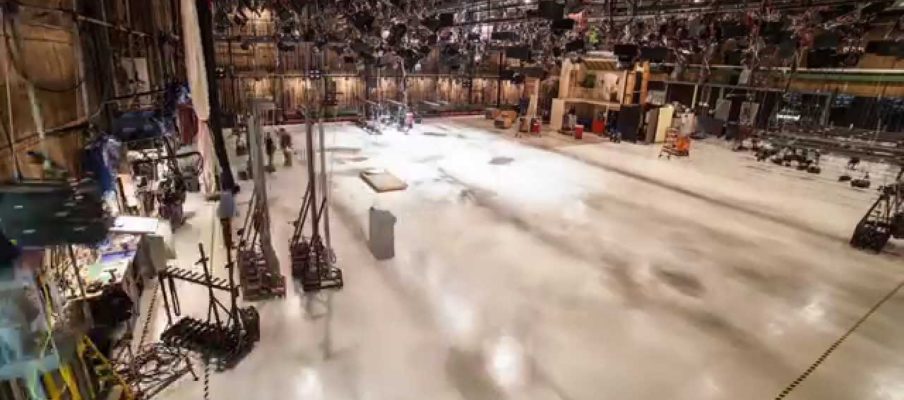
In addition, CBS Television City dedicated Studio 31 to the show’s executive producer and head writer Bradley P. Bell. Here is a time lapse video of Studio 31 being dressed for the show.
https://www.youtube.com/watch?v=3kIJYrkmgF0

40 years ago today, “Roots” began airing on ABC for eight consecutive nights from January 23 to January 30, 1977. Over half of the country tuned in to watch and soon after, a wave of awards washed in. In this video from “The Wendy Williams Show” the stars talk about some interesting things that happened on the set.
http://www.youtube.com/watch?v=5EqO1680evM

Today in 1975, “Barney Miller” Debuted On ABC. The series was born out of an unsold television pilot, “The Life and Times of Captain Barney Miller”, that aired on August 22, 1974 as part of an ABC summer anthology series, “Just for Laughs”.

In the pilot, Linden and Vigoda were cast in their series roles, but no other other eventual cast members were present. That pilot was shot on film at CBS Studio Center, where the sets of the 12th Precinct and the Miller apartment were originally built.

When the regular series went into production in late 1974, the series went to videotape, and the sets were moved to the ABC Television Center in Hollywood, and later to ABC at Sunset Gower, where they remained until production ended on the series in 1982.

At this link, https://youtu.be/lnn1jQmAGzk?t=46s Hal Linden talks about how the show was shot. Enjoy and share! -Bobby Ellerbee

The Bold and the Beautiful time-lapse video of The Bradley P. Bell Stage 31 at CBS Television City, in honor of 7,000 episodes, is a behind-the-scenes look a…

Source by [author_name]

KTLA Anniversary Show

MUST SEE HISTORY OF EARLY LOS ANGELES TELEVISION!

KTLA’s 70th Anniversary Is Today! January 22, 1947 – 2017

This amazing video is packed with ultra rare historical footage of not only KTLA, but from the early days of all the Los Angeles television stations!

The show is hosted by Bob Hope, Betty White, Steve Allen, Dinah Shore, Dick Enberg and MANY more! This 40th Anniversary broadcast video even has a very good timeline below, but if you can, make the time to see it ALL!

This is one of the very best historical presentations you will ever see!

Below are minute to minute guides to help you take this all in…it is packed with history! 

0:00 Program opening.

1:47 Clips from “The Jazz Singer.” History of the creation of television.

2:25 Early newsreel showing early television makeup.

2:50 Early television broadcasts of KTLA Channel 5.

4:30 Bob Hope talks about early television. Early television broadcasts. Great studio shots of that first day & Hope on camera.

8:06 1936 Olympic broadcasts. Klaus Lansberg, early television man. Station W6XYZ established. Early home shopping program.

10:04 Eddie Resnick, early cameraman talks about his work at the station. Pray Marco was a show similar to the lottery. Mike Stokey’s Pantomime Game Time, a show like pictionary. 1949 first Emmy Awards at Hollywood Athletic Club. Pantomime Quiz won best show.

12:09 Shirley Dinsdale with Judy Splinters (puppet) talks about winning first Emmy for most entertaining personality. Six awards were given at this first Emmy Awards show, and four went to KTLA. List of stations and when they began.

13:37 The Marshall of Gunsight Pass, early Western show. Clip from 1949. Al Jarvis, former radio disk jockey, had talk show with Betty White. Yer Ole Buddy, early comedy show. Clip from 1948. Bud Stefan talks about the show. Bill Welch did early sports shows. Talks about how many lights were needed in the studio due to the low sensitivity of the cameras.

18:07 Music and variety shows. Steve Allen talks about variety shows and venues in Santa Monica. He shot the shows that took place there.

25:10 Frosty Frolics, an ice skating show from Pasadena with host Stan Chambridge. Musical Adventure with Korla Pandit clip. Pandit talks about the show. Larry Finley talks about program he did called “Sell-a-thon.”

30:42 The Johnny Otis Show from 1960. Steve Allen talks about clip from 1962 from his show that involved a lot of pie throwing. Show called Melody Ranch with Gene Autry. Autry talks about how he changed the station after he bought it. Liberace show from 1951, Carson’s Cellar from 1952.

34:57 Early KTLA commercials.

36:03 Sponsor info.

36:17 Dinah Shore show from 1951 with Chevrolet ad. Shore talks about her early television days. Segment on “reality shows.” 1949 clip from City at Night. Ken Graue talks about the show, which was completely improvised and live. John Polich supervised the show; he talks about it.

39:05 Handy Hints with Dick Garten and Dorothy Gardiner. Hollywood Reel, which looked at stars. Clips of Barbara Bel Geddes and Ronald Reagan. Shore talks about early videotape programs, such as Emergency Ward and the Jack LaLanne show, an exercise show from 1958. LaLanne talks about the early resistance to his program. He claims to be the first to get athletes and women to work out with weights. Seven Keys, an early game show from 1960. Jack Narz talks about the show.

44:19 Adventures in Hypnotism, a live program where people get hypnotized. Emile Franchel was the host/hypnotist. Ralph Story’s Los Angeles from 1965, a public service program. Hal Style’s Help Thy Neighbor. The Baxters, hosted by Steve Edwards, clip from 1979.

47:30 Scared Straight, a documentary hosted by Peter Falk where juvenile delinquents are confronted by prisoners, from 1978.

48:30 Stan Freeberg talks about children’s programs. Time for Beany, puppet show from 1949. Daws Butler, one of the puppeteers, talks about the show. Sandy Dreams, first show with written script. Space Patrol from 1950. Tim McCoy show with Native American actor, Iron Eyes Cody. Playcrafters Club from 1954. Ding Dong School from 1960.

55:22 Cartoon Express with Engineer Bill. Bill Stula talks about the show. John Rovick talks about his role as Sheriff John. Shebang! With Casey Kasem. Clip of The Doors on the show.

1:03:55 Freeberg claims he got a letter saying that Time for Beanie was Albert Einstein’s favorite show.

1:04:40 Commercial for Calvin Klein’s Obsession for men cologne. Commercial for Toyota dealers of Southern California. Ad for Disneyland. Ad for Derma-Safe laundry detergent.

1:06:51 Hal Fishman news at ten story promo. Ad for Disneyland Circus Fantasy 87 and Carl’s Jr. Ad for Columbia Savings. Ad for British Airways. Ad for Renault Medallion.

1:09:10 Section on sports with Dick Enberg at the Olympic Auditorium. Destruction Derby, Roller Derby, Moto Polo clips. Bowling for Dollars show clip from 1970. Wrestling clips from 1950. Sports Stars on TV. The Tablehopper clip from 1959. Miss Universe Pageant clip from 1956.

1:18:30 American Express ad. Ad for Ralph’s supermarket. Ad for Pan Am airlines. Ad for Dreyer’s Grand Ice Cream. Ad for Campbell’s soups. Ad for Southern California Hyundai Dealers. Ad for Jack in the Box restaurants.

1:22:22 Hal Fishman at atomic test site in Nevada talks about news coverage. Footage of TV coverage of the test. Klaus Landsberg set up the coverage. Clip from War of the Collosal Beast. Stan Chambers, news reporter for over 40 years. Cleve Lansberg talks about watching his father direct television shows. Various newscasters relate anecdotes.

1:36:48 George Putnam talked about the early days at KTLA. Other newscasters talk about the early days of television.

1:38:53 Section on weathermen. Jim Hawthorne talks about the first weather broadcasts. Dr. George Fishbeck talks about his forecasts. Pat Sajak talks about being a substitute weatherman, which eventually led to his being asked to host the Wheel of Fortune show.

1:41:52 Ad for Oppenheimer Mutual Funds. Ad for Renault Medallion. Ad for Blue Cross of California. Geraldo Rivera does ad for show called Innocence Lost. Sponsor info. Ad for American Express. Ad for Ralph’s supermarket.

1:46:24 Clip from “The Jazz Singer.”  Information about KTLA’s current situation. They were just purchased by the Tribune Corporation. There is a list of events that they plan to cover and a promo for the night time news. Shots of old studios and what they are being used for now. Montage of shots from early programs with Simon and Garfunkel song.

1:51:33 Tape ends abruptly.

A Day In The WABC TV News Room…1973

A Day In The WABC TV News Room…1973

In an a year that has been so tumultuous for the television news business, when even fair and accurate reporting has come under attack, I thought this would be a good time to take a look back at how the process actually unfolds at a big local news department.

This great video is nearly a half hour long, and takes us through a full day of activity at the WABC news room, and studio. From assignment editors handing out local stories to crews and reporters, including Geraldo Rivera, to rushing film via motorcycle couriers back for editing, and finally to air with anchors Bill Beutel and Roger Grimsby.

According to the address above the door, this newsroom was at 77 West 66th Street, at the corner of Columbus Avenue, where the WABC news studio is now. The street numbers, and the ABC campus have changed a bit over the years and I think the live studio they were running to is in what is now 77 West 66th.

As you will see, the studio is a few buildings down, and was perhaps in 7 West 66th. Every piece of film and graphics, and talent had to make the mad dash down the street to the studio building.

You may have noticed the redundant use of the word “film”, but in ’73…that was still the main medium for news. At least it was color though, and took 40 minutes to develop.

The process of getting the script to teleprompters starts at around 18.5 minutes in and the broadcast shots come soon after.

Some nice shots of the editing process here, and the Norelco cameras have the extra tall dome tally lights…interestingly, only the very top of the tube light illuminates and you’ll hear the anchors discuss that at the very end, after the broadcast. Those tall tally lights were after-market-add-ons and were made to be taller than the teleprompters most mounted above the lens, but WABC is using and under lens setup.

Even for those of us not from New York, there are a lot of memories here like the Vietnam war protest Geraldo is covering, Burt Reynolds and Dianne Canon who are making “Shamus”, and for New Yorkers, a lot of drive by memories from the news cars.

Thanks to long time ABC cameraman Howie Ziedman for the video link. Enjoy and share! -Bobby Ellerbee

Source by [author_name]

January 18, 1929…CBS Becomes A Broadcaster

January 18, 1929…CBS Becomes A Broadcaster

Until this day in 1929, the Columbia Broadcasting System was merely a program service providing radio entertainment features to a string of 16 stations connected by an AT&T line. With the purchase of the A.H. Grebe, Atlantic Broadcasting Company’s Manhattan based station, WABC…CBS itself was on the air. (November 2, 1946, WABC call letters changed to WCBS).

There is an interesting story on why this happened, which involves WOR, but first, here is my brief history of The Columbia Broadcasting System.

In early 1927 Arthur Judson, the impresario of the Philadelphia and New York Philharmonic orchestras, approached the National Broadcasting Company (NBC), which at the time was America’s only radio network, with an idea to promote classical music by airing orchestra performances. NBC declined.

Undaunted, Judson founded his own broadcasting company, which he named United Independent Broadcasters, Inc. (UIB).

Lacking a strong capital base, UIB struggled to stay afloat. However, in the summer of 1927, Judson found a rich partner in the owner of Columbia Phonograph Company, Louis B. Sterling. Columbia Phonograph bought UIB’s operating rights for $163,000. The new company was named the Columbia Phonograph Broadcasting System.

Columbia Phonographic took over on September 18, 1927, with a presentation by the Howard Barlow Orchestra with network affiliate WOR in Newark, New Jersey, feeding fifteen other UIB network stations. Operational costs were steep, particularly the payments to AT&T for use of its land lines, and by the end of 1927, Columbia Phonograph wanted out.

In early 1928, Judson sold the network to brothers Isaac and Leon Levy, owners of the network’s Philadelphia affiliate WCAU, and their partner Jerome Louchenheim. Soon after, the Levy brothers had involved their soon to be relative, 26 year old William S. Paley, who’s sister was engaged to Leon Levy. Paley was the son of a well-to-do Philadelphia cigar maker.

With the record company out of the picture, Paley quickly streamlined the corporate name to Columbia Broadcasting System. Paley had come to believe in the power of radio advertising since his family’s La Palina cigars had doubled their sales after young William convinced his elders to advertise on radio the year before.

Although the network was growing, it did not own a radio station of its own…yet. In December of 1928, CBS bought A.H. Grebe’s Atlantic Broadcasting Company in New York City with the call letters WABC (no relation to the current WABC), which would become the network’s flagship station.

Now, here’s the story behind why CBS bought WABC.

It was Grebe’s hope to expand the Atlantic Broadcasting Company into a network operation, now that NBC has shown the way. But in September 1928, an opportunity arose that would make this station one of the major players in radio history.

The Columbia chain did not own an outlet in New York. Its local affiliate was WOR, which became convinced they could produce local programs of equal quality to the CBS shows.

When WOR refused to clear additional time for the CBS network, WABC stepped in to become the second NYC affiliate, a move it hoped would justify a power increase. For a few weeks in late 1928, WABC was the CBS station on Sunday, Tuesday, and Thursday, with WOR carrying the network on the other four days, but soon WOR dropped CBS completely.

In November 1928, Columbia offered to buy either of its New York area affiliates, and President William S. Paley negotiated with both Grebe and Bamberger. WOR’s facilities were superior, but Paley chose the less-expensive WABC, and in December the sale was completed.

The sale price was $390,000, though the appraised value of the studios and transmitter was just $130,000. Grebe had apparently let the WABC studios go to seed, for Paley reported a mess on the seventeenth floor of Steinway Hall. Among the assets were goods accepted as payment from sponsors; jewelry, kitchenware, and reportedly even some live chickens.

WABC came with a bonus though…it was located in the brand new Steinway Hall at 109 West 57th Street in Manhattan, across the street from the Carnegie Hall.

Concerts were broadcast from the Steinway concert halls downstairs, but upstairs, there were only 4 rooms. In need of studios and offices, the network moved in July 1929 into the bottom six floors of a new building at 485 Madison Avenue at 52nd Street, in the heart of the advertising community.

Initially, six studios were built on the 4th, 5th and 6th floors of the CBS space, and the bottom three floors were the CBS sales and programming offices. Eventually, CBS would take over the building and occupy if for the next 35 years.

Within a few years, CBS had nearly 50 stations in its network. Since the number of affiliates a network possesses determines the number of people it can reach, which in turn determines what a sponsor is charged, CBS was soon on firm financial ground. By 1930 CBS had 300 employees and total sales of $7.2 million. Enjoy and share! -Bobby Ellerbee

Source by [author_name]

Television & The Presidential Inaugurations…Part 1

Television & The Presidential Inaugurations…Part 1

President Harry Truman’s January 20,1949 inauguration was the first to be televised to the 2,000,000 sets in use in the US, but television did not reach the west coast until Truman’s 1952 speech from San Francisco was telecast.

In the photo, the raised platform is for the radio reporters, newsreel cameras, and two pool TV cameras, with at least one more live camera in use on the ground, and perhaps more. I think this was the only televised part of the day, with no live TV coverage attempted on the parade portion.

At the link is a rare kinescope recording of Truman’s Inaugural Address. https://www.youtube.com/watch?v=gytbJo_bmxA

Here are some mass media firsts associated with covering the inaugurations over the centuries.

First ceremony to be reported by telegraph: James Polk, 1845.
First ceremony to be photographed: James Buchanan, 1857.
First motion picture of ceremony: William McKinley, 1897.
First electronically-amplified speech: Warren Harding, 1921.
First radio broadcast: Calvin Coolidge, 1925.
First recorded on talking newsreel: Herbert Hoover, 1929.
First television coverage: Harry Truman, 1949.
First live Internet broadcast: Bill Clinton, 1997.

Here is the first inauguration to ever be captured on motion picture film. It is that of Willam McKinley on March 4, 1897.
https://www.youtube.com/watch?v=pO_aOe_FM2Q

In 1937, Franklin Roosevelt took the oath of the Presidency for the second time, but for the first time on January 20th. The 20th Amendment changed the date from March 4 to January 20 when it was ratified in 1933.

More on soon! -Bobby Ellerbee

Source by [author_name]