- Home
- TV History
- Network Studios History
- Cameras
- Archives
- Viewseum
- About
Manual Graphics…1952 Election Coverage At ABC
This is a far cry from where we are now, but this is the way it was done back when television was just taking baby steps. The ABC stagehand in the large photo is one of several men behind the big totals board. Each plastic ring has 0 through 9 on it and with the latest vote tabulations called out to them, these men moved the numbers on the board. On this night, Walter Winchell was the network’s television and radio anchor. These photos are more than likely from ABC Studio TV 1. Enjoy and share! -Bobby Ellerbee
1950s Demo Reel…Local Market Weather Package
These twenty second forecast pieces were usually not in lieu of a local weather report inside a regular newscast, but were used during the day as sponsored “public interest” spots with a ten second sponsorship slide and VO at the top of each one.
Telecine rooms were always busy back in those early days. It was all manually done with film, slides and live VOs and very “by the book” as the book had all the break and run times, slide and film numbers and live VO scripts. Stations that used this package would have had all these on separate mini reels with leader at the front and back end and woe be unto you if the box and reel numbers got mismatched. Enjoy and share! -Bobby Ellerbee
Analogue Graphics Display…The 1964 Version
With several stories on computer graphics and the like lately, I thought taking a look at how thing were done before all that came along would be fun and I’ll share a few with you this morning.
This is a WHDH Boston Celtics player info box complete with changeable photo cards and a small control box. Thanks to Maureen Carney for the photo. Enjoy and share! -Bobby Ellerbee
New Richard Wirth Article…The SMPTE Time Code
This is a perfect detailed follow up to the Smith Block and video editing stories I posted. Here’s the story of how the time code came to be and, having been around for almost half a century, how it has withstood the test of time.
Some of the most interesting parts of this are the rare videos he found while doing the research – like the CMX600 promotional film that gives a detailed demonstration of the first nonlinear editor in detail by taking you through the editing of a musical piece. Thanks to our friend Richard Wirth for composing this very interesting article. Enjoy and share! -Bobby Ellerbee
Continuing Election Coverage At CNN…A Look Inside Event Control
Thanks to our friend Andy Rose, here is a look inside CNN Atlanta and one part of the network’s technical tasking for the still ongoing CNN election coverage. This photo does not show a traditional control room. It is the “event control” in Atlanta used during special coverage. It coordinates incoming live signals and routes them to the control room in manageable blocks. At last count, there were 96 remote signals expected over the course of the night (counting reporters, guests, and candidates’ events) which would overwhelm a traditional control room. These signals are transmitted through a combination of fiber optics, IP networks, broadband, bonded cellular, and literally every satellite frequency that CNN has available. Enjoy and share! To all the very tired folks at all the networks and local stations, THANKS! -Bobby Ellerbee
November 3, 1956…The ‘Oz’ Tradition Begins On CBS
The first time ‘The Wizard Of Oz’ was shown on television was a Saturday night in November of 1956. Many have said that the debut broadcast was not in color, but this add from the Vineland Times Journal, in Vineland NJ settles that argument. It was indeed in color and this music store, which also sold color television sets, invited the public to watch at their store. By the way, RCA color sets sold for $495 and black and whites for $279 in 1956.
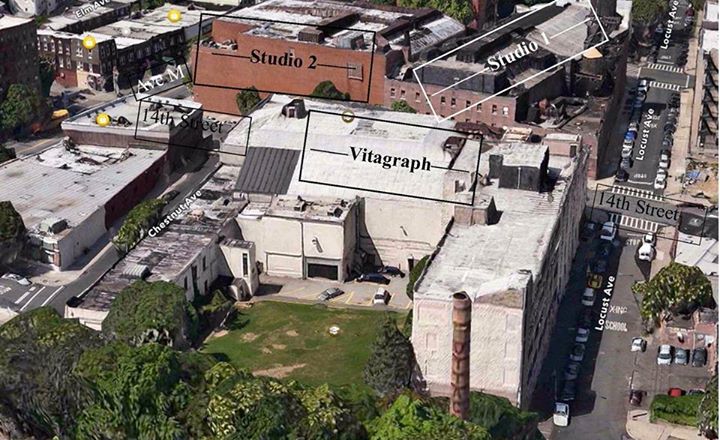
The year before, on March 7, 1955, NBC’s color broadcast of ‘Peter Pan’ from Brooklyn’s Studio I was a smash and CBS wanted a big color family affair too and broadcast ‘Oz’ as the last installment of the CBS anthology series ‘Ford Star Jubilee’.
It was a hit, but the annual tradition did not start till 1958 when CBS aired it a second time, but from then on, it was moved to an air date between Thanksgiving and Christmas. I’m glad to be able to say that I saw both the ‘Peter Pan’ and ‘Oz’ debuts, but only in glorious black and white. I think we got a color set in 1964. Do you remember? Thanks to David Crosthwait for the ad. Enjoy and share! -Bobby Ellerbee
This Should Be Interesting! Leno As “Tonight’ Guest This Friday
Jay Leno Is Returning to ‘Tonight’ on Friday
Jay Leno is returning to Tonight. The former host of the NBC late-night show will be back in its studio on Friday night for the first time since passing the baton to Jimmy Fallon. (Though he made a cameo in Fallon’s parody “House of Cue Cards” earlier this year, the upcoming episode will mark his fi…
The End…Universal Stage 28 Demolished, September 22, 2014
The Joni Mitchell lyric, “they tore down paradise to put up a parking lot” comes to mind now. As I understand it, the space where Stage 28 was will now be used as part of the Universal Theme Park expansion. Although this was built in 1925, there are six older stages here…Stages 3 & 4 and 5 & 6 and 16 & 17 were built in 1916.
To end on a high note, click the link to see The Red Hot Chili Peppers, 1996 video that shows one of the few times the 1938 vintage under-the-floor water tank has been used. Gone but not forgotten! Enjoy and share! -Bobby Ellerbee
Remembering Universal Stage 28…A Must See History Link
On September 19, a three day demolition job started and brought down one of the oldest movie sound stages in the world…by September 22, Stage 28 was gone. This is the best information I have seen on Stage 28 and at the bottom of this linked article is a stunning list of the many productions that were filmed here. I have one more post today on the demolition, but here are just a few of the movies and TV shows shot here.
‘Phantom Of The Opera’ 1925, ‘Uncle Tom’s Cabin’ 1927, ‘Dracula’ 1931, ‘Bride Of Frankenstein’ 1935, ‘Flash Gordon’ Serial 1936, ‘Psycho’ 1960, ‘Charade’ 1963, ‘The Birds’ 1963, ‘Thoroughly Modern Millie’ 1967, ‘Columbo’ TV Series, ‘The Sting’ 1973, ‘Jurassic Park’ 1993, and MANY MORE! The whole list is just amazing. Enjoy and share! -Bobby Ellerbee
http://www.thestudiotour.com/ush/frontlot/stage28.php
theStudioTour.com – Universal Studios Hollywood – Stage 28
Information and History about Stage 28 at Universal Studios Hollywood
Follow Up…Last Look At Universal Stage 28, The “Phantom Studio”
Only a month ago, the sound stage where ‘Phantom Of The Opera’ was shot, was torn down. That was Universal Studio’s Stage 28. In this post, I am including two videos that give us a last look at the original 1925 set before it was carefully removed and packed away for display at a later date.
The embedded video is :49 seconds and was taken by a Universal employee on the sly. The second video is at this link and is a longer look with 2 minutes of photos of the set and some interesting history from the presenter who is the niece of the man who ran Universal and built Stage 28…Carl Laemmle.
In 1924 Universal’s president, Carl Laemmle, commissioned the construction of a set of the Paris Opera House for the movie. Because it would have to support hundreds of extras, the set became the first to be created with steel girders set in concrete. For this reason it was not dismantled until this year. Stage 28 still contained portions of the opera house set and was the world’s oldest surviving structure built specifically for a movie. The studio was used in hundreds of movies and TV series and I’ll give you the incredible list of what famous movies were shot here and many more photos in today’s next post. Enjoy and share! -Bobby Ellerbee
https://www.youtube.com/watch?v=HDDzG2G3ExM
As an employee, and thanks to a kind security guard, I was able to film this footage of the oldest sound stage in the world. Stage 28 at Universal Studios, H…
November 4, 1957…Dick Clark Debuts “Great Balls Of Fire”
Just for fun, here’s a little piece of music and television history rolled into one. The song was recorded in Memphis at Sun Studios on October 8, 1957 and was the follow up to Jerry Lee’s first hit, “Whole Lotta Shakin”. This debut performance is on ‘The Dick Clark Saturday Beechnut Show’ on ABC from The Little Theater in New York. Notice the ultra quick “balls of fire” Lewis creates with magician’s flash paper while playing. -Bobby Ellerbee
https://www.youtube.com/watch?v=lidFipyLG8k
Jerry Lee Lewis Great balls of Fire Rock video
Best Photos Ever Of The Original NBC Color Mobile Units…
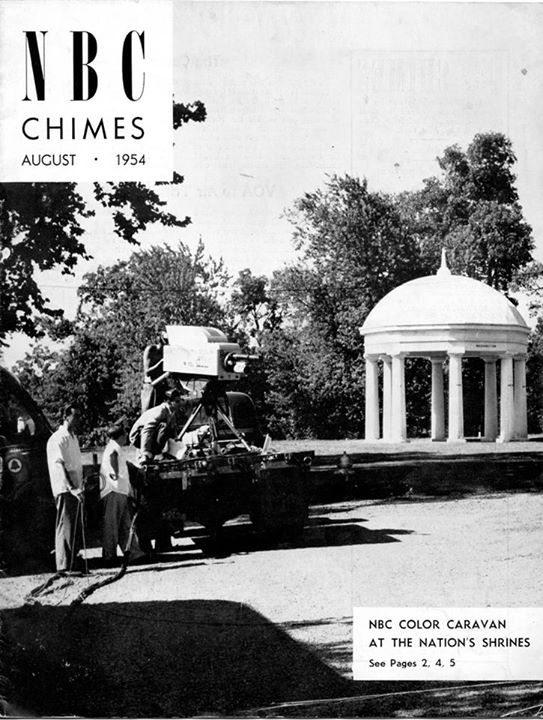
Thanks to Nicolas Auger, here is a great color photo of the first color mobile units ever. This picture was taken in Greenfield Village, Michigan near The Henry Ford Museum October 25, 1955 and NBC was there to shoot some of the museum’s activities for insert into ‘Today’ and ‘Home’, which is quite reminiscent of the 1954 Color Caravan tour.
The camera outside the school is shooting ‘Howdy Doody’ which was live from the Scottish Settlement School that day and was the third live colorcast from here. They were comparing 1855 to 1955.
The third vehicle is what I believe to be a black and white utility bus that came along with cable and scaffolding for this outdoor shoot of a recreated village from early American history. Images courtesy of The Henry Ford Museum Collection. Enjoy and share!
To Sports Fans, This Set Should Look Familiar…CBS Studio 43
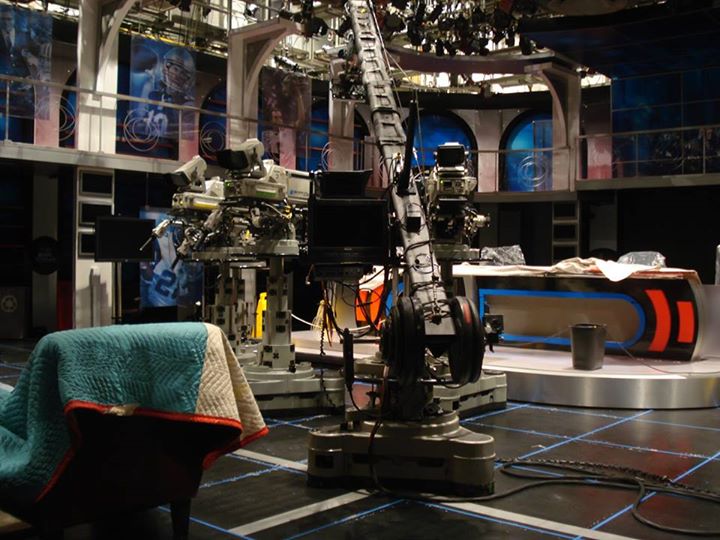
On Saturdays and Sundays during football season, this is ground zero for the CBS Television Network’s sports coverage. I make that distinction because next door, in Studio 44 is the CBS Sports Network cable channel’s headquarters set. This set in use year round for all sports, but I seem to see it more in the fall.
I took this back in June at the CBS Broadcast Center in New York and just to be clear, this is the NY Studio 43 as there is a Studio 43 at Television City too. Edited and corrected now. Enjoy and share! -Bobby Ellerbee
Meet The Cameramen Of ‘CBS Sunday Morning’
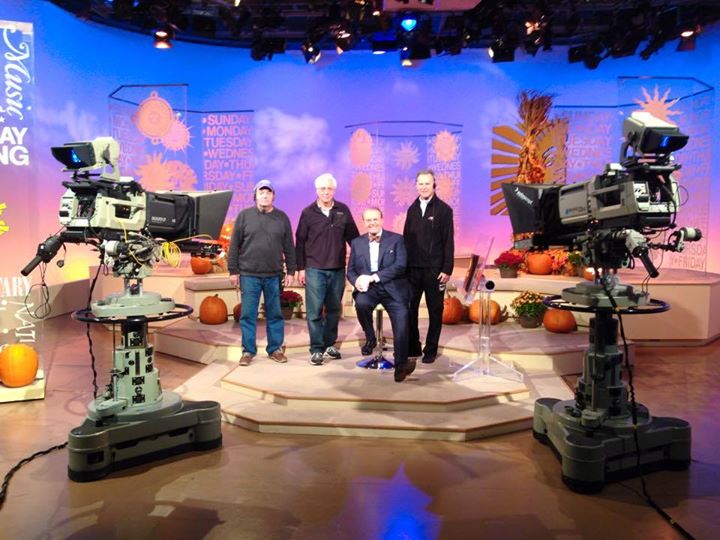
From left to right are Kevin Cavallini, Allen Brown and John Curtin shown here with the show’s great host, Charles Osgood. Every Sunday morning for 35 years, since day one in 1979, Allen Brown has been there and has been with CBS for 40 years.
Later today, I will be talking with not only Allen, but NBC veteran Frank Gaeta as well. I can’t wait to hear some of the stories about their years behind the camera and the shows they’ve done.
Also included here are some shots from yesterday’s show with a few more of the people that work in Studio 45 on Sunday mornings.
Thanks to our friend Craig Wilson for the always stellar photos. Enjoy and share! -Bobby Ellerbee
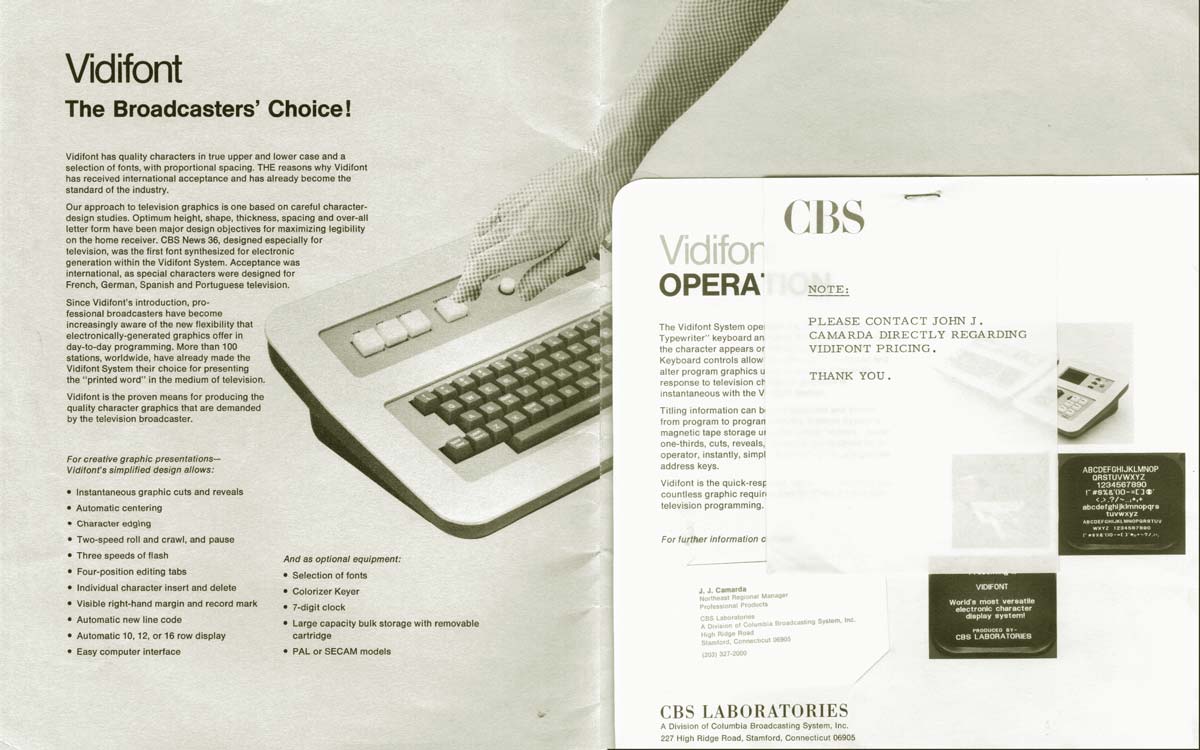
In Case You Missed It…Another Look At The Vidifont System
On Saturday, I posted the first article on television’s first character generator, but here is a much more illustrated article on Vidifont that I think you’ll like. Thanks to James Shea for sharing this in the Comment section a day or so ago. By the way…if you are not paying attention to the Comments section of these posts, your are MISSING A LOT! That’s where most of the great detail comes in and in most cases, that rich flow of new information is typically from those that were there, and only they can add. I, and many others are forever grateful to the thousands of veteran broadcasters here that, in part, come here to pass along their experiences…it’s of benefit to us all. Enjoy, share and read the comments! -Bobby Ellerbee
He also details the economic considerations involved, where CBS basically determined they were spending so much money creating 35mm slides for namesupers (the hardware costs for the specialized camera itself were considerable) that they could easily recoup that and more by developing the Vidifont. I…
Seems Like Only Yesterday, And It WAS! SNL Rehearsal Shot
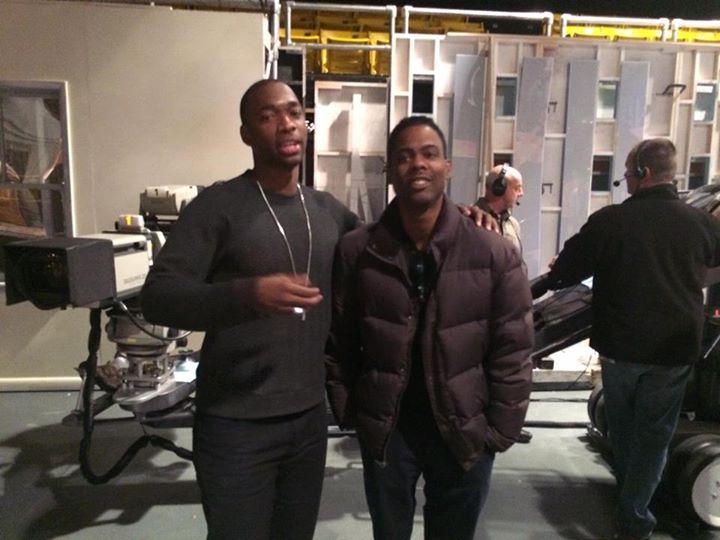
Here’s Chris Rock with Jay Pharoah between scenes yesterday in NBC Studio 8H. Last nights show was great, Rock and Prince rocked the house! That’s Louis Delli Paoli and Bob Mancari behind them on the Chapman Electra arm with John Pinto in the bucket and Phil Pernice at the wheel. The only crane team left in live television and the pride of Italy. Enjoy and share! -Bobby Ellerbee
On A Related Note…1954; The Year In Color At NBC
Just a month before NBC Brooklyn Studio I went live in September of 1954, the NBC Color Caravan wrapped up a three month sojourn through the midwest and mid Atlantic states, but that was just a small part of a year brimming with color at NBC and RCA. Here are the highlights of that industrious year.
January 1, 1954: ‘The Tournament of Roses Parade’, from Pasadena was telecast in color by twenty-one stations of NBC’s first coast-to-coast color network. This colorcast also marked the first use of NBC’s new mobile color TV unit and the first West-to-East transcontinental transmission of color television.
February 16, 1954: NBC transmitted the first newscast in color… ‘The Camel News Caravan’, including the first integration of 16-mm color film into a live program.
March 4, 1954: The first shipment of RCA TK40s, and associated studio equipment was made from RCA’s plant in Camden, N.J. This was after two years of testing of the TK40 prototypes at NBC’s Colonial Theater.
March 19, 1954: The first colorcast of a boxing match from Madison Square Garden, was presented by NBC and was their first color sports event.
March 25, 1954: Production of RCA’s first commercial color TV sets, the CT 100s, equipped with a 15-inch picture tube began at Bloomington, Indiana.
June 25, 1954: NBC made the first network transmission of 35-mm color film, on ‘The Mrs. USA’ program.
July 8 – Aug. 19: NBC aired the first network color series, ‘The Marriage’, a situation comedy with Jessica Tandy and Hume Cronyn.
July 15, 1954: RCA announced development of a new and improved 21-inch color kinescope with a picture area of 255 square inches.
September 12, 1954: NBC presented the first of its 90 minute color spectacular, ‘Satins and Spurs’. The program also inaugurated NBC’s new Brooklyn Studio I.
September 15, 1954: RCA demonstrated its new 21-inch color picture tube and a simplified color TV receiver.
Oct. 14 – Dec. 30: ‘The Ford Theatre’ was the first network sponsored TV color film series to be presented on a regular basis.
November 28,1954: First two-hour color production of a Shakespeare play, “Macbeth” on ‘Hallmark Hall of Fame’.
December 1, 1954: RCA began commercial production of color TV sets with a new 21-inch picture tube.
Presented with thanks to Ed Reitan and Novia.net for the detials and all his many contributions to the perservation of television history and his archival efforts, which are many. Enjoy and share! -Bobby Ellerbee
Ultra Rare! Network Telop Cards…Cica 1955
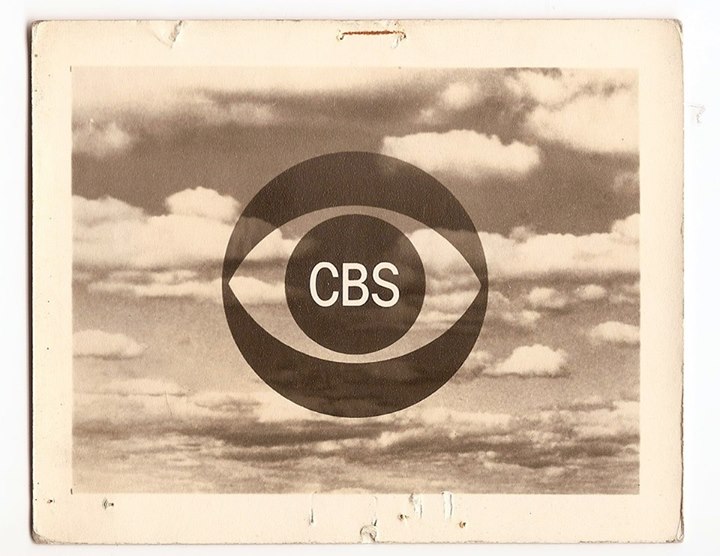
From the Gady Reinhold Collection, here are nine opaque cards used in the Gray Telop machines of the day. How many times in the 50s did you see this iconic CBS cloud logo between shows? Until I heard of the telop machines, I always thought is was a slide. It later was, but for many years it was an opaque card…this card. Quite a piece of history.
‘The Secret Storm’, ‘Guiding Light’ and ‘Love Of Life’ cards were used as rejoinders, and all the others including the NBC card are all promo cards used in stop set billboards.
These were about the height of a postcard, but not as wide and are now quite rare. Thanks to our friend Gady for saving these for future generations to see. Enjoy and share! -Bobby Ellerbee
NBC Brooklyn Studios History Coming, But For Now…Check This Out!
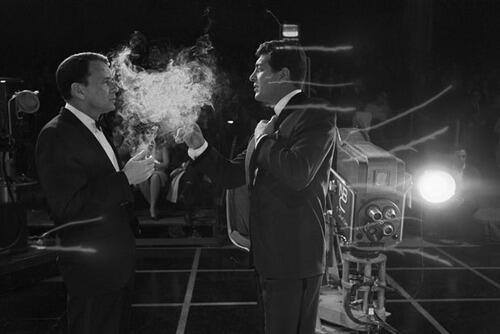
This opens with a great shot of Sammy standing in front of an RCA TK41 operated by veteran cameraman Frank Gaeta. This was the fifteenth and last episode of ‘The Sammy Davis Jr. Show’ from NBC’s Brooklyn Studios on April 22, 1966. Notice at the end, there is a VO announcing the premier of ‘Sing Along With Mitch Miller’ at the same time next week.
I’ve recently come across some new and interesting photos of NBC Brooklyn and I’ll be sharing them with you as soon as I get just a bit more first hand confirmation on some historical facts from some of the men that worked there, so stay tuned. I’m not sure which studio this came from, but given that Studio 1 was much larger, I’m thinking this was done in Studio 2. Enjoy and share! -Bobby Ellerbee
https://www.youtube.com/watch?v=DXjKNl0C-AU
from April 22, 1966. thanks to fromthesidelines and wmbrown6 for the great comments and info on this clip.
Before Character Generation, There Was This…Then Came Vidifont
The first electronic graphics machine used in US television production was the CBS Vidifont system. As told by the man that developed it, Stanley Baron, here is the story of how it came to be.
https://ethw.org/First-Hand:Inventing_the_Vidifont:_the_first_electronics_graphics_machine_used_in_television_production
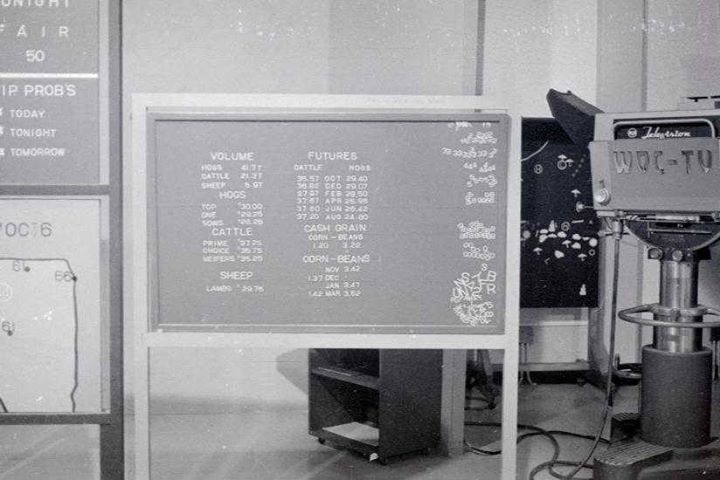
Before 1968, television graphics were either movable letters on a slot board like this, text on a slide, or white letters on a black flip card, or rolling credit drum that were superimposed over live shots. I thought Chyron was the first with this, but as it turns out, it was CBS Labs that lead the way. It’s an interesting story so enjoy and share. -Bobby Ellerbee