- Home
- TV History
- Network Studios History
- Cameras
- Archives
- Viewseum
- About
A Tour Of CBS Television City With Edward R. Murrow
This is a November 1953 broadcast of ‘See It Now’. In the first part of this half hour show, we’ll see the extensive and state of the art lighting in Studio 31, Art Linkletter’s show in Studio 41 and Jack Benny rehearsing upstairs in the space where James Cordon’s “Late, Late Show” is now done. We’ll also see “My Friend Irma” (one of the first network shows to originate at TVC) in production in Studio 43.
In the second half, we continue with Jack Benny rehearsals, but quickly move to the huge scenery and paint shop. We’ll visit camera maintenance and get up close and personal with a new RCA TK11. After that, we go to Telecine, see a fabulous custom patch panel and we’ll get to spend about five minutes on the set of “My Favorite Husband” for camera rehearsals in Studio 33. Enjoy and share! -Bobby Ellerbee
CBS Television City’s First Series…’My Friend Irma’
Here’s the set of ‘My Friend Irma’ on the brand new Studio 31Â stage, but before we get to the studio, take a look at the set. This may have been the first time this horizontal production process was used in television. With all the “rooms” laid out in a row, the cameras could move up and down the stage for different scenes. In New York, many soap and sit com sets were built like rooms in a house as stage space was limited. For most of it’s 20 year run, NBC’s ‘The Doctors’ set was in rooms and not on the long set like this.
This was the first series telecast from TVC and ran from January 8, 1952 until June 1954. This is Studio 31’s original configuration with a camera ramp that went all the way to the control room with space at the rear for cameras too. That I know of, CBS was the only network to use the long hanging banks of flood lights. In the foreground, we see the lighting board and in today’s next post, we’ll see it in action as Edward R. Murrow takes us on a tour of the new facilities. Enjoy and share! -Bobby Ellerbee
NBC Legend Harry Coyle…Power Outage Takes All But One Camera!
This amazing video starts a few seconds before the NBC Sports truck loses power. It was shot by NBC producer Rick Reed and here is what Rick wrote about this event:
“In 1982, we were producing a pre-game segment for NBC’s Game of the Week on director Harry Coyle. Our battery powered camera was in the truck when the power went out. It is the top of the ninth inning of a shootout between Milwaukee and Boston at Fenway Park. This twelve minute raw segment contains the PL lines of director Harry Coyle and producer Michael Weisman. After power is restored, the truck only has one camera and nothing else.”
The cameramen were Mario Ciarlo, Lenny Basile, Buddy Joseph and Lou Gerard and as you’ll see, it all came down to Mario…his was the only camera working and here’s how he covered the rest of the game…solo.
Director Harry Coyle (1922-1996) pioneered the look of baseball on television. He directed 36 World Series over a 42 year career. Below is a very good New York Times story on Harry and his crew from October 4, 1983.
Thanks to Steve Mangiaracina for the Rick Reed info. Enjoy and share! -Bobby Ellerbee
Who Knew? Zoomar Long Lenses Were Used In The Studio…
The first example I ever saw of this was when I discovered some rare photos of ‘Kukla, Fran And Ollie’ being done at WNBQ in Chicago. That was the first time this was done and the lens inventor, Dr. Frank Back even paid a visit to the studio to see it in action in 1949.
‘KFO’ started in ’47 on WBKB but moved to WNBQ in November of ’48 and I think the idea of the field zoom came shortly after that and just before the show was picked up by the NBC network January 12, 1949. Here’s a look through that lens at this clip and notice the crew laughing…standard fare as this show had a lot of adult viewers too.
The Zoomar Field lens was a huge 27 element zoom that, as the name implies, was meant for field use, but inside, it gave a smooth and unique look to images. I think all these photos are from before 1952 because that’s about the time two smaller Zoomar studio zoom lenses came into use.
As we see here, CBS did the same and later, local stations like Cleveland’s WXEL (now WJW) followed suit. Anybody here ever use this lens? Enjoy and share! – Bobby Ellerbee
September 13, 1966…’The Monkees’ Debuts On NBC
Before the background, a note on the video. At the start is some of the screen test shots of the guys and this is followed by the series pilot which never aired. The theme song is a demo by Boyce and Hart. Don Kirshner was in charge of the music for the show. Enjoy and share! -Bobby Ellerbee
Although the series only ran from ’66 till ’68, it was indeed the start of something big. Aspiring filmmaker Bob Rafelson developed the initial idea for The Monkees in 1962, but was unsuccessful in selling the series, but then came The Beatles ‘A Hard Days Night’ and everything changed.
The show was sold to Screen Gems Television on April 16, 1965. Rafelson’s original idea was to cast an existing New York based group, The Lovin’ Spoonful, which was not widely known at the time, but the canny John Sebastian had already signed the Spoonful to a record company, which would have denied Screen Gems the right to market music from the show on record.
On July 14, 1965, The Hollywood Reporter stated that future band member Davy Jones was expected to return to the United States in September 1965 after a trip to England “to prepare for a TV pilot for Bert Schneider and Bob Rafelson.”
Jones had previously starred as the Artful Dodger in the Broadway show ‘Oliver!’, which began on December 17, 1962, and his performance was later seen on The Ed Sullivan Show the same night as The Beatles’ first appearance on that show, February 9, 1964. He was Tony-nominated for best supporting actor in a musical in 1963.
In September 1964, he was signed to a long-term contract to appear in TV programs for Screen Gems, make feature films for Columbia Pictures and to record music for the Colpix label. Hence, Rafelson and Schneider already had him in mind for their project after their plans for the Lovin’ Spoonful fell through; when they chose him, he was essentially a proto-star looking for his lucky break.
On September 8–10, 1965, Daily Variety and The Hollywood Reporter ran an ad to cast the remainder of the band/cast members for the TV show: “Madness!! Auditions. Folk & Roll Musicians-Singers for acting roles in new TV series. Running Parts for 4 insane boys, age 17-21. Want spirited Ben Frank’s types. Have courage to work. Must come down for interview.”
Out of 437 applicants, the other three chosen for the band/cast of the TV show were Michael Nesmith, Peter Tork and Micky Dolenz. Nesmith had been working as a musician since early 1963, and had been recording and releasing music under various names, including Michael Blessing and “Mike & John & Bill” and had studied drama in college; contrary to popular belief, of the final four, Nesmith was the one member who actually saw the ad in the Daily Variety and The Hollywood Reporter.
Tork, the last to be chosen, had been working the Greenwich Village scene as a musician, and had shared the stage with Pete Seeger; he learned of The Monkees from Stephen Stills, whom Rafelson and Schneider had rejected.
Dolenz was an actor who had starred in the TV series ‘Circus Boy’ as a child, using the stage name Mickey Braddock, and he had also played guitar and sung in a band called “The Missing Links” before the Monkees, which had recorded and released a very minor single, “Don’t Do It.” By that time, he was again using his real name of Micky Dolenz; he found out about The Monkees through his agent.
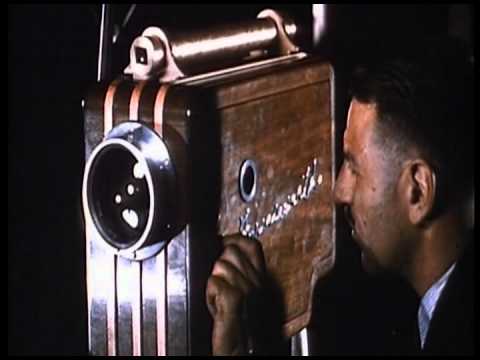
Now This Is Interesting! Introduction Of The Auricon Pro 1200
We don’t spend much time on film cameras here, but this is such an interesting piece of film, I thought you would like to see it. Thanks Steve Williams for sharing this.
At first, I thought the “studio finder” was perhaps an electronic video camera used as a video assist, but after seeing this a second time, I think it is just a large ground glass optical viewfinder. I have seen a couple of these in person, but never knew there were small lenses in the center of the turret for the cameraman’s eyepiece. You learn something new every day! Enjoy and share! -Bobby Ellerbee
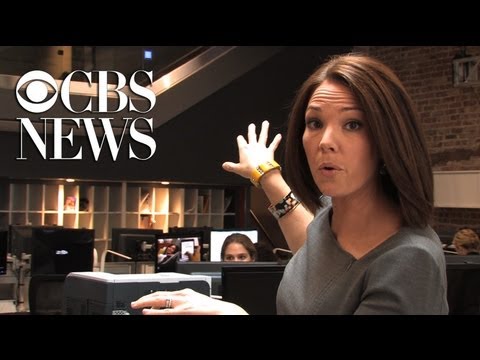
‘Law And Order’…A Tour Of The Set With Jerry Orbach
Since we are celebrating the September 13, 1990 debut of the show, I thought we should see this again…the best ever set tour with the show’s best ever detective, Lennie Briscoe. Enjoy and share! -Bobby Ellerbee
Very Interesting! ‘Search For Tomorrow’…The LIVE Episode!
On August 4, 1983 the master tape and back up copy of one of the show’s daily episodes went missing! By now the show had moved to NBC from CBS and WNBC’s Jack Cafferty is reporting here on the event of doing a live show. Even Don Pardo is there live, but NOT at NBC! They were at Reeves Teletape and the cameras are RCA TK46s.
As our friend Chuck Snitchler explains; “Although Search had switched networks, it was still produced at the CBS Broadcast Center at 524 West 57th St. in Manhattan until December 1982. By late December 1982 or January 1983, NBC relocated the show’s production to the Reeves Teletape Studio on Broadway and West 81st St., the former home of Sesame Street (which had relocated to the former WNET-TV studios at 9th Ave and 55th St.). However, in March 1985, production of the show moved to the former Edge of Night studio at the EUE/Screen Gems Studios at 222 East 44th St., where it remained for the rest of its run.”
More than likely, the tapes were hidden by the shows producers and the live event was just a way to get some free publicity. Enjoy and share!
https://www.youtube.com/watch?v=GsTmfQ_croA
News report on CPC’s Sid Hoffman running the teleprompter on the set of Search for Tomorrow.
September 11, 1967…’The Carol Burnett Show’ Debuts on CBS
Missed this one yesterday, but better late than never. Although I would love to show you the first episode of the show, that’s not possible. As a matter of fact, I think the first five years of the show are still locked away and have not been seen since they were shown on CBS. Bob Banner was a co producer of the show from 67 till 72 and a long battle over the ownership has prevented those shows from inclusion in either the syndicated ‘Carol Burnett And Friends’ or in DVD releases, so…in place of that, here is a great reel of out takes.
This bit of how the show came about is particularly interesting. After leaving the ‘Garry Moore Show’, Burnett signed a 10 year contract with CBS which required her to do two guest appearances and a special each year.
That contract also had another option…if Burnett chose that one, CBS would put her on the air for 30 weeks in her own show. After discussion with her husband Joe Hamilton, in the last week of that fifth year of the contract, Burnett decided to call CBS and exercise that option in the contract. Mike Dann of CBS Programming, explaining that the variety show Carroll wanted to do was a “man’s genre”, offered Burnett a sitcom called “Here’s Agnes”. Burnett had no interest in doing a sitcom and because of the contract, CBS was obliged to give Burnett her own variety show. The rest as they say is history!
The original show ran on CBS from September 11, 1967, to March 29, 1978, for 278 episodes and originated in CBS Television City’s Studio 33. It won 25 prime-time Emmy Awards, was ranked No. 16 on TV Guide’s 50 Greatest TV Shows of All Time in 2002, and in 2007 was listed as one of Time magazine’s “100 Best TV Shows of All Time.” Enjoy and share! -Bobby Ellerbee
https://www.youtube.com/watch?v=JlF4GVVi6Ss
Bloopers from the classic CBS variety show.
September 12, 1959…’Bonanza’ Debuts On NBC
Initially, ‘Bonanza’ aired on Saturday evenings opposite ‘Perry Mason’. The ratings were dismal and the show was soon targeted for cancellation, but NBC kept it because ‘Bonanza’ was one of the first series to be filmed and broadcast in color, including scenes of picturesque Lake Tahoe Nevada. NBC’s corporate parent, RCA, used the show to spur sales of color television sets and was also the primary sponsor of the series during its first two seasons.
In 1961, NBC moved Bonanza to Sundays at 9:00 with a new sponsor…Chevrolet (replacing The Dinah Shore Chevy Show). The new time slot caused ‘Bonanza’ to soar in the ratings, and it eventually reached number one by 1964, an honor it would keep until 1967 when it was seriously challenged by the ‘The Smothers Brothers Comedy Hour’ on CBS. Had the geniuses at CBS not put ‘The Judy Garland Show’ against ‘Bonanza’, it would have certainly lasted more than one season.
By 1970, ‘Bonanza’ was the first series to appear in the Top Five list for nine consecutive seasons (a record that would stand for many years) and thus established itself as the single biggest hit television series of the 1960s. ‘Bonanza’ remained high on the Nielsen ratings until 1971, when it finally fell out of the Top Ten.
The show ran from September 12, 1959, to January 16, 1973. Lasting 14 seasons and 430 episodes, it ranks as the second longest running western series, just behind ‘Gunsmoke’ which ran for 20 seasons.
By the way, Michael Landon was the only cast member that did not require a hair piece. Even Hop Sing wore a fake Q. Enjoy and share!
-Bobby Ellerbee
September 12, 1954…’Lassie’ Debuts On CBS
The video clips here are part one and two of the first ever episode of ‘Lassie’ which debuted Sunday, September 12, 1954, at 7:00 p.m. EST…a time slot the show would call home on CBS for the next seventeen years.
Between 1943 and 1951, Lassie, was the inspiration for seven MGM feature films. With completion of the seventh film in 1951, the studio planned no further films for the Lassie character or Pal, the dog actor who portrayed the fictional canine. In lieu of $40,000 back pay owed him by MGM, Pal’s owner and trainer Rudd Weatherwax took all rights to the Lassie trademark and name, and hit the road with Pal to perform at fairs, rodeos, and other venues.
Needing material for the relatively new medium of television, producer Robert Maxwell sold Weatherwax on the concept of a Lassie television series with a boy and his dog theme. The two men developed a scenario about a struggling war widow, her young son, and her father-in-law set on a weather-beaten American farm.
Two pilots were filmed with the first telling the story of the bond forged between boy and dog, and the second filmed to give potential sponsors and network buyers an idea of a typical episode. After viewing the pilots, CBS put the show on its fall 1954 schedule.
Campbell’s Soup Company signed on early as the show’s sole sponsor and remained so for the show’s entire run. Enjoy and share!
-Bobby Ellerbee
https://www.youtube.com/watch?v=bf49nG11S2M Part 2
https://www.youtube.com/watch?v=lXquPCNsPzM Part 1
Remembering Bob Crewe…Take A Look At This List Of Hits
Bob Crewe, the writer-producer behind Frankie Valli‘s biggest hits, has died. He was 82. Bob was best known for producing, and co-writing (with Bob Gaudio), a long string of Top 10 singles for The Four Seasons, but Crew has a long and proud history of hits with other acts, like The Rays, Diane Renay, Mitch Ryder and the Detroit Wheels, Freddy Cannon, Lesley Gore, Oliver, Michael Jackson, Bobby Darin, Roberta Flack, Peabo Bryson, Patti LaBelle, and his own group, The Bob Crewe Generation.
There just too much to tell here, but below, I’ve included a list of Bob Crewe’s top hits…songs that charted at 30 or above on the Billboard Top 100. I’ll leave you with this interesting fact that will sort of sum up his amazing success….In 1999, when BMI (Broadcast Music Incorporated) announced its Top 100 Songs of the Century, “Can’t Take My Eyes Off You” landed in the top ten with six million airplays. BMI calculates one million continuous performances of a song of the average length (3 minutes) as representing 5.7 years of continuous airplay so; this one song has a history of 35 years of continuous airplay…and counting! Here’s a list of Bob’s “other hits”. We’ll miss him! -Bobby Ellerbee
1957: “Silhouettes”, #3.
1957: “Daddy Cool”, #10.
1958: “La Dee Dah”, #9.
1959: “Lucky Ladybug”, #14.
1962: “Sherry”, #1
1962: “Big Girls Don’t Cry”, #1
1963: “Walk Like a Man, #1
1964: “Dawn (Go Away)”, #3
1964: “Ronnie”, #6
1964: “Navy Blue”, #6
1964: “Rag Doll, #1
1964: “Save It For Me”, #10
1964: “Big Man in Town”, #20
1965: “Bye, Bye, Baby (Baby, Goodbye)”, #12 (“Bye Bye Baby” on initial release)
1965: “Let’s Hang On!”, #3
1965: “A Lover’s Concerto,” #2
1965: “Silhouettes,” #5 [Herman’s Hermits cover]
1965: “Girl Come Running,” #30
1965: “Jenny Take A Ride,” #10
1966: “Devil With A Blue Dress On,” #4
1966: “The Sun Ain’t Gonna Shine,” #13
1967: “Sock It To Me, Baby,” #6
1967: “Music To Watch Girls By,” #15
1967: “Silence Is Golden,” #11 [Tremeloes cover]
1967: “Can’t Take My Eyes Off Of You,” #2
1967: “I Make a Fool of Myself,” #18
1967: “To Give (The Reason I Live),” #29
1969: “Jean,” #2
1969: “Good Morning, Starshine,” #6
1974: “Lady Marmalade”, #1
1974: “Get Dancin’,” #10
1975: “Swearin’ To God”, #6
1975: “My Eyes Adored You,” #1
1975: “I Wanna Dance Wit’ Choo,” #23
1975: “The Proud One,” #22 [The Osmonds cover]
2001: “Lady Marmalade”, #1 [Christina Aguilera cover]
FANTASTIC! Behind The Scenes…ABC Sports, October 4, 1975
With college football back in the air, it’s time to replay this best ever look at how 60 men brought 30 million viewers these great games every Saturday. “Second’s To Play” is presented here in two 15 minute segments.
This is the most extensive look you’ll ever get of how ABC Sports crews covered the games in this era. Norelco PC 70s and hand held PCP 90s are in use with our friend Don “Peaches” Langford on the sidelines. Enjoy and SHARE! -Bobby Ellerbee
Rare! ‘Lucky Partners’…NBC Studio 8H, 1958
If you blinked, you missed this short lived daytime game show. It debuted June 30, 1958 and by August 22, it was gone and these few photos are all that remain. The host was Carl Cardell.
I want to ask a question…does anyone know if the cameraman standing on the McAlister Crab Dolly is Fred Himelfarb? I have never seen a photo of him and would love to know what he looked like. Fred was NBC’s camera guru and was the man who kept the improvements on the TK41 coming. These are beautiful shots of 8H in action and thanks to our friend John Schipp for sharing them. Enjoy and share! – Bobby Ellerbee
A Rare Look At NBC Studio 8H…1954
‘Saturday Night Live’ fans and staff will get a kick out of this too as this will look quite familiar. The opens with the studio doors of 8H bursting open and the singing cast making it’s way to the 8th floor elevators to welcome the show’s star, Dorothy Collins, back from maternity leave.
If you look closely, you can see the art deco page desk behind them just as they come out. I’ll post a photo of me at that desk in the comments section to refresh your memory. They have cleverly hidden the lights behind flats in the hallway scene.
Notice that when they come back into the studio, they go into the same kind of tunnel we see now on SNL, but it’s not the same.
The SNL “temporary” bleachers on the 9th floor are supported by scaffolding on the studio floor, and were not installed till 1975. At this time, I think the seating in 8H was all pull out bleacher seating, much like you see in high school gyms. I think what they are running through is a curtained pathway between two bleacher sections. This space would have to always be clear as this is how equipment and staff moved in and out of the studio.
By the way, Studio 8H did not go color until June 24, 1963. The color photographs I have posted showing Dorothy Collins with NBC TK41s were taken at Brooklyn II where the show moved in 1957.
See any familiar faces? I see Snooky Lanson, Russell Arms and a few more. Enjoy and share! -Bobby Ellerbee
https://www.youtube.com/watch?v=TPzhhzkaT24&feature=youtu.be
Dorothy Collins is welcomed back to the Your Hit Parade show by the entire cast of the program. Dorothy took a leave of absence to have her first child and P…
A Classic Candid And What It Tells Us…
This is NBC cameraman George Kiyak goofing with the photographer in a photo shared by his son, Mark, but let’s look closer…there is something to learn here.
Notice the turret handle is at a 45 degree angle and not at it’s usual 90 degree taking position. What George has done is a “quick cap”… he has partially racked the turret between lenses to save the expensive Image Orthicon tube in this RCA TK30.
The pedestal is a Houston Fearless TD 1. George is sitting on the up/down crank wheel and these were geared to really move when you cranked them. The pedal under the crank wheel is called a trolley pedal. When you step on the TD 1 trolley pedal, it pushes down a castor wheel which allows you to move the base of the pedestal to another angle. Today, that is accomplished with Steer 1.
The castor wheel was used before there was a “Steer 1/Steer 3” option, which first appeared on the next generations of pedestals, the TD 3 counterbalanced pedestals.
The Steer 1 option allows you to steer like a tricycle with one wheel steering and the other two following, while Steer 3 is the, all wheels in the same direction, “crab” steering.
On the left side of the ped base is a cable grip which was usually a matter of preference…some liked them, some didn’t. On the very first TV pedestals which were built in the mid 30s, the cable came out of the bottom of the Iconoscope cameras and went down through the support column, exiting at the base of the column on a spring loaded arm on the right side of the camera. Believe it or not, those peds were electric and a small motor under the skirt moved the camera up and down. They too had trolley pedals.
Including George, everything here were the real workhouses of early television. Enjoy and share! -Bobby Ellerbee
Hey CBS…Buck Rogers Wants His Truck Back!
In August of 1951, this one of a kind creation was the latest and greatest thing in mobile radio units. For the time, this was actually quite a feat of engineering design with all that molded plexiglass.
This CBS unit is shown here in Central Park and could broadcast on the go from up to 35 miles out. I think the truck is either French or English. Anyone know more? Enjoy and share! -Bobby Ellerbee
Speaking Of ‘Gunsmoke’…How About Some Great Outtakes?
Long before blooper shows came to television, this reel was put together by CBS for one of their fall season kick off meetings for their affiliates in the early ’60s.
It’s hosted by James Arness and features a lot of gags from his show, but we’ll also see Red Skelton with the pooping cow, Rod Serling, Richard Boone, Jackie Cooper and many more stars and extras blowing lines and goofing. The cussing is mostly in the last 30 seconds which has a few very interesting surprises! Enjoy and share! -Bobby Ellerbee
https://www.youtube.com/watch?v=ulfIZA3KBEk
http://www.TVDAYS.com HOME VIDEO COLLECTION http://www.seagate.com Ira H. Gallen Video Resources 220 West 71st Street NYC 10023 (212) 724 – 7055 http://www.T…
What A Lesson! D W Griffith Was An Editing Pioneer Too!
From the Filmmakers IQ library, here is another great history lesson and today’s subject is editing and how it came to be. In this, I was surprised to learn one of the first great directors was actually one of editing’s leading men and is responsible for many of the same techniques we use today, including what live television is all about…continuity editing. Enjoy and share! – Bobby Ellerbee
More CGI Magic…’Boardwalk Empire’
As promised, here is more on the amazing ability editors now have with Computer Generated Imagery. Period shows like HBO’s ‘Boardwalk Empire’ have to take a great deal of care to keep the 1920s look intact and free from modern skylines and backgrounds, but that’s only half of the challenge. The other half is turning the clock back by recreating historic landscapes and even period appropriate ships. Take a look and marvel as the impossible becomes possible before your very eyes. Enjoy and share! -Bobby Ellerbee