- Home
- TV History
- Network Studios History
- Cameras
- Archives
- Viewseum
- About / Comments
Picture Parade 3…You Mean They Weren’t Really On The Runway?
Spoiler Alert: NO. The ‘Casablanca’ scene on the runway was shot in a studio, and just out of sight is the paper mache airplane waiting for them. One reason for all the fog was to help hide the not-so-hot looking, half scale plane. A miniature model was used for the takeoff shot. Enjoy and share! -Bobby Ellerbee
Picture Parade 1…Tis The Season To Be Jolly!
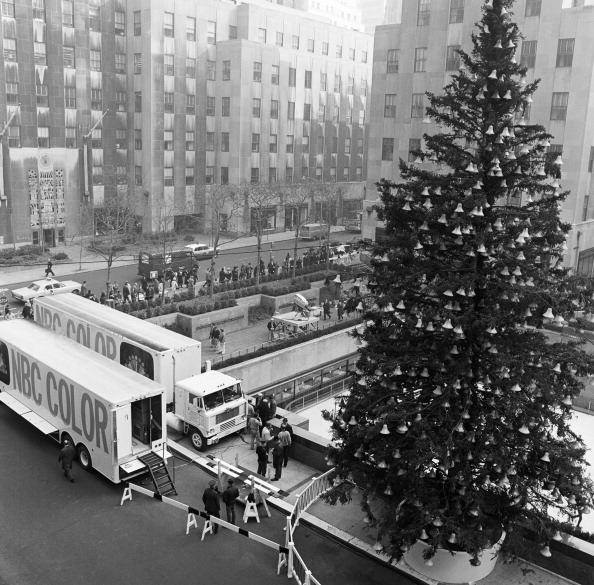
Here’s ‘Today’ show host Dave Garroway pushing a camera sled around the ice rink at 30 Rockefeller Plaza. He hosted for nine years, from the show’s start in 1952, till 1961. Thanks to John Schipp for the photo. Enjoy and share. -Bobby Ellerbee
December 12, 1896…Marconi’s First Public Demonstration Of Radio
During his early years, Marconi had an interest in science and electricity. One of the scientific developments during this era came from Heinrich Hertz, who, beginning in 1888, demonstrated that one could produce and detect electromagnetic radiation…generally known as “radio waves”. At the time these were more commonly called “Hertzian waves” or “aetheric waves”. Hertz’s death in 1894 brought published reviews of his earlier discoveries, and a renewed interest on the part of Marconi.
Marconi began to conduct experiments, building much of his own equipment in the attic of his home at the Villa Griffone in Pontecchio, Italy. His goal was to use radio waves to create a practical system of “wireless telegraphy”…the transmission of telegraph messages without connecting wires as used by the electric telegraph. This was not a new idea—numerous investigators had been exploring wireless telegraph technologies for over 50 years, but none had proven commercially successful.
Marconi did not discover any new and revolutionary principle in his wireless-telegraph system, but rather he assembled and improved an array of facts, unified and adapted them to his system. At first, Marconi could only signal over limited distances. In the summer of 1895 he moved his experimentation outdoors. After increasing the length of the transmitter and receiver antennas, and arranging them vertically, and positioning the antenna so that it touched the ground, the range increased significantly. (Although Marconi may not have understood until later the reason, the “ground connections” allowed the earth to act as a waveguide resonator for the surface wave signal.) Soon he was able to transmit signals over a hill, a distance of approximately . By this point he concluded that with additional funding and research, a device could become capable of spanning greater distances and would prove valuable both commercially and militarily.
Finding limited interest in his work in Italy, in early 1896 at the age of 21, Marconi traveled to London, where he gained the interest and support of William Preece, the Chief Electrical Engineer of the British Post Office. A series of demonstrations for the British government followed—by March, 1897, Marconi had transmitted Morse code signals across the Salisbury Plain. On May 13, 1897, Marconi sent the first ever wireless communication over open sea.
Impressed by these and other demonstrations, Preece introduced Marconi’s ongoing work to the general public at at an important London lecture: “Telegraphy without Wires”, at the Toynbee Hall on December 11,1896. The next day, Marconi returned with a tramsmitter and telegraph key, and a wooden box with a bell inside. With the London press in attendance, Preece walked around the hall with a wireless wooden box which magically rang every time Marconi hit the key.
Numerous additional demonstrations followed, and Marconi began to receive international attention. In July 1897, he carried out a series of tests at La Spezia in his home country, for the Italian government. A test for Lloyds between Ballycastle and Rathlin Island, Ireland, was conducted on 6 July 1898. The English channel was spanned by radio on March 19, 1899, from Wimereux, France to South Foreland Lighthouse, England, and in the fall of 1899, the first demonstrations in the United States took place, with the reporting of the America’s Cup international yacht races at New York.
On December 12, 1901, Marconi sucessfully sent a wireless telegraph message from Cornwall in southwest England to St. Johns Nova Scotia. By sending a signal more than 2,100 miles across the Atlantic, Marconi convincingly demonstrated the practicality of worldwide wireless communication. And in 1909, he shared the Nobel Prize for physics with Karl Ferdinand Braun of Germany, whose modifications to Marconi’s transmitters made them strong enough to be practical.
Below is a photo of Marconi (R) with David Sarnoff (L), head of RCA. Sarnoff had once worked for the Marconi Company in New York and was the telegraph operator that received the Titanic SOS and communicated with the rescue ships until they arrived in NY with the survivors. -Bobby Ellerbee
December 12, 1980…’Magnum P.I.’ Debuts On CBS
Here are some little known facts about the show I thought you may find interesting. Did you know that Orson Welles had agreed to play the roll of the illusive Robin Masters when they finally revealed his persona on camera in a 1985 episode? Unfortunately, he died before they could shoot it.
Before the opportunity rose to film the series in Hawaii, the show was originally to be set in Southern California. One of the reasons for this series being set in Hawaii is that CBS did not want to close its Hawaii production offices when ‘Hawaii Five-O’ ceased production in 1980. This show started production that same year and contains occasional references to Steve McGarrett and Hawaii Five-O, although McGarrett was never shown.
The series featured crossover episodes with ‘Simon and Simon’ and ‘Murder, She Wrote’. Tom Selleck had done a recurring role on ‘The Rockford Files’ just before this and James Garner was to appear on this show as Rockford, but legal wrangles kept that from happening. I think our friend Dick DeBartolo will like the MAD pix. Also attached are several shot of the show in production. Enjoy and share. -Bobby Ellerbee
Picture Parade 3…Roy And Dale, 1961 At The Wisconsin State Fair
I didn’t bother with the last names in the headline…you can tell from just the hat who this is. For those old enough, you have to admit two things, Roy and Dale were great, and second…going to a big state fair in those days was the greatest! Which one did you go to?
As a kid growing up around Atlanta, The Great Southeastern Fair was something I looked forward to more than Christmas. The midway was literally a mile long at Lakewood Fairgrounds. Today, that’s all movie studios owned by Screen Gems. Hold on Nellybell! Enjoy and share! -Bobby Ellerbee
Picture Parade 2….1960 Election Coverage, NBC Studio 8H
Here’s the great team of Chet Huntley and David Brinkley covering the race between Nixon and Kennedy. I think this was the first time they used this “crows nest” set up with the anchors on the 9th floor balcony. It’s still odd to me to the the NBC snake logo on black and white cameras. FYI, 8H did not go color until NBC left The Ziegfeld Theater around 1965 when those four TK41s were moved to 8H. Enjoy and share! -Bobby Ellerbee
Picture Parade 1…’Bob And Ray, Jane, Laraine And Gilda’, 1979
For some still unknown reason, this spacial ran in place of SNL on March 15, 1979. SNL was in it’s white hot fourth season, but in it’s place that Saturday night, we got this paring of long time stars Bob and Ray with Jane Curtain, Laraine Newman and Gilda Radner. Also on the show was a clean shaven, up and comer, Willie Nelson. Enjoy and share! -Bobby Ellerbee
December 11, 1985…GE Buys RCA, A Dark Day For America Begins
Why this headline on the sale of RCA to GE?
Because on the grander scale, this was the first big corporate media take over…the kind that, until Ronald Reagan became president, would have not been allowed under anti trust laws. Since then, media consolidation has run rampant. By the way, it bears remembering that Reagan was GE’s spokesman for eight years…that’s where he cut his political teeth.
Ironically, RCA was founded in 1919 as a joint venture of General Electric and Westinghouse; NBC itself was born in 1926 as a joint venture of RCA, GE and Westinghouse. Even more ironic…trust busters forced the giants to divest RCA in 1931.
Ironies don’t stop there though. With all the bellowing about the liberal media, here are a few things you may not know that happened when GE’s Bob Wright took over as head of NBC. After firing 400 NBC employees at all levels and cutting the budget from $300 million to $250 million a year, one of the first things he did at NBC was set up a political action committee. Employees were asked to donate money to the fund so NBC could buy seats for republicans in congress.
That went over like a lead balloon and was quickly shelved, but “Neutron Jack” Welch, the head of GE, didn’t stop there. Welsh pushed hard to get the cable channel CNBC on the air so that he could give his favorite political commentator a nightly show…that was ‘The McLaughlin Group’.
In the next week or so, I’m going to post an editorial on the state of news and media in the US. It’s from a research paper I wrote last month in one of my college courses.
Below, is a seven page article from The New York Times written two years after the take over. It gives a very detailed look at how it all happened. The good news is that GE is gone and since they left, there is a definitely a spring in NBC’s step at all levels, especially in moral. -Bobby Ellerbee
http://www.nytimes.com/1987/09/20/magazine/did-rca-have-to-be-sold.html
LEAD: THORNTON F. BRADSHAW WAS, TO AN EXTRA-ordinary degree, the epitome of a business statesman.
In Loving And Living Memory Of KTTV…Jim Diaz Restorations
I just got the pictures in from our friend Jim Diaz in California. He has a passion for KTTV’s history and in the process of writing a book on the station’s history, but in the mean time has restored one of his TK 31s as a replica of the early years. Here are his comments:
Attached are three photographs of my “cosmetically” restored RCA TK-31A. The TK-31A is one of two that I have. It is the first to be restored with the KTTV Channel 11, Los Angeles, California, markings. The second TK-31A will be restored after the first of the year.
Please note that the TK-31A is equipped with the standard three (3) lens complement issued when originally manufactured: Kodak Ektanon 50mm, 90mm and 135mm. It also has the optional Ilex 8 1/2” lens. It is mounted on an early version of the Baughman Spider (without the mechanical height adjustment and wheel extensions, which were offered later – of which I have two). It is equipped with a Houston Fearless Cradle Head for pan and tilt operation.
In addition to the two TK-31A’s, my collection includes an RCA TK-30A, which also needs some restoration work. After restoration, the TK-30A will be mounted on either an O’Connor wooden Tripod or a Houston Fearless TD-3 Pedestal. Or, I might mount it on one of three Houston Fearless TD-11A Metal Tripods, each equipped with the TD-15A Tripod Dolly.
Also, I have an RCA TK-46 and TK-47, both equipped with Fujinon Zoom lenses. The TK-46 and TK-47 will be mounted on a TVP P-50 Pedestal. In addition, I have two working RCA / Houston Fearless TD-9B Pedestals. In the lens department, I have three each of the Zoomar Super-Universal and Studio Zoom lenses.
As these other items become more presentable, I will send photographs as well.
Happy Holidays! And, best regards. Jim Diaz
Thanks Jim and keep us posted. Seeing this in color is interesting…who new they used yellow? Enjoy and share! -Bobby Ellerbee
Picture Parade 2…A Rare Carter White House Photo
Although the lens is covered, here’s a Norelco PC70 in the Oval Office which probably means CBS is handling the pool coverage on this night.. Enjoy and share! -Bobby Ellerbee
Picture Parade 1…A Great Idea With Little Follow Through
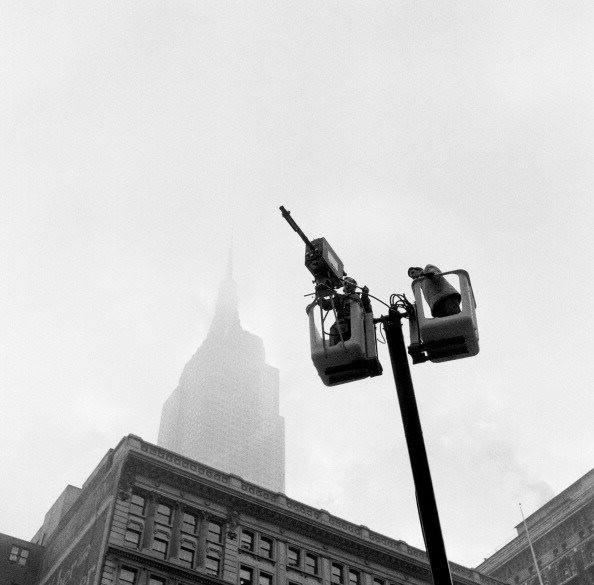
I have often wondered why so few ever used the Mole-Richardson boom platform for a camera platform. It’s perfect for studio and location work. Big tires, easy to steer, adjustable height and relatively light weight.
The only other incident of this I’ve seen, is in a 1948 photo of a station in Philadelphia using one on the sidelines of a football game, which is a perfect use too.
This is a 1963 shot of a production company from the Detroit area shooting a special for ABC at the Henry Ford Museum grounds. The camera is Marconi Mark IV. Enjoy! -Bobby Ellerbee
Tour Of Duty…Remembering Roy Holm, NBC Burbank
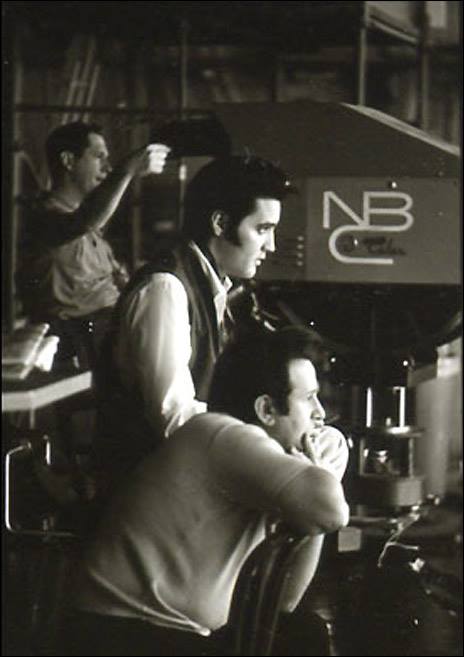
Last week when the ‘Elvis’ comeback special story ran here, Roy Holm was pictured in that photo array. Our friend David Crosthwait posted more pictures of Roy that I am sharing here. He was one of NBC’s top cameramen and a multiple EMMY winner. More on the photos. Enjoy. -Bobby Ellerbee
In Case You Missed This…’New Price Is Right’ Syndication Pitch
This is a film copy of the syndication pitch for ‘The New Price Is Right’ with Mark Goodson and his choice for host, Dennis James. It was shot in February of 1972 and I have a strong feeling it was done at NBC NY, possibly on the set of the ‘Today’ show.
I have heard that this video was taken to MGM Telepictures in NY for editing where it was dubbed to film (cheaper than VT) for mass distribution to local stations. I’ve also heard that it came to the attention of Bud Grant at CBS via one of their affiliates. Grant liked it, but thought James was to much associated with NBC and wanted Bob Barker. Ironically, Barker had hosted ‘Truth Or Consequences’ for many years on NBC.
CBS put the show on the air September 4, 1972 in a half hour format. November 3, 1975, it went to an hour and the rest, as they say, is history. Thanks to Andy Rose for the clip and to many for the great comments. Enjoy and share! -Bobby Ellerbee
https://www.youtube.com/watch?v=Iv3eCE9C2Uk
Filmed February 16, 1972: Mark Goodson presents a sales presentation film for a new weekly, syndicated, early evening version of The Price is Right with Denn…
The Big Show That Almost Wasn’t…’Price Is Right’, Pilot Pitch Problems
Do the names ‘The Auction-aire’ [sic] and Bob Stewart ring a bell…or a buzzer? Either way, that’s where ‘The Price Is Right’ all started.
Stewart was a director at WRCA (now WNBC) in New York. On his lunch break one day, he happened to see an auction taking place on 50th Street which gave him the idea he developed into a show with the working title of ‘The Auction-aire’.
Stewart joined Goodson-Todman Productions in 1956, after he bumped into Monty Hall on the street and Hall told him he knew Goodson-Todman’s attorney. “You got any ideas?” Stewart quoted Hall as asking.
Stewart did, and with some adjustments, ‘The Price Is Right’ was pitched to NBC in a live pilot which was overwhelmed by technical problems. At one point, Bill Cullen was thrown against a wall when a piece of scenery fell. NBC was not impressed and passed.
Goodson and Todman were persistent though and finally got a 13 week run commitment from NBC. The network was still wary and put the show on against CBS’s daytime mega star Arthur Godfrey. By the time the initial 13-week contract ran out, TPIR had higher ratings than Godfrey and a warehouse filled with prizes from manufacturers who wanted some exposure on the new hit. NBC had a crown jewel for their daytime line-up and in 1957, gave it a shot in prime time, where it thrived. Enjoy and share! -Bobby Ellerbee
Thanks to Fred Wostbrock for this photo in The Colonial Theater.
Mega Version! Behind The Scenes At…’The Price Is Right’ 2013
This is a one hour, real time, look at the show in production…it’s VERY interesting and fun to watch. Notice the cameras are all cable free and are now wireless. The yellow and white boxes on the pedestals are batteries that run the RF, and you can occasionally see the transmitting gear on each camera.
This is a great hour inside Studio 33, but we’ll see every aspect of the show including the control room, back stage prize set ups and more. Enjoy and share! -Bobby Ellerbee
A 1982 Behind The Scenes Look At…’The Price Is Right’
Continuing with today’s ‘Price Is Right’ theme, here’s a quick look at the show in production in 1982. When this was shot at CBS Television City’s Studio 33, Norelco cameras had been around for 17 years and Bob Barker had been the host for 10 years. Bless his heart, Johnny Olson was a great announcer, but as a dancer…not so much! You’ll see. Enjoy and share! -Bobby Ellerbee
http://www.youtube.com/watch?v=TYaHPm4fZx0
This is from a talk show “2 On The Town,” in 1982. Includes an interview with Johnny Olson and his audience warm ups, contestant selection, and pricing games.
Rare…’Price Is Right’ Color Photo And NYC Studio Locations
Since we are on the ‘Price Is Right’ path today, I think we’ll stay there for a while with this, and more PIR stories to follow. The daytime version of ‘The Price Is Right’ began in black and white from NBC’s Hudson Theater (which was never a color facility) in 1956. In the fall of ’57, the show moved to The Century Theater for a while, but then returned to the Hudson, where it stayed till moving to The Colonial Theater in 1959. The daytime show made it’s final move to The Ziegfeld Theater in 1960.
The primetime version of the show was always at The Colonial and always in color and ran from 1957 till 1963. Information on the color broadcast of the daytime show is sketchy as best, but I think ’59 may have been the first daytime color from The Colonial. I think this photo is from The Ziegfeld Theater days. Thanks to David Schwartz for help on the timeline and locations. Enjoy and share! -Bobby Ellerbee
Time Capsule…1960 ‘Price Is Right’ Technical Director’s Script
Thanks to our friend Gady Reinhold, here is part of the July 4, 1960 script for ‘The Price Is Right’, from the Colonial Theater in New York. First thought, take a look at this cool shot of one of the Colonial’s original prototype RCA TK40s in action on the set of a January 1960 ‘Price Is Right’ with Buddy Girrard at the controls. This episode lays out a lot like this script.
The director was Paul Alter who was a longtime Goodson-Todman director and stayed with the show when in went to CBS in Hollywood.
This script is the Technical Director’s, who was most likely Michael Rosar. In his hand written notes, on the opening page F1 refers to a film chain at 30 Rock, as it was labeled on the switcher. E1 stands for effects row 1 on the switcher which is set for a an effect shot between camera 3 and film chain 2. Two of the pages show prize descriptions and on them, you can see how many shots were used.
One page shows the end of a film commercial and then a film roll on F2 which is followed on the next page by the start of another prize description using the clip on F2 with the jewelry.
Picture Parade 5…Seasons Greetings From The ‘Kukla, Fran & Ollie’ Crew
Thanks to John Schipp, here’s card from the men that brought the nation one of the top shows of the day, live from WMAQ in Chicago. I think Bruce Berquist is on Camera 3 in the top left corner. This was one of the first Zoomar lenses used in television and although it is the 27 element field lens, made for outdoor use, it worked just fine on KFO. Enjoy! -Bobby Ellerbee
Picture Parade 4…I’ll Tell You A Secret If You Promise Not To Tell
This is a shot from the Control Room of CBS Studio 72 in New York…the only color facility the network had in the east. On stage, we see four RCA TK41 color cameras, but can you spot the fifth one?
Yes, that’s it at the side of the stage with a dust cover. Here’s the secret. That camera is the TK40 that CBS asked Philco to buy for them on the sly. After RCA won the color war, CBS was mad as hell, but knew that color was coming and like it or not, they had to see what was under the hood, but didn’t want to give RCA the satisfaction of becoming one of their first color customers so they paid Philco to buy it and a few color monitors. Enjoy! -Bobby Ellerbee