Posts in Category: TV History

November 30, 1927…The Birth Of Hallowed Broadcast Ground

The Original Mosaic Look Ceiling and Today’s Colbert Dome Artistry

When The Hammerstein Theater (now, The Ed Sullivan Theater) opened November 30, 1927, this black and white photo shows what the ceilings of the auditorium and lobby areas looked like. Below, you’ll see it in color!

The first nine years at 1697 Broadway were not easy, and the legitimate theater use only lasted a few years. As the Great Depression took its toll, Billy Rose took over the theater in 1933 and made it a huge nightclub, with tables and chairs where the theater seating used to be.

Finally, some stability came in 1936 when this facility became CBS Radio Playhouse #3. The first radio show from here was “Major Bowes Amateur Hour”. Ironically, the last radio show, and the first television show from here were amateur hour take offs… they were both the “Arthur Godfrey’s Talent Scouts” shows.

In the fall of ’48, in a LIFE Magazine story on his talent scout show, they predicted, “Godfrey will probably be on television very shortly,” and the prophecy came true on December 6, 1948.

After two years on the radio, “Arthur Godfrey’s Talent Scouts” became a regular show on CBS-TV. It was simulcast on radio from the studio it had been in those two years…CBS Radio Theater #3 which, when converted to television became Studio 50. This was the first television show to originate from Studio 50.

From then on, this has been home to some of the greatest talent ever seen on television. From Jackie Gleason and Ed Sullivan’s shows to David Letterman and now Colbert, all the greats have performed on this stage.

Thanks to our friend Nick Van Hoogstraten, author of “Lost Broadway Theaters,” the color image shows a small part of the hand painted mural work in 1987. Just to be clear, the “tile/mosaic” effect is painted on and is not real tile. This survived the paint overs by being inside a tape storage closet. The paint over came in 1960. The black and white photo is how the theater looked when it opened -Bobby Ellerbee


2023 ADDENDUM: Bob Valinski put in the new “Colbert Era” dome artistry and here is what he had to say about this test photo taken before the show debuted, “This is what the dome looked like in Sept 2015 when we put in an Orad engine to feed the 4 projectors aimed at the ceiling. A lot of mind bending calculations had to be used to ensure that the 4 SDI outputs line up seamlessly when projected on the 3D dome. The engine could even take a live SDI input and render to the 4 projector outputs.”

Source

November 30, 1956…A Videotape Milestone

November 30, 1956…A Videotape Milestone

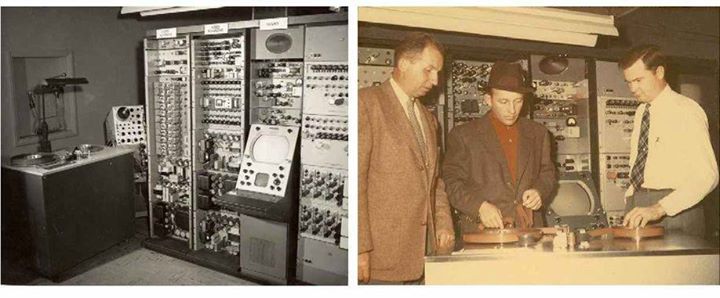
On this day in 1956, at Television City, CBS made broadcast history when they achieved the first ever videotape delay of east coast programming. The show was ‘The Evening News With Douglas Edwards’, and after recording the live feed coming down the network line from New York, the program was played back three hours later for the west coast.

In the photo, we see CBS Engineer John Radis at the Ampex VRX-1000 recording the show. Just in case, a kinescope of the newscast was rolled simultaneously, but fortunately, it was not needed.

This VRX-1000 is one of only 16 hand-built machines Ampex rushed to produce after debuting the VTR eight months before.

It would take over a year for CBS New York to get videotape machines due to a huge backlog, even though the networks got priority. In early 1958, 14 VR 1000 went into service at CBS Grand Central. NBC too had the bulk of their machines on the west coast but both CBS and NBC had two VTRs in New York which were mostly used for testing and engineering purposes.

This historic machine was retired in 1978. Early on, it had been fitted with RCA color modules as Ampex and RCA traded technology rights. RCA had developed color recording in 1954 and allowed Ampex to use it if they would allow RCA to use the Qaud recording head. -Bobby Ellerbee

Source

November 29, 1929…The NBC Chimes Sound For The First Time


November 29, 1929…The NBC Chimes Sound For The First Time

In July of 1921, RCA bought WJZ from Westinghouse, and five years later, in July of 1926, they bought WEAF from AT&T. The National Broadcasting Company was incorporated by RCA on September 8, 1926, and two months later, on November 15, the NBC Radio Network debuted.

The demand for a network service among local stations was mounting so rapidly, that less than two months after its first national broadcast, NBC split its programming into two separate networks…the Red (WEAF) and the Blue (WJZ) networks, to give listeners a choice of different program formats. That happened on January 1, 1927.

In those early days, at the end of a programs, the NBC announcer would read the call letters of all the NBC stations carrying the program. As the network added more stations this became impractical and would cause some confusion among the affiliates as to the conclusion of network programming and when the station break should occur on the hour and half-hour.

Some sort of coordinating signal was needed to signal the affiliates for these breaks and allow each affiliate to identify. Three men at NBC were given the task of finding a solution to the problem and coming up with such a coordinating signal. These men were; Oscar (O.B.) Hanson, from NBC engineering, Earnest LaPrada, an NBC orchestra leader, and Phillips Carlin, an NBC announcer.

During the years 1927 and 1928 these men experimented with a seven note sequence of chimes, G-C-G-E-G-C-E, which proved too complicated for the announcers to consistently strike in the correct order. Sometime later they came up with the three note G-E-C combination.

These three notes were first broadcast on NBC November 29, 1929 and were struck at 59 minutes 30 seconds, and 29 minutes 30 seconds past the hour. Now, the NBC audio logo is the most famous commercial sound in the world. -Bobby Ellerbee

https://www.youtube.com/watch?v=fnWfNZc0EtY

Degan “Studio” Chimes. Recorded through a RCA 4AA condenser microphone of the same vintage, circa 1931. The chimes were brought up to their original quality …

Source

A Fun Look At The History of Hollywood’s Visual Trickery Processes


A Fun Look At The History of Hollywood’s Visual Trickery Processes

From 1898 till now, here is how special effects put the magic into movies like “The Invisible Man” ,”King Kong”, “Mary Poppins”, and more. From black and white matting, to yellow and blue screens, back to sodium vapor yellow and on to the green screens, we see the different processes and learn how each one worked. Enjoy! -Bobby Ellerbee

https://www.youtube.com/watch?v=H8aoUXjSfsI

Go inside the history of the travelling mattes (now called chromakey) and learn the history of visual trickery used by filmmakers from the earliest filmmaker…

Source

November 28, 1925…”The Grand Ole Opry” Was Born

November 28, 1925…”The Grand Ole Opry” Was Born

“The Grand Ole Opry” started as the “WSM Barn Dance” in the new fifth-floor radio station studio of the National Life & Accident Insurance Company in downtown Nashville, Tennessee on November 28, 1925.

On October 18, 1925, WSM management began a program featuring “Dr. Humphrey Bate and his string quartet of old-time musicians.” On November 2, WSM hired long-time announcer and program director George D. “Judge” Hay, an enterprising pioneer from the “National Barn Dance” program at WLS Radio in Chicago, who was also named the most popular radio announcer in America as a result of his radio work with both WLS in Chicago and WMC in Memphis.

Hay launched the “WSM Barn Dance” with 77-year-old fiddler Uncle Jimmy Thompson on November 28, 1925, which is celebrated as the birth date of the Grand Ole Opry.

The name “Grand Ole Opry” came about on December 10, 1927.

The Barn Dance followed NBC Blue Network’s “Music Appreciation Hour”, which consisted of classical music and selections from the Grand Opera genre. Their final piece that night came with comments from the conductor who stated that “there was no place in the classics for realism”.

In response to this Judge Hay quipped, “Friends, the program which just came to a close was devoted to the classics, and the host told us told us that there is no place in the classics for realism. However, from here on out for the next three hours, we will present nothing but realism. It will be down to earth for the ‘earthy’.”

He then introduced the man he dubbed the Harmonica Wizard…DeFord Bailey who played his classic train song “The Pan American Blues”. After Bailey’s performance Hay commented, “For the past hour, we have been listening to music taken largely from Grand Opera. From now on we will present the ‘Grand Ole Opry'”. -Bobby Ellerbee

Source

The Story Of Videotape & Editing…Part 1 (of 2)


The Story Of Videotape & Editing…Part 1 (of 2)

Tomorrow, we’ll see how digital editing works, but today…this is a great history of how television’s need for time shifting, and delayed broadcast for time zones encouraged the development of kinescope and videotape recording.

This is well done and told in layman’s terms so everyone can understand the very interesting paths the process of recording and editing video have traveled. -Bobby Ellerbee

https://www.youtube.com/watch?v=TIVYeyWHajE

Trace the history of modern day film editing – starting with electronic engineers developing solutions for capturing and editing television through to the fi…

Source

Story Of Videotape Editing…Part 2 (of 2)


Story Of Videotape Editing…Part 2 (of 2)

Yesterday’s first installment was pretty easy to follow, even for laymen, but this lesson on digital editing is more of a challenge. This does however have an interesting timeline that reminds us of when new developments came into play.

I’m posting a second video in a few minutes that is a lot more fun…it is all about the history of special effects in film making, so keep and eye out for it. -Bobby Ellerbee

https://www.youtube.com/watch?v=dhHQw5GrwxU

We pick up the story from the electronic engineers of television in part 1, to computer scientists, mathematicians and programmers as we explore the advancem…

Source

Texas Museum of Broadcasting Opens in Kilgore

My “Conrad” In Arms….Chuck Conrad & His New Texas TV Museum

Impressive in every way! From the display, to the abundance of vintage cameras and tape equipment, to the Dumont Cruiser restoration, to Chuck’s attitude, The Texas Museum of Broadcasting and Communications in Kilgore, is true gift to us all.

This is a new story from the Dallas/Ft. Worth station that many of us still refer to as WBAP, and it is the best report I have seen so far on Chuck’s labor of love. I would like to have a brick and mortar museum like this, and if I did, I would do it the way he’s done it. I chose the virtual museum route.

Later in the story, Chuck says something I can relate to 100%. When it comes to becoming a custodian of rarities, restoring and preserving our broadcast history…he says “somebody’s got to do it”.

“I think a lot of things in life are like that, when you come across things and know somebody’s got to do this, and you are the person who can…go do it”.

That is why I created Eyes Of A Generation in 2006. Congratulations Chuck! -Bobby Ellerbee

http://www.nbcdfw.com/news/local/Texas-Museum-of-Broadcasting-Opens-in-Kilgore-403062026.html

Texas Museum of Broadcasting Opens in Kilgore

“I can’t deny it! I mean I woke up one day and noticed I had over 50 TV cameras and then you go, ‘well, what am I going to do with this stuff?’” asked Conrad. His answer: open a museum.

Source

November 25, 1950…Center Theater, World’s Largest New TV Studio

November 25, 1950…Center Theater, World’s Largest New TV Studio

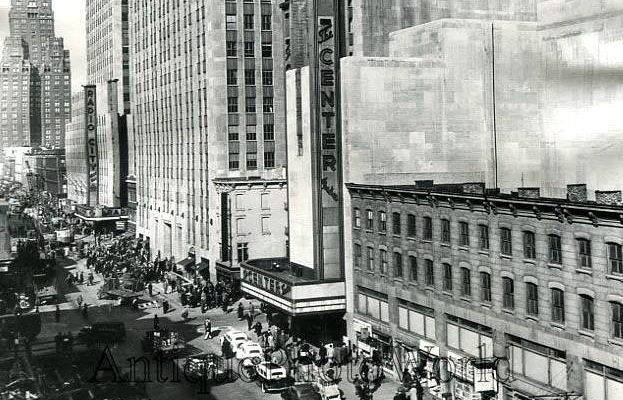
The Center Theater was Radio City Music Hall’s little sister and when it was converted by NBC for television was “the world’s largest television studio”. It’s big sister seated 6,000, and while the Center seated 3,000, it was just as opulent and a block away at 1230 Sixth Avenue. It is the only original Rockefeller Plaza structure ever demolished, which happened in 1954 to make way for an office tower, built for U S Rubber.

There is some interesting information In the attached 3 page NBC press release from August of 1950 that announces NBC’s lease.

The first television shows were actually done here in the late ’40s when NBC did remote broadcasts of several of the ice shows which were performed on the Center’s specially constructed “Sonja Henie Ice Stage” . November 25, 1950 is the theater’s debut as a television studio (with it’s own control room) and the first show was a Radio/TV simulcast of ‘The Voice Of Firestone’.

I think ‘The Colgate Comedy Hour’ also moved here at the first of December, and in the last photo before the NBC Press release, you see occasional host, Broadway dancing star Wayne Lamb on stage with the Center’s large turntable in views. At this link is a 1954 episode of ‘The Colgate Comedy Hour’ live from The Center and notice the famous freezable ice stage is still intact and in use for an appearance of none other than Sonja Henie.

By 1952, ‘You Show Of Shows’, which began in the International Theater, moved to The Center for it’s last two seasons.

The first photo says it all about the location…a block up is Radio City Music Hall and between them is NBC’s 30 Rock headquarters. Just to the left of the Center’s marquee is the famous Hurley’s Bar, nestled against NBC at the corner of 6th Avenue and 49th Street. Radio City is at 50th Street. In that photo, the construction is the demolition of the elevated train tracks that once ran up 6th Avenue. -Bobby Ellerbee


Source

THE NEW EYES OF A GENERATION WEB SITE IS UP & RUNNING!

THE NEW EYES OF A GENERATION WEB SITE IS UP & RUNNING!

Just in time for Thanksgiving browsing, the all new site ready!

Please share this news with your friends, and let your non Facebook friends know with an email. Now everyone can comment on the new site, and it is very easy. You can sign in with your FB account, or do a simple one time registration…or just visit the site and look around with no sign ins. There is a LOT to see!

My thanks to all of you for your years of interest and support…it is greatly appreciated! This is for you, and all that come after us.

Building the new site would not have been possible without the long hours of effort from our great webmaster, Dave Donaldson who directs the morning news at WTOL in Toledo, and Dr. Jodie Peeler, Professor of Communications at Newberry College. When I was too afraid of the daunting task, she pulled me through. Dave’s ingenuity allowed us to do something no other site has ever done…we are the first to capture all of our Facebook post archives, complete with comments, and import them into our own server. Other sites display FB posts, but the posts are still physically in FB…ours are not.

HAPPY THANKSGIVING TO YOU! -Bobby Ellerbee, Dave Donaldson, Jodie Peeler

Source

Happy Thanksgiving Everyone!

Happy Thanksgiving Everyone!

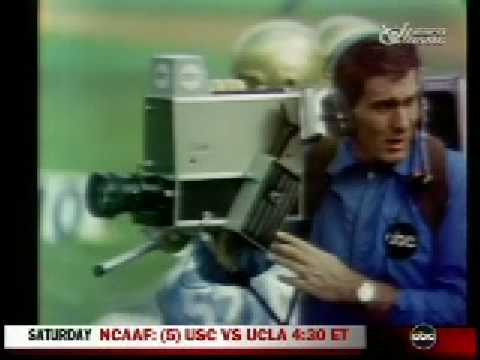
Especially to those pros among us that are “in the kitchen” whipping up live television for us today. From parades and football, to local crews newsing, thanks for being there! Add your pictures of your day here, and don’t worry, we’ll save you some turkey. -Bobby Ellerbee

Source

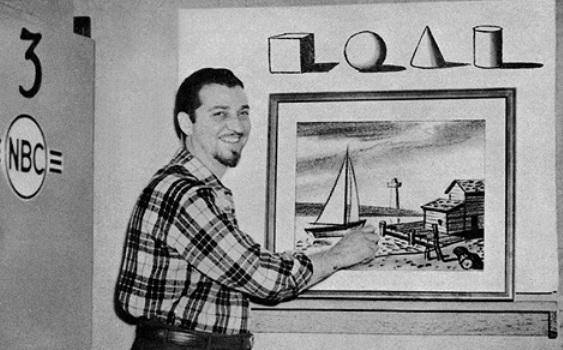
Another TV History Surprise…Jon Gnagy, One Of TV’s First Stars

Another TV History Surprise…Jon Gnagy, One Of TV’s First Stars

Before Howdy Doody, Lucy, Berle, Kukla, Fran or Ollie, there was Jon Gangy.

His TV career began May 13, 1946, in NBC Studio 3H (pictured here) on a trial video version of NBC’s “Radio City Matinee” radio program, which was carried on NBC’s three market network to New York City, Schenectady and Philadelphia.

Gnagy was the opener of the show which also featured a comic, a cooking demonstration, and a woman who modeled hats. When Gnagy picked up his crayon to begin, he found the lights had melted it into a useless glob, so he switched to charcoals. For seven minutes, he showed his viewers how to draw an old oak tree.

There were not many television sets in use then, but the creators of television knew Gnagy was onto something.

Vladimir Zworykin, who had invented the cathode ray tubes that made television transmission and reception possible, was there and rushed over to shake Gnagy’s hand. RCA and NBC President David Sarnoff called to congratulate him. The show’s producer exclaimed that his segment was “pure television.”

By November, Gnagy had his own 15-minute NBC series, “You Are An Artist”, airing on Thursday nights in prime time. In The New York Times, critic Jack Gould praised Gnagy’s ”thoroughly engaging setside manner.” Writing in The Philadelphia Inquirer, Merill Panitt, later to become editorial director of TV Guide, said that ”Gnagy’s Midwestern easy-going manner conceals the hours of rehearsal and gives an air of spontaneity to the proceedings.”

And while Gnagy could never boast Uncle Miltie’s influence, he did have an impact. At the height of his popularity, Manhattan bartenders handed out paper and pencils to patrons who put down their cocktails to sketch along with ”America’s Television Art Instructor.”

It didn’t last, of course. Like so many early TV staples, “You Are An Artist” was cancelled in 1950 to make way for shows with broader appeal as the number of sets and stations multiplied, BUT, there is more to come!

The video above is what most of us remember…the syndicated series, “Learn to Draw”, that Gnagy subsequently co-produced and marketed to local TV stations to fit into their Saturday or afternoon schedules alongside the likes of Meet Mr. Wizard and Howdy Doody.

His show remained on television until 1971 and in syndication on PBS beyond that. He received no royalties, but now had a platform from which to promote his lesson books and art kits. Doubleday sold a copy of his book to one out of every fourteen television set owners in the United States.

His art supply company moved fifteen-million art kits. He even spawned some successful imitators, most notably Bob Ross, whose show “The Joy of Painting” ran on PBS from 1983 to 1994.

Believe it or not, you can still buy Gangy’s kits today, complete with the gum eraser many of us ate.

It’s impossible to know just how many artists were inspired by Gnagy’s show, but here is a quote from someone who was. Andy Warhol said, “I watched his show every week and I bought all his books.” -Bobby Ellerbee

Source

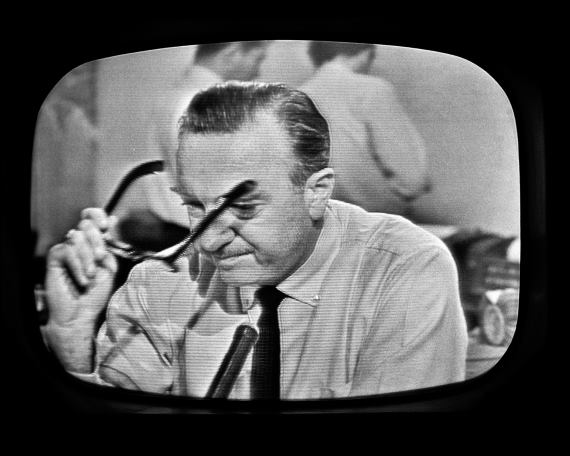
November 22, 1963: A President Falls…TV News Ascends

November 22, 1963: A President Falls…TV News Ascends

Until the day President Kennedy was assassinated in Dallas, breaking news coverage had been the domain of the print media, but the story of that weekend unfolded so fast, only live television could deliver both the story and the unforgettable images.

During that 4 days of nonstop, commercial free broadcasting, Americans came to accept TV news for its unique ability and trustworthy presentation.

What follows is a very interesting account of how the UPI and AP wire reporters in the motorcade fought to cover the story. http://ajrarchive.org/article.asp?id=1672

After that awful day in Dallas, no one and nothing in this country was ever the same again…especially television news. -Bobby Ellerbee

Source

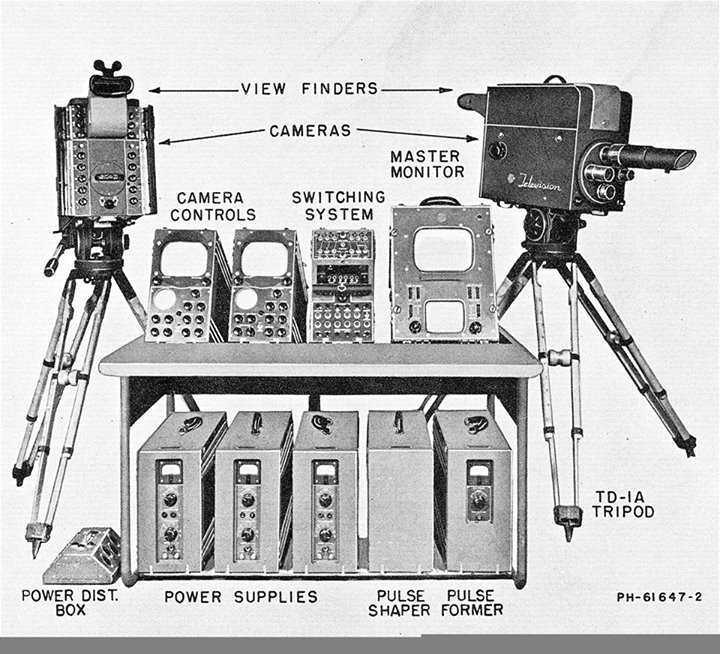
Introducing The RCA TK30: Television’s First Workhorse Camera

Introducing The RCA TK30: Television’s First Workhorse Camera


This is the entire edition of RCA’s October 1946 “Broadcast News” magazine that features this brand new camera in a very detailed, multi page story. One of many new Archive items in the new Eyes Of A Generation site, coming soon.

The cover page photo is in relation to the first ever use of this camera at the Joe Lewis – Billy Conn boxing match held at Yankee Stadium. On page 20, you can read about RCA’s new improved microwave system that help the new TK30 images.

Even after taking in these feature stories, it’s fun to browse the rest of this issue for an interesting look back at audio boards, transmitters and more technology that, at the time, was “state of the art”. -Bobby Ellerbee

Source

November 20, 1958…First Known Videotape Edited Show Airs

November 20, 1958…First Known Videotape Edited Show Airs

Seated on the right is director John Frankenheimer watching Ross Murray edit “Old Man”, which was a ‘Playhouse 90’ presentation that aired November 20, 1958.

This was the first time an entire production had ever been videotaped in advance and edited for air. The year before, Frankenheimer had used videotaped inserts in the live productions of two prior ‘Playhouse 90’ shows which were “Bomber’s Moon” and “The Days Of Wine And Roses”, but “Old Man” was a different ballgame.

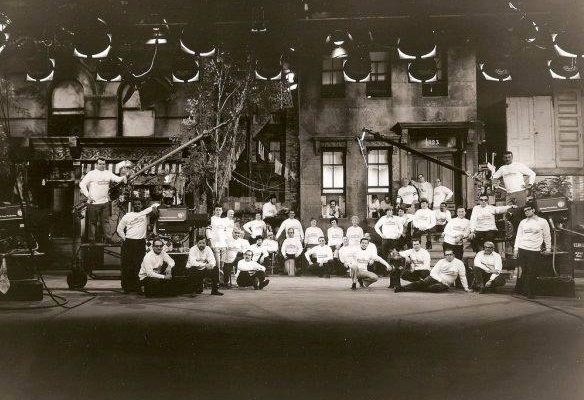
Most of “Old Man” took place in a storm on the Mississippi River as an escaped convict fled from the law. The production used two studios at Television City (wet and dry) and was so daunting technically that the only way to do it was on tape. You can see some of the production shots below, including the huge Chapman movie crane they brought in.

On November 30, 1956 CBS had made history by tape delaying ‘Douglas Edwards With The News’ and again on October 13, 1957 when they used videotape to play back ‘The Edsel Show’ which aired live from Television City three hours earlier. -Bobby Ellerbee


Source

November 19, 1959…America Meets Rocky And Bullwinkle


November 19, 1959…America Meets Rocky And Bullwinkle

Today is the anniversary of the debut of one of my all time favorite cartoon shows…probably one of yours too. The show debuted as ‘Rocky And His Friends’ on ABC and although done in color, it was broadcast in black and white. Before third season began in 1961, the show moved to NBC where it was broadcast in color and called ‘The Bullwinkle Show’.

Production began in February 1958 with the hiring of voice actors June Foray, Paul Frees, Bill Scott, and William Conrad. Ward hired most of the rest of the production staff, including writers and designers, BUT…no animators were hired!?! Why? Because Ward was able to convince some friends at Dancer, Fitzgerald, & Sample (an advertising agency that had General Mills as a client) to buy an animation studio in Mexico called Gamma Productions, originally known as Val-Mar Animation.

This outsourcing of the animation for the series was considered financially attractive by primary sponsor General Mills, but caused numerous problems. In a 1982 interview by animation historian Jim Korkis, Bill Scott described some of the problems that arose during production of the series: “We found out very quickly that we could not depend on Mexican studios to produce anything of quality. They were turning out the work very quickly and there were all kinds of mistakes and flaws and boo-boos. They would never check with us on details…mustaches popped on and off Boris, Bullwinkle’s antlers would change, colors would change and costumes would disappear. By the time we finally saw it, it was on the air.”

General Mills had signed a deal to sponsor the cartoon, under the condition that the show be run in a late-afternoon time slot, where it could be targeted toward children. The show was broadcast for the first time on November 19, 1959, on the ABC television network under the title ‘Rocky and His Friends’ twice a week, on Tuesday and Thursday afternoons, following American Bandstand at 5:30 p.m. ET, where it was the highest-rated daytime network program.

The show moved to the NBC network starting September 24, 1961, broadcast in color, and first appeared on Sundays at 7 p.m. ET, just before ‘Walt Disney’s Wonderful World of Color’. Bullwinkle’s ratings suffered as a result of being aired opposite perennial favorite Lassie. A potential move to CBS caused NBC to reschedule the show to late Sunday afternoons (5:30 p.m. ET) and early Saturday afternoons in its final season. NBC canceled the show in the summer of 1964. It was shopped to ABC, but they were not interested. However, reruns of episodes were aired on ABC’s Sunday morning schedule at 11 a.m. ET until 1973, at which time the series went into syndication.

An abbreviated fifteen-minute version of the series ran in syndication in the 1960s under the title ‘The Rocky Show’. This version was sometimes shown in conjunction with The King and Odie, a fifteen-minute version of Total Television’s King Leonardo and His Short Subjects. The King and Odie was similar to Rocky and Bullwinkle in that it was sponsored by General Mills and animated by Gamma Productions. NBC later aired Bullwinkle Show reruns at 12:30 p.m. ET Saturday afternoons during the 1981-1982 television season.

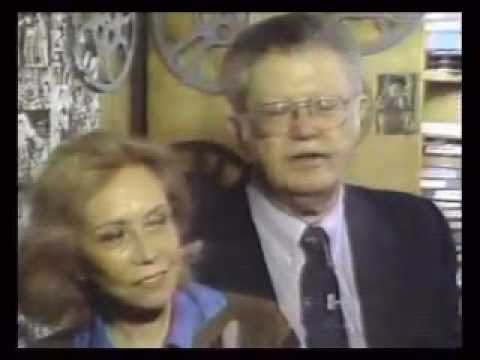
Below is a clip of the main voices of the show, June Foray and Bill Scott talking about their “adventures”. Other famous voices on the show included William Conrad as the narrator, Paul Frees as Boris Badenov, Wally Tetley as Sherman, Daws Butler as Aesop Junior and various other characters, Charlie Ruggles as Aesop, Hans Conried as Snidely Whiplash and Edward Everett Horton as the narrator for Fractured Fairy Tales. -Bobby Ellerbee

Source

START SPREADING THE NEWS! NEW SITE COMING SOON!

START SPREADING THE NEWS! NEW SITE COMING SOON!

Stay tuned for more! -Bobby Ellerbee

Source
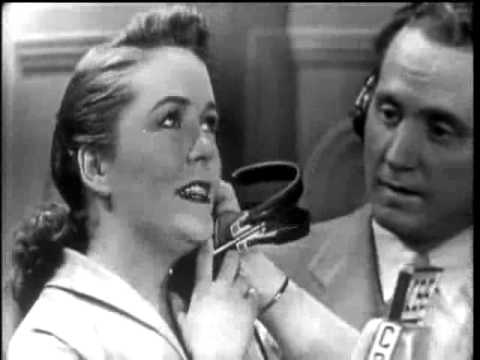
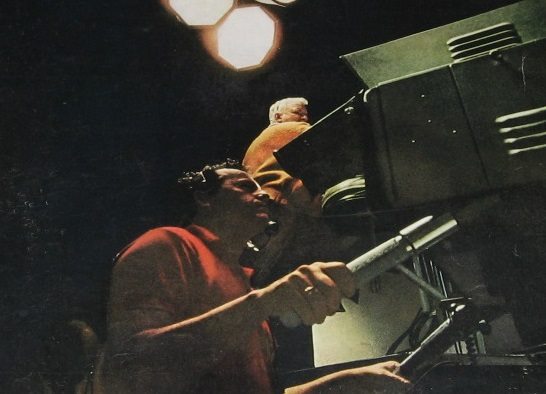
Les Paul & Mary Ford on “Omnibus” (1953)

FANTASTIC!…First TV Demonstration Of Multi Track Audio Tape Recording

In this 1953 kinescope from “Omnibus”, Alistair Cooke hosts Les Paul and Mary Ford in a recreation of their 1951 hit “How High The Moon”. The song not only topped the ‘Top 40’ charts, but the ‘R&B’ charts too, which was another first.

Although Les and Mary had released a few other multi tracked songs, which were well received, those were done with discs and not tape. Using the disc method was difficult and tedious, with one track at a time being added as the previous compilation of tracks was played back and re-recorded with each new part.

In 1947, Bing Crosby brought Les an Ampex 200 tape recorder to play with, and the rest is history. I am attaching two excellent links that go into great detail about the process and the string of discoveries, so make sure you take a look and a listen.

http://www.les-paul.com/timeline/sound-on-sound/
At the bottom of this page, there is an embedded video of Les recording “Brazil” on the discs, and when the pop up screen appears, click the play button at the bottom and the + and – controls to add or remove tracks.

http://www.soundonsound.com/people/classic-tracks-les-paul-mary-ford-how-high-moon
At this link, you’ll find a great history, most in Les’ own words, that take you from the start, all the way through the 8 track machines and more.

Finally, this clip came to my attention while watching the great PBS series “Soundbreaking” which has so far aired 4 of the 8 episodes (nightly) and I can’t wait for the rest.

By the way…notice in this video clip, the whole thing starts out with a prop given credit for the way the recording system works. That part is pure Les Paul. He was a joker and all around great guy. ENJOY and SHARE! -Bobby Ellerbee

Source

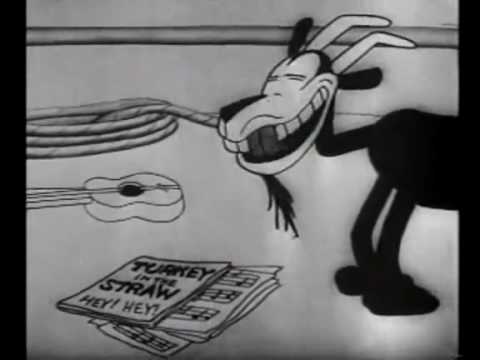
Happy Birthday To Mickey Mouse…”Born” November 18, 1928


On November 18, 1928, ‘Steamboat Willie’, starring Mickey Mouse, was released and shown in theaters across the country. It was wildly popular.

This was the first cartoon with synchronized sound and was the first cartoon to feature a fully post-produced soundtrack which distinguished it from earlier sound cartoons.

Although animation filmmakers Dave and Max Fleischer’s Inkwell Studios had already produced seven sound cartoons, part of the Song Car-Tunes which started in May 1924, those failed to keep the sound fully synchronized. ‘Steamboat Willie’ was produced using a click track to help with musical cues.

The click track was sufficiently useful as a synchronization tool as optical marks were made on the film to indicate precise timings for musical accompaniment.

In 1994 professional animators voted Steamboat Willie 13th in the book “The 50 Greatest Cartoons”. By the way, Walt is the voice of Mickey in this historic cartoon, and although Mickey Mouse had been seen in theaters before this, his official birthday is marked as today in consideration of the success of ‘Steamboat Willie’. -Bobby Ellerbee

The classic Mickey Mouse cartoon

Source

CBS News celebrates career of Bill Plante, retiring after 52 years

Happy Trails & Many Thanks To Bill Plante….

CBS News celebrates career of Bill Plante, retiring after 52 years

Plante covered many major stories of the past half century, from the Civil Rights Movement to the Vietnam War

Source