- Home
- TV History
- Network Studios History
- Cameras
- Archives
- Viewseum
- About
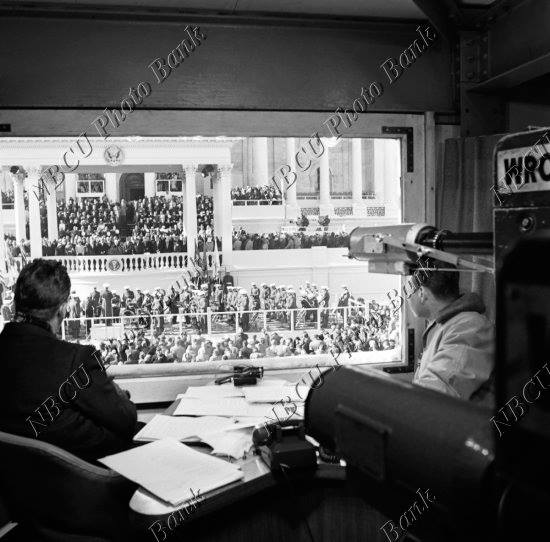
The View From Walter Cronkite’s News Desk…Ultra Rare!
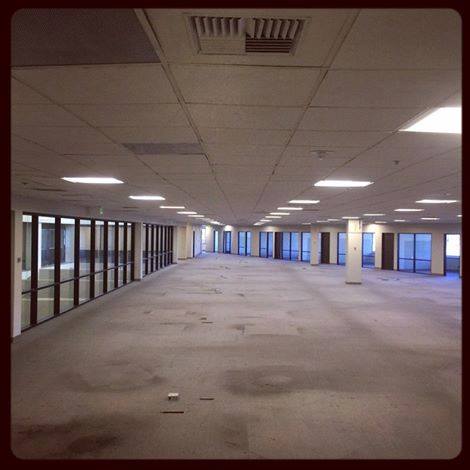
By request, here is a shot you’ll only find here. Thanks to Glenn Mack, this is a look at what Walter Cronkite looked out on from behind his desk in what was then, CBS Studio 33.
I think the engineers are removing older style prompters and replacing them with a newer version on the two Norelcos in the studio. The camera on the right is mounted on a rare German made movie camera tripod…the only one I know of with the ability to be raised and lowered on the fly, but not on camera. I think this is 1973. Enjoy and share! -Bobby Ellerbee
A Rare Article On Leonard Goldneson…Driving Force At ABC
You don’t hear much about this man, but to do what he did, you have to be a pretty sharp cookie. Here a three page look at his leadership of ABC from yesterday’s Investor’s Business Daily. -Bobby Ellerbee
Leonard Goldenson Built Tiny ABC Into Daring Winner
Although overshadowed in the public eye by William Paley of CBS and David Sarnoff of NBC, Leonard Goldenson raised struggling ABC to parity with the two big networks.
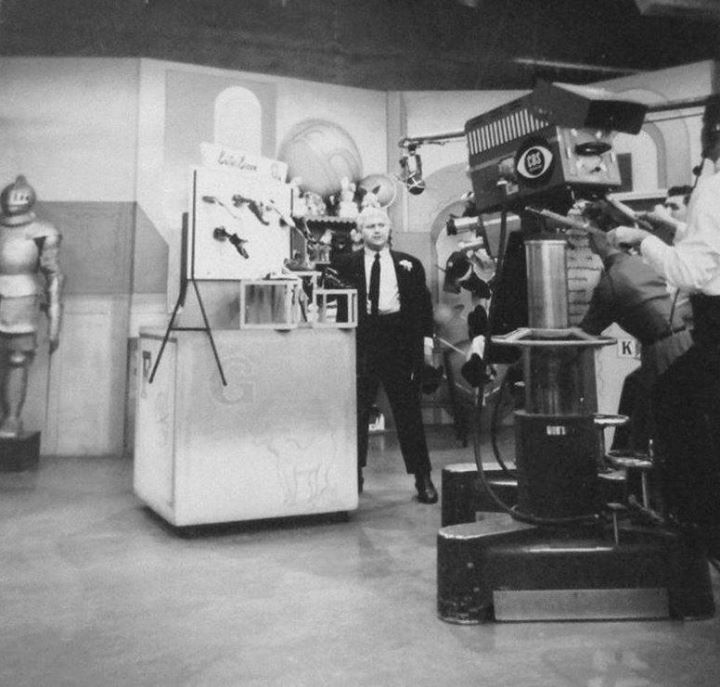
In the bottom photo, we see the back of the game board in NBC Studio 8G, which is game board unit C. I think there were at least three game boards, units A, B and C which were loaded before the show and wheeled into place as the show progressed. On the set there was a curtain that covered the board.
Notice the white cloth tabs on the back of each door: those were used to pull the $ amount card out of the way to reveal the question card. Above is the question card and all of the heavy paper cards in the squares had red cloth tabs attached to the top of them. When a contestant picked a subject and then a $ amount, the stagehand behind the board grabbed the small wooden handle at the top of the metal door and pulled the top back slightly, grabbed the tab and pulled the white tab to remove the $ amount card and expose the question card.
The back of the door was spring loaded and snapped back holding the question card in place. After the question was answered, that question card was removed leaving a solid blue one in its place. Thanks to Glenn Mack for the photos and to Mark Ogden for the workings of the board. Enjoy and share! -Bobby Ellerbee

By Request…Game Show Pictures #2: “Jeopardy!”
From it’s start in 1964 till 1973, the show came from NBC Studio 8G which is seen here. The last year of so of the show came from 6A as seen in today’s first post. Thanks to Glenn Mack for the photo. Enjoy and share! -Bobby Ellerbee
As you can see in the photo below, Hurley’s Bar (which opened in 1892) was just a half a block away from NBC’s studio entrance, making it the nearest watering hole for everyone from stars to stagehands. It became the favorite for radio, television, newspaper and sports celebrities as well as tourists and midtown workers.
The old-fashioned saloon atmosphere, as well as the convenient location in Rockefeller Center, made Hurley’s a favorite. Liz Trotta noted “You never knew who would be standing next to your lifting elbow at Hurley’s. Jason Robards, Jonathan Winters, jazz musicians from the local clubs and the ‘Tonight’ show, starlets, football players, the lot.”
Johnny Carson made the Hurley name nationally familiar while he did his show live from Rockefeller Center. It was the bar in all of his Ed McMahon drinking jokes. David Letterman did several on-air visits to the bar. NBC technicians haunted the place so regularly that among themselves it was known as Studio 1-H.
Hurley’s was known as a place where status was left at the door. Mayor John Lindsay stopped in once, only to be hissed by the patrons. When Henry Kissinger and two bodyguards got noisy, they were ejected by the bartender “for rowdy behavior.”
But this is only half of a great “David & Goliath” story.
The bar had been here since 1892 and had always done well, even during prohibition when a florist shop was used to disguise the bar and it’s new back door.
In 1930, John D. Rockefeller, Jr. had begun aggressively buying up a staggering twenty-two acres of midtown property, right in the middle of Fifth Avenue’s most exclusive district, for a seemingly implausible project: Rockefeller Center. One by one he purchased buildings from Fifth to Sixth Avenue between 48th and 51st Streets. In the stranglehold of the Great Depression, none but the city’s wealthiest property owners could resist the offer to convert real estate to cash.
None except John F. Maxwell, grandson of John F. Boronowsky who owned the three-story building at the opposite end of the block from Hurley’s and, of course, the feisty Irishmen themselves. In June 1931 Maxwell sent word to Rockefeller that he would not sell “at any price.”
Construction had already begun on the gargantuan Art Deco complex of nineteen buildings on May 17, 1930. The block of 49th to 50th Streets, Sixth Avenue to 5th Avenue was eventually demolished, leaving only the two brick Victorian buildings standing on opposite corners of a devastated landscape.
The RCA Building—70 stories tall—rose around Hurley’s, diminishing the bar building only in height. But nothing in New York City is permanent and in 1979 Hurley Brothers and Daly was sold. Journalist William Safire spoke for New Yorkers in an article mourning the loss. The mahogany bar was removed to a Third Avenue restaurant and, as Nancy Arum wrote in her letter to New York Magazine that year “a pretend old-fashioned bar now stands where the real old-fashioned bar once was.”
The pretend old-fashioned bar took the name Hurley’s and, most likely, tourists never noticed the change. But proximity, tradition, or habit still brought the Rockefeller Center workers and celebrities into the bar until September 2, 1999. That night owner Adrien Barbey served the last glass of beer in the bar that had stood at Sixth Avenue and 49th Street for 102 years.
Today, Hurley’s is a bakery and the building at the other end of the block is a 9 West store. The 1931 photo on the right shows 6th Avenue with it’s elevated train (yellow). Hurely’s is in the red circle and 46th Street is in aqua. The other building left standing on the 6th Avenue corner is the space that is now a 9 West store. The 11 story NBC studio building is just behind Hurley’s.
Just In! New Photo Of The Center Theater
There are not many photos of Radio City Music Hall’s little sister, The Center Theater, so we are glad to have this. This photo was taken in February of 1946 and shows the last parts of the elevated train tracks being removed from 6th Avenue.
The Center was at the corner of 6th Avenue and 49th Street. Just above the marquee you can see the famous Hurley’s Bar nestled against 30 Rock’s front, and at 50th Street, there is the big sister. On the 49th Street side, you can see the top of the 11 story NBC studio building.
NBC took over The Center Theater in November of 1950 and used it until US Rubber bought it and the row of low buildings to build an 18 story office tower. That was the only original Rockefeller Plaza building ever demolished. Thanks to Jodie Peeler for the find! Enjoy and share! -Bobby Ellerbee
January 25, 1915…The First Transcontinental Phone Call Made
100 years ago today, Alexander Graham Bell (shown below) in New York placed a call to his long time assistant, Thomas Watson in San Francisco at 4 PM Eastern time. The second transcontinental call to San Francisco was made at 4:30 over an even greater distance from Jekyll Island, Georgia, which had to be routed through Boston.
January 25, 1961…The First Live Presidential Press Conference
Instead of presenting the historical footage, I’ve included a short compilation that reminds us of JFK’s easy style in these press conferences. He was the first American president to really understand television and how to use it to his advantage, which started during the campaign.
Fifty four years ago today, President Kennedy held the first ever live presidential news conference. It originated from the auditorium of the State Department and was carried live on both radio and television. It was the first of sixty three he would give.
Prior to this, live radio broadcasts by a President were scripted speeches. In press conferences prior to Kennedy, questions were submitted in advance and were not asked by reporters nor broadcast live, but were recorded on film for television and on audio tape for radio news. Enjoy and share! -Bobby Ellerbee
http://www.youtube.com/watch?v=mXDLLUOxmsY
The wit and humor of President John F. Kennedy is revealed in this series of clips from his various press conferences.
By Request…A Wonderful Minute From NBC NY and Burbank & Good Comments
Thanks to our friend John Schipp, we are able to see a little over a minute’s worth of rare footage inside 30 Rock and Burbank.
This is from a behind the scenes episode of NBC’s ‘The Go Show’ which aired briefly around 1973. It was a unique show, shot mostly in the field with RCA TK 76 ENG cameras and recorded on Ampex VR-3000 VTRs, a portable 2-inch quad machine.
With a little help from NBC’s Dennis Degan, here’s what we are seeing. “The first two shots look like Studio 5H Control Room, originally built in 1954. The TCR-100 (tape cartridge machine) shown in the clip was Machine #31, the one furthest to the left in a line of six TCR-100’s at NBC-NY. My maintenance shop was on the other side of the wall seen in the shot. The clip jumps to Burbank and Studio 4’s elephant doors, then home to ‘The Flip WIlson Show’ and ‘Midnight Special’. You can also get a glimpse of the set for ‘Sanford & Son’ which I think was in Studio 3. Then we flip back to NY for a shot of Frank Blair at his news desk, most likely Studio 3K and I think the closing moments are in Studio 4 again. I believe the clip was probably made in 1973. The TCR’s were first brought to market no earlier than 1972.” Comment, enjoy and share! -Bobby Ellerbee
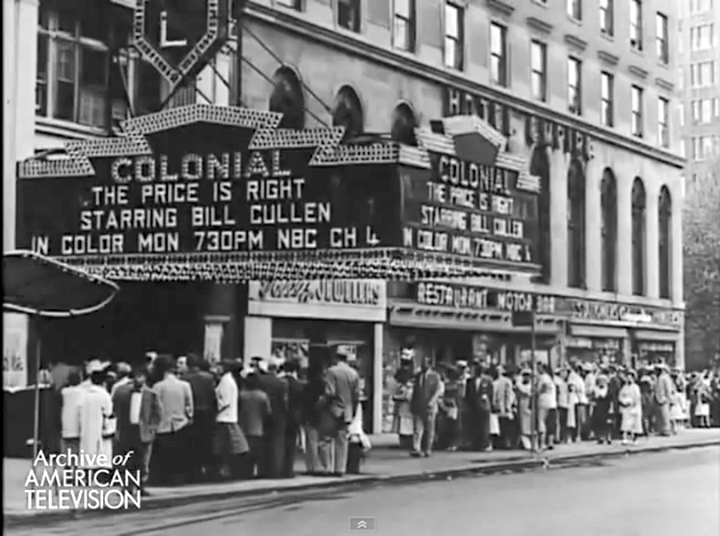
This Just In! Ultra Rare Photos Of The Colonial Theater Marquee
Thanks to Tom Gauer, here are two rare photos of The Colonial with “The Price Is Right” on the marquee. These are the first, and only two images I have ever seen of the outside during the NBC/RCA color years which began in early 1952.
Before this, the only outside shot we had of The Colonial was this 1936 photo when it was an RKO movie theater. Here’s the history of the building that housed NBC’s first ever commercial color television facility.
The Charleston (dance) was born here…at 1887 Broadway.
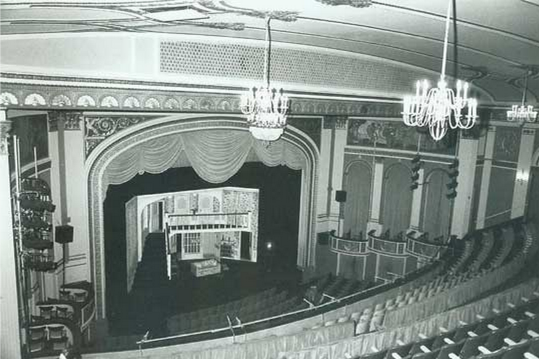
The theater was built in 1905 as the Colonial Music Hall by Fred Thompson and Elmer Dundy, the same duo behind the Hippodrome Theater and Luna Park at Coney Island, as a venue for musicals and vaudeville acts.
Designed by architect George Keister, the Colonial Theater was designed in the style of a Victorian London music hall. The interior had a wide yet not very deep auditorium, which brought the balcony much closer to the stage than many other theaters and could seat nearly 1,300.
In 1912, B.F. Keith took over the Colonial Theater, altering its name to Keith’s Colonial Theater, and when E.F. Albee took over from Keith five years later, it became the New Colonial Theater.
In the early-1920’s, black-themed musical comedies came to the New Colonial Theater, with such now-racist sounding names as “Little Sambo” and “Chocolate Dandies”. It was during this time that a 1923 show, “Runnin’ Wild” introduced the dance craze called the Charleston to America from the stage or The New Colonial.
In 1932, RKO took over, and, as the RKO Colonial Theater, began showing movies. After years of second-run and double features, RKO sold the theater to NBC in early 1952.
RCA and NBC remodeled the theater, added 4 live TK40 color prototypes and a color film chain. By November of ’52, the theater was ready to go live and did so with an experimental broadcast of “Your Show Of Shows” with the color burst removed for the network audience. Color testing continued until the FCC approved the RCA Dot Sequential System and commercial colorcasts began from here.
A decade later, ABC took over, and used the Colonial Theater mainly for taping game shows until 1971. Today, it’s all gone, but not forgotten. Enjoy and share! -Bobby Ellerbee
Once, This Was The Heart Of KNBC News
Thanks to Chuck Snitchler, here is a shot of the KNBC news room at the old Burbank location as it appears today. This is where the reporters, editors and producers desks were. Enjoy and share! -Bobby Ellerbee
By Request…Historic Kinescope Footage & The Machine Itself
Several people asked to see more on the kinescope process, so here from NBC’s KNBH in Hollywood, is a look at some early kine images starting with some of the first Iconoscope images from 1938. I think this report was probably done in early 1949.
Also seen here, the kine recordings of the first broadcast using the RCA TK30 Image Orthicon cameras in June of 1946 at the Joe Lewis – Billy Conn rematch at Yankee Stadium. Near the end, we’ll get a look at RCA’s latest Kine in action. Videotape couldn’t come soon enough. Enjoy and share! – Bobby Ellerbee
https://www.youtube.com/watch?feature=player_embedded&v=0HbODxTSDmM
The Gray Research Sound Effects Console
This is kind of a follow-up to posts earlier in the week that showed portable turntables from the 1930s, This was the big boy unit and CBS had a lot of these in their radio studios across the country. RCA had a similar model.
These were originally used for sound effects playbacks, but some of the first disc jockey shows were done on these machines as well. Enjoy and share! -Bobby Ellerbee
My How Thing$ Have Changed
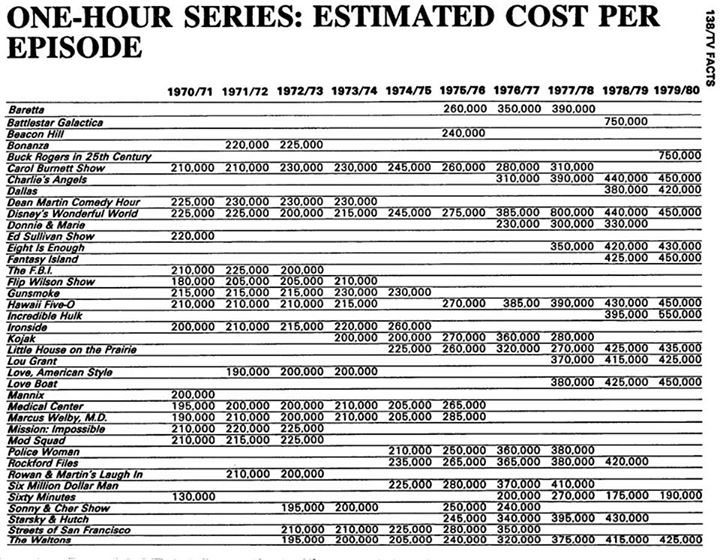
As you look at these numbers, consider this. What cost $100,000 in 1975 dollars now costs $440,030. If you remember from a few days back, “Miami Vice” cost almost $1.3 million per episode when it debuted in 1984. Anyone have a chart like this for today’s shows? Enjoy and share. -Bobby Ellerbee
Just For Fun!
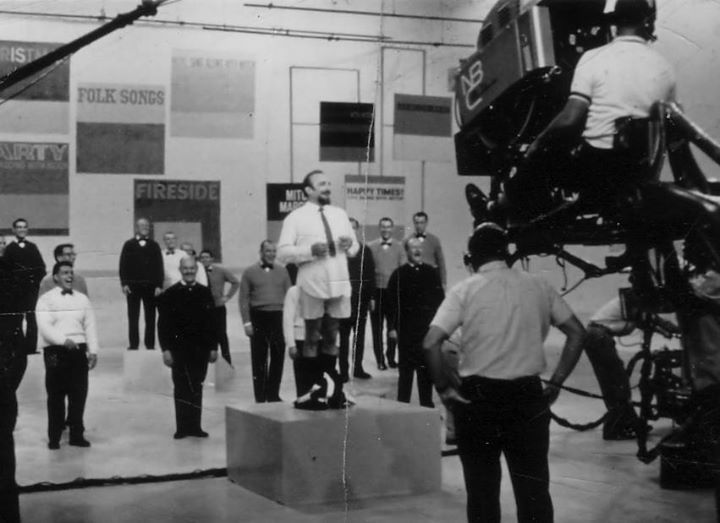
Here’s great shot of Mitch Miller dropping his pants as part of a practical joke during rehearsal at NBC Brooklyn Studio 2. Enjoy and share! -Bobby Ellerbee
January 22, 1947…KTLA Becomes The 1st Commercial Station In The West
THIS IS A MUST SEE HISTORY OF EARLY LOS ANGELES TELEVISION!
I’ve put up only two stories today so you can have the time to see them. This amazing video is packed with ultra rare historical footage of not only KTLA, but from the early days of all the Los Angeles television stations!
You’ll hear from Bob Hope, Betty White, Steve Allen, Dinah Shore, Dick Enberg and MANY more! This 40th Anniversary broadcast posting even has a very good timeline of what comes where on the video, but if you can, make the time to see it ALL! It is one of the very best historical presentations you will ever see! ENJOY AND SHARE! -Bobby Ellerbee
http://mediaburn.org/video/ktla-anniversary-show/
[KTLA anniversary show] — Media Burn Archive
Anniversary show for the station with clips from classic programs.
The Adelphi Theater…By Request, A Replay Of The Famous Theater’s History
Adelphi Theater Stage Is Now…New York Hilton’s Grand Ballroom
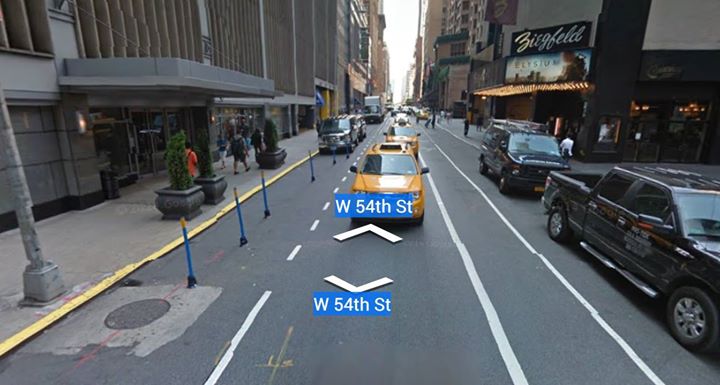
If you ever want to conjure up the ghosts of ‘The Honeymooners’, make your way to the Grand Ballroom of the New York Hilton as that is where the stage of the Adelphi Theater was located.
After I posted the rare new photo from Peter Katz yesterday of the ‘Honeymooners’, our friend Howie Zeidman from ABC called me with this interesting information. In the color photo, you see on the left what I think is the Hilton’s ballroom entrance which is directly across from the (new) Ziegfeld Theater at 144 W. 54 Street. The Adelphi was at 152 W. 54.
In the second photo, we see a long shot up 54th from 6th Ave. By the time this photo was taken, Dumont had moved out (1957) and the theater was renamed The 54th Street Theater. It was torn down in 1970 to make way for the Hilton.
Speaking of The Ziegfeld Theater, the one shown here is not the original theater where NBC did ‘The Perry Como Show’, but it is very close. That theater was on the corner of 6th Avenue and 54th street and this new Ziegfeld movie theater was built right behind where the original was.
By the way, CBS Studio 50 (Ed Sullivan Theater) is only a couple of blocks from here. Gleason started there with CBS in 1952 and had offices in the Park Sheraton Hotel which was only a block from Studio 50. When he decided to do the half hour ‘Honeymooners’ on film, he wanted something close and choose Dumont’s Adelphi which Dumont had just equipped with their new Electronicams. Enjoy and share!
-Bobby Ellerbee
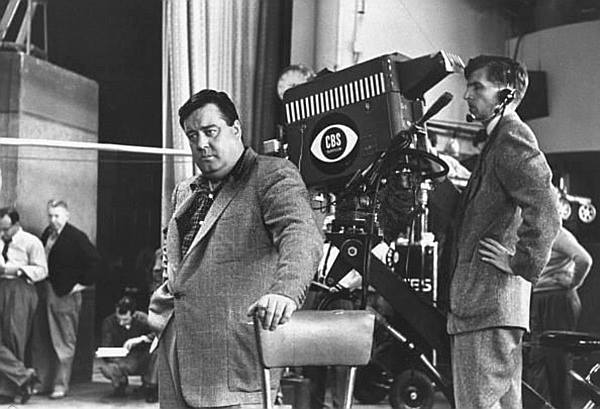
A True Classic
Here’s Jackie Gleason at CBS Studio 50. Behind him is legendary cameraman Pat McBride. Enjoy and share. -Bobby Ellerbee
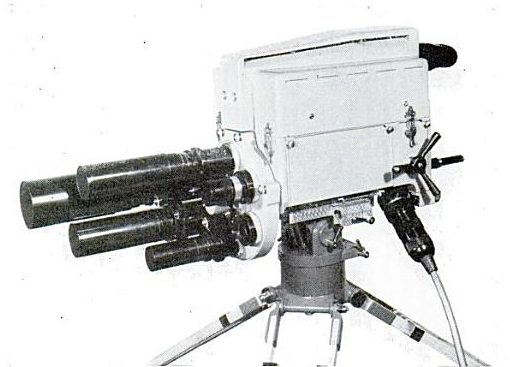
A True Rarity. Television’s Only Six Shooter
This is the six lens EMI Emitron camera from 1951. That I know of no other camera had a six lens turret. There were a couple of five lens turrets over the years, but I think this is the only six shooter. This is a monochrome studio camera used by the BBC. Enjoy and share. -Bobby Ellerbee
Otis Redding’s Final Appearance…The Day Before The Plane Crash
While searching for something else, I found this and thought you may enjoy seeing it. This video is from the syndicated music show “Upbeat” that was done at WEWS in Cleveland on December 9, 1967.
Redding’s next stop was Madison, Wisconsin; the next day they were to play at The Factory nightclub near the University of Wisconsin.
Although the weather was poor, with heavy rain and fog and despite warnings, the plane took off. Four miles from their destination at Truax Field in Madison, the pilot radioed for permission to land. Shortly thereafter, the plane crashed into Lake Monona. Bar-Kays member Ben Cauley, the accident’s sole survivor.
I never met Otis, but I knew his brother Rogers and his wife Zelma. One day in 1973, they were both in my car in Macon, Georgia when a brand new song came on the radio and we were all electrified. None of us had ever heard it before, but they both said, “That’s going to be a huge record”, and it was…the song was “Let’s Get It On” from Marvin Gaye. Enjoy and share! -Bobby Ellerbee