- Home
- TV History
- Network Studios History
- Cameras
- Archives
- Viewseum
- About
ULTRA, ULTRA RARE: A CBS Pye Camera
Above is a photo of James Dean and Betsy Palmer in ‘Sentence of Death’ which aired on CBS, August 17, 1953, on Westinghouse Studio One (Season 5, Episode 46).
The camera is a Pye Mark II, Type 2014. This is the only photo I know of showing Pye cameras at CBS in New York. I think the Pye cameras replaced the Dumont cameras at Studios 53 to 56 in Liederkrantz Hall at 111 East 58th Street. I have a feeling that they were only used for a short time, possibly arriving in mid 1952, and then sold almost immediately after use on this broadcast. In late 1953 and early 1954, WJBF in Augusta, Georgia, WHA in Madison, Wisconsin and WVEC in Hampton, Virginia went on the air with these same camera models, and all were started on a shoestring budget. I think they all came from CBS. These are the only 3 stations I know of that used the Pye camera and by coincidence, they all went on the air around the same time. I suspect CBS sold them to buy some RCA TK11s which came out in May of 52.
Below is the full video of the Studio One episode.
Super Rare! First Plumbicon Tests
The smaller camera is one of two experimental models of the first color plumbicon camera from Philips. It is the predecessor of the Philips LDK1/Norelco PC60 and it has been built inside the body of a Philips monochrome camera. It is being compared in performance by the BBC to the Marconi BD 848 (in the background), which is a 3 Image Orthicon color camera, very much like the RCA TK41. The date is probably late 1963 or early 64.
CLASSIC! Final Days Of ‘Tonight’ With Johnny Carson
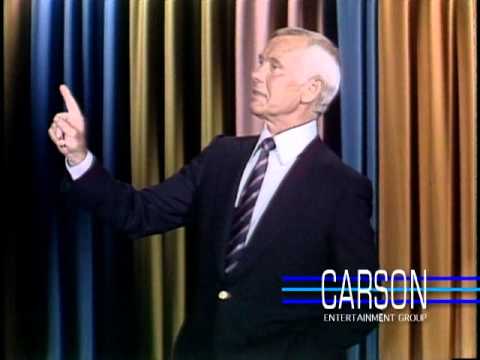
This is a great behind the scenes look at the show, shot in the final days of production with Johnny and Ed as hosts. The year is 1992 and the cameras are RCA TK47s. Enjoy!
http://www.youtube.com/watch?v=NSDcQkpb9sE
Leonard Bernstein’s Young People’s Concerts: CBS 1958-1972
These special musical presentations for young people by The New York Philharmonic were actually started in 1924, but when conductor Leonard Bernstein arrived in 1958, he and CBS took it to a new level. These originated from Carnegie Hall, but in 1962 the orchestra moved to the new Lincoln Center. Originally broadcast on Saturday (episodes 1-7) and Sunday (episodes 8-15), the concerts moved to prime time for episodes 16-40. This was likely a CBS counter to Newton N. Minow’s speech referring to television as a vast wasteland. The concerts were also syndicated to forty countries.
Through this video’s home on YouTube, you can access ALL of the concerts.
Classic Intro
Here’s a cameraman at CBS Television City getting ready for the opening shot of ‘Art Linkletter’s House Party’. At show time, the red chase lights come on. The camera is the RCA TK11.
Here is a quick look at this “Art” card with its flashing lights at the shows intro!
RCA Exhibition Studio…1964 World’s Fair
To give the RCA TK41s on display something to do, RCA offered to do live and recorded public service shows from their facility. This is a taping of The Bronx Zoo Show. Many of us that visited usually saw only an empty studio, but at least we got to see the TK41s.
By The Way…these 4 cameras and the RCA color truck parked behind the pavilion were sold to ABC after the fair ended and went to The Hollywood Palace to make shows from there, the FIRST LIVE COLOR ON ABC. The Flintstones was the first color show on ABC but distribution to the ABC network had to come first from NBC Burbank’s color telecine equipment, then to ABC New York via telephone lines as, at the time ABC had no color ability. Soon after The Flintstones started, ABC New York got color telecine equipment.
FINALLY! Chuck Pharis Has Unpacked!
After the move from California to Tennessee a couple of years ago, our friend Chuck has finished putting together a new camera room at his home. I’ll have more photos tomorrow, and many more of his collection in a few weeks when I go up and visit. Congratulations to Chuck on a beautifully done room and the recent acquisition of the rare Marconi Mark IIs and Mark IIIs…the only ones in the US.
Steve Allen & The Hudson Theater
In 1954, ‘The Tonight Show’ debuted on the NBC Television Network and was broadcast from The Hudson Theater. Before ‘The Tonight Show’, WNBT had originated ‘The Steve Allen Show’ from there for local NYC audiences. In 1957, Jack Paar took over as host and I’m pretty sure that’s when the show moved into Studio 6B at 30 Rock. In 1956, ‘The Price Is Right’ debuted from The Hudson and that same year, Steve Allen began hosting ‘The Steve Allen Show’ on the NBC network from The Hudson on Sunday nights against Ed Sullivan. When ‘Tonight’ began it was broadcast live, but on January 12, 1959, the show began to be videotaped for broadcast later on the same day, although initially the Thursday night programs were kept live for some reason. Color broadcasts began on September 19, 1960 during Jack Parr’s tenure as host.
Amazing! Saturday Night Live and Studio 8H In Action
In the first part of this timelapse video, we see the remarkable movement of the crew and scenery in a rehearsal. The second part of the video is shot from a timelapse cam on the Chapman Electra crane with our friend John Pinto in the bucket. Enjoy!
http://www.youtube.com/watch?feature=player_embedded&v=PU8k2hoCr2w
A quick look behind the scenes.
After months of searching, I finally know the story behind this fabulous photo array! This is NBC’s ‘Saturday Color Carnival: A Salute To Baseball’! This was done live from the Colonial Theater in the early spring of 1957. Notice a couple of the cameras are RCA TK40s and a couple are TK41s. The lineup of star players is astounding!
Emceed by Gene Kelly, the 90-minute extravaganza brings together dozens of special guests from Baseball and Showbiz to commemorate in song, sketch and story, the opening of the 1957 baseball season. Among the special’s many highlights: The introduction of 1956’s MVPs, Mickey Mantle and Don Newcombe; comedy playlets starring the likes of Robert Alda (father of Alan Alda) and Ed Gardner of Duffy’s Tavern radio fame; songs performed by Janis Paige, Tony Bennett, and ventriloquist Paul Winchell, with the help of dummy Jerry Mahoney; a “dream outfield” segment built around Stan Musial, Leo Durocher and Ted Williams; a “baseball rock-n-roll” specialty sung by Bill Hayes; old-time baseball newsreel clips, narrated by radio caster Mel Allen; and a special closing message, delivered by then-Commissioner of Baseball Ford Frick (long before his vilification as the architect behind the “asterisking” of Roger Maris’ 61st homer.
In The Days Of Not So Instant Replays…
Our friend Richard Wirth has a new article on the history of kinescopes and video tape development. Linking the east and west costs by coaxial cable was a blessing and a curse for networks because of the need to delay broadcasts going west. Here’s a look at how that got done in the 50s. Enjoy!
Ultra Rare 1: ‘The Voice Of Firestone’, NBC Studio 8H, 1949
Believe it or not, what you’re looking at is technically a remote broadcast. At this moment in 1949, 30 Rockefeller Plaza had only two functioning television studios: 3H and 8G.
Studio 3H, converted from radio in 1935, was NBC’s original television home — the birthplace of nearly all early black‑and‑white programming and the network’s first color experiments. It remained NBC’s lone TV studio until 8G came online in 1948. Studio 8H, famous today as the home of Saturday Night Live, wouldn’t be converted for television until 1950.
So how does a show produced inside 30 Rock qualify as a remote? The answer is a surprise even to seasoned broadcast historians: NBC used its own in‑house mobile units. Yes — the same trucks normally dispatched to ballparks, parades, and special events were rolled inside the building for this production. The full story is in our companion article, “The NBC Inhouse Mobile Units? YEP!” – Eyes Of A Generation…Television’s Living History
The radio version of the program began in 1928 as “The Firestone Hour,” airing Monday nights at 8:30. Its television lineage is equally historic. This series may well have been the first regularly scheduled U.S. television program broadcast beyond New York. It debuted on WNBT‑TV on November 29, 1943 — a time when television sets were scarce — and joined the NBC television network in April 1944, continuing through January 1947.
When The Voice of Firestone returned to television in the fall of 1949, NBC simulcast the program on both radio and TV, making it one of the earliest shows to use that dual‑platform approach.
In the lower left of the photo, you can spot an RCA TK‑30 mounted on a Panoram dolly. Also note the remarkable ceiling height: Studio 8H is three stories tall, not two, with a roof garden directly above it — a feature that made it uniquely suited for large orchestras and ambitious productions.
Special thanks to Val Ginter for providing these two extraordinary images.
Ultra Rare 2: ‘The Voice Of Firestone’, NBC Studio 8H, 1949
If you look closely, you can see 3 RCA TK30 cameras in this photo. There’s a good chance there was at least one more in the balcony. Interestingly, in this photo, Studio 8H looks a lot like the studio as we know it now, probably because the Firestone stage is much larger than the original NBC Symphony stage we’ve seen in earlier photos. This rehearsal photo shows a vocal group being accompanied by the orchestra. The balcony seating shown here is now office space. The SNL bleachers are in front of the old balcony and have catwalks under them. Just above the Firestone sign, you can see the radio control room window.
The iconic stars were reunited and interviewed on the popular talk show “The Dinah Shore Show” in 1975. ***A 20 minute version of this reunion interview is a…
The Bell Telephone Hour…1959-1968
Above is a clip from ‘The Bell Telephone Hour’, an NBC classic that focused on music, both classical and Broadway. This was one of the first TV series to be telecast exclusively in color and recorded on videotape. In this photo, RCA TK41s at NBC Brooklyn circle up for a scene “from the inside out” as they prepare to shoot four performers against a 180 degree cyclorama.
Follow The Yellow Brick Road…
In this rare photo from ‘The Wizard Of Oz’ we see one of the huge Techincolor cameras in action. Production on the bulk of the Technicolor sequences was a long and cumbersome process that ran for over six months, from October 1938 to March 1939. Most of the actors worked six days a week and had to arrive at the studio as early as four or five in the morning to be fitted with makeup and costumes, and would not leave until seven or eight at night. Cumbersome makeup and costumes were compounded by the fact that the early Technicolor process required a significant amount of lighting to be used (due to the low ASA speed of the film), which would usually heat the set to over a hundred degrees
His Master’s Voice…
Here’s a rare moment…Johnny Carson as a guest on David Letterman’s show in 1985. Enjoy!
http://www.youtube.com/watch?v=gehruIvKoXs
Johnny making an appearance on Letterman Show in Burbank CA @ NBC Studios
Q Card Hell!
Can you imagine? Here’s an associate producer working on Q cards for a show at CBS Television City. Can you imagine what chaos there would be on a live show if these were out of order?
Episode 1, ‘Studio One’…’The Storm, November 7, 1948
Also known as Westinghouse Studio One, Studio One From Hollywood, Summer Theater and Westinghouse Summer Theater, this series of dramas ran on CBS from ’48 to ’58. ‘Twelve Angry Men’ was one of the many blockbuster presentations in this series that was always among the top rated shows and an Emmy magnet.
Shown here are Margret Sullivan and Dean Jagger. Notice the extended arm on the HF Panoram dolly. More, a few posts below.