- Home
- TV History
- Network Studios History
- Cameras
- Archives
- Viewseum
- About
November 1, 1960…Rare! The Photo And Video, Martin And Sinatra
Before the 1965-1974 ‘Dean Martin Show’ on NBC, there was the 1957-1961 ‘Dean Martin Show’ on NBC. Both were done in Studio 4 at NBC Burbank, but that’s where the similarity ends…sort of.
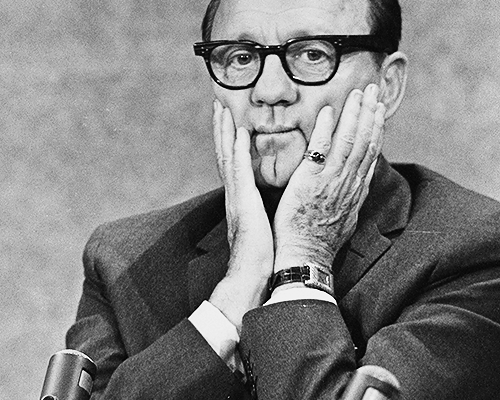
The ’57-’61 shows were specials and only aired two or three times a year and were black and white shows. This photo was taken at dress rehearsal on this day 54 years ago and the video clip is a ‘This Is Your Life’ style comedy bit Dean did with Frank on that show. The camera is an RCA TK11.
After ten incredible years as the hottest act in show business, Jerry Lewis and Dean Martin did their last show together at the Copacabana in NYC on July 24, 1956. During that time, they had their own radio show on NBC, hosted NBC’s ‘Colgate Comedy Hour’ on television and starred in 16 feature length films.
After the break, Lewis began to produce, star in and direct his own movies, while Martin returned to singing with three huge hits for Capitol including “Memories Are Made Of This”, “When You’re Smiling” and “Oh, Marie”.
1958 gave birth to The Rat Pack in Las Vegas and Dean’s carrier was on fire again. In the next post today, we’ll see twenty unpublished photo of the Rat Pack from Life Magazine. Enjoy and share! -Bobby Ellerbee
October 31, 1950…Trick Or Treat? My Parents Would Say, BOTH!
Yep, today’s my birthday and at 3:20 this afternoon, I’ll be 64 years old. I’m not sure, but that probably makes me the oldest student at The University Of Georgia.
Most don’t know, but in August, I started back to school at my old alma mater to take some classes I thought would be interesting and helpful. The class I am taking now is on Media Technology and friends, I am here to tell you…it’s a whole new ballgame! Did you know that modulation is now “bit depth” and frequency is “sample rate”?
As an analogue guy in a digital world, I can hum the tune but the lyrics seem to have changed a good bit. It’s interesting though and so are my fellow students…especially their way of being. Fortunately, I’m not the only one taking notes on paper, but my Motorola Razor phone sure is a rarity.
The long, slow decline of television news has bothered me for years, and although I know how the trainwreck started at CBS in the 80s when accountants suggested making the news a profit center (instead of being supported by the entertainment side), some new aspects of this phenomenon are revealing themselves as we study “convergence” which is the process of merging print, broadcast and online news systems.
You would think that more access to more news would be better all around, but in my opinion…it has weakened reporting, especially in the mainstream media. Now, there are more blogs and more opinion based bloggers but fewer journalists reporting “news”. You would also think that with plenty of choices of political slants (like MSNBC vs Fox), people who wanted to understand both sides of a story would be better informed by having the ability to go to the other outlets, but…this seems to cause even more polarization. Why? Because human nature, being what it is, people tend to stay in their comfort zones and thus, find even more support for their beliefs on the web at sites like The Drudge Report or Huffington Post.
As for the softness of network evening news shows with all the YouTube videos and feel good stories…I know you guys are doing it to snare a younger demo, but you can stop now. They are not coming to dinner with you, so how about going back to real news with real reporters? Thank you for being a part of Eyes Of A Generation and Happy Halloween! -Bobby Ellerbee
Halloween Special #5…One Minute Of Movie Magic That Lasts A Lifetime
This is perhaps one of most amazing transformation shots ever done, especially when you consider the date was 1943! Lon Chaney Jr’s face is in constant motion, yet the time lapse makeup application process by Jack Pierce is seamless as he becomes The Wolfman. This starts at 1:04 and follows the not as impressive, but pretty spooky 1941 transformation scene. The ‘American Werewolf In London’ transformation scene is great too, but that’s in today’s next video. Enjoy, share and Happy Halloween! -Bobby Ellerbee
In Case You Missed This…The Oldest Known ‘Tonight’ Color Clip
During yesterday’s camera comparisons, Gary Walters reposted this ultra rare clip which was restored by David Crosthwait and his expert crew at DC Video in LA. Although it’s a dub of a 2″ low band quad tape, it’s still very good and shows off the RCA TK41’s abilities quite well. This was at NBC Studio 6B in New York. Enjoy and share! -Bobby Ellerbee
https://www.youtube.com/watch?v=eg-R9tnEXso&feature=youtu.be
This segment is courtesy of Carson-Entertainment-Group and Stan Zabka. This 2″ low-band color quad tape (dub) was presented to Stan by NBC in 1964. Stan pers…
October 31, 1965…’The Ed Sullivan Show’ Goes Color
Although I can’t locate a clip of the debut color show from CBS Studio 50, I have the next best thing…a clip from a week later on November 7, 1965.
Starting in the late 50’s, Sullivan had done color shows from time to time, but they were all done from CBS Television City in Hollywood. As a matter of fact, Season 18 started in color from Television City on September 12, 1965 and the show stayed there till the seventh episode was broadcast October 24th with Richard Pryor, Marvin Gaye, Herman’s Hermits, Duke Ellington and Helen Hayes.
The move back home was Episode 8, and starred Liza Minnelli, Alan Sherman, Barry McGuire, The Grass Roots and London Lee, live from the Ed Sullivan Theater which was now equipped with six Norelco color cameras. In the photo below is Sullivan with his long time “personal cameraman” George Moses on Camera 1. Enjoy and share! -Bobby Ellerbee
October 31, 1953…NBC’s First Network Colorcast: “Carmen”
In essence, the opera “Carmen” was broadcast nationally in black and white with the color burst removed. BUT, the color broadcast was fed via closed circuit to viewing parties in New York, possibly Washington and to Chicago.
The colorcast was live from NBC’s first and only color facility, The Colonial Theater in New York. At the time, the only color equipment was here. No one had color transmitters and there were very few color monitors, even in the NBC O&O stations control rooms where the closed circuit feed came in. As the article states, WNBQ’s single 12″ color monitor, provided by RCA, was at the off site viewing party next to a 24″ black and white set that was carrying the nationally telecast monochrome broadcast.
The cameras used were the four RCA TK40 prototypes. The one hour presentation of the opera “Carmen” also included an audio trick or two. In passages where the vocal performance was critical, but extreme movement in dance numbers was too, look-alike actors were subtly inserted on stage to dance and lip synch while the principal operatic stars sang off stage. The principals would quietly return to stage and sing in more static shots. This is the only surviving photo. Enjoy and share! -Bobby Ellerbee
I think this is my all time favorite TK41 color shot. My like for this may be influenced by the art of the shot and the set, and even though this is not very colorful, it shows how great the black registration was on this camera. I would have loved to have been at NBC Burbank when this was done. Were any of you there? Enjoy and share! -Bobby Ellerbee
https://www.youtube.com/watch?v=W-RAnkH8Jxc
Andy Williams – O Holy Night
To me, the best examples of the great pictures the TK41 made are captured on The Andy Williams Christmas Specials on NBC. This is my second favorite clip of their great color. Wait till you see my favorite which is up next! Enjoy and share! -Bobby Ellerbee
Halloween Special #3…Universal’s Master Of Makeup, Jack Pierce
We said a brief hello to Jack Pierce yesterday, but today, we’ll get a full half hour of his mastery. Pierce created the most iconic and memorable monster looks ever to hit the screen, and they live on till this day. Did you know that the look of The Joker in the Batman comics was based on Jack’s “Laughing Man” make up? You’ll see that and much more here so feel free to skip around in the video. Enjoy and Share! -Bobby Ellerbee
The GE PE 20…A Witness To History In Dallas
The Broadcast Engineering ad here is from March of 1962 and is part of the introduction of GE’s new PE 20 monochrome camera. Nationally, not many broadcasters used GE equipment, but there was an unusually large market for GE product in the southwest, and Texas in particular.
The first time most of us saw pictures from a PE 20 were in November of 1963 when President Kennedy was killed in Dallas. The then CBS affiliate there, KRLD had these and you can see a couple of them here in these photos of Lee Harvey Oswald and Jack Ruby. Thanks to Jeremy Butler at The University Of Alabama for sharing the ad with us…this gives us more information on the rather sketchy GE equipment timeline. Anyone ever work with these? Enjoy and share! -Bobby Ellerbee
October 30, 1931…NBC Begins Work On Empire State Tower
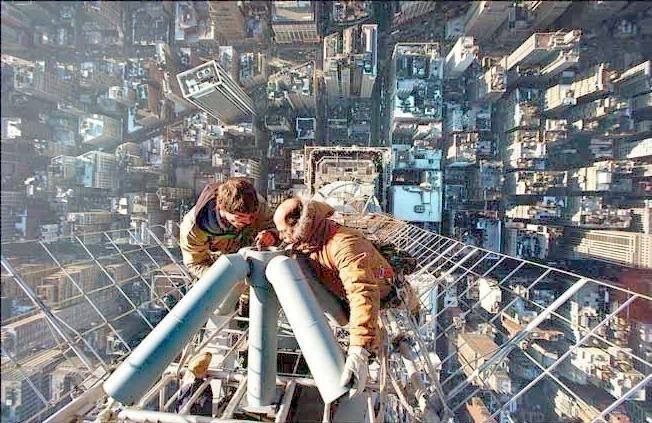
On this day in 1931, NBC began putting a TV transmitter on top of the Empire State Building. The first experimental TV broadcast from the building was on December 22, 1931.
I don’t think the broadcast tower atop the building’s dirigible mooring mast was added till after 1936. At this point, antenna elements were simply attached to the existing mast.
RCA’s first experimental television transmissions began in 1928 by station W2XBS in Van Cortland Park and then moved to the New Amsterdam Theater Building, transmitting 60 line pictures in the new 2-3 mHz band allocated to television. A 13 inch Felix the Cat figure made of paper mache was placed on a record player turntable and was broadcast using a mechanical scanning disk to a scanning disk receiver. The image received was only 2 inches tall, and the broadcasts lasted about 2 hours per day. By 1931 the station became part of NBC and began to transmit from 42nd St.
The Empire State Building was completed in May of 1931, and RCA leased the 85th floor for a studio and transmitter location for experimental television broadcasts. RCA, through its broadcasting division NBC, applied to the Federal Radio Commission on July 1, 1931 for construction permits for the sight and sound channels of a television station, which were issued on July 24, 1931. The call sign W2XF was issued in December 1931 for the “sight” channel of that station on an assigned frequency of 44Mc. The RCA transmitter had an input power to the final stage of about 5Kw, giving an estimated power output to the antenna of about 2Kw.
The sound channel of the TV station was separately licensed as W2XK for a 2.5Kw transmitter to operate on 61Mc. Both transmitters were located on the 85th floor and used separate vertical dipole antennas.
Below are some shots of the Empire State mooring mast built as a dirigible docking station, but aside from King Kong and Fay Wray, no one ever went up there. The winds proved to be too strong and there were several near accidents in mooring tests, but a bag of mail was once delivered via the mast. The last photo is I think from the late ’50s and shows the assigned areas of the tower. Enjoy and share! -Bobby Ellerbee
Halloween Special #1…Rare Frankenstein Color Footage
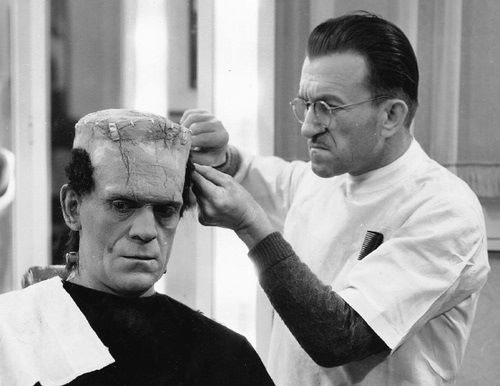
This is a short color home movie clip shot by Boris Karloff’s wife who took this on the set of ‘The Son Of Frankenstein’ in December of 1939. In it, we see Karloff goofing and playing with Universal’s top monster makeup man, Jack Pierce. There will be much more on Pierce in the next post.
This was the third and final Frankenstein role for Karloff and he and Pierce had been working together since Pierce first developed this classic look in 1931 for ‘Frankenstein’. Their second together was ‘The Bride Of Frankenstein’ in 1935. They both cooperated on the design of the now iconic make-up, with Karloff removing a dental plate to create an indentation on one side of the Monster’s face. He also endured four hours of make-up under Pierce’s hand each day, during which time his head was built up with cotton, collodion and gum, and green greasepaint (designed to look pale on black and white film) was applied to his face and hands. The finished product was universally acclaimed, and has since become the commonly accepted visual representation of Mary Shelley’s creation. Enjoy and share! -Bobby Ellerbee
Putting A Face To A Famous Voice, Again…Meet Apple’s Siri
Long before there was an Iphone, there was a text to speech recording session which became…you guessed it…the basis for the Apple Siri assistant. Enjoy and share! -Bobby Ellebee
https://www.youtube.com/watch?v=z2bTymnb1uE
Susan Bennett reveals to the world that she’s the voice behind Siri.
Putting A Face To A Famous Voice…The Telephone Company Lady
Long before all the new computer voice sequencing programs came along, there was a lady named Jane Barbie making recordings for AT&T and The Bell Systems whose voice we have all heard a million times. Thanks to Dick Clark, we get to meet her. Enjoy and share! -Bobby Ellerbee
https://www.youtube.com/watch?v=G2YJu3i4edI
Jane Barbie surprises audience members at her table when Dick Clark revealed that she is the famous voice behind the telephone. She performs Clark’s favorite…
October 29, 1956…’The Huntley Brinkley Report’ Debuts On NBC
First, a note on the video clip…this is a short clip of the first pairing of this great team at the 1956 Democratic Convention. From August 13 – 17, Chet and David hosted NBC’s coverage from Chicago and were well received. The public liked them and the critics did too. Pairing them was NBC News pioneer Reuven Frank’s idea.
For many years, John Cameron Swayze had been NBC’s news face, but Douglas Edwards at CBS was beating Swayze and NBC had been thinking of a shift to new talent. Their convention success with the Huntley – Brinkley duo was a key in deciding who, but then came the question of where.
Bill McAndrew, NBC’s director of news (later NBC News president), had seen a highly rated local news program on NBC affiliate WSAZ-TV in Huntington, West Virginia, with two anchors reporting from different cities. It was his idea to put Chet in New York and David in Washington, and although Ruven Frank thought it was the dumbest idea he ever heard, it was done. The day of the debut broadcast, it was Frank that came up with the closing line…”Good night, Chet. Good night, David. And good night, for NBC News.” This exchange became one of television’s most famous catch phrases even though both Huntley and Brinkley initially disliked it. The New York segment with Huntley came from NBC Studio 3A but was moved to 8G in 1967.
As an aside, Huntley and Brinkley probably would have never even met if it weren’t for a big mistake on Brinkley’s part. Brinkley enjoyed writing as a boy, and in high school he obtained an internship at a local newspaper. His first story, according to his memoirs, was about the nonappearance of a bloom on a century plant and the crowd it drew. It was picked up by the Associated Press and printed in newspapers across the country. During World War II Brinkley moved to Atlanta to write news stories for United Press International (UPI), and he was soon transferred to Nashville to become a bureau manager. On a mistaken notion that he had been offered a CBS job in Washington, D.C., Brinkley moved to that city in 1943, but finding no job waiting for him, he landed a job as a reporter at NBC’s WRC Radio there. When NBC expanded from radio to television in the early 1950s, Brinkley became one of the first television reporters.
Enjoy and share! -Bobby Ellerbee
https://www.youtube.com/watch?v=cKhNFSOiKnc
The TV era dismays Adlai Stevenson but expands the following for Sen. John F. Kennedy—and for NBC’s Huntley and Brinkley.
Speaking Of Toys…Here Is The First Ever Barbie Commercial
This is reported to have aired on ABC on ‘The Mickey Mouse Club’ in 1959. Did you know Barbie’s full name is Barbara Millicent Roberts and was from the fictional town of Willows, Wisconsin?
Me either, but unlike most YouTube posts, this one actually has some interesting and correct background information included in it’s About section. Enjoy and share. -Bobby Ellerbee
October 28, 1950…’The Jack Benny Show’ Debuts On CBS
The video here is a kinescope of that first show, with special guest Dinah Shore. Since Television City was still being built, this probably originated at the CBS Studios at 1313 Vine Street or from Studio A at Columbia Square.
On this debut show which includes singer Snooky Lansen selling cigarettes at the start and Mel Blanc’s debut as a guest on the show (9:15), as Mel plays a stage hand. The monologue and the sketch are about how Jack decided to go on television, and how he put his initial show together. Rochester sings “My Blue Heaven” while doing his housework. Mr. Kitzel drops by to wish Jack good luck. Dinah Shore sings “I’m Yours” over the phone to see if Jack approves of it for her guest spot. On the show, Ken Murray drops by to wish Jack good luck, and Dinah and Jack sing a duet: “I Oughta Know More About You”. The Sportsmen Quartet do the Lucky Strike commercial. Jack closes the program playing his signature song “”Love in Bloom” on the violin.
The regular and continuing ‘Jack Benny Show’ was telecast on CBS from October 28, 1950, to September 15, 1964, and on NBC from September 25, 1964, to September 10, 1965 with 343 episodes produced.
The television show was a seamless continuation of Benny’s radio program with many of the same players, the same approach to situation comedy and some of the same scripts.
The show appeared infrequently during its first two years on CBS as Benny moved into television slowly. In his first season (1950–1951), he only performed on four shows, but by the 1951-1952 season, he was ready to do one show approximately every six weeks. In the third season (1952–1953), the show was broadcast every four weeks. During the 1953-1954 season, Benny aired every three weeks. From 1954 to 1960, the program aired every other week, rotating with such shows as ‘Private Secretary’ and ‘Bachelor Father’.
Beginning in the 1960-1961 season, ‘The Jack Benny Show’ began airing every week. During the 1953-54 season, a handful of episodes were filmed at Desilu during the summer and the others were live, which allowed Benny to continue doing his radio show. Enjoy and share! -Bobby Ellerbee
Incase You Missed It…Fantastic NBC ‘Monitor’ Site!
The page linked here is just great, but it’s just one page of a whole site dedicated to NBC Radio’s weekend show ‘Monitor’. A note…just on this page, there are dozens of great ‘Monitor’ moments, BUT, at the bottom of this page, there are some priceless outtakes and goofs so look and listen there too! Thanks to Dennis Hart for creating this and to Jodie Peeler for sharing it with us. Enjoy, bookmark and share! -Bobby Ellerbee
http://monitorbeacon.net/nbc-monitor/the-sounds-of-nbc-monitor/
Just For Fun…A 1951 Christmas Card Gag
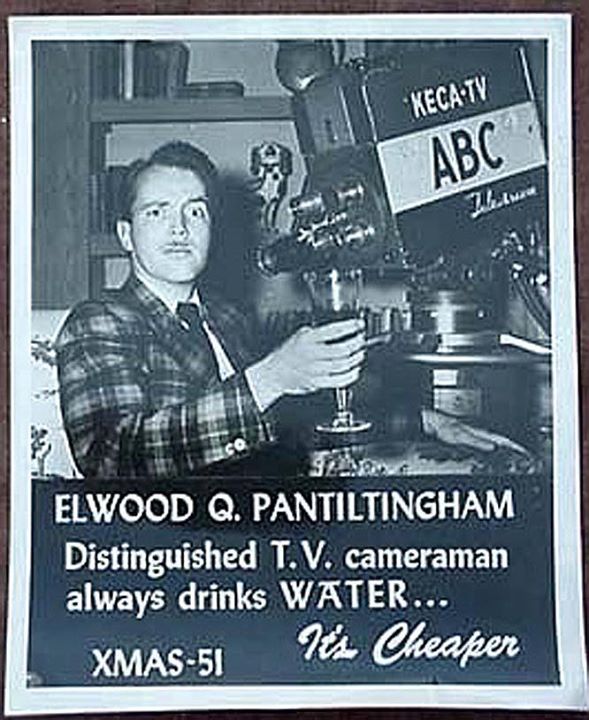
With all the ABC mentions today and the shot of KECA’s first cameraman (Bob King) last week, I thought you would like to see this. I don’t think this is King, but it is one of the first few cameramen there. I love the made up name, Elwood Q. Pantiltingham! Just so you know, one of our friends here is a top independent cameraman who’s email address reminds me of this…his is, focustiltpanzoom@. Enjoy, share and be good for goodness sake…Santa’s watching! -Bobby Ellerbee
And Now, A Word From Our Sponsor…
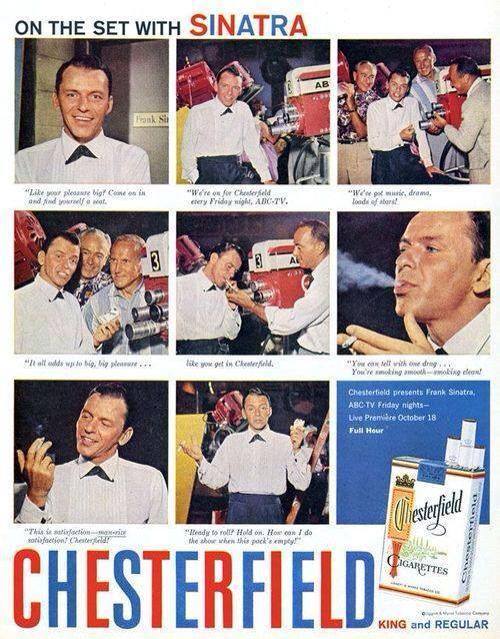
Thanks to Sly Rose, here’s an interesting introduction to Frank Sinatra’s second and final television series…’The Frank Sinatra Show’ on ABC which aired from October 18, 1957 till June 27,1958. Notice the last panel in the ad which announces the debut show. His first series was on CBS, and was a variety show that ran from 1950 till 1952.
This series was originally slated to consist of thirteen variety episodes, thirteen dramas starring Sinatra, and ten dramas hosted by Sinatra and originated from The El Capitan Theatre in Hollywood.
Sinatra was paid $3 million for the series, and granted near total artistic freedom which turned out to be a huge mistake for ABC. Frank hated to rehearse and tried to make eleven shows in fifteen days; the series subsequently received a critical mauling and was Sinatra’s last attempt at a television series.
The drama segments of the show fared less well against the variety episodes in ratings and the final total was fourteen live variety shows, eight filmed variety shows, four dramas starring Sinatra, and six dramas hosted by Sinatra. Rather than 36 episodes for the season, ABC cut its losses and reduced the total number to 32.
It’s rare to see the old red and white ABC camera color scheme. The photo for this ad were taken at The El Capitan and are the same RCA TK10 cameras used during the day on ‘Queen For A Day’, which originated here too. Enjoy and share! -Bobby Ellerbee