- Home
- TV History
- Network Studios History
- Cameras
- Archives
- Viewseum
- About
The Great Dennis James…A Video Tribute By Monty Hall
Few have had a carrier like this…as you’ll see, even Frank Sinatra and Bob Hope respected the trail he blazed. Dennis James was among the first television announcers and game show hosts, and “made his bones”, partially by cracking chicken bones (on mic) as he called wrestling matches which were a staple of early television. He is also the first person to record a commercial on video tape, but his depth and stature is much greater. As good friend Monty Hall will tell you, Dennis James is truly one of television’s great pioneers. Enjoy and share! -Bobby Ellerbee
https://www.youtube.com/watch?v=0IihYyy3hZ4
This Video Chronicles the life of Television Pioneer and Game Show Icon Dennis James.
Another Of Television’s First Game Shows…’Cash And Carry’
This may actually be network television’s first game show. The distinction here is “network television”, as this debuted on June 20, 1946 on Dumont and was broadcast in New York and Washington.
Earlier today, we looked at the CBS game show ‘Missus Goes – A -Shopping’ which aired in 1944, but that was only shown in New York City. As we also saw, ‘It’s A Gift’ debuted in January of ’46 on CBS, but that’s several months after ‘Cash And Carry’ with Dennis James.
I wanted to post this to do two things…connect some dots in the history department and to prepare you to meet Dennis James. In the next post, there is a superb video tribute to one of television’s true pioneers. Don’t miss it! Enjoy and Share! -Bobby Ellerbee
By the way, ‘Cash And Carry’ was broadcast from Dumont’s first studios located inside Wanamaker’s Department Store in NYC.
One Of CBS Television’s First Game Show Hosts…John Reed King
Pictured here is John Reed King hosting ‘It’s A Gift’. There’s a good chance this photo was taken the night of the show’s debut, January 29, 1946 in what is probably CBS Studio 42 at Grand Central Terminal.
This television story actually starts two years earlier. One of, if not the first, CBS television game show was ‘Missus’ Goes – A – Shopping’ which debuted the evening of August 3, 1944. King was the host of that show too, on radio and on television. When ‘Missus’ left the air, it was replaced by ‘It’s A Gift’ on January 29, 1946.
With King as host, ‘Missus Goes A-Shopping’ ran on CBS Radio from February of 1941 till December of 1951. Bud Collier took over the radio show when King took it to television. In 1952, Bill Cullen was his announcer and on camera assistant on ‘Give And Take’.
In addition to his radio and television quiz shows, Mr. King was also notable as the voice of many Paramount newsreels, and for a time he was coordinating producer of the series. His voice can often be heard on the Turner Movie Classics cable network when the movie newsreels are replayed from time to time.
One of John’s best known roles in radio was as the star of ‘Sky King’. In television, he is celebrated as the producer of one of the most popular series of the late 1950’s, ‘Death Valley Days’, which featured, among other hosts, Ronald Reagan.
From 1933 to 1936, while attending Princeton University, King broadcast news for the CBS network in New York. During World War II, King worked in Europe with CBS newsmen Edward R. Murrow and Robert Trout. At the height of the hostilities, King narrated a weekly news show in French beamed into occupied France. In later life, he retired to Fresno, California but kept his hand in the advertising business. Mr. King died in 1979. Enjoy and share! -Bobby Ellerbee
Rare…CBS Studio 52 Spec Sheets From 1961
At one time, the CBS production office had a big book listing all their studios, complete with diagrams of the stage and all the technical specifications. Thanks to Gady Reinhold, we get to see these pages on Studio 52 from the 1961 edition.
Having just seen this studio in the IGAS video post just before this should make this a lot more interesting. A lot of CBS game shows came from here including ‘I’ve Got A Secret’, ‘To Tell The Truth’, ‘What’s My Line’, ‘Password’ and several soap operas eventually came from here including ‘Love Of Life’. ‘The Arthur Godfrey Show’ and ‘Arthur Murray’s Dance Party’ also came from 52.
I think the first television shows done here may have been ‘The 54th Street Revue’ directed by Ralph Levy in late 1949. Enjoy and share! -Bobby Ellerbee
‘I’ve Got A Secret’…Backstage Video 1962
A Rare Look At CBS Studio 52
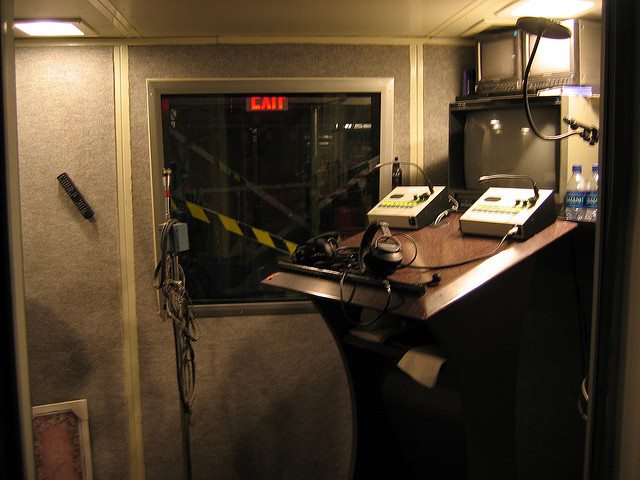
This opens in the Control Room and moves to the stage of Studio 52. This is a long and narrow building with the entrance on West 54th Street and the back door on 53rd and is just behind The Ed Sullivan Theater, which is on Broadway.
As you watch, here is a key for orientation…entering from 54th street, the stage is on the left and the control room is on the right. As you’ll see, there is very little seating on the studio floor as 90% of the audience is in the balcony, which is still there. I was in this building in May. Here is the CBS Spec Sheet for this studio.
The show moved here from Studio 59 in late 1960 and this is the show’s 10th Anniversary episode. Enjoy and share! -Bobby Ellerbee
How’s This For RARE? ‘Tonight’ Show, Debut Ad
Thanks to Maureen Caney, here is a print ad that ran Sunday, September 26, 1954 announcing the debut of ‘Tonight’ With Steve Allen, the next night. The first guests to ever appear on ‘Tonight’ were Martha Raye and The Inkspots.
On September 27th of this year, ‘Tonight’ turned 60, but to my amazement, nothing was said about it and there was no celebration. Tony Bennett was on the show that night and even though he was on Johnny Carson’s debut show, not a word about any of the show’s proud history was mentioned. Thanks to Maureen, there are more interesting ads to come. Enjoy and share! -Bobby Ellerbee
October 15, 1973…’Tomorrow’ Debuted On NBC
The only way to remember this great show is to remember what made it great…Tom Snyder. On the event of his death in 2007, here are remembrances from Brian Williams, Jay Leno and David Letterman. Incidentally, Letterman’s NBC show replaced ‘Tomorrow’.
‘Tomorrow’ followed ‘Tonight’ With Johnny Carson and started as a 60-minute series which aired only four nights a week, Monday through Thursday, in order to accommodate the weekly shows ‘Midnight Special’ (1973–81) and SCTV (1981–82) in that time slot on Fridays. It was originally broadcast from the NBC studios in Burbank, but relocated to New York in December 1974 when Snyder took on additional anchor duties for NBC News and the network’s flagship station, WNBC-TV. Our friend Joel Tator who directed the show started with Tom in LA, went with him to NYC and returned with him to LA.
In June 1977, the show returned to Burbank until 1979, when Snyder once again began originating from 30 Rockefeller Plaza.
On September 16, 1980, when ‘Tonight’ was shortened to 60 minutes, ‘Tomorrow’ was scheduled at 12:30 Eastern and lengthened to 90 minutes, a format that lasted until its cancellation 16 months later. In February 1982, NBC replaced ‘Tomorrow Coast-To-Coast’ with ‘Late Night With David Letterman’. Enjoy and share! -Bobby Ellerbee
On The Set Of ‘I Love Lucy’
This is a close to “being there” as we’ll ever get. This clip from an ‘I Love Lucy’ movie takes us inside the Desilu Playhouse and gives us an ultra rare glimpse of what it was like on the set of one of television’s most famous shows.
As we have confirmed with other sources, this was pretty much the same warm up that Desi used for the entire six years, including the camera push in. Enjoy!
October 15, 1951…’I Love Lucy’ Debuts On CBS, Tribute 3 Of 4
Rare Color Footage…In Context
As you saw in the pilot episode post just before this, the script from the pilot was rewritten and was used as Episode 6, Season 1 with the title “The Audition”. In the closing curtain call here, we even see Pepito again briefly.
Although photos and filming by anyone on the set was prohibited, somehow, someone in the audience the night of October 12, 1951 managed to get these few minutes of color film, which is expertly edited into footage from this episode.
I have posted all of today’s videos before, but now for the first time, with all of them together, there is a greater context for you to see the linkage between them. Enjoy and share! -Bobby Ellerbee
Original Stick Figure Intro… this is a video lesson on the first of television’s most famous shows.
Before the “satin heart” intro that almost everyone on the planet has seen, the show’s entire six years of first run episodes used the animated stick figure opening that you will see below. The opening familiar to most viewers, featuring the credits superimposed over a “heart on satin” image, was created specifically for the 1959–67 CBS daytime network rebroadcasts.
For the original run of the show, the episodes opened with animated matchstick figures of Arnaz and Ball making reference to whoever the particular episode’s sponsor was. Here’s a surprise…these sequences were created by the animation team of William Hanna and Joseph Barbera, who declined screen credit because they were technically under exclusive contract to MGM at the time. More to come! Enjoy and Share! -Bobby Ellerbee
https://www.youtube.com/watch?v=_1rpAUhbARY
i Love Lucy Clip
The Peabody Awards…First Season Winners From The Early Years
Some shows are so unique and shining that their merit is immediately recognizable. Here is the story of four programs that were awarded The Peabody in their first seasons, and why. Among the winners…’Howdy Doody’ in 1947, ‘Disneyland’ in 1954, ‘Lassie’ in 1955 and ‘Mr. Novak’ in 1963. Enjoy and share! -Bobby Ellerbee
http://www.peabodyawards.com/stories/story/first-season-peabody-winners-televisions-early-years
The Peabody Awards – First Season Peabody Winners: Television’s Early Years
After 70+ years of presentations, there are a vast number of Peabody Award winners, across numerous genres, all notable in their own way. Those shows which find resonance with multiple audiences over a great number of years, but were acknowledged as innovative and excellent from their very beginning…
In The Beginning…There Was The Smith Block
Thanks to John Schipp, here’s a 1965 photo showing the Smith Block in action. The editor is thought to be Peter Groom and the location, NBC New York.
The first show known for extensive use of video tape editing was ‘Rowan And Martin’s Laugh In’, which debuted on NBC in January of 1968, but there was a pilot done in mid ’67. I have heard that it took six weeks to edit each episode, but on the bright side, a few new curse words were created in the process. They too were created by splicing. I think GDMF and MFSOB were the top two.
This was a devilish combination of art and science and very tricky business. If you want to know more about just how it was done, take a look below. Enjoy and share! -Bobby Ellerbee
This opens on the empty stage of CBS Studio 59 which is also known as The Mansfield Theater at 256 West 47th Street. Our host, Garry Moore shows us the stage and takes us outside where we see CBS Studio 62 across the street and back into the theater via the front door with a stop in the control room and then on back to the stage. This is the show’s 7th Anniversary episode. Enjoy and share! -Bobby Ellerbee
https://www.youtube.com/watch?v=WTfjSbk8tdU
The 7th anniversary episode opens with a tour of the theater on 47th Street.
Remembering Ed Sullivan…September 28, 1901 – October 13, 1974
It was 40 years ago today that we lost Edward Vincent Sullivan. Gone, but not forgotten! Bobby Ellerbee
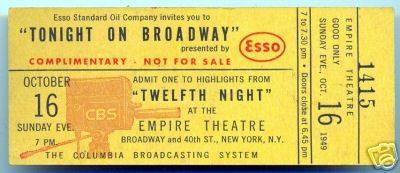
The First Ever CBS Television Series…’Tonight On Broadway’
There is not very much information on this show, but here’s one thing we know for sure…the CBS remote trucks in New York got a workout. Each week, it was broadcast from the theater in which the featured Broadway show was playing…not a television theater or studio.
‘Tonight on Broadway’ was the first series to be broadcast over the newly formed CBS Television Network. It was a weekly half hour program that aired from 1948 to 1950. The debut was April 6, 1948, featuring the original Broadway cast of the musical ‘Lend an Ear’ and aired from 7 till 7:30 Sunday nights. Some list ‘Mr. Roberts’ on April 20 as the debut. Two months later on Sunday nights at 8, ‘Toast Of The Town’ with Ed Sullivan debuted.
The host was drama critic John Mason Brown, who had worked for the New York Evening Post and The Saturday Review. Usually, an abbreviated scene from the show was included along with an interview of the cast members and it was all live and on location with a live audience at a different theater each week. Enjoy and share! -Bobby Ellerbee
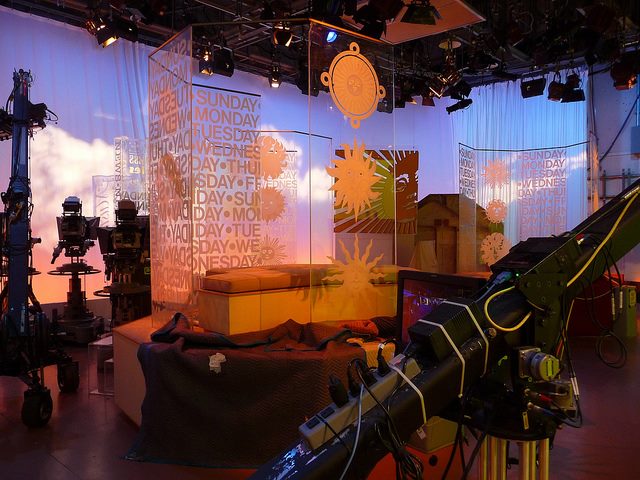
A Look Inside ‘Sunday Morning’, And CBS Studio 45
This is a story I posted a few days after my visit to The CBS Broadcast Center in early May. There are many great comments and add on’s at this link, so I’m pasting it here. Enjoy and share! -Bobby Ellerbee
https://www.facebook.com/permalink.php?story_fbid=673957542641798&id=189359747768249
This has always been one of my favorite shows. There is a line in a Lionel Richie song that says it all…”easy like a Sunday morning”, and that’s just the way it feels. Actually, that’s the foundation it was built on; to be like the magazine section of the Sunday paper, taken in at a leisurely pace with your morning coffee.
The show has been on since January 29, 1979 and that’s proof that the ‘Sunday Morning’ formula works. The program was created by Robert Northshield and it’s original host Charles Kuralt. The current host of the show is Charles Osgood, who took over duties from Kuralt upon his retirement on April 3, 1994, and has since surpassed Kuralt’s tenure as host. Both are perfect hosts.
This set is located directly across from something we saw here yesterday, the ‘Inside Edition’ greenscreen set in Studio 45 at the CBS Broadcast Center, which is a just over 3000 square feet. When ’60 Minutes’ first began, it shared space with ‘Captain Kangaroo’ and I think it was in this studio.
I’ve always wondered about the show’s trumpet theme. I had always thought the opening was played on a coronet which is smaller than a regular trumpet, but it’s actually played on a piccolo trumpet, which is smaller than a cornet.
The show’s theme is the trumpet fanfare “Abblasen”, attributed to Gottfried Reiche. A recording of the piece on a baroque trumpet by Don Smithers was used as the show’s theme for many years, until producers decided to replace the vinyl recording with a digital of a piccolo trumpet by former ‘Tonight Show’ musical director Doc Severinsen. The current version is played by Wynton Marsalis. I can hear it now, can you?
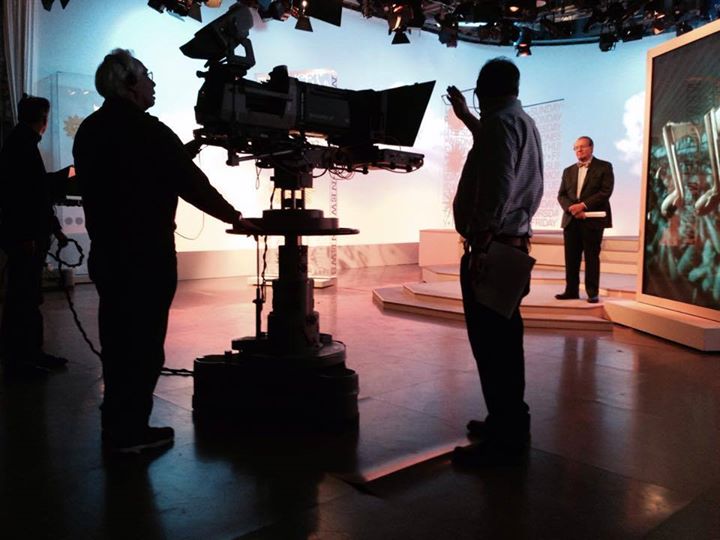
‘CBS Sunday Morning’…Seems Like Only Yesterday, And It WAS!
Thanks to Craig Wilson, here’s a nice shot of yesterday’s show in CBS Studio 45 with Charles Osgood. The floor director is Mark Dicso with cameraman Allan Brown. With this in mind, the next post here today is a ‘Sunday Morning’ story I did in May on my visit to to New York. Enjoy and share! -Bobby Ellerbee
‘See It Now’ Debut With First Ever Commercial Coast To Coast Feed
Today, when news breaks, we can get live pictures from almost anywhere in the world almost instantly, but this was not always the case and we take that ability for granted.
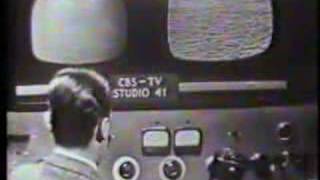
Here’s a reminder of the incredible effort it took just to get live pictures from coast to coast, memorialized in this first broadcast of ‘See It Now’ with host, Edward R. Murrow. Murrow is broadcasting live from the CBS Studio 41 control room in Grand Central, with the legendary Don Hewitt behind him directing.
On September 4, 1951,President Harry S. Truman’s opening speech at The Japanese Peace Treaty Conference in San Francisco was broadcast across the nation, marking the first time a television program was broadcast from coast to coast. The broadcast, via then-state-of-the-art microwave technology, was picked up by 87 stations in 47 cities, according to CBS.
On November 18, 1951, Edward R. Murrow on the ‘See It Now’ debut presented the first live coast-to-coast commercial television broadcast in the US, showing a split screen view of the New York Harbor and the Golden Gate Bridge in San Francisco.
This east – west link was made possible by AT&T’s new microwave radio-relay skyway, the first facilities to transmit telephone, radio and television across the United States by radio rather than wire or cable.
The new route, at the time the longest microwave system in the world, relayed calls along a chain of 107 microwave towers, spaced about 30 miles apart. AT&T spent over three years building it at a cost of $40 million.
This historic debut of ‘See It Now’ went off without a hitch. The New York Times reported that “the image reproduced on screens in the New York area, nearly 3,000 miles from the scene, had excellent clarity and compared favorably with programs of local origin. The contrast was of first-rate quality and there was no distortion.” Enjoy and share! -Bobby Ellerbee
The Theater And Secrets Of…’I’ve Got A Secret’
IGAS began at CBS Studio 59, The Mansfield Theater at 256 West 47th Street, which is now the Brooks Atkinson Theater. Below are photos of the theater in the CBS days and now. Studio 59 also hosted another huge CBS hit…’What’s My Line’ and from that show, came IGAS. Here’s the full story as detailed by Mark Evanier on his great Old TV Tickets.com site. http://www.oldtvtickets.com/
‘What’s My Line’ was one of the most popular shows on TV when two out-of-work comedy writers, Howard Merrill and Allan Sherman, created a not-dissimilar show which they called ‘I Know A Secret’. They took their creation to the producers of WML, Mark Goodson and Bill Todman, who immediately informed them it was a copy of their program. Sherman, displaying the ingenuity that would later catapult him to stardom as a singer of song parodies, replied that “People are going to start imitating your show whether you like it or not. You might as well do it and make the money.” Amazingly, Goodson and Todman saw the wisdom in this and bought the idea.
When ‘I’ve Got A Secret’ went on CBS a year later, it was an immediate disaster, in part because Goodson-Todman had tried too hard to differentiate it from ‘What’s My Line’. It had an awkward courtroom set in which the panelists would walk up and interrogate the contestants seated in a witness stand. After the first broadcast, Goodson ordered the set scrapped and a new one built which would be a mirror-image of the WML set. Also after the first broadcast, one of the show’s two sponsors cancelled so for the remainder of its first season, Secret only aired every other week, alternating with ‘Racket Squad’.
By the end of the year, the producers had gotten most of the bugs out of IGAS and it built up enough of a following to return to weekly status. The show had many things going for it. The program staff (mainly Allan Sherman, until he got himself fired in 1958) was fearless about trying different things and taking risks. On WML, the panel was prim and proper and dressed in tuxedos and evening gowns…and if the contestant’s secret occupation was that he shot apples off someone’s head, you never got to see him do it. On IGAS, the game would be followed by him shooting an apple off some panellists noggin. The show, though broadcast live, was willing to be wildly unpredictable with its odd stunts and clever “secrets.”
The producers also managed to eventually assemble a great panel, anchored by Bill Cullen and Henry Morgan, two of the wittiest men in television. They were good opposites: Cullen was cheery and optimistic; Morgan was acerbic and if something on the show was silly, likely to say so. The women changed from time to time but included Jayne Meadows, Faye Emerson, Betsy Palmer and Bess Myerson, all of whom were quite charming. Best of all, the show had Garry Moore as its host. A great ad-libber, he could handle any disaster…a fact which no doubt encouraged the producers to try more daring segments. Moore did a terrific job of keeping the game moving and setting up the panelists to be funny. It all made for a great weekly party, right up until 1964.
That year, CBS programming was in the hands of a man named Jim Aubrey who was known for his ruthlessness. “The Smiling Cobra,” as some called him, cancelled The Garry Moore Show, the other show Moore was doing for CBS, in such a nasty confrontation that Moore decided to also give up the game show and retire.
Steve Allen was selected as his replacement on IGAS and he kept things afloat for three more seasons…but the chemistry wasn’t the same. Allen dominated the show more than Moore had, and you could sometimes sense that he and Henry Morgan weren’t getting along well. Also, since Steverino lived in California and commuted to New York to do the program, they began doing two shows every other week — one airing live that night, one taped to air the following week. -Mark Evanier
Enjoy and share! Bobby Ellerbee
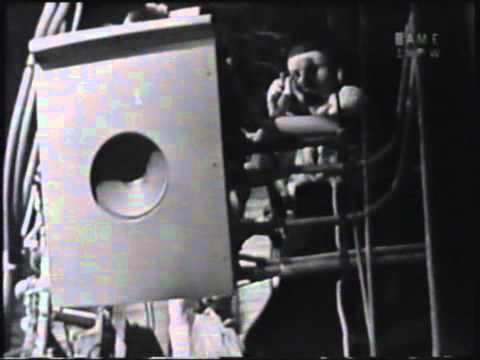
This is the first of several backstage videos from IGAS that I’ll be posting here this week. It opens on the empty stage of CBS Studio 59 which is also known as The Mansfield Theater at 256 West 47th Street.
By the 2:00 mark, the stage will be completely set for the show…actually, the did it in :17 seconds. One surprise to me is that Gary Moore’s desk is on the left side of the stage…I had always thought he was on the right and the panel on the left.
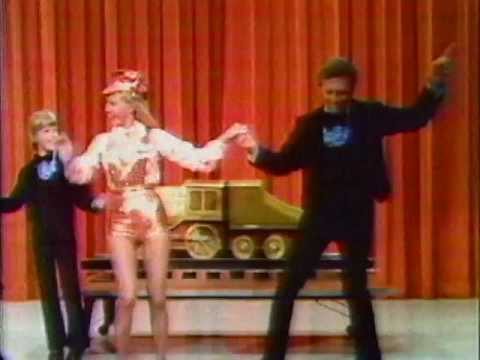
As you’ll see on this Fifth Anniversary show, they have quite a talented crew, as many of them will perform for us. Cameraman Lee Tanner is, to me, the best dancer, but there is quite a range of talent here which makes for a better crew.
I was going to add the detailed drawings and specs of Studio 59 that I have from the 1961 CBS Studio Book, but when the show moved to Studio 52 in 1960, CBS gave up the lease. They had used the studio from 1950 till 1960. In September 12, 1960 it became The Brooks Atkinson Theatre and is still in use as legitimate theater. Enjoy and share! -Bobby Ellerbee
https://www.youtube.com/watch?v=3Pah5FDfcjA