Posts in Category: TV History

May 17, 1939…Television’s First Sports Announcer & Baseball Game

May 17, 1939…Television’s First Sports Announcer & Baseball Game

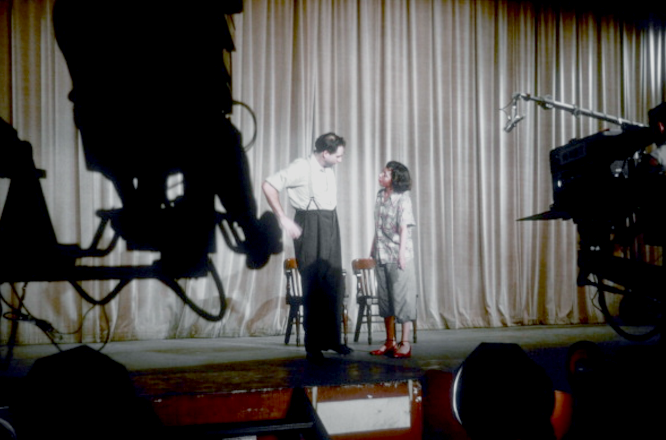
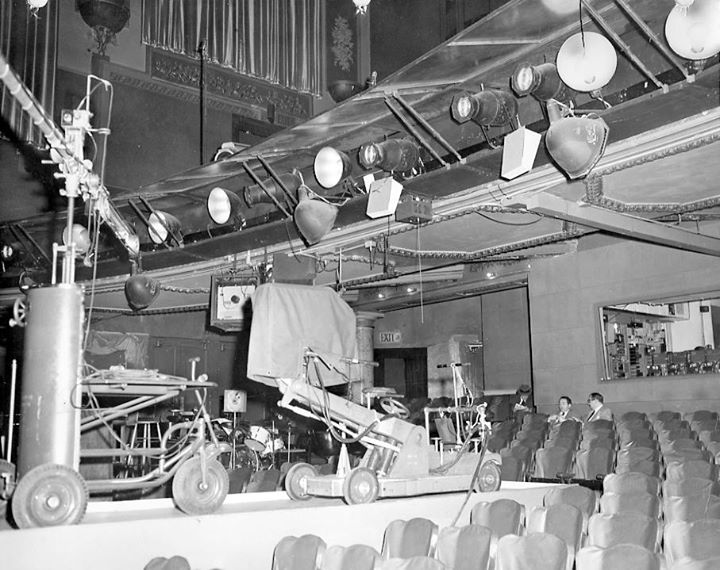
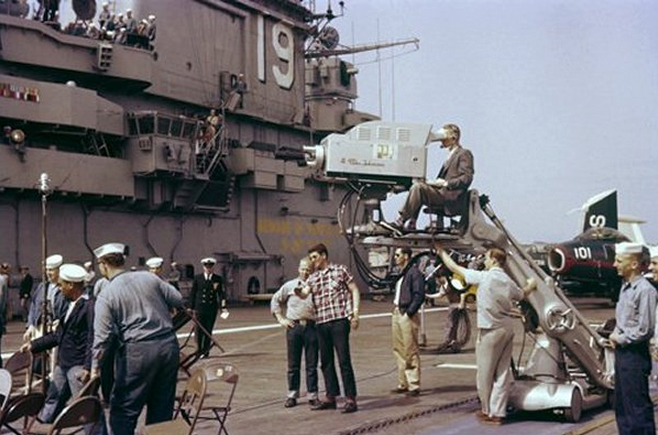
On May 17, 1939 NBC broadcast a baseball game between Princeton and Columbia Universities from Columbia’s Baker Field. Two RCA Iconoscope cameras covered the event that was carried on NBC’s experimental station W2XBS in New York. Princeton beat Colombia 2 -1.

The rare color image is that of Bill Stern, the man that called the action on this first ever televised sporting event. It was on purpose that coverage was of the second game of a baseball doubleheader between Princeton and Columbia, because during the first game, they all practiced, and took feedback from 30 Rock on the closed circuit run through.

On September 30, 1939 he called the first televised football game. It was a college game between the Fordham Rams and the Waynesburg Yellow Jackets played at Triborough Stadium on New York City’s Randall’s Island. Fordham won the game 34–7.

NBC hired Stern in 1937 to host a radio show called “The Colgate Sports Newsreel”, as well as Friday night boxing on radio, which made Stern one of the first televised boxing commentators, and the man Dennis James looked up to.

Many say that Paul Harvey copied Stern’s style, and his stories about the famous and odd, which Harvey called “The Rest Of The Story”. Although Stern made no effort to authenticate his stories, in later years, he did however introduce that segment of his show by saying that they “might be actual, may be mythical, but definitely interesting.” Below, is Bill Stern narrating “The Colgate Sports Newsreel”, with guest BABE RUTH. Hear the similarity? Enjoy and share! -Bobby Ellerbee

https://www.youtube.com/watch?v=QD9lTCLDZX4&ab_channel=OleTymeRadioShows


Source

May 17, 1930…Construction Begins On Rockefeller Center

May 17, 1930…Construction Begins On Rockefeller Center

Of the 21 buildings on 15 acres in midtown New York, that make up Rockefeller Center, none are more famous than Radio City Music Hall, and the home of NBC…30 Rockefeller Plaza.

In the construction photo, we see in the center, the excavated footprint of 30 Rock. Notice, it is bracketed on the 6th Avenue side by two small buildings, which are still there today. The building on the right is now a 9 West store, but the building on the left was much more important…that was NBC Studio 1H, better know as Hurley’s Bar.

The bar had been here since 1892, and had always done well, even during prohibition when a florist shop was used to disguise the bar and it’s new back door.

In 1930, John D. Rockefeller, Jr. had begun aggressively buying up acres and acres of midtown property, right in the middle of Fifth Avenue’s most exclusive district, for a seemingly implausible project: Rockefeller Center. One by one he purchased buildings from Fifth to Sixth Avenue between 48th and 51st Streets. In the stranglehold of the Great Depression, few property owners could resist the offer to convert real estate to cash.

But among the few were John F. Maxwell, grandson of John F. Boronowsky who owned the three story building (right in photo) at the north end of the block from Hurley’s and, of course, the feisty Irishmen themselves. In June 1931 Maxwell sent word to Rockefeller that he would not sell “at any price.”

Construction began on the gargantuan Art Deco complex on May 17, 1930. The block of 49th to 50th Streets, Sixth Avenue to 5th Avenue was demolished, leaving only the two brick Victorian buildings standing on opposite corners of a devastated landscape.

The RCA Building—70 stories tall—rose around Hurley’s, diminishing the bar building only in height. But nothing in New York City is permanent and in 1979, Hurley’s was sold. Journalist William Safire spoke for New Yorkers in an article mourning the loss. The mahogany bar was removed to a Third Avenue restaurant and, as Nancy Arum wrote in her letter to New York Magazine that year “a pretend old-fashioned bar now stands where the real old-fashioned bar once was.”

The pretend old-fashioned bar took the name Hurley’s and, most likely, tourists never noticed the change. But proximity, tradition, or habit still brought the Rockefeller Center workers and celebrities into the bar until September 2, 1999. That night owner Adrien Barbey served the last glass of beer in the bar that had stood at Sixth Avenue and 49th Street for 102 years.

Hurley’s Bar was just a half a block away from NBC’s studio entrance, making it the nearest watering hole for everyone from stars to stage hands. It became the favorite for radio, television, newspaper, and sports celebrities as well as tourists and midtown workers.

Liz Trotta noted “You never knew who would be standing next to your lifting elbow at Hurley’s. Jason Robards, Jonathan Winters, jazz musicians from the local clubs, “Tonight” show stars, starlets, football players, the lot.”

The night Jack Paar walked off the “Tonight” show, he went straight to Hurley’s and the asked that the phone on the bar…a direct line to NBC, be taken off the hook.

Johnny Carson helped make the Hurley name nationally familiar while he did his show live from Rockefeller Center. It was the bar in all of his Ed McMahon drinking jokes. David Letterman did several on-air visits to the bar. NBC technicians haunted the place so regularly that among themselves it was known as Studio 1H.

Thanks to “Tonight” show lead cameraman, Kurt Decker, I have experienced a sense of the old Hurley’s, at a very similar bar called Playwrights, and have bent an elbow with him at the new Hurley’s too. In honor of today’s 86th Anniversary of Rockefeller Center…Cheers! -Bobby Ellerbee

There is much more here, and on the photos. http://alokv.tripod.com/plan_port/rc519.html


Source

May 16, 1946…70 Years Ago Today, America Met Audio Tape

May 16, 1946…70 Years Ago Today, America Met Audio Tape

As a compliment to today’s earlier story on the history of AMPEX, here is a companion article on Jack Mullin, who, on this day in 1946, stunned attendees at the annual Institute of Radio Engineers (IRE) conference in San Francisco.

There, with a captured German Magnetophon, switching between a live jazz combo and a recording of the group, literally asked the question “Is it live or…?” None of the golden ears in the audience could tell. It was America’s first public demonstration of audio tape recording. Enjoy and share! -Bobby Ellerbee

Tape recording was introduced 70 years ago today

A case of insomnia led to the introduction of tape recording — and, by extension, the entire home media business.

Source

AMPEX = Alexander Matthew Poniatoff EXcellence…


This is the history of the fascinating early years at Ampex. I hope this will give you a new perspective on their grand achievements in audio and video, as well as a new appreciation for Bing Crosby’s efforts to make recording a reality. Enjoy and share! -Bobby Ellerbee


Source

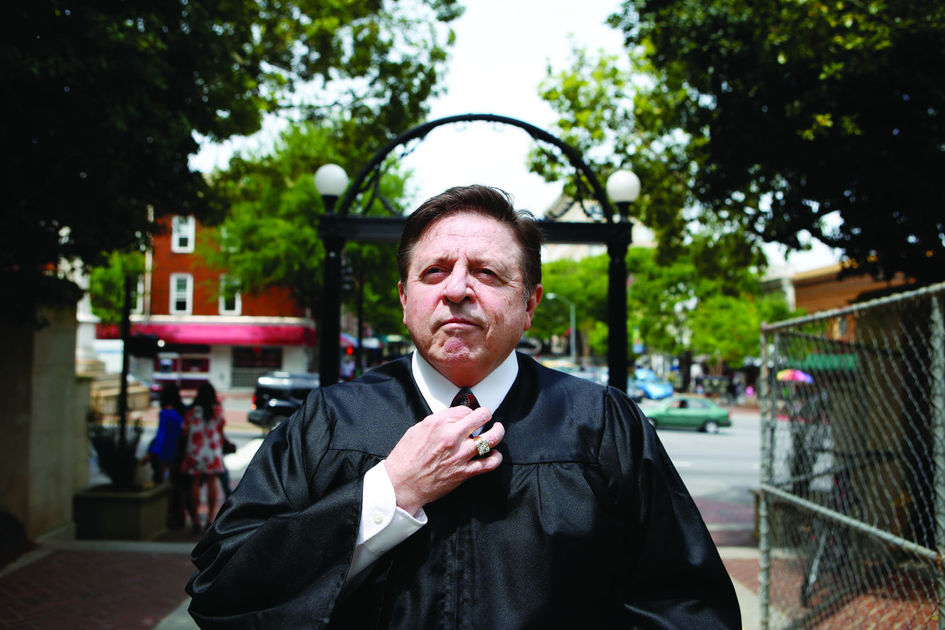
After 40-Year Detour, ‘Squidbillies’ Voiceover Actor Graduates

My Interview With Linda Wertheimer, From NPR Weekend Edition

A little while ago, a friend called me from his car in Los Angeles. He said he was just driving along the Pacific Coast Highway, listening to NPR, and all of a sudden…there I was. Here’s a link to the audio, the audio playback box is at the top right. Thanks to all, for all of your support and well wishes. -Bobby Ellerbee

After 40-Year Detour, ‘Squidbillies’ Voiceover Actor Graduates

Bobby Ellerbee tells NPR’s Linda Wertheimer that he bonded with his much-younger University of Georgia classmates over the cartoon Squidbillies, on which he voices the sheriff.

Source

Today Is The Day I Graduate From The University Of Georgia!

Today Is The Day I Graduate From The University Of Georgia!

101 years ago, The Henry W. Grady College of Journalism was founded. At yesterday’s Convocation ceremony, I became of the 21,000 proud graduates of the school that is the home of The Peabody Awards.

Today, I will become one of the 186,000 students to graduate from The University of Georgia’s seventeen schools and colleges, here in Athens. Founded in 1785, we were the nation’s first state-chartered university, and are consistently ranked among the nation’s Top 20 Universities, and are among the Top 100 in the world.

66 years ago, my dad graduated from UGA, and now it is my turn. Although he left us in August, I felt his presence yesterday. This evening, as I sit on the same Sanford Stadium field that he once did, I’m sure I will hear his voice, and feel his pride again.

I am forever grateful to my father for all his love, advice, and support. It was always his dream for me to graduate. I am also grateful for my friendship with Professor David Hazinski, who persuaded me to return to school, and to Dean Charles Davis for his support and friendship.

Today, dreams come true, and I move another step forward in making even more come true. I have applied to Grady for my Masters Degree in Nonfiction Writing, and hopefully will be accepted as one of the 30 candidates for the program.

I also want to thank you, because without your interest in Eyes Of A Generation, my interest in researching and writing about television’s history may have died on the vine.

Over the summer, there will be some big and exciting changes to the EOAG website and this FB page, so like they say…stay tuned, and THANK YOU! -Bobby Ellerbee


Source

May 13, 1957…Production Begins On “Jailhouse Rock”

May 13, 1957…Production Begins On “Jailhouse Rock”


In this classic photo, we see two RCA TK41s on either side of the Mitchell film cameras at MGM, during a rehearsal of the big dance number. Both cameras can be seen at the open and close of the video linked above. They are most likely on loan from RCA’s west coast office in LA.

MGM hired Richard Thorpe to direct their first film with Presley, as Thorpe had a reputation for shooting the productions in a short time, because he did not do retakes. The production of Jailhouse Rock began on May 13, 1957, and concluded on June 17, and that is amazingly fast.

The dance sequence to the film’s title song is often cited as “Presley’s greatest moment on screen”. It was shot first, and given it’s importance, Thorpe did shoot more than one take with the final edit containing footage from all.

The songs that integrated the film’s soundtrack were commissioned to Mike Stoller and Jerry Leiber, before pre-production. In April, Leiber and Stoller were called for a meeting in New York City to show the progress of the repertoire. The writers, who had not produced any material, were confronted in their hotel room by Jean Aberbach, director of Hill & Range music publishing, who locked them in their hotel room by blocking the door with a sofa until they wrote the material.

Presley recorded the soundtrack at Radio Recorders in Hollywood on April 30 and May 3, with an additional session at the MGM Soundstage on May 9.

During post-production, the songs were dubbed into the film, to the recorded scenes, where Presley only mimed the lyrics. “Jailhouse Rock” premiered on October 17, 1957 in Memphis. and was released nationwide on November 8, 1957

This was Presley’s third film, and his first for MGM. The film was the first production that the studio filmed on the recently developed 35mm anamorphic lens by Panavision. The film was originally entitled “The Hard Way”, and was changed to “Jailhouse Kid”, before MGM finally settled on “Jailhouse Rock”. -Bobby Ellerbee

Source

May 12, 1963…Bob Dylan, Ed Sullivan & The Koch Brothers? Yep!

May 12, 1963…Bob Dylan, Ed Sullivan & The Koch Brothers? Yep!

After seeing this photo, many swear they remember seeing Bob Dylan on the Sullivan show, but it never happened…it almost did though.

In May of 1963, Bob Dylan was still an aspiring young musician who was preparing for the release of his second album “The Freewheelin’ Bob Dylan”. At this point in his career, Dylan had received little national attention, but it seemed that was all about to change when he received an invitation to perform on “The Ed Sullivan Show”.

Dylan decided to perform “Talkin’ John Birch Paranoid Blues”, a satirical blues number skewering the conservative John Birch Society, and the red-hunting paranoia associated with it.

A few days earlier, Bob auditioned the song for Sullivan who seemed to have no issue with it. However, on the day of the show during the dress rehearsal, an executive from the CBS Standards and Practices department decided Dylan could not perform the song due to its controversial nature.

When the show’s producer, Bob Precht, informed Dylan of the decision, Dylan responded saying, “No; this is what I want to do. If I can’t play my song, I’d rather not appear on the show.” Rather than choose a new song, Dylan walked off the set of the country’s highest-rated variety show.

The story got widespread media attention in the days that followed helping to establish Bob’s reputation as an uncompromising artist. The publicity Bob Dylan received from this event probably did more for his career than the actual performance would have.

Speaking of The John Birch Society, did you know Fred Koch, father of the right wing billionaire sons Charles and David Koch, was a leader of the John Birch Society from its founding in 1958 until his death in 1967? In fact, Charles Koch followed his father’s footsteps into the John Birch Society. Charles, and his brother have spent millions fueling a John Birch Society-like “Tea Party” peopled with right-wingers. much like Birchers of decades past.

In many ways, the playbook deployed by the Kochs today, through myriad organizations, resembles a more sophisticated (and expensive) playbook of the John Birch Society back then.

Source

Some Interesting Tidbits On Early Talking Pictures…

Some Interesting Tidbits On Early Talking Pictures…

https://www.loc.gov/exhibits/bobhope/mopic.html
From the Library of Congress, here is a page on Bob Hope, but there is a lot more here than you may think, so click the link above.

There is info, and rare images here on Lee Deforest’s Phonofilm, and Vitagraph’s Vitaphone motion picture sound recording systems. An answer to the question of where Hope’s “Thanks For The Memories” theme song came from, a page from his Oscar hosting script, and more. Thanks to Barry Mitchell for the link.

The photo is from 1917, and shows one of the first silent pictures to be shot at Vitagraph’s new Hollywood studio at Prospect and Talmage. This property was later sold to Warner Brothers, along with their Vitaphone system, which was used on “The Jazz Singer” – generally considered the first hit “talkie”. In 1948, Warner sold this studio property to ABC, and this became their west coast HQ. In 1952, Warner sold the Vitagraph Studio property in Brooklyn to NBC, and that became the NBC Brooklyn color studios. Enjoy the browse. -Bobby Ellerbee

Source

May 9, 1946…”Hour Glass”…Television’s First Variety Show Debuts

May 9, 1946…”Hour Glass”…Television’s First Variety Show Debuts

Not only was this network TV’s first variety show, it was TV’s first hour long program as well, with the exception of two week night boxing matches WNBT carried live. All but the second photo, which shows us “Hour Glass” rehearsing with the NBC made cameras in Studio 8G, were taken on the debut night by photographing a monitor screen.

The show aired every Thursday night at 8 PM on the NBC network, which at the time was made up of just three markets including NYC, Schenectady and Philadelphia. “Hour Glass” was sponsored by Standard Brands and the production was created weekly by their ad agency, J. Walter Thompson. Just like in radio, in those early days of TV, the broadcasters were just the messengers renting their facilities to the sponsors and their agencies.

Standard Brands canceled the show in February 1947, with a larger goal in mind. With J. Walter Thomson now more experienced in the ways of television, it wasn’t long before JWT’s “Hour Glass” veterans were back in the studio. On May 7, 1947, “The Kraft Television Theater” debuted on NBC, and ran till 1958, and is still remembered as on of the golden age’s top anthology series.

NBC also learned a lot, and those lessons lead the network to basically bring this show back in 1948 in a tighter and more structured form as, “The Texaco Star Theater” with Milton Berle, with NBC in charge of production.

In 1946, NBC only had 10 shows on the network, but that was twice as many as the only other network offering television, and that was Dumont. On Thursday nights, “Hour Glass” was preceded on the network by the 10 minute ‘Esso News Reel’ at 7:50 and followed by local programs. ‘Hour Glass’ pioneered sketch/variety TV, and was the most ambitious and expensive production yet with big production numbers, chorus girls, a band, famous guest stars, and more, with the show’s sponsor pouring in over $200,000 for the show’s nine month run.

That sponsor was Standard Brands and the products they advertised on the show were for their Chase and Sanborn, and Tenderleaf Tea lines.

“Hour Glass” featured different performers every week, including Peggy Lee and, in one of the first examples of a top radio star appearing on network television…Edgar Bergen and Charlie McCarthy in November 1946. The show also showcased filmed segments produced by JWT’s motion picture department; these ranged from short travelogues to advertisements. Every episode also included a ten minute drama, which proved one of the more popular portions of the show.

Although JWT, and Standard Brands representatives occasionally disagreed over the quality of individual episodes, their association was placid compared to the constant sniping that was the hallmark of the agency’s relationship with NBC. It started with unhappiness over studio space, which Thompson regarded as “woefully inadequate”.

This leaves me wondering if perhaps this show actually began in NBC Studio 3H, which was small, and equipped with RCA Iconoscope cameras, but this was the only TV studio at the time. Either that, or, they did the early shows on the Studio 8G radio stage with the new NBC built 8G cameras, before the studio was stripped down, and the stage removed.

The tension escalated when the network insisted that an NBC director manage the show, from live rehearsals through actual broadcast. The network was similarly displeased that Thompson refused to clear their commercials with NBC before air time.

These types of problems persisted until Pat Weaver came to NBC in 1949 and began to change the way things worked. Under Weaver, NBC took charge of production, and introduced “magazine” style advertising which split the cost of a show between several sponsors, and not just one. More on the photos. Enjoy! -Bobby Ellerbee


Source

Sunday Flashback…Some Of America’s Most Famous Announcers


Sunday Flashback…Some Of America’s Most Famous Announcers

Visiting with Tom Snyder, here are some funny stories and interesting insights into life at the top of the network television food-chain.

From “You Bet Your Life” with Groucho Marx, George Fenneman; from “The Jack Benny Show”, Don Wilson; and from “Burns & Allen”, Harry Von Zell. The fourth man is John Reed King, and for the many that don’t know who he is, here’s a thumbnail sketch.

In the ’30, King hosted the top radio show, “Misses Goes A Shopping”, which he also hosted on television in 1944 and was one of the first ever TV game show hosts. In ’46, he hosted the CBS game show “It’s A Gift” and a newcomer named Bill Cullen was his assistant and announcer on “Give And Take” in 1952. He was also radio’s original “Sky King”, and the announcer for the hit radio show, “Duffy’s Tavern” in 1941. Thanks to Barry Mitchell for the clip. Enjoy! -Bobby Ellerbee

Three of the greatest announcers of all time sat down for an hour-long chat with Tom Snyder on Apr 4, 1978, because this is the kind of interesting program t…

Source

May 8, 1945…Victory In Europe Day, Times Square

May 8, 1945…Victory In Europe Day, Times Square

Except for Germany and Japan, every country around the world celebrated the defeat of Adolf Hitler’s war machine, on this day in 1945. In Italy, they celebrated by hanging Mussolini.

In New York, half a million celebrated in Times Square, and NBC Radio and Television was at The Astor Hotel to cover the event. From atop the Astor marquee, NBC Radio announcers described the victory party to listeners across the country, while WNBT cameras panned the crowd, and took reports from those same radio reporters. Also atop the Astor marquee were announcers, and reporters from NBC’s former Blue Network, which was now owned by ABC, but still headquarted and working from 30 Rock.

Pacific Fleet Commander, Admiral Nimitz had been in Washington, and with the VE news, came to New York for a war bond rally, and while there, went to NBC Studio 3H to broadcast a message to all the soldiers, and sailors in the veterans hospitals in the area. RCA had donated 100 receivers to the VA hospitals in the WNBT coverage area, just the month before.

To give you an idea what that day was like, here is some CBS Radio coverage of the day. https://www.youtube.com/watch?v=Fh8M6CEh5Jk

More on the photos. Enjoy and share, as a tribute to “the greatest generation”. -Bobby Ellerbee


Source

My Heartfelt Thanks For Your Congratulations….

My Heartfelt Thanks For Your Congratulations….

On Thursday, I posted the UGA magazine article on my graduation, and the outpouring of support, and congratulations was overwhelming. It is greatly appreciated, and I thank you.

Over 150 photos were taken for the article, both here at home, and on campus. I want to share some of them with you, and hope you will enjoy them. The EOAG family is a rare collection of amazing individuals, and I thank you for allowing my effort to become a small part of you life. I hope it is a worthwhile contribution. -Bobby Ellerbee


Source

May 7, 1949…The First 45 RPM Record Hits The Billboard Charts

May 7, 1949…The First 45 RPM Record Hits The Billboard Charts

The song was “You’re Adorable” by Perry Como. The next week, the year’s biggest 45 hit appeared on the Billboard charts…”Riders In The Sky” by Vaughn Monroe.

The 45 rpm record was RCA’s pushback against Columbia’s 33 1/3 rpm long-playing disc, introduced the previous year. The two systems directly competed with each other to replace 78 rpm records, bewildering consumers, and causing a drop in record sales. The years from ’49 to ’51, in media, were referred to as “the war of the speeds” years.

By the way, around September of ’48, William Paley, at CBS had offered RCA’s Sarnoff the rights to the 33 technology at no cost as it would help boost the 33 format record sales for all. Sarnoff thanked Paley and told him he would think about it, but RCA had already perfected it’s secret 45 project. Paley was shocked and more than a bit miffed when RCA rolled out the 45 a few months later.

The number 45 came from taking 78, and subtracting Columbia’s new 33 rpm format speed, which equaled 45. Record companies and consumers alike faced an uncertain future as to which format would survive. In 1949 Capitol, and Decca started issuing the new LP format, and RCA relented and issued its first LP in January 1950. But the 45 rpm was gaining in popularity, and Columbia issued its first 45s in February 1951. Soon other record companies saw the mass consumer appeal the new format allowed. and by 1954 more than 200 million 45s had been sold.

RCA had announced the new format, and introduced the player in January of ’49, but it was months later till there was a use for it. The first 45, was released on March 31, 1949; it was the RCA Victor label’s “Texarkana Baby” b/w “Bouquet of Roses” by Eddy Arnold. Enjoy and share! -Bobby Ellerbee


Source

Massive Kentucky Derby Production ‘Like a Super Bowl’ for NBC Sports Group

Producing Today’s Kentucky Derby…A Mega Job For NBC

With 300 crew members, 54 cameras, 15 announcers, and half a dozen mobile units, this is a big day for NBC Sports. Here’s the story, and when race time comes, and you have your mint julep, you can toast the many making the effort to bring it to you. -Bobby Ellerbee

Massive Kentucky Derby Production ‘Like a Super Bowl’ for NBC Sports Group

Fifteen years ago, when NBC Sports took over the broadcasting rights for the first gem in horse racing’s Triple Crown, NBC’s 90-minute Kentucky Derby …

Source

JFK, Huntley-Brinkley Interview Photos In The Oval Office

ULTRA RARE! JFK, Huntley-Brinkley Interview In The Oval Office


Above are videotape outtakes, from what would be President Kennedy’s last interview on NBC.

The date is September 9, 1963, and these rare behind the scenes photos were taken by long time NBC/WRC-TV production manager, Bill Wells, and are made available to us by his friend, Tom Buckley, and the Wells estate.

As seen in these remarkable photos, NBC reporters Chet Huntley and David Brinkley sat down with the President in the White House for an exclusive interview for their program, “The Huntley-Brinkley Report”.

Kennedy stuck to outlining the policy priorities of his first term throughout the expansive interview, particularly focusing on the conflict in Southeast Asia. But he grew reflective when Huntley asked if, three years into his presidency, he found the office of the presidency unmanageable.

Kennedy gave a strikingly thoughtful, long response assessing America’s place in the world and economic issues and political roadblocks at home – essentially summing up all the challenges facing his presidency. But Kennedy ended on a hopeful and humble note, saying that the country was really managed – not by the White House, but by its citizens.

He concluded that America was making progress and said, “I think we can really look forward to the ’60s with a great deal of hope.” Tragically, of course, Kennedy would not outlive the decade for which he had so much hope, nor the the year of 1963.

In that these images are so rare, I’m sure you have friends that you would like to share them with, so please do. If you can help identify the people shown here, that would be appreciated too. -Bobby Ellerbee

Thanks to NBC veteran audio engineer Joel Spector for identifying the black man here as the great Fred Lights, who was the Huntley-Brinkley (NY), and then Nightly News Stage Manager for everyone including Tom Brokaw, until Fred’s death in 1995. He had already been the SM on TODAY with Dave Garroway. Fred Lights was the step brother of actress and major off-Broadway producer Ellen Stewart of LaMama, ETC Theatre.

Harold Tomason removing the mic.


Source

Closing a Chapter

40 Years Later….I Graduate From The University Of Georgia

Next Friday, May 13, yours truly will finally receive a Bachelor’s degree in Journalism…40 years after I left UGA. My graduate studies application is already in, and hopefully in the fall, I will begin my Masters degree work at UGA’s Grady College of Journalism.

When I left, I had already finished all my Journalism core, and needed only six more classes in my minor, Theater, to graduate.

Having started on the radio at age 16, in 1966, 2016 marks my 50th year as a professional broadcaster. I don’t know of a better way to celebrate that, than with five A’s and one B, a degree, and a great part in a top rated cartoon series.

Here is the story in the UGA’s “Red & Black”, with one correction…my belief is that if you put 51 perecent of all your passion and effort into a desire, the universe will handle the other 49 percent. -Bobby Ellerbee

Closing a Chapter

Bobby Ellerbee believes that if a person puts 51 percent passion and effort into a goal, the universe will find a way to take care of the other 49 percent.

Source

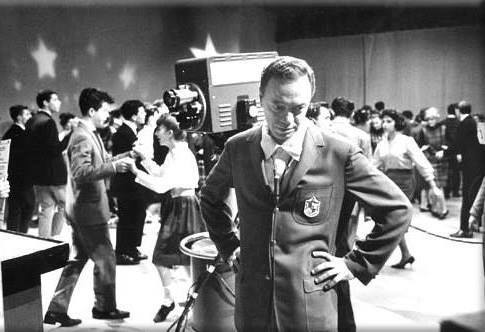
May 4, 1957…America’s First Prime Time Rock n Roll Show Debuts

May 4, 1957…America’s First Prime Time Rock n Roll Show Debuts

On this day in 1957, ABC brought radio’s top DJ, Alan Freed to television, and that made “The Big Beat”, the first nationally-televised rock ’n roll dance show. Freed’s 30 minute, Friday night show came four months before Dick Clark’s afternoon show, “American Bandstand” debuted nationally on ABC that August.

Freed’s show was a summer replacement test of sorts, and ran with the understanding, that if there were enough viewers, it would continue into the 1957-58 TV season. Early reviews in June and July were positive, and ratings for the first episodes were strong.

Freed and his show seemed to be on course for a long run…BUT…his TV show came to an abrupt end. It seems that on the episode which featured a live performance by Frankie Lymon And The Teenagers, Lymon (who had appeared with Freed in some of his films), was shown dancing with a white girl. The biracial dance scene enraged ABC’s Southern affiliates, and the network cancelled the show despite its growing popularity.

A little later, Freed struck a deal with Dumont’s WABD to televise “The Big Beat” show again locally. Even as WABD became WNEW, the show continued, until the Payola charges started, not only flying, but landing on Freed. -Bobby Ellerbee


Source

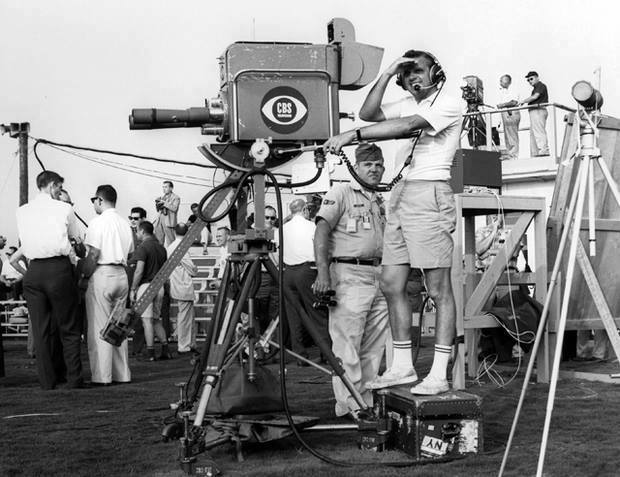
May 4, 1961…Network TV Preps For First US Manned Space Shot

May 4, 1961…Network TV Preps For First US Manned Space Shot

The next day, on May 5, Alan Shepard became the first American to enter space, but long before that, the networks had flocked to Cape Canaveral with their standard remote equipment, a load of telephoto lenses, and some imagination.

This may be the first use of this wonderful counterbalanced arm system from CBS. This is a Houston Fearless cradle head with the wheel track, pan head base removed, which limited the tilt up. By drilling a hole at the center of balance of the cradle, a cross member support was installed, and an adjustable lead weighted arm was attached underneath. It looks like the wheel track base is being used to secure the rig to the tripod, via it’s Mitchell mounting nut, but is installed sideways, which would allow the cameraman to lock the swivel or pan. Very clever.

I think by the next launch, everyone was using this system, which CBS gladly shared. Notice there is even a periscope made into the custom viewfinder. Enjoy and share! -Bobby Ellerbee

Source

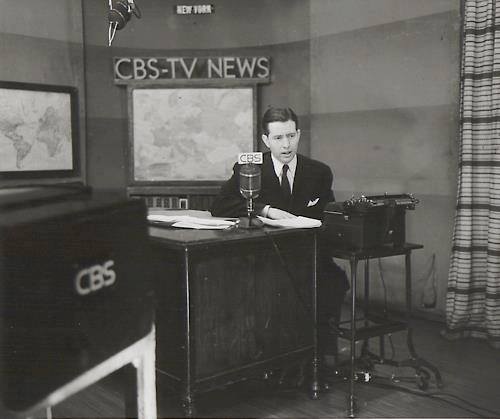
May 3, 1948…CBS Debuts TV’s First, Live, Nightly Network News

May 3, 1948…CBS Debuts TV’s First, Live, Nightly Network News

On this day in 1948, “CBS TV News” became network television’s first daily newscast, with a live newsman…Douglas Edwards.

NBC actually had the first daily network news broadcast, which began February 16, 1948. That was the “The NBC Television Newsreel” (later named “Esso Newsreel” and “Camel Newsreel”), which was a 10 minute weekday newsreel, and was narrated off camera by John Cameron Swayze. On February 16, 1949, Swayze moved in front of the camera, and that began “The News Caravan” as a live news show. By the summer of ’49, Camel had become the sponsor and the name changed to “Camel News Caravan”.

To go a bit further in just what the first network new broadcast was, we go again to NBC. Their Sunday afternoon, “The War As It Happens” began as a local weekly program, but NBC records indicate that in April of 1944, it was fed to Schenectady and Philadelphia on the fledgling NBC Television Network, and became the first news cast regularly seen in multiple cities. In August 1945, the war was over and the Sunday “The War As It Happens” newscast was renamed “The NBC Television Newsreel”.

Edwards joined CBS Radio in 1942, eventually becoming anchor for the network’s regular evening newscast “The World Today” as well as “World News Today” on Sunday afternoons. He came to CBS after stints as a radio newscaster and announcer at WSB in Atlanta, Georgia and WXYZ in Detroit, Michigan.

Although Lowell Thomas, on NBC, and Richard Hubble on CBS had done live TV news shows locally in New York in the late ’30s and early ’40s, Edwards was the first network anchor.

After the war, CBS began telecasting news shows locally on Saturday nights, expanding to two nights a week in 1947. These reports were delivered by CBS radio news men, who were not really interested in this “television stuff” and loathed having to do it. Edwards had a couple of turns at it, and kind of enjoyed it and let his interest be known.

On May 3, 1948, Douglas Edwards began anchoring the “CBS Television News”, a regular 15-minute nightly newscast, airing every weeknight at 7:30 p.m. Eastern Time, and this was the first regularly scheduled, network television news program to use an anchor.

On CBS, the week’s news stories were recapped on a Sunday night TV program titled “Newsweek in Review”. The name was later changed to “The Week in Review”, and the show was moved to Saturdays. In 1950, the name of the nightly newscast was changed to “Douglas Edwards With the News”, and the following year, it became the first news program to be broadcast on both coasts, thanks to a new coaxial cable connection, prompting Edwards to use the greeting “Good evening everyone, coast to coast.”

Once the coast-to-coast connection was available, it is not clear whether both Douglas, and Swayze did a live second broadcast for the west coast, or whether it was kinescoped. There are stories that report the show was done live again, with added west coast content, and reports that say it was kine delayed, but one thing is clear…November 30, 1956, Edwards’ program became the first to use the new technology of videotape to time delay the broadcast.

Early on, NBC’s news took the lead, but by the mid 50s, CBS and Edwards were in the lead. In September 1955, “Douglas Edwards With The News” was moved from 7:30 to 6:45 p.m. ET.

On October 29, 1956, Swayze was replaced by Chet Huntley and David Brinkley and NBC’s “Huntley-Brinkley Report”. The switch helped CBS ratings as it took a while for Chet and David to gain traction. By the early ’60s, NBC’s news ratings were a good bit higher, and a decision was made to make a switch at CBS.

Walter Cronkite became anchor on April 16, 1962. On September 2, 1963, “The CBS Evening News” became network television’s first half-hour weeknight news broadcast, lengthened from its original 15 minutes, and telecast at 6:30 p.m. ET. NBC quickly followed suit and “The Huntley-Brinkley Report” expanded to 30 minutes exactly a week later on September 9, 1963. ABC followed 4 years later.

“The CBS Evening News” was broadcast in color for one evening on August 19, 1965, and made the switch permanently on January 31, 1966.

Just this week, a big change to the weekend edition of “CBS Evening News”, was announced, and that story is in today’s second post, so look for it, or better yet, visit this page by clicking on the blue EOAG address at the top of this post. Enjoy and share. -Bobby Ellerbee

Source